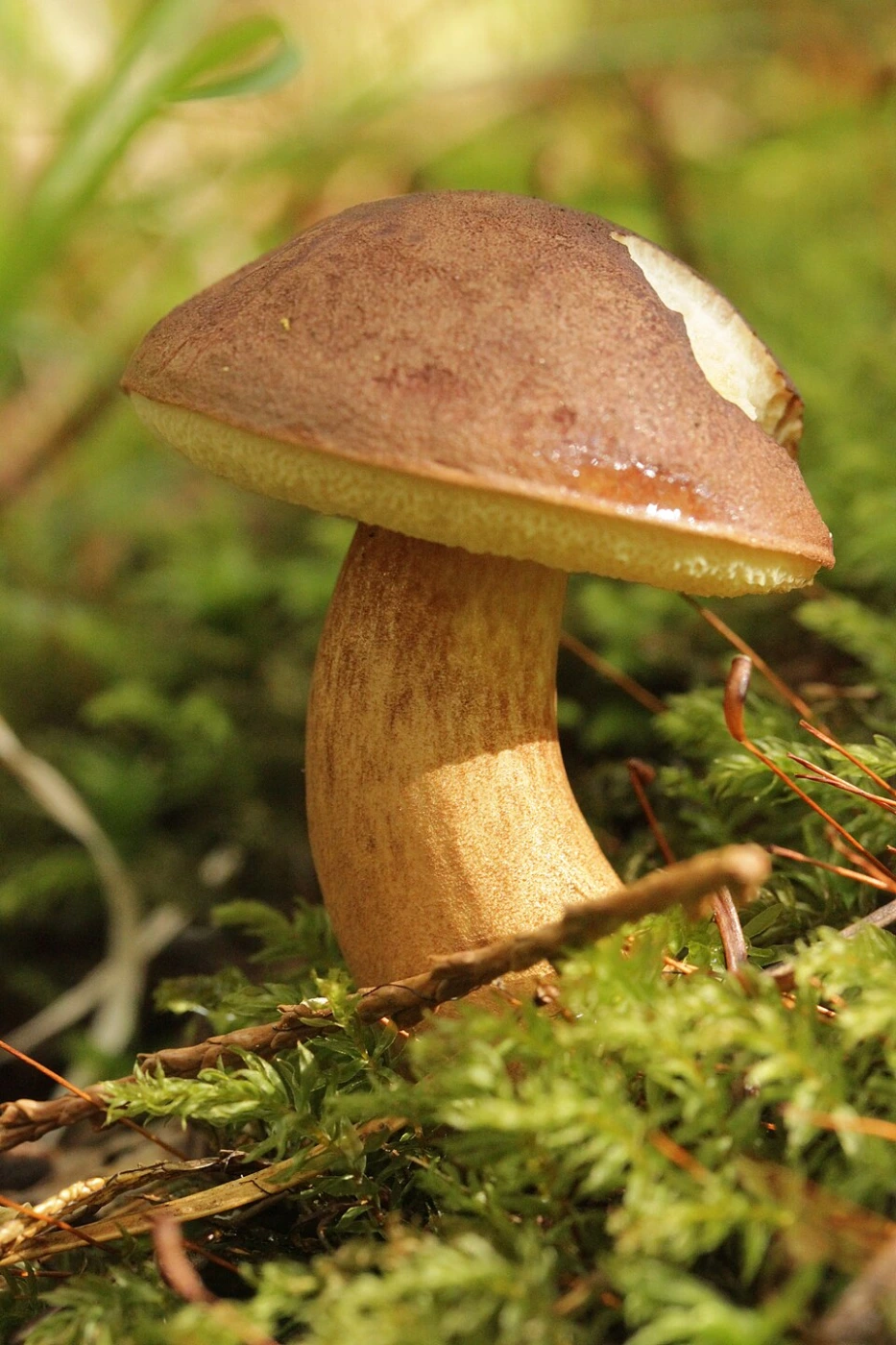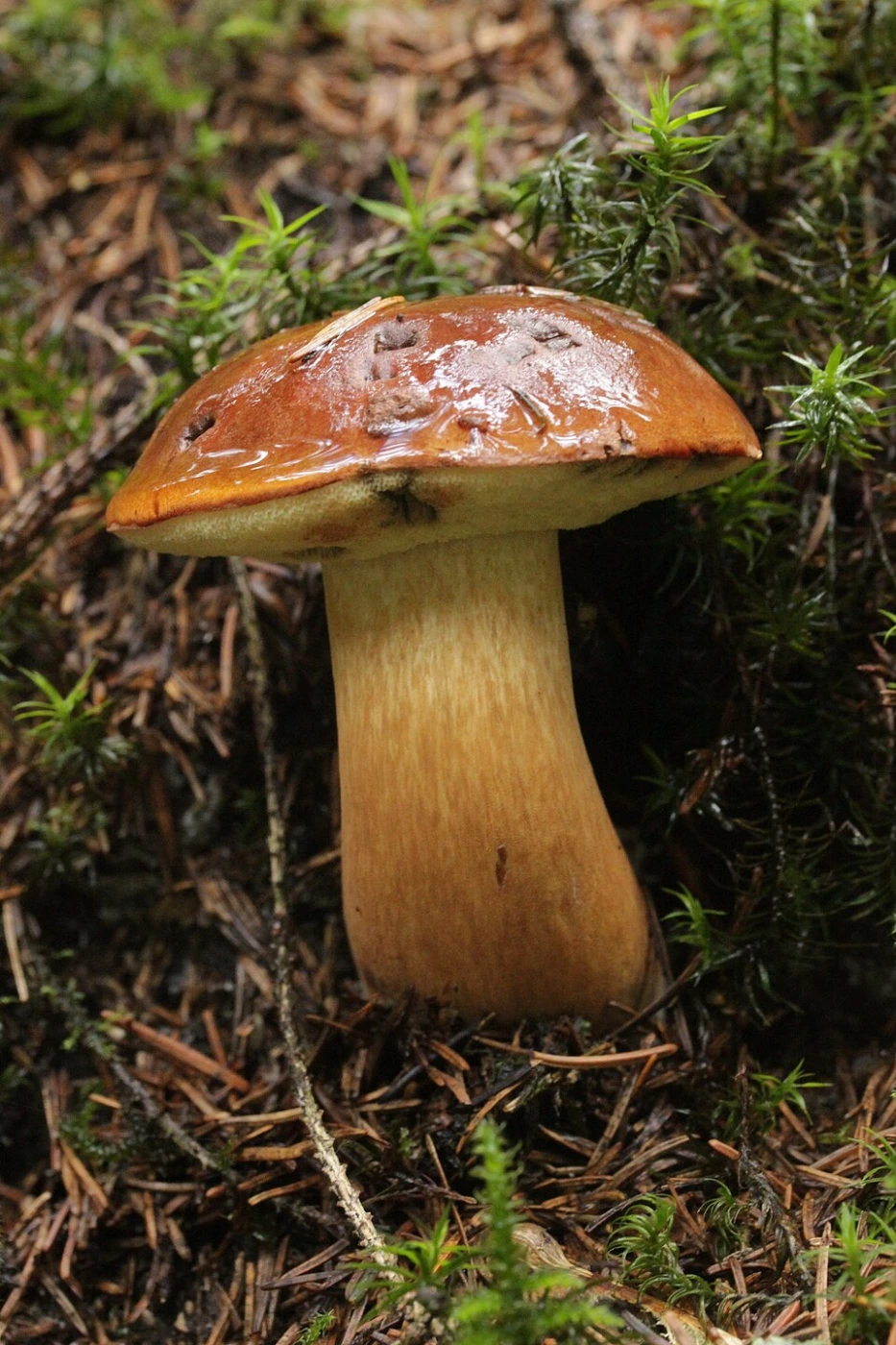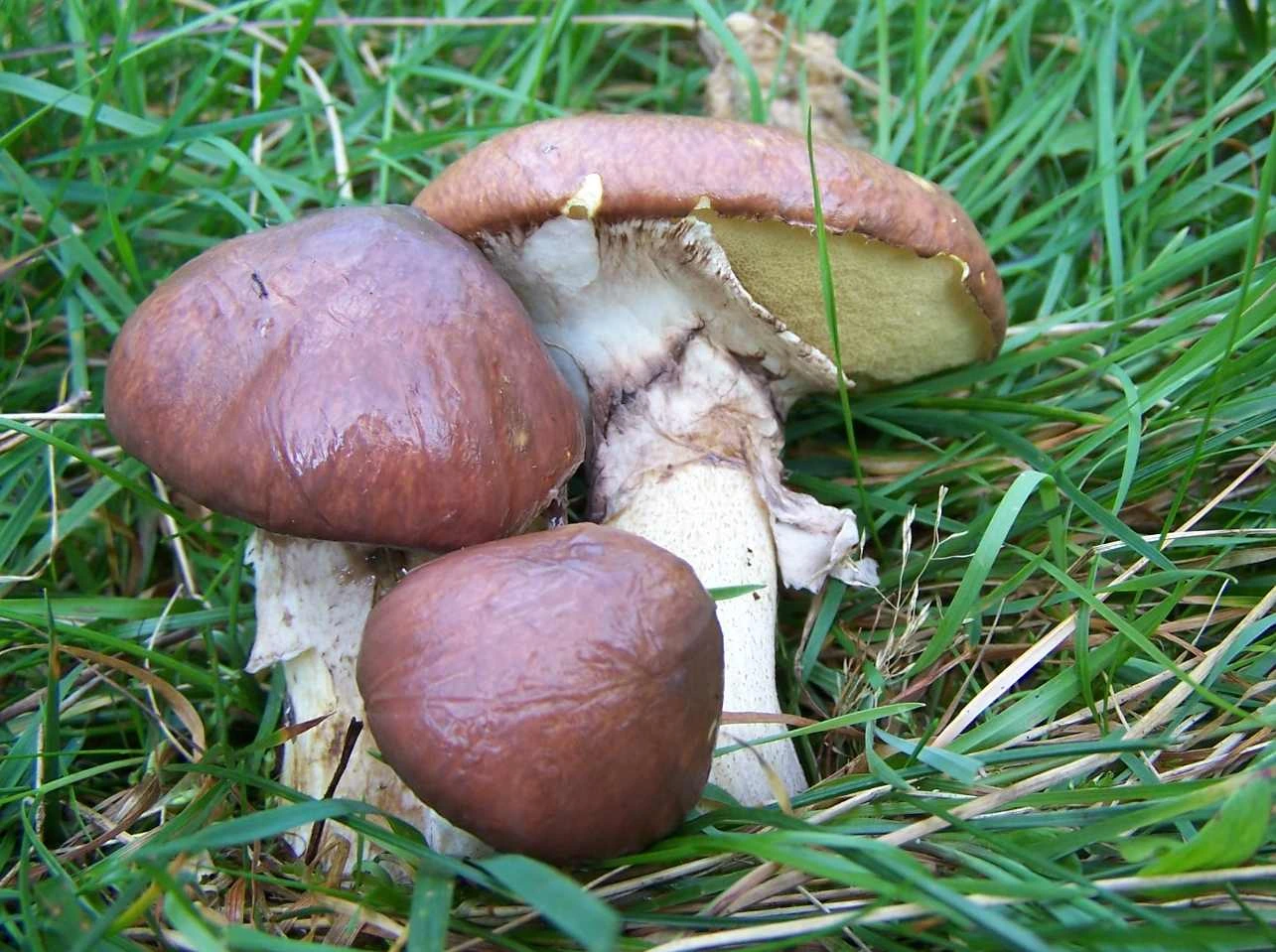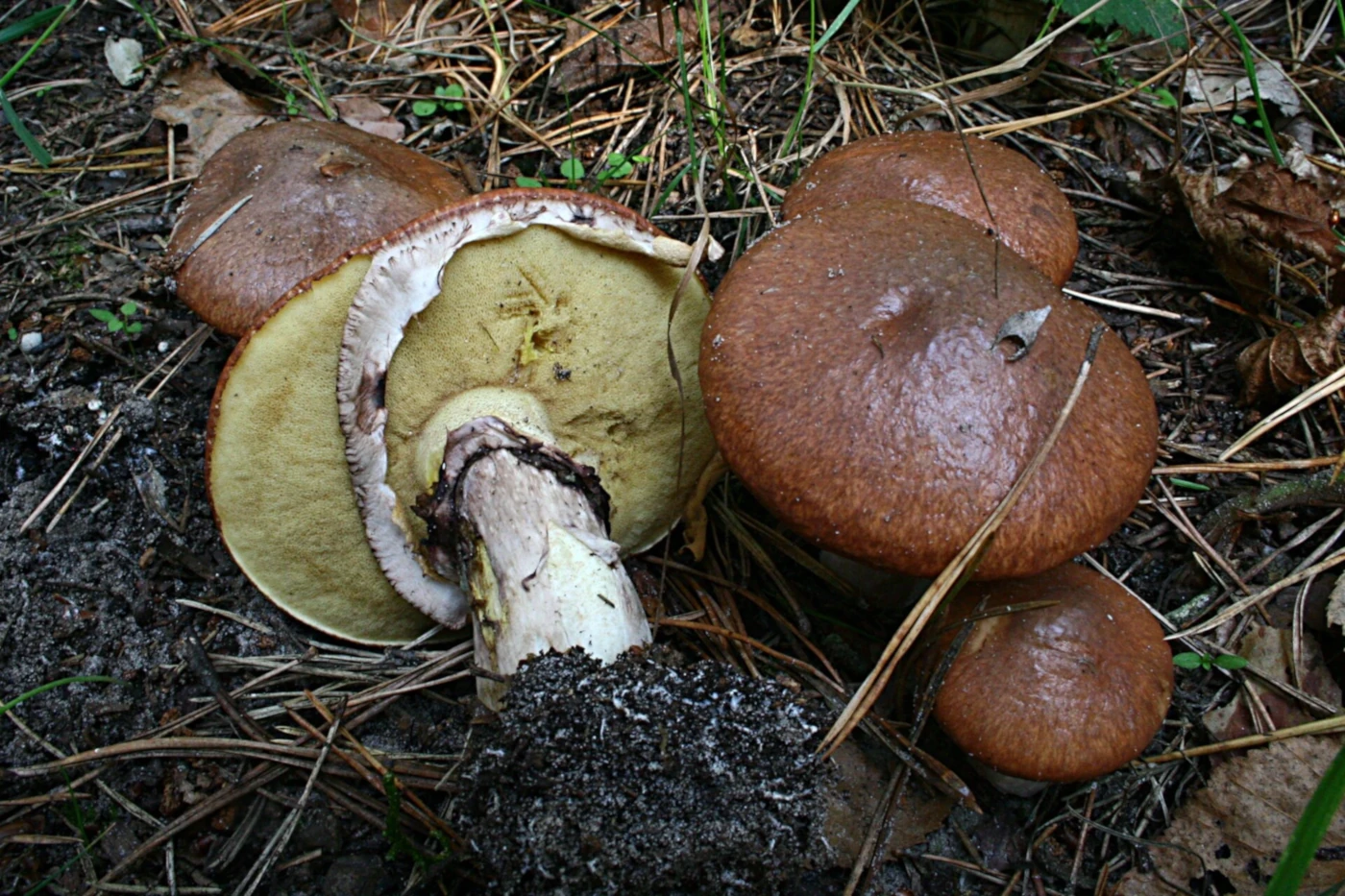
Category: Mushrooms

  • Grifola frondosa: Maitake (Hen of the Woods) Identification and Look-Alikes

    Grifola frondosa: Maitake (Hen of the Woods) Identification and Look-Alikes

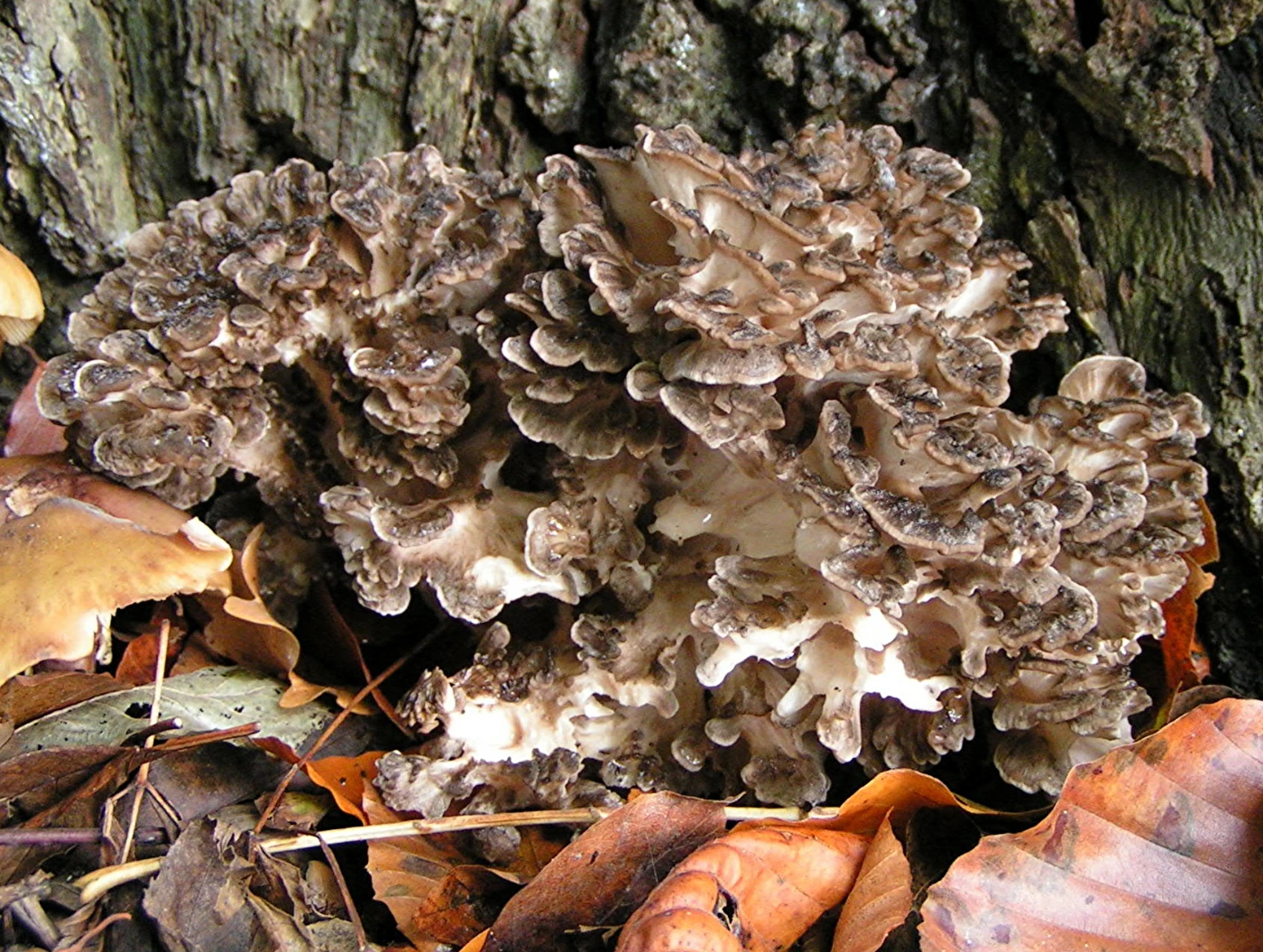
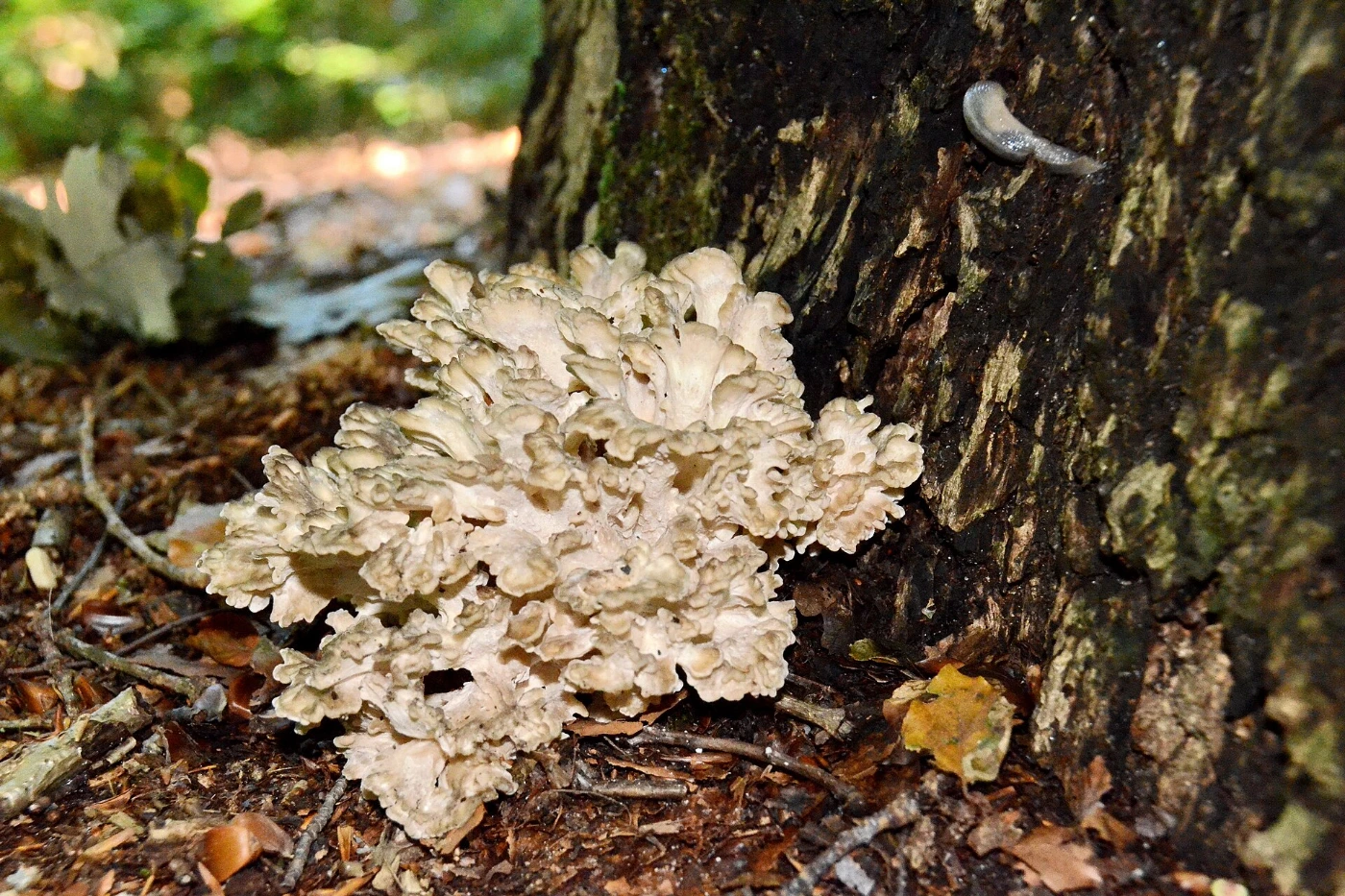
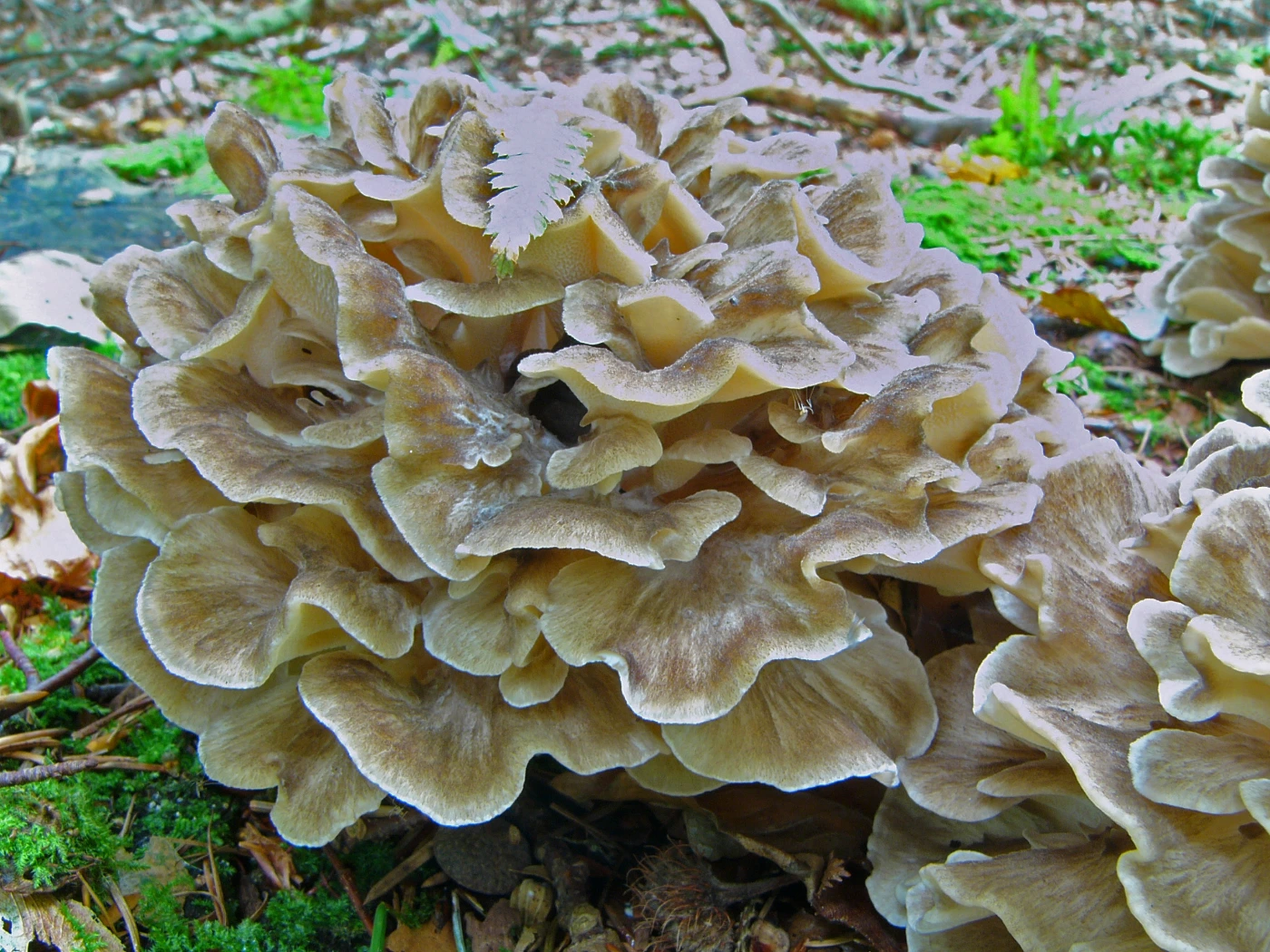
    Grifola frondosa, commonly known as Maitake or Hen of the Woods, is a large clustered polypore that grows at the base of mature hardwood trees, especially oaks. Its many overlapping gray-brown fronds can form massive rosettes that resemble a ruffled bird or a bouquet of leaves.

    Maitake is one of the most recognizable edible polypores when mature, but several other large bracket fungi can look similar from a distance. The most reliable identification comes from combining growth form, pore surface, host tree, bruising behavior, and texture.

    ⚠️ Important: Never eat a wild mushroom based solely on photographs, AI identification, or one visible feature. Large clustered polypores can be difficult to separate when old or damaged.

    Quick Identification

    Feature Grifola frondosa
    Scientific name Grifola frondosa
    Common names Maitake, Hen of the Woods
    Family Meripilaceae
    Growth form Large rosette of many overlapping fronds
    Cap color Gray-brown to brown
    Underside White pores
    Stem Branched central base
    Flesh White, firm when young
    Bruising Usually little dramatic staining
    Spore print White
    Substrate Roots/base of hardwood trees
    Main host Especially oak
    Season Late summer through autumn
    Ecology Wood-decaying / root-associated
    Edibility Edible when correctly identified and properly cooked
    Main look-alikes Meripilus giganteus, Bondarzewia berkeleyi, Polyporus umbellatus

    What Does Maitake Look Like?

    Maitake forms a large branching mass made of dozens or even hundreds of individual spoon-shaped or fan-shaped caps. These arise from a common thick base and create a layered rosette.

    A mature cluster can become very large, sometimes weighing several kilograms. The overall appearance is much more complex than a single bracket fungus.
    Caps

    Individual caps are usually gray-brown, brown, or smoky gray. They are thin compared with the thick central base and often have wavy margins.

    The upper surface may show faint zoning or subtle darker streaks.

    Cap Shape

    The caps are usually fan-shaped or spoon-shaped rather than round. They overlap tightly and point outward from the center.

    This layered rosette is one of the strongest identification features.

    Pore Surface

    The underside is white to cream and covered with tiny pores. There are no gills.

    The pore surface extends across the underside of each frond and may continue slightly onto the branching structure.

    Pore Size

    The pores are small and can look almost smooth from a distance. Close inspection reveals the fine openings.

    They remain pale in fresh specimens.

    Stem and Branching Base

    Maitake does not have one ordinary stem. Instead, many branches arise from a thick central base.

    Each branch supports several caps, creating the characteristic clustered architecture.

    Why the Base Matters

    The branching structure helps separate Maitake from several layered bracket fungi that grow as separate shelves directly from the trunk.

    A single common base is a useful clue.

    Flesh

    The flesh is white and firm when young. Older clusters become tougher and more fibrous.

    The outer margins are usually more tender than the thick central base.

    Texture

    Fresh Maitake has a dense but not woody texture. Very old specimens become leathery and less suitable for culinary use.

    The texture is much softer than many perennial conks.

    Smell

    The smell is usually mild, earthy, and mushroom-like. Some people describe it as pleasantly savory.

    Odor is not one of the strongest diagnostic features, but it can support an otherwise convincing identification.

    Spore Print

    The spore print is white.

    This helps confirm the broader polypore group but is rarely necessary if the mushroom’s structure and host are clear.

    Where Does Maitake Grow?

    Maitake usually grows at the base of mature hardwood trees or from buried roots. It is especially famous for its association with oak.

    The fruit body may appear to grow directly from the soil even though it is connected to underground wood.

    Oak Association

    Oak is the classic host in both Europe and North America. Large old trees are especially typical sites.

    The same tree may produce Maitake repeatedly over multiple years.

    Other Hardwood Hosts

    Depending on region, Maitake can also occur with other hardwoods. However, oak remains the most characteristic association.

    A similar rosette beneath conifers should be examined carefully before calling it Maitake.

    When Does Maitake Grow?

    The main season is late summer through autumn. Fruiting often begins after warm wet weather.

    In many regions, September and October are particularly productive.

    Repeat Fruiting

    Maitake can return to the same tree year after year because the fungus remains established in the root or lower trunk system.

    Finding one productive site can therefore be useful in future seasons.

    Distribution

    Grifola frondosa occurs across temperate parts of Europe, Asia, and North America.

    Its abundance varies regionally and depends strongly on suitable mature hardwood habitat.

    Is Maitake Edible?

    Maitake is considered edible when correctly identified and properly cooked. Young fresh clusters are highly valued for their texture and flavor.

    The tender outer fronds are usually preferred, while the thick central base can become tough.

    Culinary Use

    Maitake can be sautéed, roasted, grilled, or added to soups and other dishes. Its layered structure creates many crisp edges during cooking.

    Old specimens should be avoided if they are tough, insect-damaged, or beginning to decay.
    Medicinal Reputation and Caution

    Maitake has a long reputation in food and traditional use, and extracts from Grifola frondosa have been studied for compounds such as beta-glucans.

    However, research on isolated extracts or laboratory models should not be interpreted as proof that eating wild Maitake treats or prevents disease.

    For MushroomID purposes, it is best treated first as a mushroom identification topic, not as a medical product.

    Maitake Look-Alikes

    Several large polypores form rosettes at the bases of hardwood trees. Their size and growth habit can make them confusing from a distance.

    The most important comparisons are with Giant Polypore and Berkeley’s Polypore.

    Meripilus giganteus — Giant Polypore

    Identification

    Giant Polypore forms huge clusters of broad overlapping fronds at the base of hardwood trees.

    Its caps are generally larger and broader than typical Maitake fronds.

    Bruising

    One of its most useful features is dark bruising. Damaged pore surfaces and flesh often turn brown to black.

    Main Difference

    Maitake usually has smaller, more numerous gray-brown fronds and does not characteristically blacken as strongly.

    Grifola frondosa vs Meripilus giganteus

    Feature Maitake Giant Polypore
    Fronds Numerous, relatively small Larger, broader
    Color Gray-brown Tan to brown
    Bruising Usually mild Strong dark/black staining
    Growth Dense branching rosette Broad layered rosette
    Host Especially oak Many hardwoods
    Edibility Edible when correctly identified Young parts sometimes considered edible, but often tough

    Bruising is one of the fastest field differences.

    Bondarzewia berkeleyi — Berkeley’s Polypore

    Identification

    Berkeley’s Polypore forms large pale rosettes with thick cream to tan caps.

    The caps are usually much larger and thicker than Maitake’s delicate fronds.

    Main Difference

    Maitake tends to be darker, more finely divided, and made of many smaller fronds.

    Berkeley’s Polypore looks heavier and more massive.

    Polyporus umbellatus — Umbrella Polypore

    Identification

    This species forms a branching cluster, but instead of broad irregular fronds it has many distinct round caps on individual branch tips.

    The structure can resemble a bouquet of small umbrellas.

    Main Difference

    Maitake caps are more fan-shaped and merge into a dense layered rosette.

    Polyporus umbellatus has more clearly separated cap-and-stem units.

    Laetiporus Species — Chicken of the Woods

    Identification

    Chicken of the Woods forms layered brackets with bright yellow, orange, or salmon coloration.

    Its appearance can also be large and clustered around tree bases.

    Main Difference

    The vivid orange-yellow color immediately separates it from gray-brown Maitake in fresh condition.

    Its brackets are also thicker and less finely divided.

    Maitake vs Chicken of the Woods

    Feature Maitake Chicken of the Woods
    Color Gray-brown Bright yellow-orange
    Fronds Thin and numerous Thick shelf-like brackets
    Pores White Yellow to cream
    Main host Especially oak Several hardwoods and some conifers
    Growth form Dense leafy rosette Layered shelves

    These two are usually easy to separate by color and structure.

    How to Identify Maitake Step by Step

    Start by looking at the overall architecture. Maitake should form a large multi-branched rosette with many overlapping gray-brown fronds.

    Then inspect the underside for white pores and check the host tree.

    Step 1: Look for a Rosette

    The mushroom should consist of many caps emerging from one central branching base.

    A few separate shelf brackets are less typical.

    Step 2: Check the Cap Color

    Look for gray, smoky brown, or muted brown tones.

    Bright yellow, orange, or very pale cream suggests another polypore.

    Step 3: Check the Underside

    The underside should be porous and pale.

    True gills would rule out Maitake.

    Step 4: Test Bruising

    Press a small area of the pore surface. Strong blackening points more toward Meripilus.

    Maitake generally shows less dramatic staining.

    Step 5: Identify the Host

    An old oak strongly supports Maitake.

    If the host is unclear, inspect bark, leaves, acorns, and nearby roots.

    How to Photograph Maitake for Identification

    Take one wide photograph showing the entire cluster and the base of the tree.

    Then photograph individual fronds from above and below.

    A close-up of the pore surface and a side image showing the branching base are especially useful.

    Can AI Identify Maitake?

    AI can often recognize a classic mature Maitake because the dense gray-brown rosette is visually distinctive.

    Problems arise with very young clusters or old damaged fruit bodies that lose the typical layered form.

    Including the host tree, underside, and full cluster greatly improves identification.

    Common Identification Mistakes

    One common mistake is calling every large polypore at the base of an oak Maitake. Giant Polypore and Berkeley’s Polypore can occupy similar habitats.

    Another is ignoring bruising. Strong black staining is an important clue toward Meripilus.

    A third mistake is using size alone. Several large polypores can produce enormous fruit bodies.

    Interesting Facts About Maitake

    The Japanese name maitake is often translated as “dancing mushroom.” One traditional explanation is that people were so pleased to find this valuable fungus that they danced with joy.

    The English name Hen of the Woods comes from the layered, feather-like appearance of the cluster, which can resemble a sitting hen.

    Maitake can form exceptionally large fruit bodies. A single mature cluster may weigh several kilograms while still arising from one connected fungal organism.

    The fungus can also return to the same tree repeatedly for years. The visible rosette is temporary, while the mycelium remains inside or around the root system.

    Frequently Asked Questions

    Can Maitake grow away from the tree trunk?

    Yes. It can fruit from buried roots and appear a short distance from the visible trunk.

    Why are some clusters much darker than others?

    Color varies with age, moisture, sunlight, and genetics. Fresh shaded clusters can look significantly darker than dry exposed ones.

    Can Maitake grow on fallen logs?

    It is more characteristically found at the base of living, declining, or dead hardwoods, especially around roots. Direct growth from fallen wood is less typical.

    Why do older clusters become tough?

    The tissues become more fibrous as the fruit body matures and dries.

    Can one oak produce multiple clusters?

    Yes. Several rosettes can emerge from different roots or points around the base of the same tree.

    Does Maitake always have gray caps?

    No. Color can range from pale gray-brown to darker brown, but the overall tone is usually muted rather than bright.

    Can insects damage Maitake quickly?

    Yes. Large fleshy polypores often attract insects, especially as they mature.

    Can Maitake return to exactly the same spot next year?

    Yes. This is common when the fungal mycelium remains established in the same host root system.

    Final Identification Notes

    Grifola frondosa is best recognized by the combination of a large branching rosette, many overlapping gray-brown fronds, white pores, a shared central base, and growth around the roots of mature hardwoods, especially oak.

    The most important look-alike is Giant Polypore, Meripilus giganteus. Strong dark or black bruising, broader fronds, and a heavier layered structure favor Meripilus.

    The simplest rule is: many small gray-brown fronds + white pores + oak + little black bruising = strong Maitake candidate.
  • Fomitopsis betulina: Birch Polypore Identification and Look-Alikes

    Fomitopsis betulina: Birch Polypore Identification and Look-Alikes

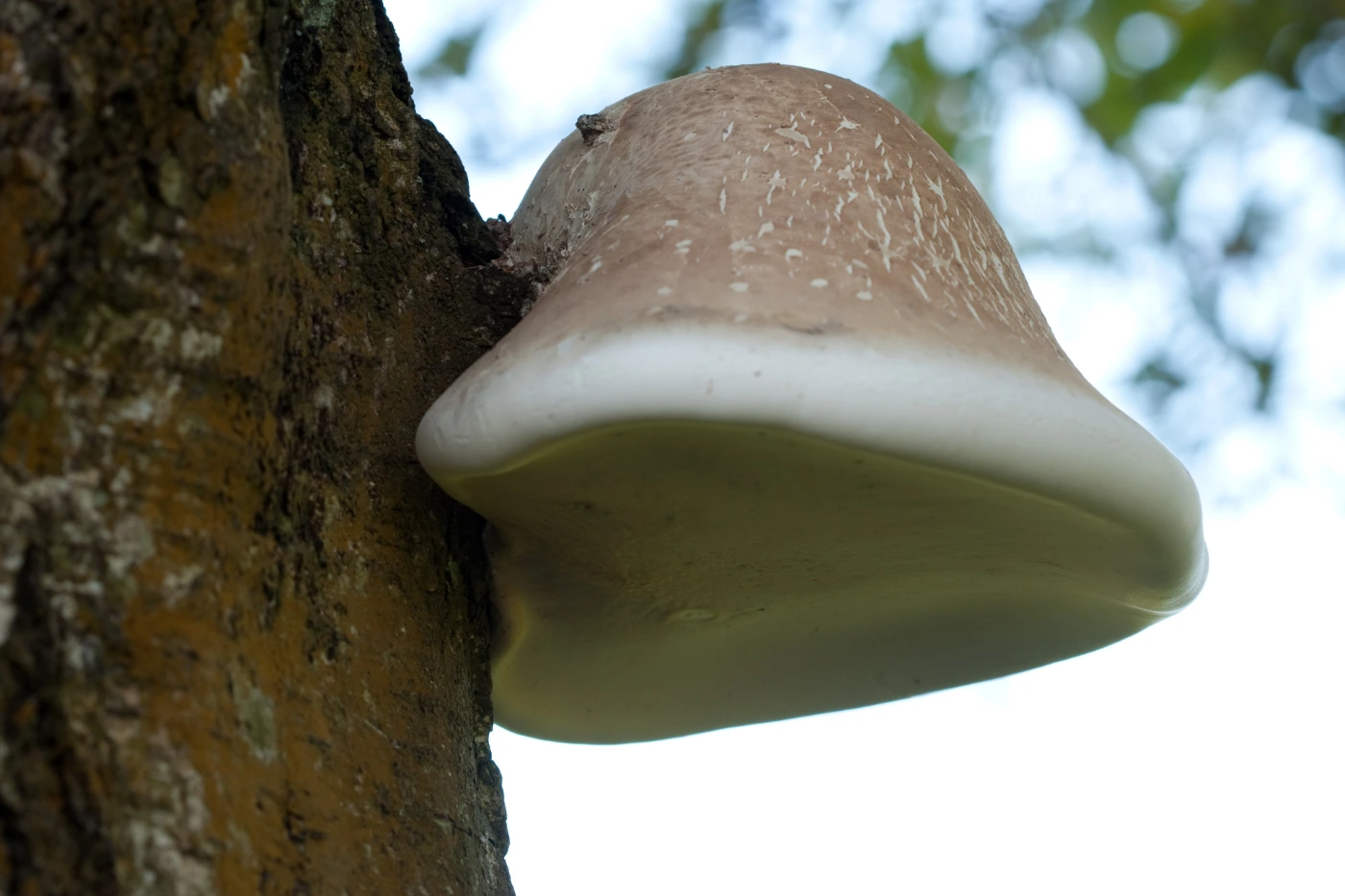
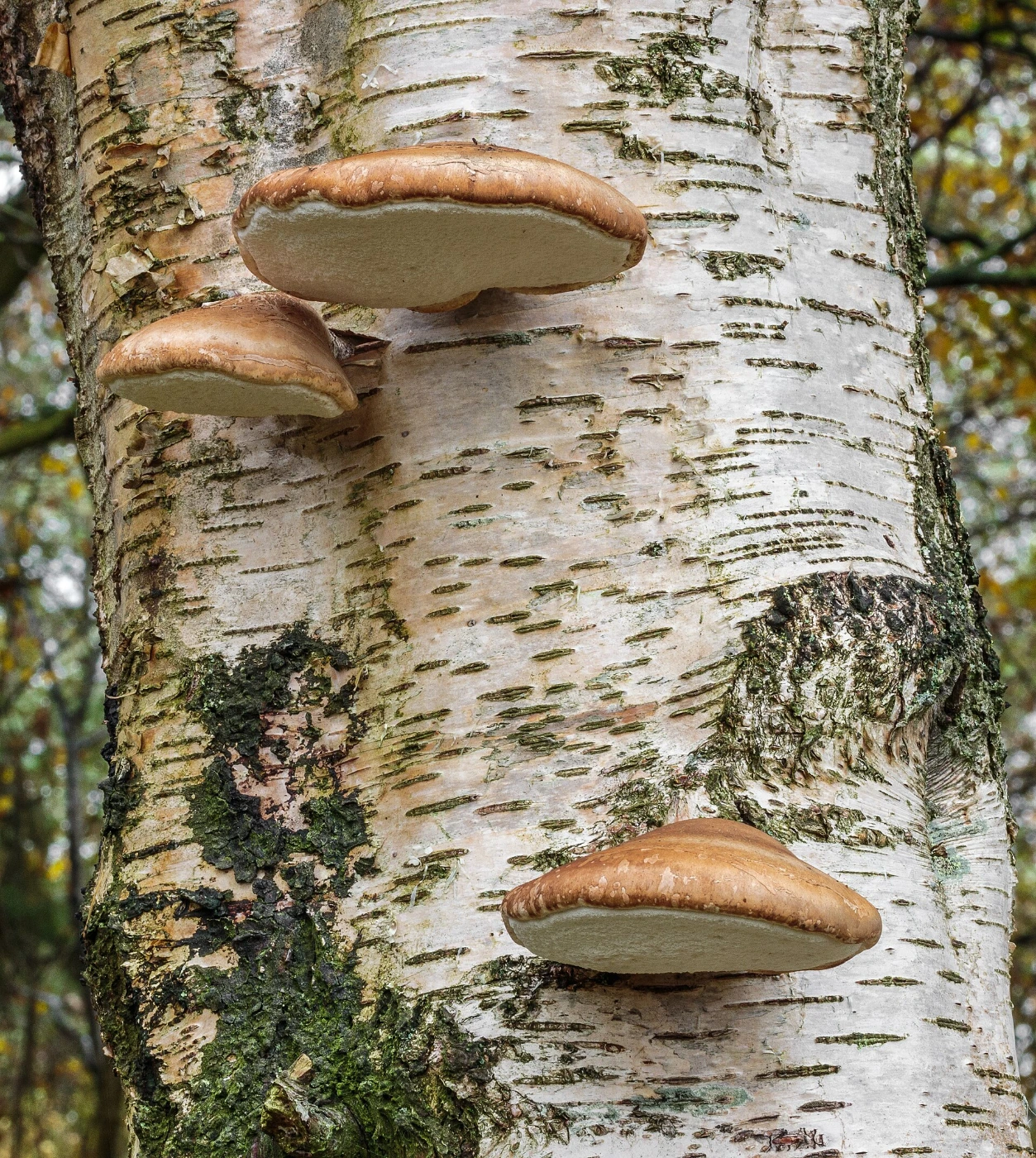
    Fomitopsis betulina, commonly known as the Birch Polypore, is one of the most characteristic fungi found on birch trees. It forms thick, pale bracket-like fruit bodies directly from trunks and branches and is strongly associated with dead, dying, or weakened birch.

    The species is easy to recognize once you learn its combination of features: a smooth pale upper surface, a rounded hoof- or cushion-like form, white pores underneath, soft corky flesh when young, and an almost exclusive relationship with birch.

    ⚠️ Important: This guide is for identification and education only. Never eat or use a wild fungus medicinally based solely on photographs, AI identification, or an online comparison.

    Quick Identification

    Feature Fomitopsis betulina
    Scientific name Fomitopsis betulina
    Common name Birch Polypore
    Former name Piptoporus betulinus
    Growth form Bracket / polypore
    Cap color White, cream, gray-brown
    Cap surface Smooth, matte to slightly velvety
    Underside White to cream pores
    Pore size Very small
    Stem Usually absent
    Flesh White, corky, soft when young
    Host Almost exclusively birch
    Substrate Dead, dying, or weakened birch
    Season Mainly summer–autumn, often persists into winter
    Ecology Wood-decaying
    Rot type Brown rot
    Edibility Not generally eaten as a normal food mushroom
    Main look-alikes Fomes fomentarius, Trametes species, young Ganoderma, other pale polypores

    What Does Fomitopsis betulina Look Like?

    Birch Polypore usually forms a single thick bracket protruding from birch wood. Young fruit bodies are pale, rounded, and soft, while older specimens become flatter, browner, and tougher.

    The fungus lacks a true stem. Instead, the fruit body attaches directly to the bark or exposed wood.

    Cap

    The upper surface is white to cream when young and may later become pale gray, beige, or light brown.

    The cap is smooth and usually lacks the strong concentric zoning seen in species such as Turkey Tail.

    Cap Shape

    Young fruit bodies are often rounded and cushion-like. As they grow, they become more semicircular or hoof-like.

    The margin is usually thick and rounded rather than thin and sharp.

    Pore Surface

    The underside is covered with a white to cream pore layer. The pores are very small and may look almost smooth from a distance.

    Unlike gilled mushrooms, Birch Polypore produces spores through thousands of tiny tubes.

    Pore Color

    Fresh pore surfaces are usually white. Older specimens may become cream, dull beige, or slightly brownish.

    Dark bruising is not usually one of the main diagnostic features.

    Flesh

    The flesh is white and thick. Young specimens can be surprisingly soft and corky compared with many other bracket fungi.

    As the mushroom ages, the flesh becomes firmer and tougher.

    Texture

    A fresh Birch Polypore often has a dense foam-like or cork-like consistency. This is quite different from the woody hardness of old perennial conks.

    The texture changes significantly with age and drying.

    Stem

    There is usually no real stem. The fruit body attaches laterally to the birch trunk or branch.

    The attachment area may narrow slightly, but it does not form a conventional mushroom stalk.

    Spore Print

    The spore print is white. In practice, this is rarely necessary for field identification.

    Host tree and overall structure are much more useful.

    Where Does Fomitopsis betulina Grow?

    Birch Polypore is strongly associated with birch trees. This host preference is one of its most important identification clues.

    It most often appears on dead, dying, or severely weakened birches.

    Birch Association

    Species of Betula are the classic hosts. The fungus is so closely linked to birch that finding the same-looking bracket on another tree should prompt reconsideration.

    This makes host identification unusually powerful in this case.

    Dead and Dying Trees

    The fungus commonly fruits from standing dead trunks, fallen birch logs, broken branches, and weakened trees.

    It is a wood-decaying species rather than a mycorrhizal mushroom.

    Can It Grow on Living Birch?

    Yes, especially on stressed or damaged trees. However, it is much more typical of dead or declining wood.

    The presence of fruit bodies often indicates substantial internal decay.

    What Kind of Rot Does It Cause?

    Birch Polypore causes brown rot. It breaks down cellulose and hemicellulose while leaving modified lignin behind.

    The affected wood becomes brown, brittle, and often cracks into block-like pieces.

    When Does Birch Polypore Grow?

    Fresh fruit bodies are most commonly produced from summer into autumn.

    However, old brackets can remain attached through winter and sometimes much longer.

    Fresh vs Old Fruit Bodies

    Fresh specimens are pale, smooth, and relatively soft. Old ones become darker, dry, hard, cracked, or weathered.

    This difference is useful because old Birch Polypores can look much less typical.

    Distribution

    Fomitopsis betulina is widespread throughout birch-rich regions of the Northern Hemisphere.

    It is common across Europe and occurs in northern Asia and North America where suitable birch species are present.

    Is Fomitopsis betulina Edible?

    Birch Polypore is not generally regarded as a conventional edible mushroom because its flesh is tough, bitter, and corky.

    Young fruit bodies are softer, but that does not make them a typical food mushroom.

    Traditional Uses

    Historically, the fungus has been used in various practical and traditional contexts. Its tough, absorbent texture made it useful for purposes other than food.

    Modern interest often focuses more on ethnomycology and fungal chemistry than on culinary use.

    Fomitopsis betulina Look-Alikes

    The strongest look-alikes are other pale bracket fungi growing on hardwoods.

    Host tree, texture, cap zoning, and whether the fruit body is annual or perennial help separate them.

    Fomes fomentarius — Tinder Fungus

    Identification

    Tinder Fungus forms hard perennial hoof-shaped conks with gray to dark gray zoned upper surfaces.

    The fruit body is woody and persists for years.

    Main Difference

    Birch Polypore is usually paler, smoother, softer, and more rounded when fresh.

    Tinder Fungus is much harder and develops pronounced perennial growth zones.

    Fomitopsis betulina vs Fomes fomentarius

    Feature Birch Polypore Tinder Fungus
    Host Mainly birch Many hardwoods
    Shape Rounded bracket Hard hoof
    Texture Corky when young Woody
    Upper surface Smooth, pale Gray, zoned
    Lifespan Annual Perennial
    Pores White Pale gray to brownish
    Main clue Soft pale bracket on birch Hard layered hoof conk

    This is one of the most common comparisons on birch trunks.

    Trametes Species

    Identification

    Many Trametes species form thin shelf-like brackets with zoned surfaces.

    They are usually much thinner than Birch Polypore.

    Main Difference

    Birch Polypore is thick, cushion-like, and relatively smooth. Trametes brackets are typically thinner and more layered.

    Turkey Tail in particular has strong multicolored concentric zones.

    Ganoderma Species

    Identification

    Some young Ganoderma fruit bodies can be pale before developing their typical brown or reddish lacquered appearance.

    Their structure and surface texture change significantly with age.

    Main Difference

    A mature glossy reddish-brown crust strongly suggests Ganoderma, not Birch Polypore.

    Birch Polypore stays matte to dull and lacks a lacquered finish.

    Other Pale Polypores

    Several other white or cream bracket fungi can occur on hardwoods. Their host preferences, pore structure, growth pattern, and internal texture may differ.

    When the fungus is on birch and has the classic thick pale cushion-like form, Fomitopsis betulina is much more likely.

    Birch Polypore vs Turkey Tail

    Turkey Tail is thin and leathery with clear concentric color zones. Birch Polypore is much thicker and more fleshy or corky.

    Their silhouettes are completely different once mature.

    Underside

    Both have pores, but Turkey Tail has a thin bracket with many small white pores.

    Birch Polypore has a much thicker fruit body and a more substantial white pore surface.

    How to Identify Fomitopsis betulina Step by Step

    Start with the host tree. If the fungus is growing on birch, the identification immediately becomes much easier.

    Then examine the thickness, cap surface, pore layer, and texture.

    Step 1: Confirm Birch

    Look for white or peeling birch bark, birch leaves, or the characteristic bark pattern.

    A very similar fungus on oak or beech deserves a second look.

    Step 2: Check the Growth Form

    Look for a thick bracket attached directly to the wood.

    It should not have a true stem.

    Step 3: Examine the Cap

    Fresh specimens should be pale and relatively smooth.

    Strong zoning, heavy scales, or lacquered surfaces point toward other polypores.

    Step 4: Check the Underside

    The underside should have very small pale pores.

    Gills, teeth, or a smooth underside would rule out Birch Polypore.

    Step 5: Test the Texture

    Fresh young fruit bodies are corky rather than rock-hard.

    A very hard layered hoof is more consistent with a perennial conk such as Fomes fomentarius.

    How to Photograph Birch Polypore for Identification

    Take one image showing the whole bracket attached to the birch trunk. Make sure the host bark is visible.

    Then photograph the underside closely enough to show the pores.

    A side view is useful because it shows thickness and attachment shape. If the fungus is damaged or cut, the internal white corky flesh can also help.

    Can AI Identify Fomitopsis betulina?

    AI can often recognize Birch Polypore well when the host tree and full fruit body are visible.

    The combination of pale bracket, smooth cap, white pores, and birch bark is visually distinctive.

    Problems arise when only a close-up of the cap is shown. Host context is one of the most valuable clues for this species.

    Common Identification Mistakes

    A common mistake is confusing old Birch Polypore with Tinder Fungus. Old specimens can darken and become much harder than fresh ones.

    Another mistake is ignoring the host tree. A similar bracket on non-birch wood may belong to another species.

    A third mistake is focusing only on cap color. Texture, thickness, pores, and host are more reliable.

    Interesting Facts About Fomitopsis betulina

    Birch Polypore has a long history of association with humans. One of the most famous examples is the prehistoric individual known as Ötzi the Iceman, whose equipment included pieces of birch polypore.

    The fungus has historically been used as a practical material because of its corky texture. It has been associated with sharpening, polishing, absorbent uses, and traditional fungal preparations.

    Its close association with birch also makes it a useful ecological indicator. Where mature or dying birch trees are common, Birch Polypore is often one of the most conspicuous bracket fungi.

    The species was long known as Piptoporus betulinus. Modern taxonomy places it in Fomitopsis, so older books and websites may use the former name.

    Frequently Asked Questions

    Can Birch Polypore grow on a healthy-looking birch?

    Yes. Internal decay may be present before obvious external decline appears. A fruit body can indicate that the fungus has already colonized substantial wood.

    Why are some specimens nearly white and others brown?

    Young fruit bodies are much paler. Weathering, age, drying, and exposure gradually darken the upper surface.

    Can several Birch Polypores grow on one trunk?

    Yes. Multiple brackets can occur along the same standing trunk or fallen log.

    Why do old brackets remain on the tree after the growing season?

    The dried fruit bodies are fairly durable. They can persist long after active spore production has ended.

    Can the fungus grow on fallen birch logs?

    Yes. Fallen birch is an extremely common substrate.

    Why are young specimens softer than old ones?

    Fresh tissue contains more moisture and has not yet hardened through drying and aging.

    Does Birch Polypore always have a perfect semicircular shape?

    No. Growth position, bark shape, competition, and damage can produce irregular forms.

    Can insects live inside the fruit body?

    Yes. Older brackets can be colonized by insects and other small organisms that use the fungus as food or shelter.

    Final Identification Notes

    Fomitopsis betulina is best recognized by the combination of a thick pale bracket, smooth upper surface, white pore layer, corky flesh, lack of a true stem, and very strong association with birch.

    The most important look-alike is Fomes fomentarius, but that species is usually much harder, darker, more strongly zoned, and perennial.

    The simplest rule is: thick pale annual bracket + white pores + birch = strong Birch Polypore candidate.
  • Leccinum scabrum: Brown Birch Bolete Identification and Look-Alikes

    Leccinum scabrum: Brown Birch Bolete Identification and Look-Alikes

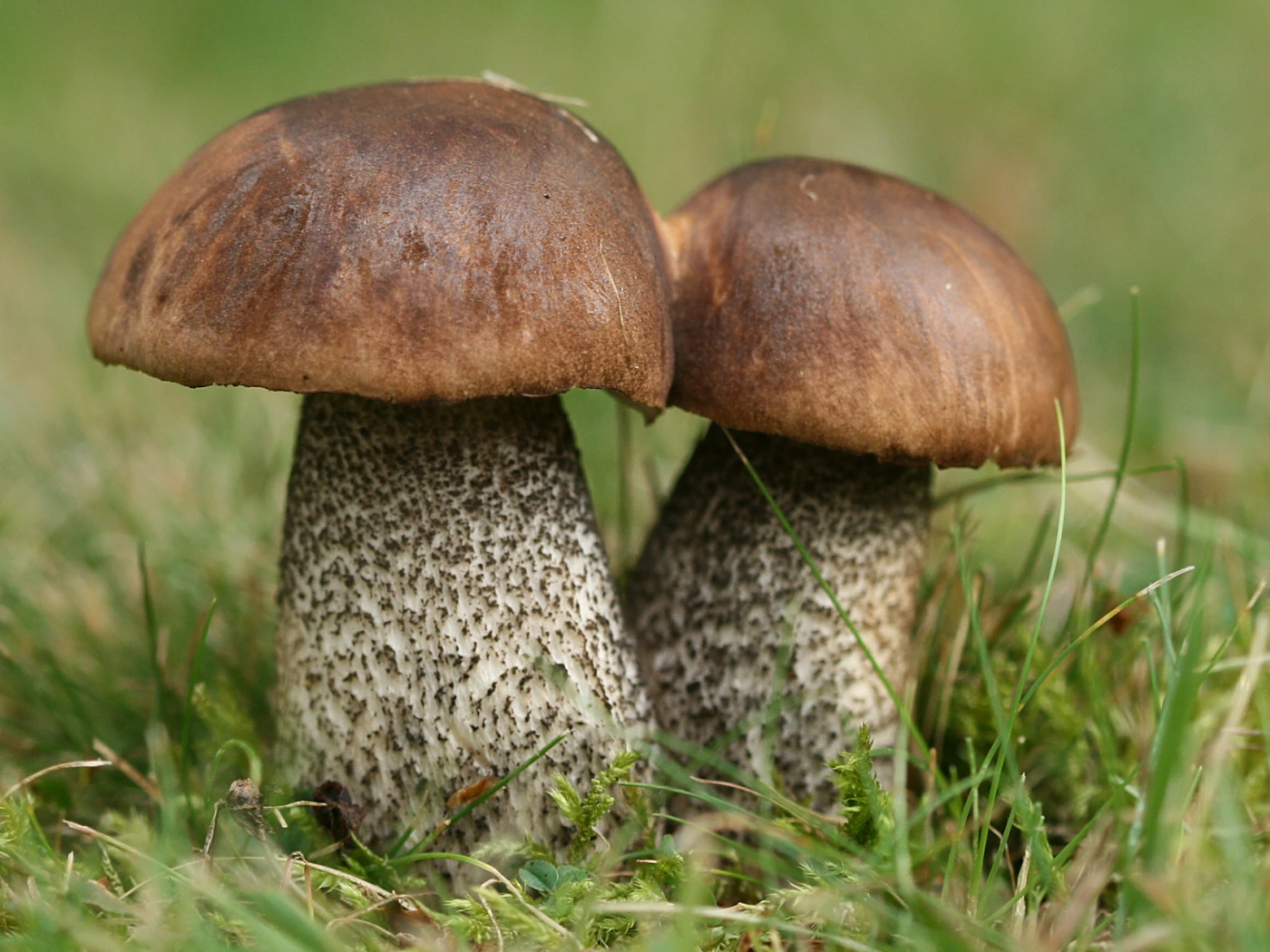
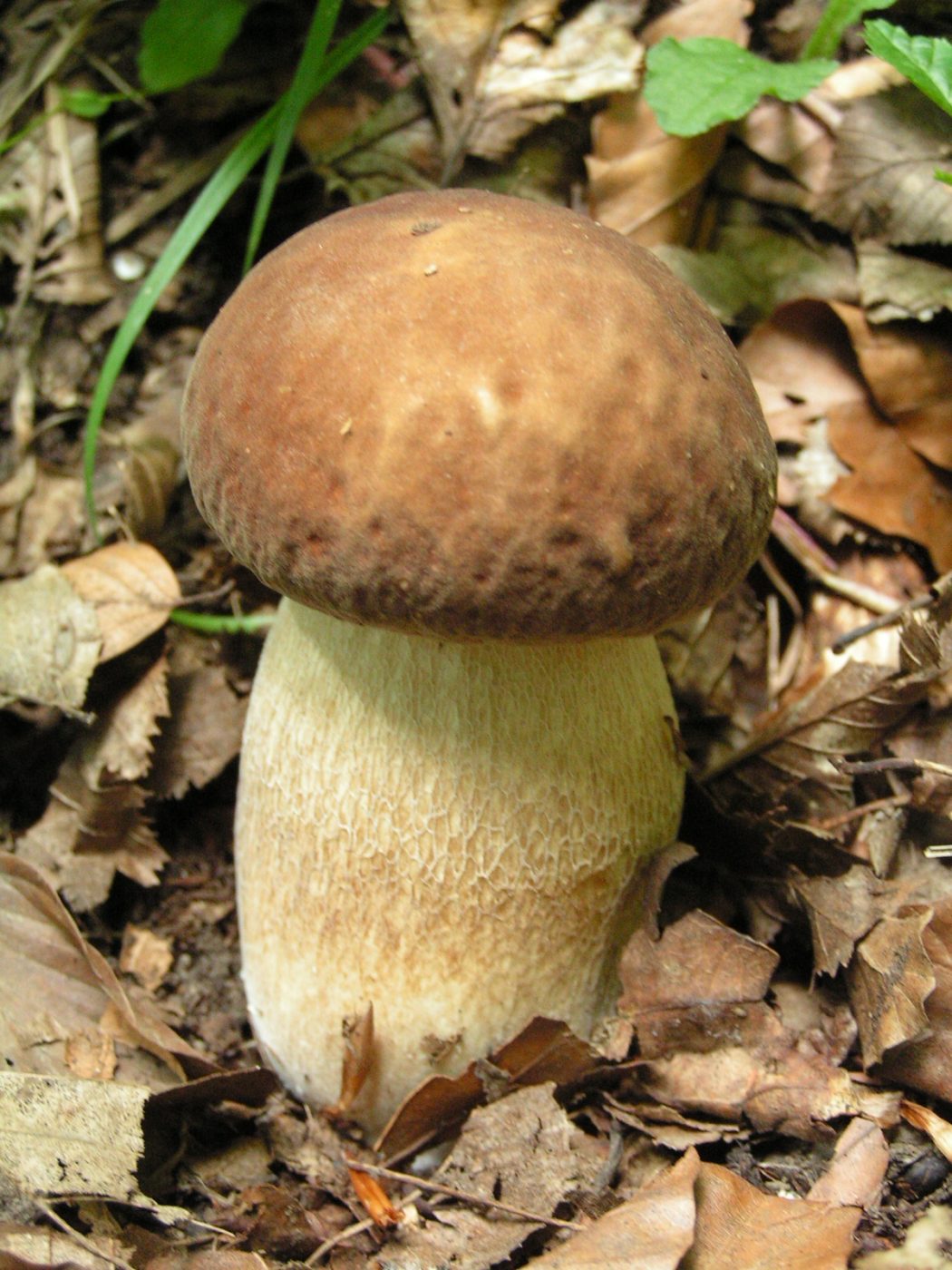
    Leccinum scabrum, commonly known as the Brown Birch Bolete or Birch Bolete, is one of the most characteristic mushrooms associated with birch trees. It has a brown cap, a pale pore surface, and a distinctive stem covered with dark rough scales known as scabers.

    The species is widespread across much of Europe and northern temperate regions and is strongly linked to birch through a mycorrhizal relationship. Because several other Leccinum species can look very similar, the best identification comes from combining cap color, stem scabers, flesh reactions, habitat, and host tree.

    ⚠️ Important: This guide is for identification and education only. Never eat a wild mushroom based solely on photographs, AI identification, or one visible feature.

    Quick Identification

    Feature Leccinum scabrum
    Scientific name Leccinum scabrum
    Common name Brown Birch Bolete / Birch Bolete
    Family Boletaceae
    Cap color Brown to gray-brown
    Cap surface Dry to slightly velvety
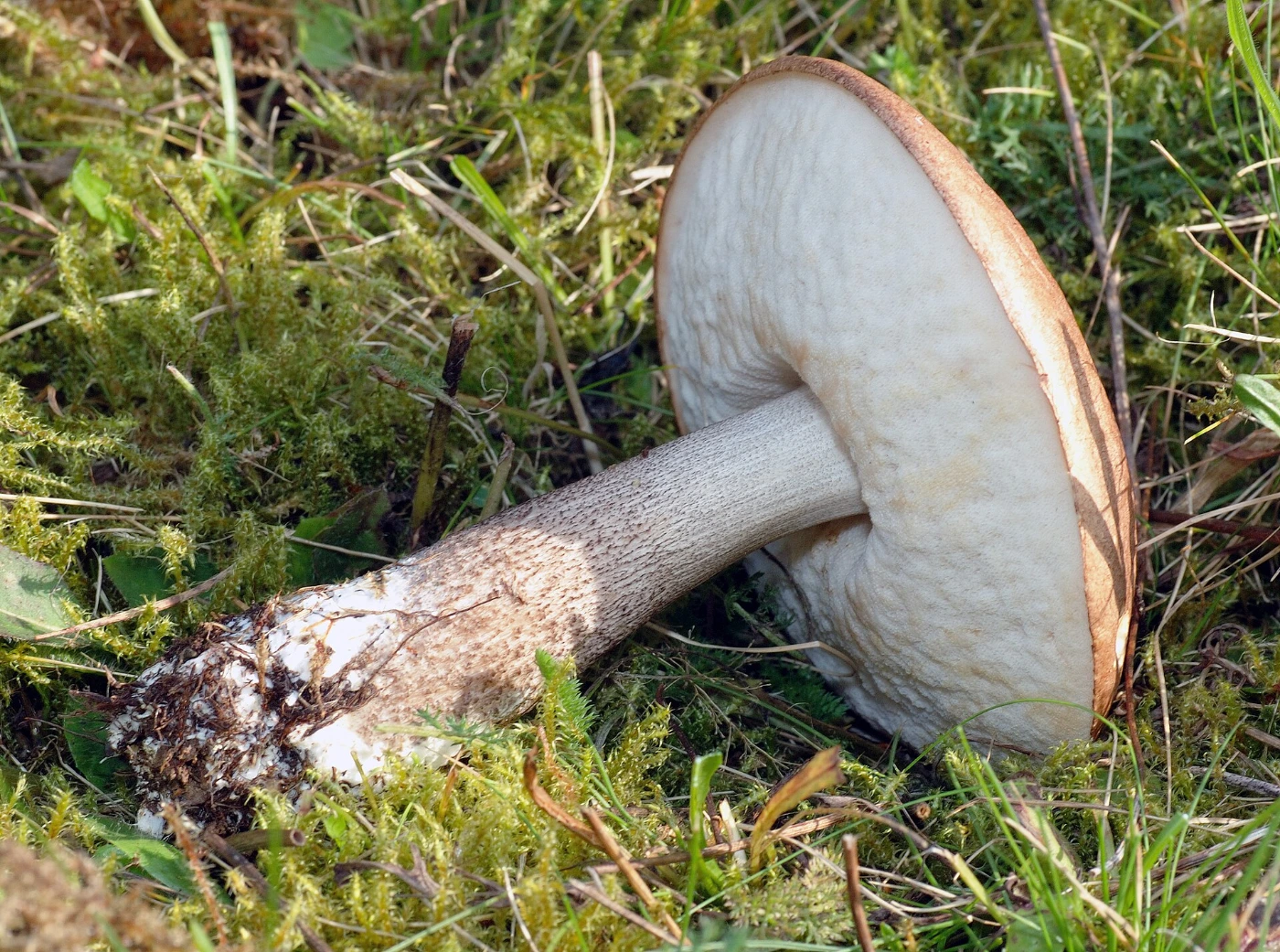
    Underside Pores, not gills
    Young pores White to pale cream
    Mature pores Grayish to dull olive
    Stem Pale with dark scabers
    Reticulation Absent
    Flesh White to pale, may darken slightly
    Strong blue bruising Usually absent
    Spore print Olive-brown
    Ecology Mycorrhizal
    Main host Birch
    Season Summer through autumn
    Edibility Commonly regarded as edible when correctly identified and properly cooked
    Main look-alikes Other Leccinum species, especially orange-capped and pale birch boletes

    What Does Leccinum scabrum Look Like?

    Brown Birch Bolete has the classic shape of a medium-sized bolete. The cap is usually brown, the underside is sponge-like, and the pale stem is covered with numerous darker projections.

    Those stem markings are the most important visible clue. They give the stem a rough, speckled appearance and are very different from the net-like reticulation seen in Porcini.

    Cap

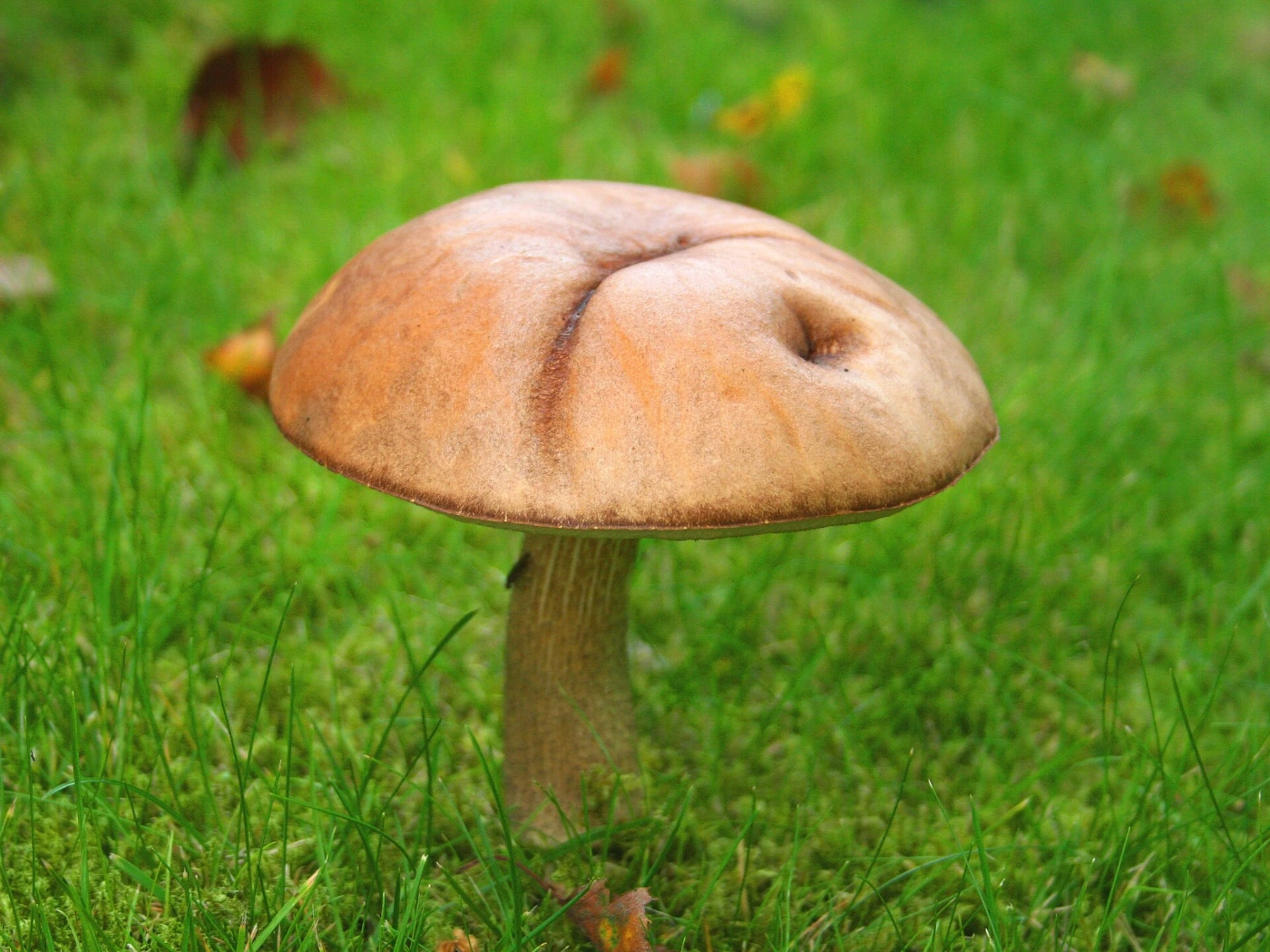
    The cap is usually medium brown, gray-brown, or warm chestnut-brown. Young mushrooms have rounded caps that gradually become broader and flatter with age.

    The surface is generally dry or slightly velvety rather than strongly slimy. In wet weather it may darken and appear smoother.

    Cap Color

    Color varies considerably. Some specimens are pale tan, while others are much darker and can approach deep brown.

    This variation means cap color alone is not enough. The stem and birch association are much more useful.

    Pores

    The underside consists of tubes ending in fine pores. Young pores are white or cream and gradually become grayish, beige, or dull olive as the mushroom matures.

    The pore surface may bruise slightly, but dramatic blue staining is not typical.

    Pore Color With Age

    Very young fruit bodies can have almost pure white pores. Older specimens often look much duller underneath.

    This age-related change can make the same species look surprisingly different in the field.

    Stem

    The stem is usually long, pale, and somewhat cylindrical or slightly swollen toward the base. It is covered with numerous dark scabers.

    These scabers can be gray, brown, or almost black and often become darker as the mushroom matures.

    Scabers

    Scabers are one of the defining features of the genus Leccinum. They look like tiny rough scales or dots embedded in the stem surface.

    Unlike reticulation, they do not form a continuous net. Their presence is one of the fastest ways to recognize a Leccinum-type bolete.

    Flesh

    The flesh is white or pale cream. It generally does not show strong rapid blue bruising.

    Some specimens may develop grayish, pinkish, or slightly brownish discoloration after cutting, depending on age and condition.

    Texture

    Young mushrooms are firm, while older fruit bodies become soft and spongy. The pore layer can become especially loose with age.

    Mature specimens are also frequently damaged by insects. Young intact fruit bodies are easier to identify.

    Smell

    The smell is mild and not particularly distinctive. It may simply be described as mushroom-like.

    Odor is not an important identification feature for this species. Stem structure and host tree are much more reliable.

    Spore Print

    The spore print is olive-brown. This is typical of many boletes.

    It helps confirm the broader bolete group but does little to separate Leccinum scabrum from close relatives.

    Where Does Leccinum scabrum Grow?

    Brown Birch Bolete is strongly associated with birch. It forms mycorrhiza with living birch roots and therefore grows from soil rather than directly from dead wood.

    It can occur in natural birch woodland, mixed forest, parks, roadsides, and gardens where suitable birch trees are present.

    Birch Association

    The birch relationship is one of the strongest identification clues. A brown Leccinum with dark stem scabers found beneath birch is a strong candidate for L. scabrum.

    However, other birch-associated Leccinum species also exist. Host tree narrows the possibilities but does not always prove the exact species.

    When Does Brown Birch Bolete Grow?

    The main season is summer through autumn. Fruiting often increases after periods of rain.

    In suitable climates, mushrooms may appear in repeated flushes during the season. The same birch stand can produce them year after year.

    Distribution

    Leccinum scabrum is widespread across Europe and northern temperate regions. It is particularly common wherever birch is abundant.

    Regional taxonomy can be complicated, especially because closely related Leccinum species may overlap. Exact identification sometimes requires more than field appearance.

    Is Leccinum scabrum Edible?

    Brown Birch Bolete is commonly regarded as edible when correctly identified and properly cooked. Young firm specimens are usually preferred.

    As with other Leccinum, undercooked or poorly identified specimens may cause gastrointestinal problems. Proper preparation and correct identification are important.

    Why Proper Cooking Matters

    Some Leccinum species have been associated with gastrointestinal upset when eaten raw or insufficiently cooked. This is one reason they should not be treated casually.

    Wild mushroom edibility should always be considered only after the identification is secure.

    Leccinum scabrum Look-Alikes

    The main look-alikes are other Leccinum species. Many share the same pale stem with dark scabers and similar pore structure.

    The most useful differences involve cap color, flesh staining, habitat moisture, and exact host tree.

    Leccinum versipelle Group — Orange Birch Boletes

    Identification

    Orange Birch Boletes have orange to orange-brown caps and pale stems with dark scabers. They are also strongly associated with birch.

    Their flesh may darken more strongly after cutting than typical L. scabrum.

    Main Difference

    Cap color is the most obvious distinction. Brown Birch Bolete has a brown to gray-brown cap, while L. versipelle-type mushrooms are clearly orange or reddish-orange.

    Because faded orange caps can become duller, stem and flesh reactions should also be checked.

    Leccinum holopus — Ghost Bolete

    Identification

    Leccinum holopus is much paler, with whitish to pale gray caps and the same characteristic scabrous stem.

    It is especially associated with wet birch habitats, boggy ground, and mossy areas.

    Main Difference

    The pale almost ghostly cap and wetter habitat are the best clues. Brown Birch Bolete is usually much darker.

    Leccinum variicolor Group

    Identification

    Some Leccinum species associated with birch can have mottled or unevenly colored caps and more pronounced flesh discoloration.

    These taxa may be difficult to separate reliably in the field.

    Main Difference

    A strongly patchy cap or more complex staining pattern may point away from typical L. scabrum. Regional knowledge becomes important.

    Porcini — Boletus edulis Group

    Identification

    Porcini can also have brown caps and pale pores, but the stem is completely different. Instead of dark scabers, it usually shows pale reticulation.

    The stem is also often thicker and more club-shaped.

    Main Difference

    Scabers vs reticulation is the fastest comparison. Leccinum scabrum has dark rough dots, while Porcini has a pale net-like pattern.

    Bay Bolete — Imleria badia

    Identification

    Bay Bolete has a chestnut-brown cap and yellow pores that often bruise blue. Its stem is relatively smooth and lacks the dark scabers typical of Leccinum.

    It is more commonly associated with coniferous and mixed woodland.

    Main Difference

    Blue-bruising yellow pores and a smooth brownish stem point toward Bay Bolete. Dark scabers and birch habitat favor Brown Birch Bolete.

    Leccinum scabrum vs Orange Birch Bolete

    Feature Brown Birch Bolete Orange Birch Bolete
    Cap Brown to gray-brown Orange to orange-brown
    Stem Pale with dark scabers Pale with dark scabers
    Pores Pale to grayish Pale to grayish
    Flesh reaction Usually mild Often stronger darkening
    Main host Birch Birch
    Best clue Brown cap Orange cap

    These two can occur in very similar habitats. Cap color and flesh reaction are therefore especially useful.

    Leccinum scabrum vs Porcini

    Feature Leccinum scabrum Porcini
    Cap Brown to gray-brown Brown to chestnut
    Stem surface Dark scabers Pale reticulation
    Stem shape Long, relatively slender Often thick and bulbous
    Pores Pale → grayish White → yellow → olive
    Blue bruising Usually absent Usually absent
    Main host Birch Several tree species

    The stem alone often solves this comparison.

    How to Identify Leccinum scabrum Step by Step

    Start by confirming that the mushroom has pores rather than gills. Then look for a brown cap and a pale stem covered with dark scabers.

    Finally, confirm that birch is present and check for the absence of strong blue staining.

    Step 1: Check the Underside

    The mushroom should have a sponge-like pore surface. Young pores are pale and later become duller.

    True gills would immediately rule out Leccinum.

    Step 2: Examine the Stem

    Look for many dark rough dots or scales. These should be clearly separated rather than forming a net.

    This is the strongest structural clue.

    Step 3: Check the Cap

    A brown to gray-brown cap supports L. scabrum. A bright orange or nearly white cap suggests another birch bolete.

    Use cap color as a secondary feature.

    Step 4: Cut the Flesh

    Check whether the flesh remains mostly pale or develops only mild discoloration. Strong blackening or dramatic color reactions may suggest another Leccinum species.

    Reaction strength can vary, so this should not be used alone.

    Step 5: Confirm Birch

    Look carefully for birch trunks, leaves, or roots nearby. In mixed woodland, check whether other trees are also present.

    A Leccinum with no birch anywhere nearby deserves reconsideration.

    How to Photograph Brown Birch Bolete for Identification

    Take one photograph of the whole mushroom in habitat, ideally with birch leaves or trunks visible. This helps document the host relationship.

    Then photograph the stem closely so the scabers are clearly visible. A separate underside image should show the pores.

    A cut specimen can also help record flesh discoloration. Several mushrooms of different ages are even more useful.

    Can AI Identify Leccinum scabrum?

    AI can often recognize the general Leccinum type because the dark scabers are visually distinctive. Distinguishing L. scabrum from close birch-associated relatives is harder.

    Accuracy improves when the cap color, stem, pores, flesh reaction, and birch habitat are all shown. A cap-only photograph is much less reliable.

    For difficult specimens, an identification such as “brown birch-associated Leccinum” may be more accurate than forcing an exact species name.

    Common Identification Mistakes

    One common mistake is identifying every scabrous-stem bolete beneath birch as Leccinum scabrum. Several related species share the same basic structure.

    Another mistake is using cap color without considering flesh reactions. Orange, pale, and mottled birch boletes can overlap with weathered brown specimens.

    A third mistake is confusing scabers with reticulation. Learning the difference between rough dots and a true net pattern is essential.

    Interesting Facts About Leccinum scabrum

    The common name Brown Birch Bolete reflects one of the clearest tree-mushroom relationships in European woodland. The species is so strongly associated with birch that the host tree becomes part of the practical identification.

    The genus name Leccinum includes many boletes whose stems are covered with scabers. These rough projections are one of the most recognizable structural features among boletes.

    Birch itself is a pioneer tree that often colonizes disturbed or nutrient-poor ground. Mycorrhizal fungi such as Leccinum help birch obtain minerals and water from the soil, while receiving sugars from the tree.

    The visible mushroom is only the reproductive structure. Most of the fungus remains underground around the birch roots as a network of mycelium.

    Frequently Asked Questions

    Why do the stem scabers become darker with age?

    Pigments and surface tissues change as the mushroom matures. Older fruit bodies often have much darker and more obvious scabers than very young ones.

    Can the cap become almost gray instead of brown?

    Yes. Weather, age, and hydration can shift the cap from warm brown to dull gray-brown.

    Can Brown Birch Bolete grow in lawns?

    Yes, if birch roots extend beneath the grass. Parks and gardens with mature birch can support the species.

    Why do some specimens have much longer stems?

    Soil depth, moss thickness, vegetation, and moisture can all affect stem proportions. Mushrooms pushing through deep moss may develop noticeably elongated stems.

    Can Brown Birch Bolete grow several meters from a birch trunk?

    Yes. Birch roots and fungal mycelium extend well beyond the trunk, so fruit bodies can appear at some distance.

    Do all Leccinum species grow with birch?

    No. Different Leccinum species associate with birch, aspen, poplar, oak, and other trees depending on the species.

    Why is the exact species sometimes difficult to confirm?

    Many Leccinum species overlap in cap color and stem appearance. Flesh reactions, ecology, geography, and sometimes microscopic traits are needed for confident separation.

    Can old specimens lose the scabers?

    They can become less crisp through rain, insects, and handling, but some rough stem markings are usually still visible.

    Final Identification Notes

    Leccinum scabrum is best recognized by the combination of a brown to gray-brown cap, pale pores, a white to pale stem covered with dark scabers, little strong bruising, and a close association with birch.

    The main challenge is separating it from other birch-associated Leccinum species. Orange caps, very pale caps, unusual mottling, or stronger flesh discoloration can all point toward related taxa.

    The simplest rule is: find the scabers first, confirm birch second, and use cap color and flesh reaction to narrow the species.

  • Lactarius indigo: Indigo Milk Cap Identification and Look-Alikes

    Lactarius indigo: Indigo Milk Cap Identification and Look-Alikes

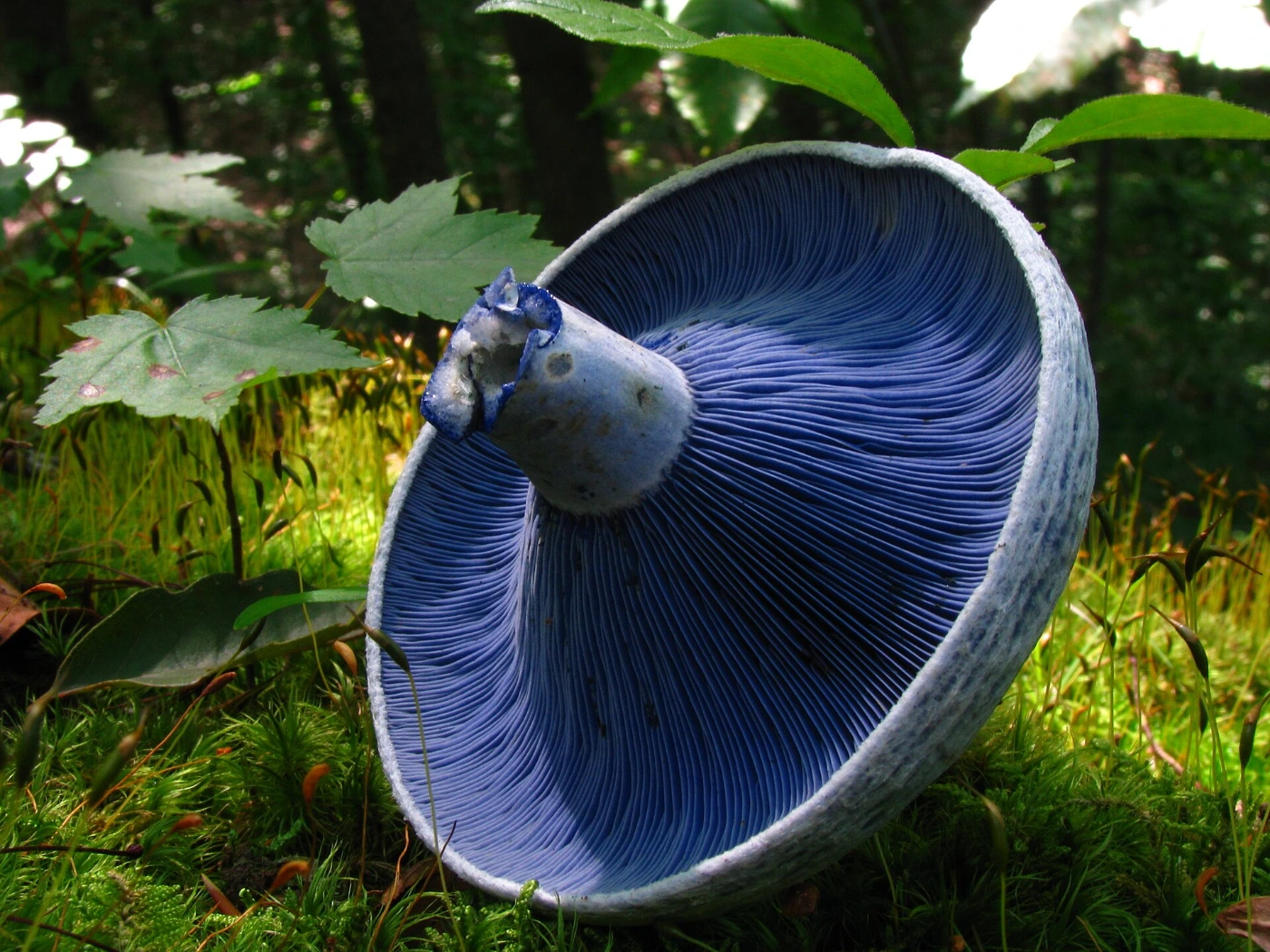
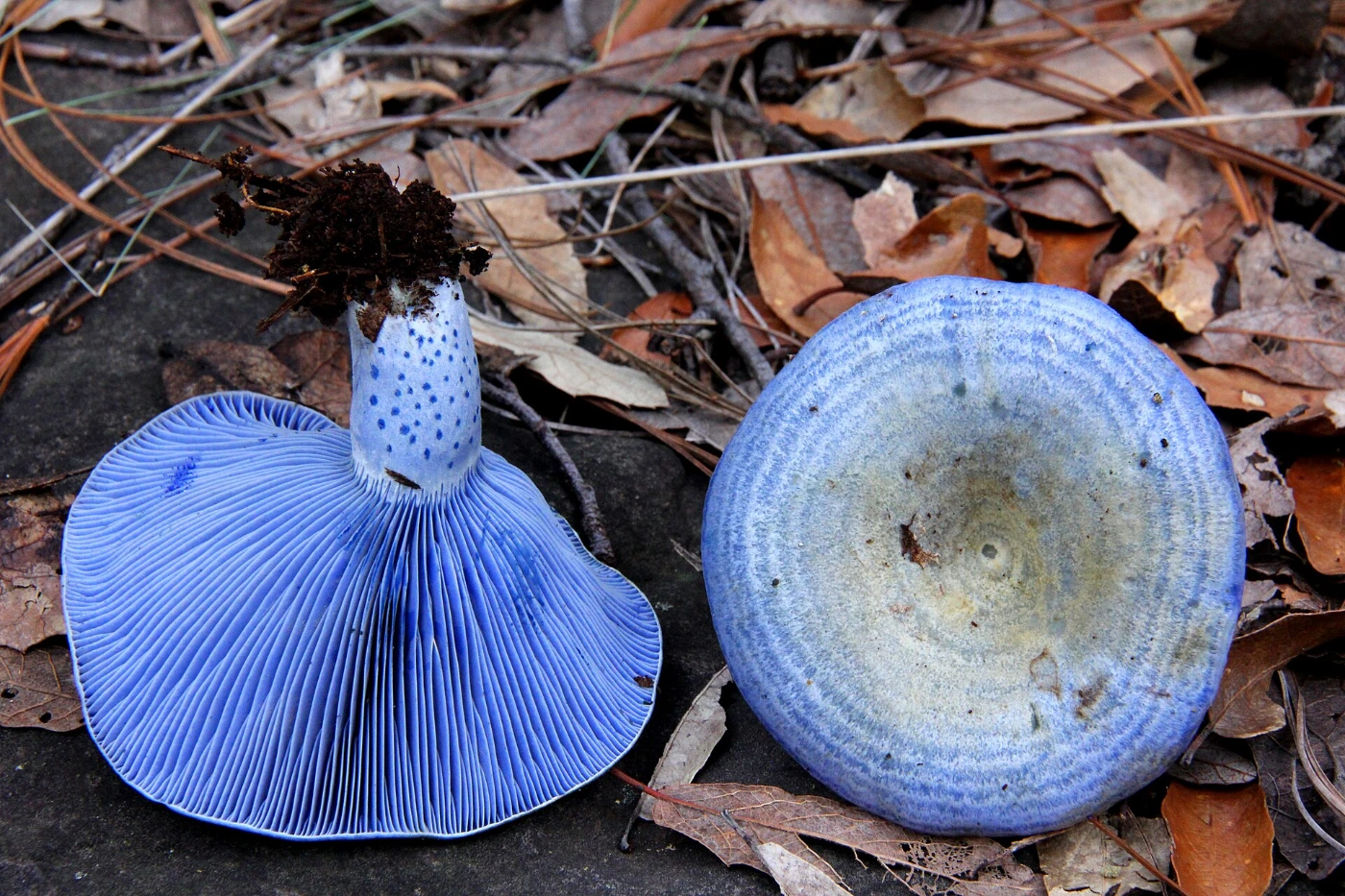
    Lactarius indigo, commonly known as the Indigo Milk Cap, is one of the most distinctive mushrooms in the world. Its deep blue cap, blue gills, and vivid blue latex make it look almost unreal compared with the browns, whites, and reds of most woodland fungi.

    Despite its unusual appearance, correct identification still requires more than color alone. The mushroom belongs to the milkcap group, so the presence of latex, the structure of the gills, the way damaged tissue changes color, and the surrounding trees all help confirm the identification.

    ⚠️ Important: This guide is for identification and education only. Never eat a wild mushroom based solely on photographs, AI identification, or a single visible feature.

    Quick Identification

    Feature Lactarius indigo
    Scientific name Lactarius indigo
    Common name Indigo Milk Cap
    Family Russulaceae
    Cap color Deep blue to blue-gray
    Cap pattern Often concentrically zoned
    Gills Blue, decurrent
    Latex Bright blue
    Bruising Damaged areas often turn greenish
    Stem Blue to blue-gray
    Flesh Pale blue to blue
    Spore print Cream to pale yellowish
    Ecology Mycorrhizal
    Main hosts Oak, pine and other trees depending on region
    Season Summer through autumn
    Distribution Mainly North America, also parts of Central America and Asia
    Edibility Generally considered edible when correctly identified
    Main look-alikes Other blue or greenish milkcaps, faded milkcaps, unrelated blue mushrooms

    What Does Lactarius indigo Look Like?

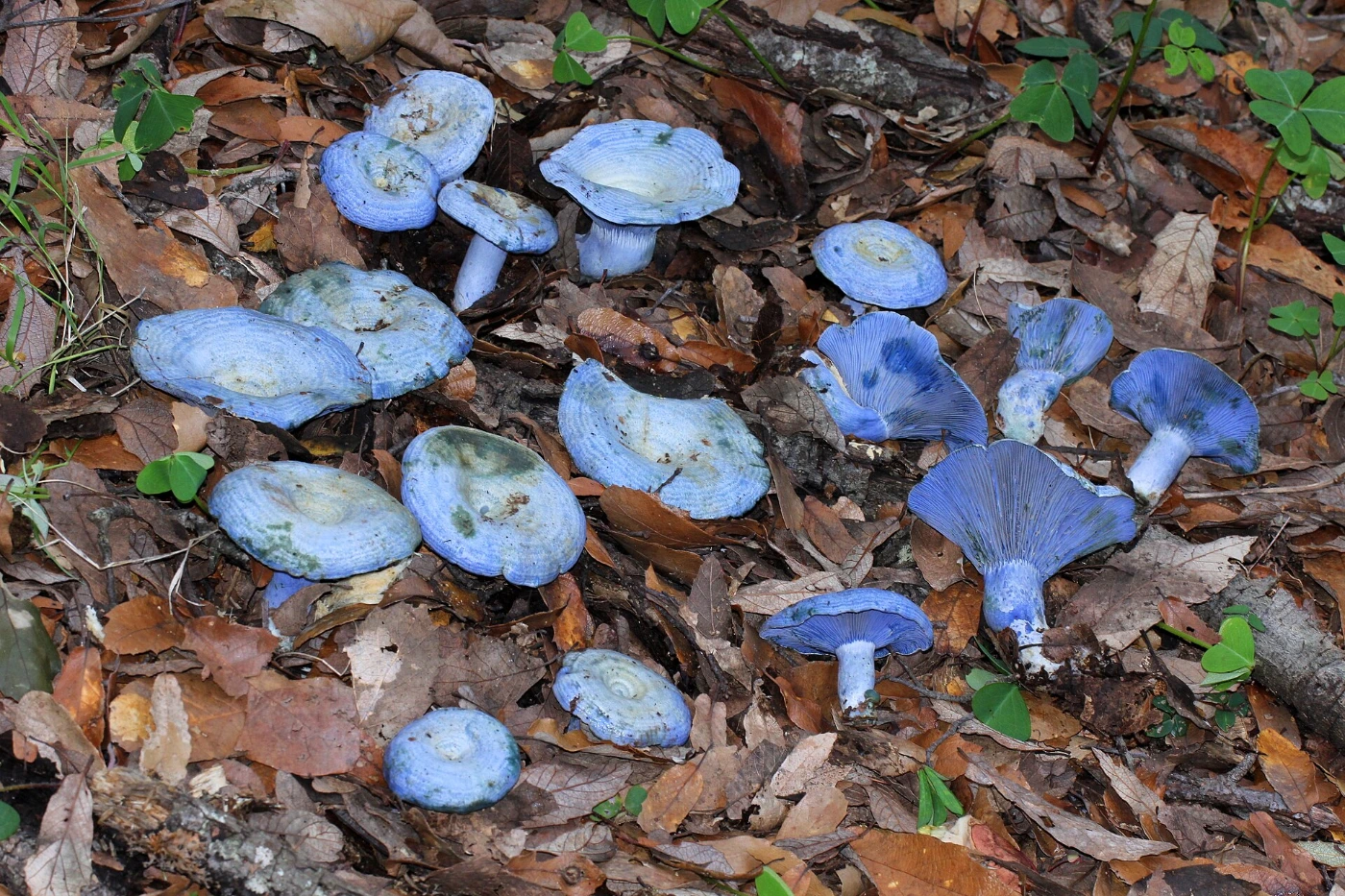
    The Indigo Milk Cap is usually unmistakable when fresh. The cap is blue to blue-gray, the gills are also blue, and damaged tissue releases blue latex.

    As the mushroom ages, some of that intense color can fade. Old specimens may become dull gray-blue or develop greenish areas where the tissue has been damaged.

    Cap

    The cap usually begins convex and later becomes flat or slightly depressed in the center. Mature specimens may develop a broad funnel-like shape.

    Color ranges from rich indigo and cobalt-blue to paler blue-gray. Concentric rings or zones are often visible across the cap surface.

    Cap Surface

    The surface is smooth and may feel slightly sticky or moist in wet weather. Young mushrooms can have especially vivid blue coloration.

    With age and exposure, the cap may fade substantially. Greenish staining often appears where insects, rain, or handling have damaged the tissue.

    Gills

    The gills are attached to the stem and typically run slightly downward, a condition known as decurrent gills. Their color ranges from blue to bluish-gray.

    When cut or broken, the gills release the same blue latex found elsewhere in the mushroom. This is one of the strongest identification clues.

    Gill Bruising

    Damaged gills may gradually shift from blue toward greenish tones. The reaction becomes especially noticeable on older fruit bodies.

    This green staining is not a sign of decay by itself. It is part of the normal chemical response of the mushroom’s pigments.

    Latex

    The latex is the defining feature of Lactarius indigo. Fresh cuts typically release a striking blue liquid. This immediately separates the mushroom from many unrelated blue species that do not produce milk at all.

    Does the Latex Change Color?

    The latex may darken or become greener as it oxidizes and dries. The surrounding tissue can also develop greenish staining. Because latex production can be reduced in old or dry mushrooms, young fresh specimens show this character best.

    Stem

    The stem is usually blue to blue-gray and fairly solid when young. It may be slightly paler than the cap. Its surface can show small pits or uneven color zones, especially in mature specimens.

    Stem Shape

    The stem is usually cylindrical or slightly tapered. It lacks a ring and does not have a volva. This plain structure fits the milkcap group and helps separate the mushroom from ringed or volva-bearing blue fungi.

    Flesh

    The flesh is pale blue to bluish-white and fairly firm in young mushrooms. Like other members of the Russulaceae, it has a somewhat brittle texture. Cut tissue may slowly turn greenish. This color change is especially useful when paired with the blue latex.

    Smell

    The smell is usually mild and not especially diagnostic. It may be described as faintly mushroom-like or earthy. Odor should not be used as a primary identification feature here. The color and latex are far more informative.

    Spore Print

    The spore print is pale cream to yellowish-cream. This may seem surprising given the intense blue fruit body. Spore print color helps confirm that the mushroom belongs in the broader milkcap/russula group. It is not blue.

    Where Does Lactarius indigo Grow?

    Lactarius indigo is mycorrhizal, forming symbiotic relationships with living trees. It grows from soil rather than directly from decaying wood.

    Depending on region, it can be associated with oak, pine, and other trees. Mixed woodland is often productive habitat.

    Oak and Pine Associations

    In parts of North America, Indigo Milk Cap is often found under oaks or pines. The exact host relationship varies regionally. This makes tree identification a useful supporting clue. A blue milkcap growing from soil in suitable oak or pine woodland fits the ecology well.

    When Does Lactarius indigo Grow?

    The main fruiting season is summer through autumn, especially after periods of warm rain. Fruiting can continue for several weeks if conditions stay moist. Like many mycorrhizal mushrooms, visible fruit bodies may appear irregularly from year to year. The underground mycelium can remain active even when no mushrooms are present.

    Distribution

    Lactarius indigo is best known from North America. It is especially associated with eastern and southern regions but has a wider distribution. The species or closely related blue milkcaps have also been reported from parts of Central America and Asia. It is not a typical widespread European woodland species.

    Geographic Caution

    Blue milkcaps outside the best-known range of Lactarius indigo should not automatically be assigned this species name. Regional taxonomy can include related taxa.

    Geography should therefore be considered together with morphology and host trees.

    Is Lactarius indigo Edible?

    Indigo Milk Cap is generally considered edible when correctly identified. Its unusual color does not indicate toxicity.

    The texture can be somewhat firm or brittle, and culinary quality is described differently by different collectors. As with other wild mushrooms, only fresh, correctly identified specimens should ever be considered for food.

    Color After Cooking

    The striking blue color may fade, darken, or shift during cooking. This is normal and reflects changes in the pigments.

    Appearance after heating should not be used as an identification test.

    Lactarius indigo Look-Alikes

    Very few mushrooms share the exact combination of blue coloration and blue latex. This makes Lactarius indigo easier to recognize than many brown or white milkcaps.

    Still, faded specimens or regional relatives can cause confusion.

    Other Blue Milkcaps

    Identification

    Some related milkcap species can show blue, violet, or greenish-blue colors. Depending on geography, they may resemble Lactarius indigo closely.

    Latex color, host trees, spore features, and regional range become important in difficult cases.

    Main Difference

    A true Lactarius indigo-type mushroom should have strongly blue fruiting tissue and clearly blue latex when fresh.

    If the latex is white, clear, or another color, another species is more likely.

    Faded Lactarius indigo

    Identification

    Old specimens can lose much of their vivid blue color and become grayish, greenish, or dull blue-green. This can make them look less distinctive.

    The gills, remaining blue tones, latex, and habitat then become much more important.

    Main Difference

    Look for residual blue in protected areas such as the lower gills or inner flesh. Fresh cuts may still reveal blue latex even when the cap has faded.

    Lactarius deliciosus Group

    Identification

    Orange milkcaps such as Lactarius deliciosus also produce colored latex and may develop green stains after damage. Their orange caps and orange latex, however, are very different from the blue coloration of Lactarius indigo.

    Both groups demonstrate how useful latex color can be in milkcap identification.

    Main Difference

    Lactarius indigo produces blue latex, while orange milkcaps produce orange to carrot-colored latex.

    The overall cap and gill colors are also completely different in fresh specimens.

    Blue-Green Stropharia and Other Blue Mushrooms

    Identification

    Some unrelated mushrooms can have blue or blue-green caps. Certain Stropharia species are good examples.

    These mushrooms have true gills but do not produce blue latex and often have different stem structures and spore colors.

    Main Difference

    Breaking the gills provides a quick distinction. A true Indigo Milk Cap should release blue milk.

    Lactarius indigo vs Orange Milkcaps

    Feature Lactarius indigo Orange Milkcaps
    Cap Blue to blue-gray Orange to carrot-orange
    Gills Blue Orange
    Latex Blue Orange
    Bruising Often greenish Often greenish
    Habitat Oak/pine depending on region Often conifer-associated
    Best clue Blue latex Orange latex

    The green bruising can look surprisingly similar in both groups. The original latex color is what separates them quickly.

    How to Identify Lactarius indigo Step by Step

    Start by confirming that the mushroom has true gills rather than pores or false gills. Then damage a small section of the gills and observe the latex.

    A blue cap plus blue gills plus blue latex is a remarkably strong combination. Finally, check for greenish bruising and suitable woodland habitat.

    Step 1: Check the Overall Color

    Look for a predominantly blue fruit body. The cap, gills, and stem should all show some degree of blue coloration.

    A mushroom with only a blue cap but white or brown gills is less likely to be Lactarius indigo.

    Step 2: Cut the Gills

    Fresh gills should release blue latex. This is the single most useful diagnostic feature.

    If no latex appears, check a fresher specimen before ruling the species out. Old or dry mushrooms may produce less liquid.

    Step 3: Watch for Green Staining

    Damaged areas often become greenish over time. This can occur on the cap, gills, stem, or cut flesh.

    The blue-to-green transition strongly supports the identification when the other features also match.

    Step 4: Check the Stem

    The stem should also carry blue or blue-gray tones and lack a ring or volva.

    This helps keep the identification within the milkcap group rather than unrelated blue mushrooms.

    Step 5: Check the Trees

    Look for oak, pine, or other compatible host trees depending on region. The mushroom should be growing from soil in a mycorrhizal setting.

    Direct growth from dead wood would point toward another species.

    How to Photograph Lactarius indigo for Identification

    Take one photograph showing the complete mushroom in natural light. Blue colors can shift dramatically under warm artificial lighting, so daylight is especially useful.

    Then photograph the gills and make a small cut so the latex is visible. A second image several minutes later can document the greenish color change.

    A habitat photo showing nearby oak or pine trees adds valuable ecological context. If several mushrooms are present, photograph both young and mature specimens.

    Can AI Identify Lactarius indigo?

    AI can often recognize a fresh Indigo Milk Cap quite well because the color pattern is so unusual. Blue cap, blue gills, and blue latex provide several independent visual signals.

    The main difficulty comes from old faded specimens or related regional milkcaps. A cap-only photograph may also lead to confusion with unrelated blue mushrooms.

    Including the latex reaction and host trees greatly improves identification. Dynamic features such as bruising are especially valuable because they are difficult to infer from a single image.

    Common Identification Mistakes

    One common mistake is assuming every blue mushroom is Lactarius indigo. Many unrelated species can have blue or blue-green caps.

    Another mistake is ignoring latex. In this species, blue milk is far more diagnostic than the cap color alone.

    A third mistake is calling every blue milkcap worldwide Lactarius indigo. Regional relatives and taxonomy should always be considered.

    Interesting Facts About Lactarius indigo

    The intense blue color of Lactarius indigo is unusual among mushrooms and comes from specialized pigments in the fruit body. These pigments can change chemically after injury, which helps explain the transition from blue to greenish tones.

    The species is also a striking example of how mushroom color does not predict spore color. Despite its deep blue appearance, the spore print is pale cream rather than blue.

    Like other milkcaps, Lactarius indigo belongs to the same broader family as brittlegills. Their flesh contains unusual rounded cells that contribute to the brittle texture of the mushroom.

    The mushroom’s vivid appearance has also made it popular in nature photography. Few edible wild mushrooms are as visually distinctive in fresh condition.

    Frequently Asked Questions

    Why does the blue color become green after handling?

    Damage triggers oxidation and chemical changes in the pigments. As the reaction develops, blue areas can shift toward green or blue-green.

    Can the mushroom lose almost all of its blue color with age?

    Yes. Old fruit bodies can become gray, greenish, or dull blue. Protected areas such as the lower gills may retain color longer.

    Does the blue latex stain fingers?

    It can temporarily discolor skin or surfaces, especially when several fresh mushrooms are handled. The intensity depends on how much latex is produced.

    Can rain make the cap look much paler?

    Yes. Water, age, and sunlight can all reduce the apparent intensity of the blue pigments.

    Do young specimens produce more latex?

    Usually they do. Fresh actively growing mushrooms tend to release more obvious latex than old dry ones.

    Can Indigo Milk Caps grow in groups?

    Yes. Several fruit bodies may appear scattered or clustered within the same mycorrhizal area.

    Why is the spore print not blue?

    The pigments responsible for the fruit body color are not the same as those determining spore color. The spores remain pale despite the blue mushroom tissue.

    Can Lactarius indigo grow directly from wood?

    No, it is a mycorrhizal soil-growing species. A blue mushroom emerging directly from a log should be reconsidered.

    Final Identification Notes

    Lactarius indigo is best recognized by the combination of a blue cap, blue decurrent gills, blue latex, blue-gray stem, and greenish staining after damage.

    Its appearance is distinctive, but exact identification should still include habitat and geography. Similar regional milkcaps may exist, and old specimens can lose much of their original color.

    The strongest rule is simple: blue color suggests the species, but blue latex confirms the direction of the identification.

  • Russula emetica: The Sickener Identification and Look-Alikes

    Russula emetica: The Sickener Identification and Look-Alikes

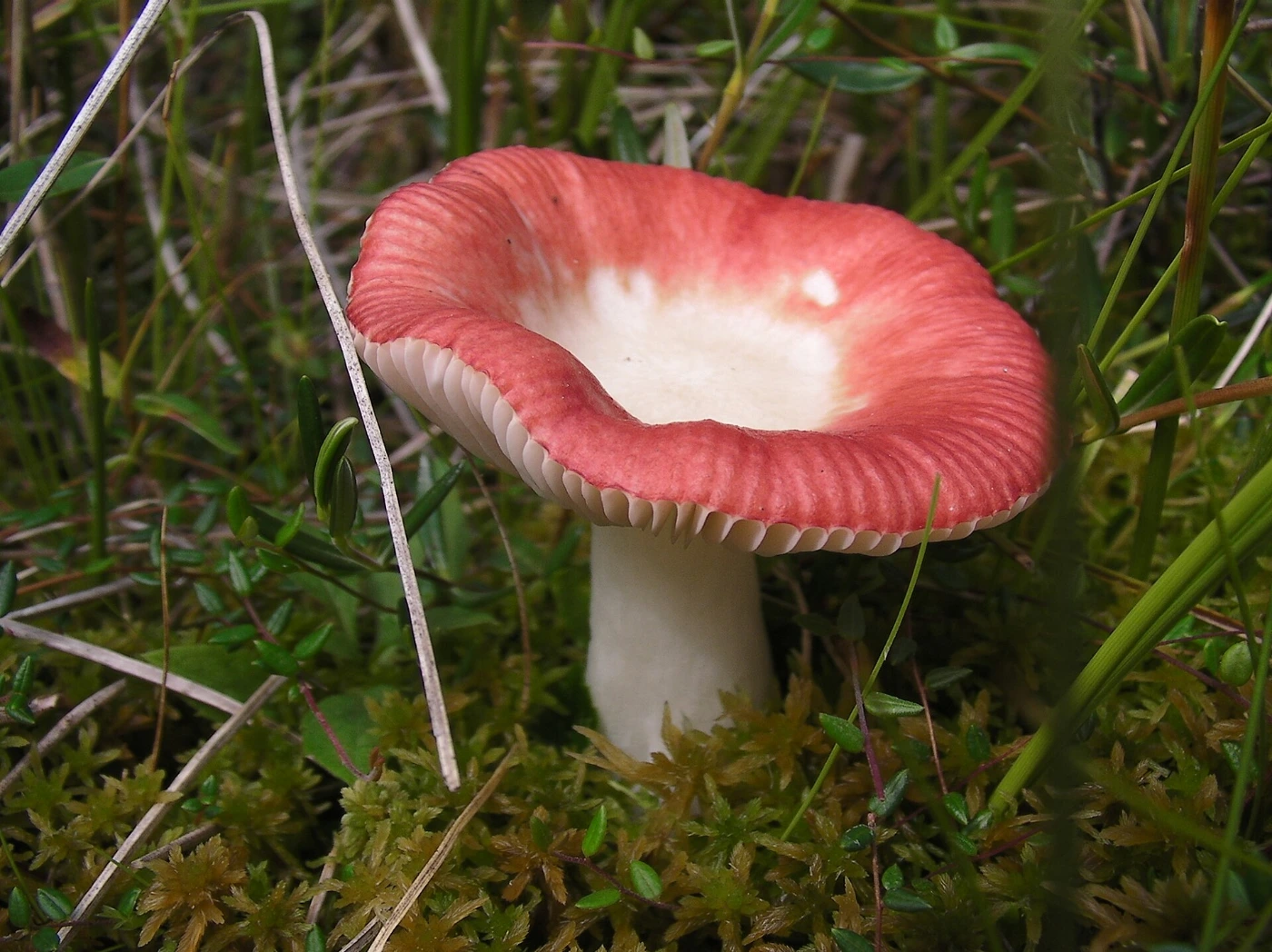
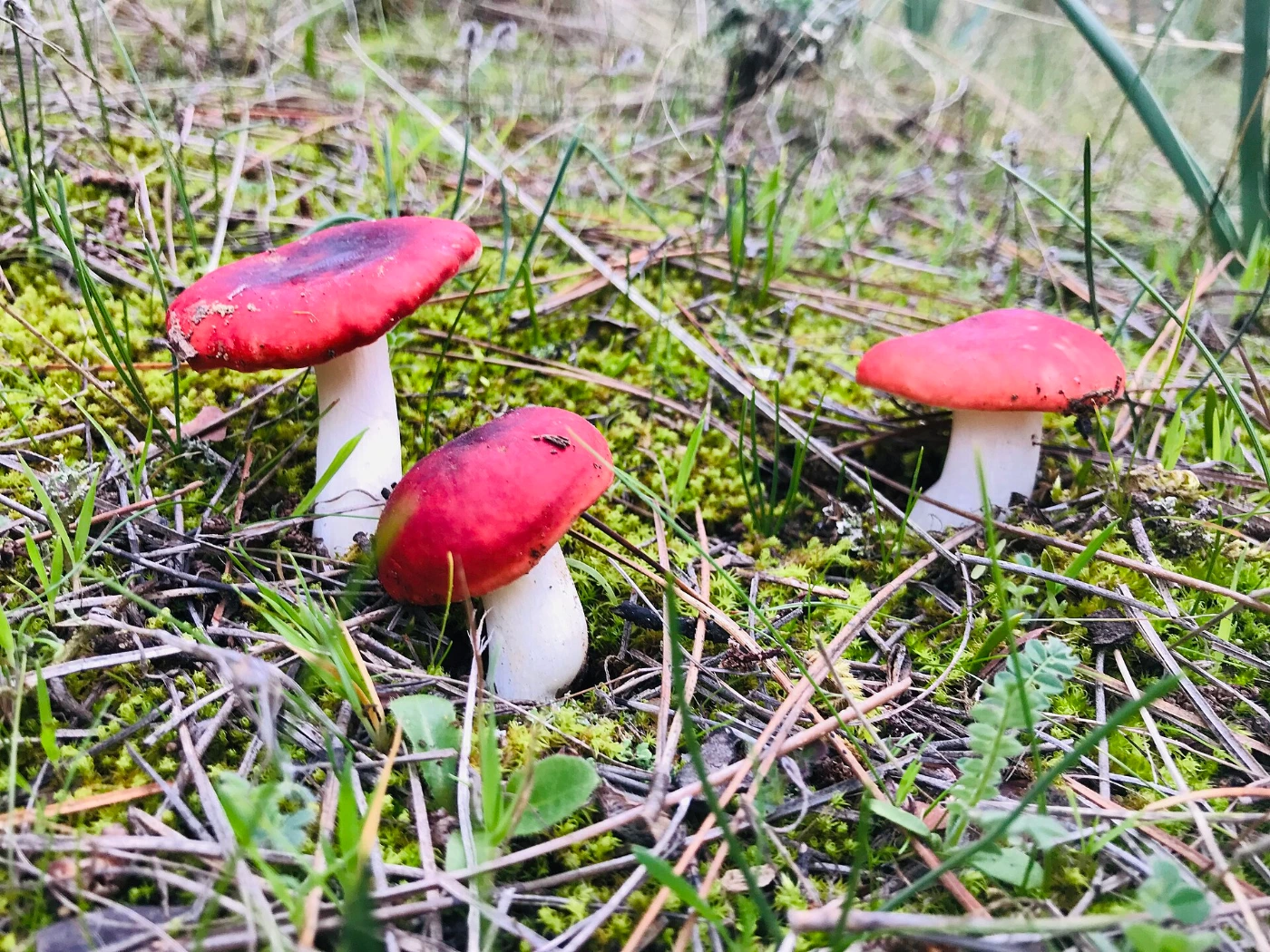
    Russula emetica, commonly known as The Sickener, is a bright red brittlegill that often attracts attention in wet conifer woods and boggy habitats. It is best known for its vivid cap, white gills, brittle flesh, and reputation for causing gastrointestinal illness if eaten.

    At first glance, The Sickener looks like a simple red mushroom, but identification is not always that easy. Many red Russula species resemble one another, and several differ only in subtle details such as habitat, taste, cap texture, or microscopic characters. For that reason, the most reliable identification comes from combining structure, ecology, and overall appearance rather than trusting cap color alone.

    ⚠️ Important: This guide is for identification and education only. Russula emetica is traditionally regarded as poisonous or at least strongly unsuitable for eating because it can cause nausea and vomiting. Never eat a wild mushroom based solely on photographs, AI identification, or an online comparison.

    Quick Identification

    Feature Russula emetica
    Scientific name Russula emetica
    Common name The Sickener
    Family Russulaceae
    Cap color Bright red to scarlet, sometimes fading
    Cap surface Smooth, often shiny when moist
    Gills White to cream, crowded
    Stem White, smooth, brittle
    Flesh White, brittle
    Spore print White to pale cream
    Smell Usually mild or not distinctive
    Taste Acrid, very hot or peppery
    Habitat Wet acidic ground, often with conifers and moss
    Main hosts Pine, spruce and other conifers
    Season Summer through autumn
    Edibility Poisonous / causes gastrointestinal upset
    Main look-alikes Other red Russula species, especially Russula nobilis and similar brittlegills

    What Does Russula emetica Look Like?

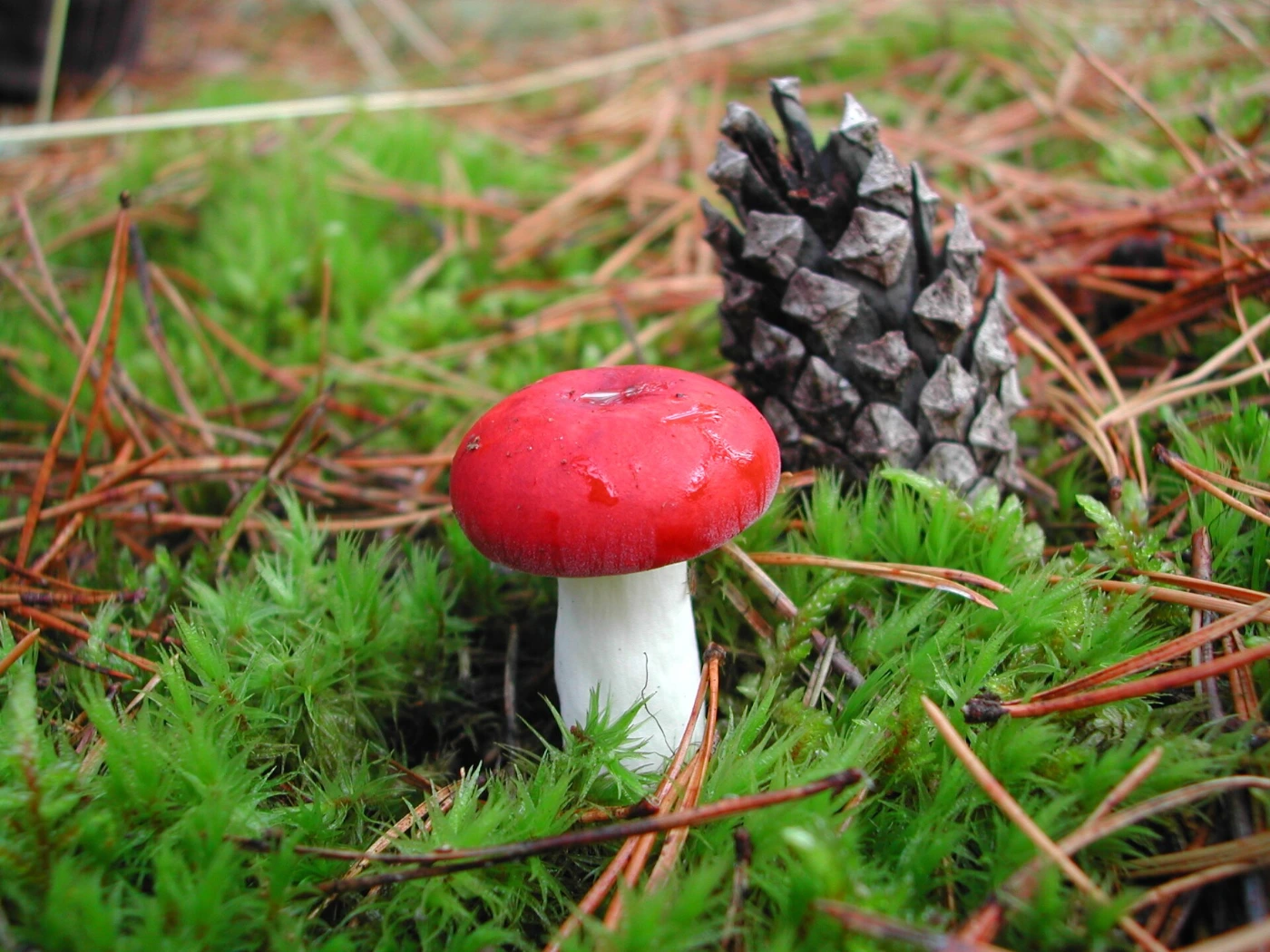
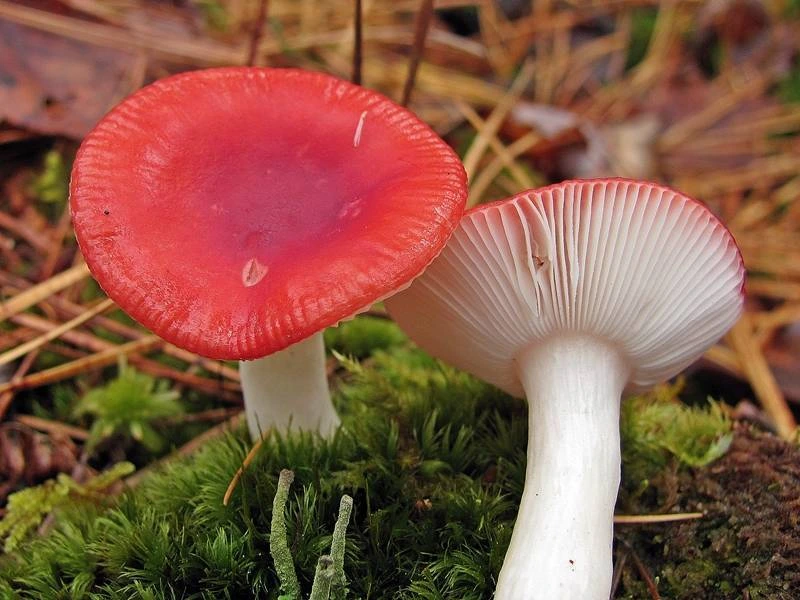
    The Sickener is a classic red brittlegill. It usually has a bright red cap, white gills, and a white stem, and like many Russula species it snaps cleanly rather than bending like a fibrous mushroom.

    Its overall appearance is often neat and attractive, especially when fresh. That attractive appearance can be misleading, because many mushroom hunters are drawn to the vivid cap long before they notice the brittle structure and acrid taste associated with this species.

    Cap

    The cap usually begins convex and later becomes flatter or shallowly depressed in the middle. Fresh specimens are often a strong scarlet, cherry-red, or bright crimson. With age or exposure to sunlight, the cap may fade, especially toward the center. This means older mushrooms can look pinker or less vividly red than fresh young ones.

    Cap Surface

    The cap surface is usually smooth and can be slightly sticky or shiny in damp weather. In dry conditions it becomes more matte, although it often keeps a clean polished appearance. The skin can sometimes be peeled part of the way from the margin toward the center. This is common in several Russula species, so it is a supporting rather than decisive feature.

    Cap Margin

    The cap margin is usually smooth when young and may become faintly lined or grooved with age. This striation is not usually dramatic in fresh firm specimens, but it can become more noticeable as the cap expands.

    A strongly damaged or dried cap can distort the margin, making the mushroom harder to identify. Fresh specimens give the clearest picture.

    Gills

    The gills are white to pale cream and are fairly crowded. They are attached to the stem but remain delicate and brittle, which is characteristic of the genus.

    As with many Russula species, the gills can chip or break easily if handled roughly. This brittle nature is often one of the first clues that the mushroom belongs in Russula rather than in a more fibrous gilled group.

    Gill Color

    The gills generally stay pale and do not become dark chocolate, rusty brown, or purple-brown with age. This helps separate The Sickener from unrelated red-capped mushrooms with darker spores. Slight creaminess may develop in older fruit bodies, but the overall impression remains pale.

    Stem

    The stem is usually white, smooth, and fairly even in width, though it can become slightly tapered toward the base. It is not ringed and does not have a volva or sack-like base. Like the rest of the mushroom, the stem is brittle. It often breaks with a chalk-like snap rather than bending.

    Stem Texture

    Fresh stems are firm but fragile. Older stems can become softer or slightly spongy in the center, especially in waterlogged specimens. A fibrous or stringy stem should make you reconsider the identification, because true brittlegills usually fracture cleanly.

    Flesh

    The flesh is white and very brittle. It breaks rather than tears, which is one of the defining features of Russula mushrooms. This brittleness applies to both the cap and the stem. When handled, the mushroom can look surprisingly fragile compared with many other woodland species.

    Taste

    The traditional field description of Russula emetica includes a distinctly acrid, peppery, or burning taste. This hot taste is one of the reasons the species received the name “The Sickener.”

    However, taste testing in Russula should never be treated as a beginner method. Some mycologists use a tiny nibble-and-spit approach for brittlegills, but beginners should not rely on taste as a primary identification tool and should never swallow any part of an unknown mushroom.

    Spore Print

    The spore print is white to very pale cream. This fits the classic appearance of many pale-spored red brittlegills. Spore print color helps place the mushroom within a narrower part of the genus, but it does not by itself prove the species. Several similar red Russula species have comparable spore prints.

    Where Does Russula emetica Grow?

    The Sickener is especially associated with wet acidic habitats, often with conifers. It is a mycorrhizal species, which means it lives in partnership with tree roots rather than growing directly from dead wood.

    The species is frequently found in mossy forest floors, bog margins, damp heaths, and wet woodland. Sphagnum moss is often mentioned as a useful habitat clue.

    Typical Host Trees

    Pine and spruce are especially important hosts. Other conifers may also be associated depending on region and habitat.

    Because it is mycorrhizal, the mushroom may appear a short distance from the visible trunk. The surrounding tree community is therefore more informative than the exact point where the fruit body emerges from the ground.

    Wet Acidic Ground

    This ecological preference is one of the best clues for the species. A bright red brittle Russula in wet mossy conifer ground fits Russula emetica much better than a very similar mushroom in dry beech woodland.

    Habitat does not replace morphology, but in this case it is extremely helpful. Many red brittlegills are easier to separate by tree association and soil type than by cap color alone.

    When Does Russula emetica Grow?

    The main season is summer through autumn. In cooler and wetter climates, it may fruit abundantly during late summer and continue well into autumn.

    Rainfall has a strong effect on fruiting. After wet weather, the bright caps can stand out clearly against moss and dark forest litter.

    Is Russula emetica Poisonous?

    Yes, Russula emetica is traditionally regarded as poisonous or at least strongly inedible. It is associated mainly with gastrointestinal symptoms such as nausea, vomiting, stomach pain, and diarrhea.

    It is important to distinguish this type of poisoning from the deadly amatoxin syndrome caused by mushrooms such as Death Cap. The Sickener is not generally described as a liver-destroying Amanita-type poison, but it is still a mushroom that should not be eaten.

    Why the Name “The Sickener”?

    The species name emetica refers to vomiting. This reflects the long-standing belief that the mushroom can make people ill if consumed.

    Even if some field traditions discuss processing or regional use of acrid russulas, this is not a species for casual experimentation. For practical identification and safety purposes, it should simply be treated as poisonous.

    Russula emetica Look-Alikes

    The main difficulty with The Sickener is not confusion with unrelated mushrooms, but confusion with other red Russula species. Many of them have red caps, pale gills, brittle white stems, and similar overall proportions.

    Because of that, exact species identification may be difficult from a photograph alone. Ecology, taste, and sometimes microscopy may all matter.

    Russula nobilis / Russula mairei — Beechwood Sickener

    Identification

    These beech-associated red russulas can look extremely similar to Russula emetica. They also have red caps, white stems, pale gills, and acrid flesh.

    At a glance, they can be nearly indistinguishable from The Sickener. The most useful practical difference is ecology.

    Main Difference

    Russula nobilis and closely related forms are associated mainly with beech, while Russula emetica is more typical of wet acidic conifer habitats.

    This means that a “Sickener-like” red russula under beech should not automatically be called R. emetica. Habitat matters greatly in this comparison.

    Russula paludosa — Swamp Russula

    Identification

    Swamp Russula is another red to red-orange brittlegill that can grow in wet conifer habitats. It is often larger and more robust than The Sickener.

    Its cap may be more orange-red or less sharply scarlet, and the taste is generally milder rather than strongly acrid.

    Main Difference

    The milder taste and often sturdier build point toward Russula paludosa. Its cap tones can also be slightly less pure scarlet and more reddish-orange.

    This is a good example of how red russulas are often separated by a combination of subtle traits rather than one obvious character.

    Russula xerampelina Group — Shrimp Russulas

    Identification

    Some members of the Russula xerampelina group can show reddish caps, though many are darker wine-red, brown-red, or mixed in tone. They usually have a different smell, often described as fishy or shrimp-like in older specimens.

    Their flesh and ecology also differ, depending on the exact species.

    Main Difference

    A distinctly seafood-like odor points away from The Sickener. The cap color range also tends to be broader and often darker or duller than the clean scarlet of R. emetica.

    Other Red Russulas

    Identification

    There are many additional red brittlegills in Europe and North America. Some are mild, some acrid, and some difficult to name confidently without microscopic work.

    This means that “red russula” is often only the beginning of the identification process rather than the end.

    Main Difference

    For Russula emetica, the most supportive combination is bright red cap + pale gills and stem + brittle flesh + acrid taste + wet acidic conifer habitat.

    If one of those major elements is missing, another red brittlegill may be more likely.

    Russula emetica vs Other Red Russulas

    Feature Russula emetica Similar Red Russulas
    Cap Bright scarlet to red Red, pink-red, orange-red, wine-red
    Gills White to pale cream Usually pale in many species
    Stem White, brittle Often similar
    Taste Strongly acrid Mild or acrid, depending on species
    Habitat Wet acidic conifer woods, bogs Variable, often tied to different trees
    Best clue Conifer + wet habitat + acrid red russula Ecology and subtle structural differences

    How to Identify Russula emetica Step by Step

    Begin by confirming that the mushroom really belongs to Russula. The brittle stem and gills are usually the fastest clue.

    Then examine the cap color, gill color, and the complete habitat. Finally, compare the tree association and moisture conditions of the site.

    Step 1: Confirm the Russula Structure

    Look for a mushroom with brittle white flesh, pale gills, and a clean-snapping stem. There should be no ring and no volva.

    This structural step is important because it separates brittlegills from many other red woodland mushrooms right away.

    Step 2: Check the Cap

    Look for a vivid red to scarlet cap with a smooth surface. Some fading is normal, especially in older fruit bodies.

    Do not rely on cap color alone, because many red Russula species overlap heavily in this feature.

    Step 3: Check the Gills and Stem

    The gills should be pale and brittle, and the stem should be white and fragile rather than fibrous. Strongly colored stems would suggest another type of brittlegill.

    A ringed stem or a bulbous volva-bearing base would point away from Russula entirely.

    Step 4: Check the Habitat

    This is one of the most important steps. Wet mossy conifer woodland, bog edges, and acidic ground strongly support Russula emetica.

    A similar mushroom under beech or in drier deciduous woodland may be another red russula instead.

    Step 5: Use Caution With Taste-Based Characters

    Experts sometimes mention the hot acrid taste of The Sickener. However, beginners should treat that as background information rather than a primary method.

    It is much better to rely on visible structure and ecology than to turn taste into a shortcut.

    How to Photograph Russula emetica for Identification

    Take one photograph showing the whole mushroom in its habitat, including moss, soil, and nearby trees if possible. This is especially helpful because habitat is so important for red russulas.

    Then photograph the cap from above, the gills from below, and the full stem from the side. A broken stem or snapped gill can also help show the brittle structure.

    If there are several mushrooms, photograph both young and mature specimens together. Color variation within the same patch can be informative.

    Can AI Identify Russula emetica?

    AI can often recognize the general red russula / brittlegill type, especially when the white gills and brittle structure are visible. Distinguishing Russula emetica from close red look-alikes is much harder.

    Results improve significantly when habitat information is visible or provided. A scarlet brittle russula growing among wet moss and conifers is much easier to interpret than a single cap photo with no context.

    A cautious identification may therefore be “red acrid Russula” or “Russula emetica group” rather than a confident exact species name. In difficult red russulas, that caution is often appropriate.

    Common Identification Mistakes

    One common mistake is calling every red brittlegill The Sickener. The genus contains many similar red species, and several are difficult to separate.

    Another mistake is ignoring habitat. In this group, host trees and wet acidic ground can be just as important as cap color.

    A third mistake is focusing only on the cap and failing to confirm brittleness. The clean-snapping structure of Russula is one of the first things that should be checked.

    Interesting Facts About Russula emetica

    The name Russula refers to the reddish tones common in many species of the genus, although not all russulas are red. In the case of Russula emetica, the vivid cap color is so eye-catching that it has made the species one of the best-known brittlegills.

    The genus is famous for its unusual texture. Russulas and their close relatives contain spherical cells called sphaerocysts, which make the flesh snap cleanly instead of tearing into fibers like many other mushrooms.

    The name emetica is directly tied to vomiting, reflecting the traditional view of the mushroom as a gastrointestinal poison. Few species carry such a blunt warning in their scientific names.

    The Sickener is also a good example of how mushroom identification often depends on ecology. A red cap alone is not enough, but a red brittle russula in wet mossy conifer habitat immediately narrows the possibilities.

    Frequently Asked Questions

    Why do some specimens fade to pink instead of staying bright red?

    Sunlight, age, and weather can all fade the cap. Older specimens often become paler in the center, and prolonged exposure can shift a vivid red mushroom toward a pinker appearance.

    Can heavy rain wash away useful cap characters?

    Yes. Rain can dull the surface, alter the shine, and sometimes make the cap look less richly colored. This is one reason fresh specimens from the same patch are often easier to interpret than a single rain-beaten mushroom.

    Why do so many red russulas seem impossible to tell apart?

    The genus contains many species built on the same basic plan: red cap, pale gills, white brittle stem, and pale spores. Exact identification often depends on small differences in habitat, taste, odor, chemistry, or microscopic traits.

    Can insects or slugs eat The Sickener even if it is poisonous to humans?

    Yes. Toxicity to humans does not mean a mushroom is protected from insects or slugs. Many species considered poisonous can still show feeding damage from woodland invertebrates.

    Does a broken chalky stem always mean Russula?

    It strongly suggests Russula or a close relative such as Lactarius, but you should still check the rest of the structure. In Lactarius, damaged gills often release milk, which The Sickener does not.

    Why is wet moss such a useful clue?

    The Sickener is especially associated with damp acidic conditions, and mossy ground often reflects exactly that kind of habitat. While moss alone never proves the species, it supports the identification strongly when the other features fit.

    Can The Sickener grow alone rather than in groups?

    Yes. It may appear singly, scattered, or in small loose groups. The growth pattern is not usually the most important character for this species.

    Why is the spore print not enough to prove the species?

    Many pale-spored red russulas produce a similar white to cream print. The spore print helps narrow the group, but habitat and morphology are still needed for a more confident identification.

    Final Identification Notes

    Russula emetica is best recognized by the combination of a bright red cap, pale brittle gills, white brittle stem, acrid taste, white to pale cream spore print, and strong preference for wet acidic conifer habitats.

    The greatest challenge is not separating it from unrelated mushrooms, but from other red russulas. In practice, tree association and moisture level are often as important as the cap itself.

    For reliable identification, think in layers: first confirm a brittlegill, then confirm a red acrid species, and finally check whether the habitat matches The Sickener. That sequence is much safer than trying to identify the mushroom from color alone.

  • Imleria badia: Bay Bolete Identification and Look-Alikes

    Imleria badia: Bay Bolete Identification and Look-Alikes

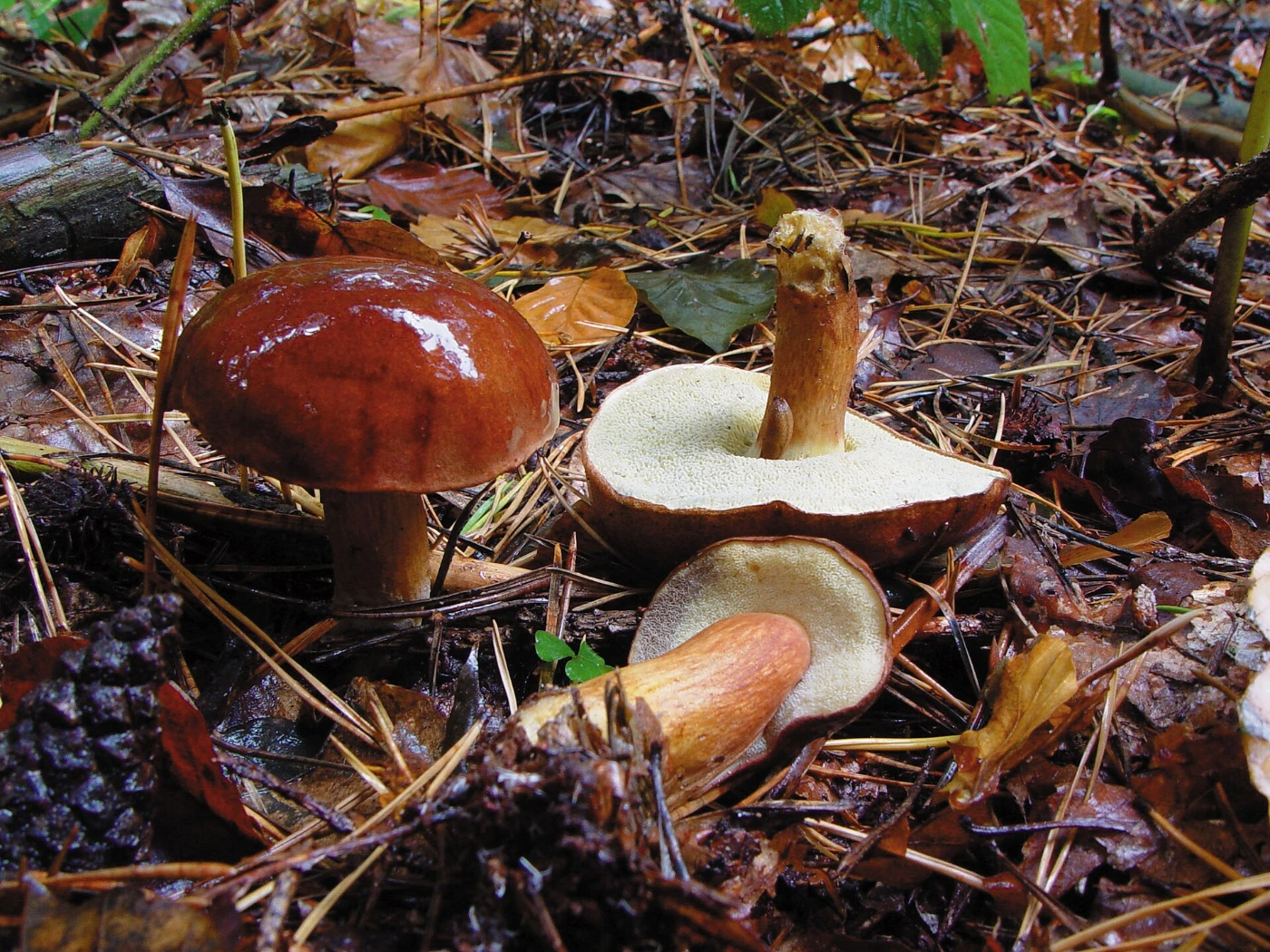
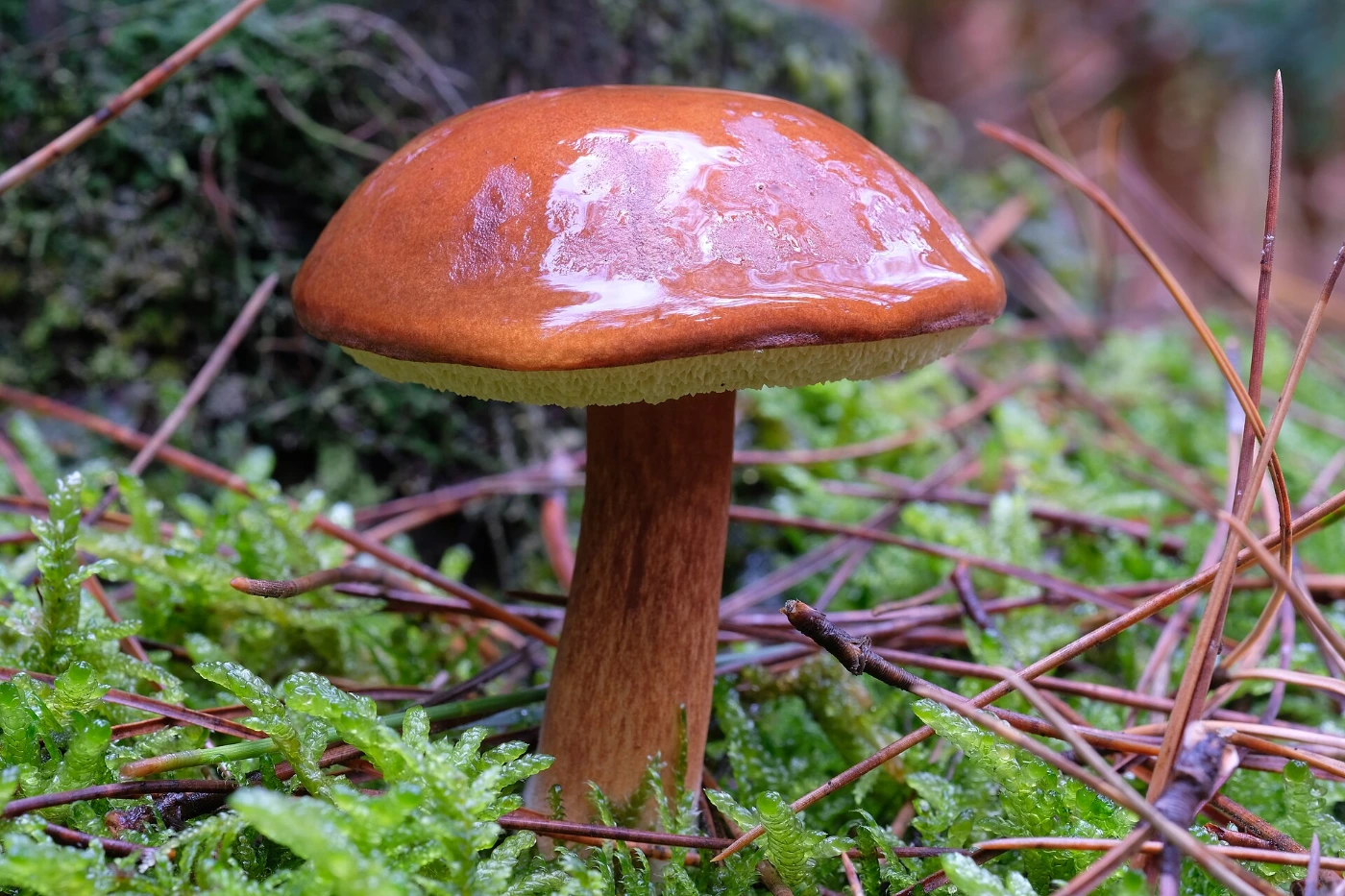
    Imleria badia, commonly known as the Bay Bolete, is a common brown-capped bolete found in coniferous and mixed forests. It is recognized by its chestnut-brown cap, yellow pores that often bruise blue when pressed, and a comparatively smooth brownish stem without the strong pale reticulation typical of Porcini.

    The species is widespread across Europe and parts of Asia and is especially common under spruce and pine. Because it can resemble several other brown boletes, the best identification comes from combining pore color, bruising, stem structure, cap texture, host trees, and overall proportions.

    ⚠️ Important: This guide is for identification and education only. Never eat a wild mushroom based solely on photographs, AI identification, or an online comparison.

    Quick Identification

    Feature Imleria badia
    Scientific name Imleria badia
    Common name Bay Bolete
    Family Boletaceae
    Cap color Chestnut-brown to dark brown
    Cap surface Smooth, slightly sticky when wet
    Underside Yellow pores
    Bruising Pores often turn blue when pressed
    Stem Brownish, usually smooth to finely fibrous
    Reticulation Absent or weak
    Flesh Pale, may blue slightly in places
    Spore print Olive-brown
    Ecology Mycorrhizal
    Main hosts Spruce, pine, other conifers
    Season Summer through autumn
    Edibility Edible when correctly identified
    Main look-alikes Porcini, Chestnut Bolete, red-cracking boletes, other brown boletes

    What Does Imleria badia Look Like?

    Bay Bolete has a classic bolete shape, with a rounded brown cap and a sponge-like pore layer underneath instead of gills. Young fruit bodies are compact, while mature specimens become broader and more open.

    The cap is usually richer and more uniformly chestnut-brown than many pale Porcini-type boletes. The pore surface is yellow and commonly develops blue staining after pressure.

    The stem is relatively plain compared with king boletes. It is usually brownish or yellow-brown and lacks a strong net-like pattern.

    Cap

    The cap begins hemispherical or convex and gradually flattens with age. Typical colors range from warm chestnut to dark reddish-brown.

    Fresh wet specimens can look glossy or slightly sticky. Dry caps are usually smoother and more matte.

    Cap Surface

    The surface is generally even and lacks prominent scales. It may feel slightly tacky after rain.

    Older caps can become wrinkled or develop small cracks, especially in dry weather. These changes should not be confused with the pronounced cracking seen in some Xerocomellus species.

    Pores

    The underside is yellow to yellow-olive. Young pores are finer and paler, while mature pores become broader and more olive.

    When pressed, the pore surface often turns blue. This is one of the most recognizable features of the species.

    Blue Bruising

    The reaction can appear within seconds and may vary from pale blue to darker blue-green. It is often more obvious on the pore surface than in the internal flesh.

    Bruising intensity can vary with age, moisture, and temperature. A weak reaction does not automatically exclude the species.

    Stem

    The stem is usually cylindrical or slightly thickened toward the base. It is often more slender than the massive stems of classic Porcini.

    Color ranges from pale brown to yellow-brown, sometimes with darker longitudinal fibers. The surface is usually plain rather than strongly netted.

    Lack of Strong Reticulation

    This is an important clue. Boletus edulis and related king boletes often show a pale net-like reticulation on the upper stem.

    Bay Bolete normally lacks that distinct network. The stem may look fibrous or subtly streaked instead.

    Flesh

    The flesh is pale cream to yellowish. It may remain mostly pale after cutting or develop slight blue staining, especially near the tubes.

    The reaction is usually weaker than in strongly blue-staining boletes. The pore layer often provides a much clearer bruise.

    Texture

    Young fruit bodies are firm and dense. Older mushrooms become softer and more spongy, particularly underneath the cap.

    Insect damage can be common in mature specimens. Young intact mushrooms are easier to identify.

    Smell

    The smell is mild and mushroom-like. It is not considered an important diagnostic feature.

    Odor varies with age and condition. Pore bruising and stem structure are much more reliable.

    Spore Print

    The spore print is olive-brown. This is typical of many boletes and confirms the broader group. It is not especially useful for separating Bay Bolete from similar species. Morphology and ecology are more practical in the field.

    Where Does Imleria badia Grow?

    Bay Bolete grows from soil in association with living tree roots. It is especially common in coniferous forests.

    Spruce and pine are among the most important hosts. The species can also occur in mixed woodland where conifers are present.

    Conifer Association

    Spruce forests are particularly classic habitat in Europe. Pine woodland can also be productive.

    The species often appears among moss, needles, and acidic forest litter. It may fruit several meters from the nearest visible trunk because tree roots extend widely underground.

    When Does Bay Bolete Grow?

    The main season is summer through autumn. Fruiting often becomes strongest after sustained rainfall. In many regions, Bay Bolete is especially common later in the season. Cool wet autumn weather can produce large numbers.

    Weather and Fruiting

    Dry periods can suppress visible mushrooms even while the underground mycelium remains active. After rain, several fruit bodies may appear in the same patch. The same woodland can produce repeated flushes within one season. Productive sites may also return in later years.

    Distribution

    Imleria badia is widespread across Europe and parts of Asia. It is particularly common in temperate and boreal forests. The species is strongly associated with conifer-rich regions. Exact abundance varies with soil chemistry, climate, and forest composition.

    Is Imleria badia Edible?

    Bay Bolete is considered edible when correctly identified and properly prepared. It is widely collected in Europe.

    Young specimens are generally preferred because older fruit bodies become soft and frequently insect-damaged. The blue bruising does not make the species poisonous.

    Correct identification is still important because brown boletes can be difficult to separate. Pore color, bruising, and stem structure should all agree.

    Imleria badia Look-Alikes

    The main look-alikes are other brown-capped boletes with yellow pores. Some are edible, while others are bitter or difficult to identify confidently.

    The most useful differences involve stem reticulation, pore bruising, cap texture, and host trees.

    Boletus edulis — Porcini

    Identification

    Porcini usually has a thick pale stem with visible reticulation. The pore surface begins white and becomes yellow to olive with age.

    The flesh usually remains white after cutting and does not show strong blue bruising. The overall fruit body is often more robust.

    Main Difference

    Bay Bolete usually has a smoother, less reticulated stem and pores that turn blue when pressed. Porcini generally has pale netting and little or no blueing.

    The stem and pore reaction together are especially useful.

    Imleria badia vs Porcini

    Feature Bay Bolete Porcini
    Cap Chestnut-brown Brown to chestnut
    Pores Yellow to olive White → yellow → olive
    Blue bruising Common on pores Usually absent
    Stem Smooth to fibrous Thick, pale, reticulated
    Reticulation Usually absent Usually present
    Habitat Mainly conifer forests Conifer and broadleaf forests

    Pore bruising is the fastest difference. Stem reticulation provides confirmation.

    Xerocomellus chrysenteron — Red Cracking Bolete

    Identification

    Red Cracking Bolete has a brown to olive-brown cap that often develops cracks. Reddish tissue may show through those cracks.

    The pores are yellow and can turn blue when bruised. The stem often contains yellow and red tones.

    Main Difference

    Bay Bolete usually has a smoother chestnut cap without the characteristic red cracking. The stem is also generally less colorful.

    Old dry Bay Boletes can crack slightly, so the full combination of features should be checked.

    Gyroporus castaneus — Chestnut Bolete

    Identification

    Chestnut Bolete has a reddish-brown to chestnut cap and a relatively slender stem. The stem is often brittle and may become hollow or chambered inside.

    The pores are pale cream to yellowish. Strong blue bruising is generally absent.

    Main Difference

    The hollow or chambered stem is one of the strongest clues for Gyroporus castaneus. Bay Bolete has a more solid stem and typically blue-bruising pores.

    Suillus Species

    Identification

    Several Suillus species have brown caps and yellow pores. Many are strongly associated with pine.

    Their caps are often slimier, and the stems may have rings or glandular dots. These features are not typical of Bay Bolete.

    Main Difference

    A clear ring, strongly slimy cap, or glandular stem dots point more toward Suillus. Bay Bolete is simpler in structure.

    Caloboletus calopus — Bitter Beech Bolete

    Identification

    Bitter Beech Bolete has a pale cap, yellow pores, and a thick stem with strong red coloration. The flesh turns blue when damaged.

    The overall color combination is much more dramatic than in Bay Bolete.

    Main Difference

    A strongly red-yellow stem points away from Imleria badia. Bay Bolete is predominantly brown and yellow.

    Bay Bolete vs Red Cracking Bolete

    Feature Imleria badia Xerocomellus chrysenteron
    Cap Smooth chestnut-brown Often cracked brown cap
    Tissue beneath cracks Not characteristically red Often reddish
    Pores Yellow, blue-bruising Yellow, often blue-bruising
    Stem Brownish, relatively plain Yellow and red tones common
    Overall build Moderate to robust Often smaller and more slender

    Cap structure is particularly useful in this comparison.

    How to Identify Imleria badia Step by Step

    Start by confirming that the underside has pores rather than gills. Then check for a chestnut-brown cap and yellow pore surface.

    Press the pores gently and watch for blue bruising. Finally, examine the stem for the absence of strong reticulation and confirm a conifer-rich habitat.

    Step 1: Check the Cap

    Look for an even chestnut to dark brown cap. The surface should be relatively smooth.

    Strong scales, vivid red cracks, or a very pale cap suggest other species.

    Step 2: Check the Pores

    The pores should be yellow to olive-yellow. Press a small area with a finger.

    A blue reaction strongly supports Bay Bolete when the rest of the mushroom also fits.

    Step 3: Examine the Stem

    Look for a brownish, relatively plain stem. Strong pale reticulation would be more typical of Porcini.

    A ring or glandular dots would point toward Suillus. A red-yellow stem suggests another bolete group.

    Step 4: Check the Flesh

    Cut the mushroom vertically and observe any color change. The flesh may remain mostly pale or show limited blueing.

    Very strong dark blue staining throughout the mushroom would suggest a more reactive bolete.

    Step 5: Check the Trees

    Look for spruce, pine, or other conifers nearby. This ecology strongly supports the identification.

    In mixed woodland, check all possible host trees. The nearest trunk is not always the actual mycorrhizal partner.

    Why Blue Bruising Is Useful but Not Enough

    The blue reaction is visually memorable, but many boletes show it. Some are edible, some inedible, and some poisonous.

    For Bay Bolete, the reaction becomes meaningful only when combined with the chestnut cap, yellow pores, plain stem, and conifer habitat.

    This is a good example of why mushroom identification should use several independent features rather than one dramatic clue.

    How to Photograph Bay Bolete for Identification

    Take a side photograph showing the complete mushroom and stem. Include surrounding conifer needles or moss if possible.

    Then photograph the pore surface before and after pressing it. This records both the original yellow color and the blue bruising reaction.

    A close-up of the stem can show the absence of strong reticulation. A cut section can document flesh color and internal bruising.

    Can AI Identify Imleria badia?

    AI can often recognize Bay Bolete when the brown cap, yellow pores, and blue bruising are all visible. Accuracy improves when the stem and habitat are also shown.

    The main challenge is separating it from other brown yellow-pored boletes. A cap-only image is not enough.

    Before-and-after bruising photos are particularly useful. They provide information that a single static image cannot show.

    Common Identification Mistakes

    One common mistake is calling every brown bolete with yellow pores Porcini. Bay Bolete differs strongly in pore bruising and stem structure.

    Another mistake is assuming blue bruising means the mushroom is poisonous. Bay Bolete is a clear example of why that rule fails.

    A third mistake is ignoring the cap surface. Strong cracking or scales may point toward other species.

    Interesting Facts About Imleria badia

    Bay Bolete was historically placed in the genus Boletus, and older field guides may list it as Boletus badius. Modern classification places it in the genus Imleria.

    The common name “Bay Bolete” refers to the rich bay or chestnut-brown color of the cap. This warm brown tone is one of the species’ most consistent visual features.

    Its blue bruising is caused by oxidation reactions in damaged tissue. The reaction is most visible on the pore surface, which is why a gentle press can reveal so much identification information.

    Bay Bolete is also a good example of how closely fungal ecology follows trees. Its abundance in spruce and pine forests reflects a mycorrhizal relationship that continues underground even when no mushrooms are visible.

    Frequently Asked Questions

    Why do some Bay Boletes barely turn blue?

    Moisture, age, temperature, and tissue condition all influence the reaction. Fresh hydrated mushrooms usually show stronger bruising than old dry specimens.

    Can the pore surface turn almost green with age?

    Yes. Yellow pores can become olive or olive-green as the mushroom matures and spores develop.

    Why are some caps much darker after rain?

    Water darkens the surface and can make the cap look almost chocolate-brown. Dry specimens usually appear lighter and more matte.

    Can Bay Bolete grow in very mossy forest floors?

    Yes. Mossy conifer forests are a classic habitat, especially where spruce or pine roots are present beneath the moss.

    Why do older specimens often have soft pore layers?

    The tubes expand and retain more moisture as the mushroom matures. This creates the spongy texture common in old boletes.

    Can several bolete species fruit in the same patch?

    Yes. One forest area can support multiple mycorrhizal boletes at the same time. Each mushroom should therefore be checked individually.

    Can insects change the bruising reaction?

    Yes. Old insect-damaged tissue may already be oxidized and react less clearly than fresh intact areas.

    Can Bay Bolete appear far from the nearest conifer?

    Yes. Tree roots and fungal mycelium extend well beyond the trunk, so fruit bodies can appear several meters away.

    Final Identification Notes

    Imleria badia is best recognized by the combination of a smooth chestnut-brown cap, yellow pores that often bruise blue, a relatively plain brownish stem without strong reticulation, and growth in conifer-rich woodland.

    The most important comparisons are Porcini and other brown yellow-pored boletes. Porcini usually has pale stem reticulation and little blue bruising, while Red Cracking Bolete often develops obvious cap cracks with reddish tissue beneath.

    For reliable identification, use the complete pattern rather than one feature. The pore reaction, stem surface, cap texture, and host trees together make Bay Bolete much easier to recognize.

  • Suillus luteus: Slippery Jack Identification and Look-Alikes

    Suillus luteus: Slippery Jack Identification and Look-Alikes

    Suillus luteus, commonly known as the Slippery Jack, is one of the most familiar pine-associated boletes. It is usually recognized by its very slimy brown cap, yellow pores, pale stem with a distinct ring, and strong association with pine trees.

    The species is common in pine forests, plantations, parks, and grassy areas where pine roots are present. Its sticky cap and stem ring make it easier to separate from several other Suillus species, although close relatives can still look very similar.

    ⚠️ Important: This guide is for identification and education only. Never eat a wild mushroom based solely on photographs, AI identification, or an online comparison.

    Quick Identification

    Feature Suillus luteus
    Scientific name Suillus luteus
    Common name Slippery Jack
    Family Suillaceae
    Cap color Brown to dark chestnut
    Cap surface Very slimy when wet
    Underside Yellow pores
    Stem Pale yellow to cream
    Ring Present, usually distinct
    Flesh Pale yellow to cream
    Bruising Usually little or no strong blueing
    Spore print Brown to olive-brown
    Ecology Mycorrhizal
    Main host Pine
    Season Summer through autumn
    Edibility Edible when correctly identified
    Main look-alikes Suillus granulatus, Suillus collinitus, other pine-associated Suillus species

    What Does Suillus luteus Look Like?

    Slippery Jack has the classic appearance of a pine bolete: a brown cap, yellow pores, and a relatively stout stem. The cap can become extremely sticky in wet weather, which is one of the reasons the species is so easy to remember.

    Young mushrooms often have a partial veil covering the pore surface. As the cap expands, the veil tears and leaves a ring around the stem.

    This ring is one of the strongest features separating Suillus luteus from several similar ringless species.

    Cap

    The cap begins rounded and convex, then gradually flattens with age. Color ranges from medium brown to dark chestnut or chocolate-brown.

    When wet, the surface becomes distinctly slimy and glossy. In dry weather, it can look much duller and less obviously sticky.

    Cap Skin

    The skin is smooth and can often be peeled from the cap fairly easily. This peelable surface is typical of several Suillus species.

    Some people remove the cap skin before cooking because of its texture. That culinary habit should not be confused with an identification requirement.

    Pores

    The underside has pores rather than gills. Young pores are pale yellow and become deeper yellow or olive-yellow as the mushroom matures.

    The pore openings are small and tightly packed. They are usually much finer than those of some other ringless Suillus species.

    Bruising of the Pores

    Strong blue bruising is not typical. Slight discoloration may occur with age or handling, but dramatic blueing should suggest another bolete.

    This makes the species relatively easy to separate from strongly blue-staining boletes. The lack of blueing should still be treated as one feature among several.

    Stem

    The stem is pale yellow to cream and usually fairly robust. It may be slightly swollen near the base.

    The most important feature is the ring, which remains from the partial veil. In fresh specimens, it can be broad and membranous.

    Ring

    The ring is usually pale on the upper surface and may become darker or brownish underneath as spores and dirt accumulate.

    Older specimens may have a damaged or collapsed ring. Even then, remnants or a ring zone are often still visible.

    Flesh

    The flesh is pale yellow to cream and relatively firm in young mushrooms. It becomes softer as the mushroom ages.

    The stem is usually more fibrous than the cap. Older fruit bodies often become spongy, especially in the pore layer.

    Texture

    Young Slippery Jacks are compact and firm. Mature specimens can become soft and waterlogged after prolonged rain.

    Insect damage is also common in older mushrooms. Young intact fruit bodies show the clearest features.

    Smell

    The smell is mild and mushroom-like. It is not considered a major field character.

    Odor can vary with age and moisture. The slimy cap, ring, pores, and pine habitat are much more useful.

    Spore Print

    The spore print is brown to olive-brown. This is typical of many boletes.

    Spore color helps confirm the broader group but does not separate Suillus luteus from close relatives. The ring and host tree are more practical.

    Where Does Suillus luteus Grow?

    Suillus luteus is strongly mycorrhizal with pine. It grows from soil in association with living pine roots.

    Pine forests, young plantations, grassy roadside plantings, and parks with ornamental pines are all typical habitats. It may appear several meters from the trunk because pine roots extend widely.

    Pine Association

    Pine is one of the strongest ecological clues. The species is especially common with two-needled pines, although exact associations vary by region.

    It can become extremely abundant in plantations. Large flushes may appear after autumn rain.

    Young Pine Plantations

    Slippery Jack often colonizes relatively young pine stands. Disturbed or grassy ground beneath planted trees can be very productive.

    This makes the species common in areas that do not look like old natural forest. Pine roots matter more than woodland appearance.

    When Does Suillus luteus Grow?

    The main season is summer through autumn in temperate regions. Fruiting often increases sharply after sustained rainfall. Cooler autumn weather can extend the season. In mild climates, fruiting may continue late into the year.

    Weather and Fruiting

    Dry periods can suppress visible mushrooms even when the underground fungus remains active. Once the soil becomes moist again, large groups can appear quickly. The same site may produce several flushes in one season. Productive patches can also return in later years.

    Distribution

    Suillus luteus is widespread across Europe and Asia and has been introduced to many other regions with planted pines. It can now be found far beyond its original range. Its spread is closely linked to forestry and pine planting. This makes it one of the most successful pine-associated boletes globally.

    Is Suillus luteus Edible?

    Slippery Jack is generally considered edible when correctly identified and properly prepared. It is less highly prized than Porcini because of its slimy surface and softer texture. Some people remove the cap skin before cooking. Older specimens are usually less desirable because they become spongy and may be heavily insect-damaged. Like other Suillus species, it can cause gastrointestinal discomfort in some people. Correct identification and sensible preparation remain important.

    Suillus luteus Look-Alikes

    The main look-alikes are other pine-associated Suillus species. Most share brown caps and yellow pores, so the ring and cap texture become especially important.

    Some close relatives are ringless. Others differ in basal color, cap streaking, or pore shape.

    Suillus granulatus — Weeping Bolete

    Identification

    Suillus granulatus has a yellow-brown to orange-brown cap and yellow pores. Young specimens may produce milky droplets from the pore surface.

    The stem has small glandular dots but lacks a ring. This is the easiest difference from Slippery Jack.

    Main Difference

    Suillus luteus has a distinct ring. Suillus granulatus does not.

    This single feature is often enough to separate mature specimens. Cap color and pore droplets provide additional support.

    Suillus luteus vs Suillus granulatus

    Feature Suillus luteus Suillus granulatus
    Cap Brown, often dark Yellow-brown to orange-brown
    Surface Very slimy Sticky to smooth
    Ring Present Absent
    Pores Yellow Yellow
    Young pore droplets Not a key feature Often present
    Stem Ringed Glandular dots
    Host Pine Pine

    The ring is the fastest field clue. If the stem is ringless, S. granulatus becomes more likely.

    Suillus collinitus

    Identification

    Suillus collinitus is another ringless pine-associated species with a sticky brown cap and yellow pores. The cap may show radial streaks or fibers.

    Pinkish basal mycelium can be an important clue. The stem lacks the distinct ring of Slippery Jack.

    Main Difference

    Ring absence immediately separates it from S. luteus. Pinkish tissue around the stem base provides additional support for S. collinitus.

    Suillus bovinus — Bovine Bolete

    Identification

    Bovine Bolete usually has a yellow-brown to orange-brown cap and large irregular pores. The stem is relatively slender.

    There is no ring. The overall mushroom often looks less robust than Slippery Jack.

    Main Difference

    The pore openings are larger and more irregular in Suillus bovinus. Slippery Jack has smaller pores and a clear ring.

    Suillus variegatus — Velvet Bolete

    Identification

    Velvet Bolete has a dry or finely textured yellow-brown cap rather than a strongly slimy one. The surface may look velvety or granular.

    The pores are yellow to olive, and the flesh may show some blueing. It also grows with pine.

    Main Difference

    A dry cap strongly points away from Suillus luteus. The absence of a ring provides another clue.

    Slippery Jack vs Bay Bolete

    Bay Bolete, Imleria badia, can have a brown cap and yellow pores, but it usually lacks a ring and does not have the same strongly slimy cap.

    Its pore surface commonly bruises blue. Slippery Jack usually shows little or no dramatic blueing.

    Quick Comparison

    Feature Slippery Jack Bay Bolete
    Cap Very slimy when wet Smooth, less slimy
    Ring Present Absent
    Pores Yellow Yellow
    Blue bruising Usually weak or absent Common
    Host Strongly pine-associated Conifer and mixed forests
    Stem Pale, ringed Smooth to fibrous

    The ring alone is usually enough to separate them.

    How to Identify Suillus luteus Step by Step

    Start by confirming that the mushroom has pores rather than gills. Then look for a smooth brown cap that becomes strongly slimy when wet.

    Next, examine the stem for a persistent ring. Finally, confirm that the mushroom is growing near pine.

    Step 1: Check the Habitat

    Look for pine needles, cones, and bark. The species should be associated with pine roots.

    In mixed woodland, confirm that pine is actually present. Nearby spruce or fir can support different fungi.

    Step 2: Look Under the Cap

    The underside should have yellow pores rather than gills. The pores should remain relatively fine.

    Red pores or strong blue bruising point toward another bolete group.

    Step 3: Check the Cap Surface

    Wet the surface mentally or observe after rain: a true Slippery Jack can become extremely slimy. This is one of its most characteristic features.

    A dry textured or velvety cap should lead toward another species.

    Step 4: Look for the Ring

    Check the upper stem for a membranous ring or clear ring remnants. This is the defining feature among many common pine Suillus species.

    If no ring is visible, compare with Suillus granulatus and Suillus collinitus.

    Why the Ring Matters So Much

    Many pine boletes look nearly identical from above. Brown caps and yellow pores are common across the genus.

    The ring provides a strong structural character that is less affected by cap color variation. Even damaged specimens may retain enough veil tissue to be useful.

    This is why stem photographs are essential. A cap-only image can easily misidentify the species.

    How to Photograph Slippery Jack for Identification

    Take a photo showing the whole mushroom and surrounding pine habitat. Include needles or cones when possible.

    Then photograph the pore surface and the stem ring in close-up. A side view should clearly show how the ring sits beneath the cap.

    A final image of the cap in wet conditions can document the slimy surface. Multiple views make species-level identification much stronger.

    Can AI Identify Suillus luteus?

    AI can often recognize Suillus luteus when the slimy brown cap, yellow pores, ring, and pine habitat are all visible. The ring is especially important.

    Without a stem photo, AI may confuse it with ringless Suillus species. A top-down cap image alone is not enough.

    Host-tree information also improves accuracy. Pine habitat plus a ringed bolete strongly narrows the possibilities.

    Common Identification Mistakes

    One common mistake is calling every sticky pine bolete Slippery Jack. Several ringless Suillus species look very similar.

    Another mistake is ignoring an old damaged ring. Even partial veil remnants can still be useful.

    A third mistake is relying only on cap slipperiness. Wet weather can make many mushrooms appear sticky, so the ring and pores should always be checked.

    Frequently Asked Questions

    Why do some Slippery Jack caps look almost dry?

    Dry weather can remove much of the obvious slime. The cap may become matte even though the species is strongly viscid when wet.

    Can the ring disappear completely?

    Yes. Rain, insects, handling, and age can damage the ring. Young intact specimens are best for confirming it.

    Why do some specimens have very dark caps?

    Moisture, age, and natural variation can deepen the brown color. Wet caps often appear much darker than dry ones.

    Can Slippery Jack grow in grass rather than forest litter?

    Yes. If pine roots are present beneath the lawn, the mushroom can fruit in grass several meters from the tree trunk.

    Do young specimens have the pores covered?

    Yes. The partial veil can cover the pore surface in young mushrooms before tearing to form the stem ring.

    Can several Suillus species grow under the same pine trees?

    Yes. A single pine stand can support multiple Suillus species, sometimes fruiting at the same time.

    Why do old pore layers become so soft?

    The tubes enlarge and absorb moisture as the mushroom matures. This creates the sponge-like texture typical of older boletes.

    Can frost damage the ring or cap surface?

    Yes. Freezing and thawing can darken tissue, collapse the ring, and make the cap less obviously slimy.

    Final Identification Notes

    Suillus luteus is best recognized by the combination of a very slimy brown cap, yellow pores, pale stem with a distinct ring, little or no strong blue bruising, and a strong association with pine.

    The closest common comparison is Suillus granulatus, which lacks a ring and often has glandular stem dots. Other ringless Suillus species can also be separated by cap texture, pore shape, stem base, and host details.

    For a strong identification, do not rely only on the slippery cap. The ring is the key structural feature that makes Slippery Jack stand out from many other pine boletes.

  • Armillaria Species: Honey Mushroom Identification and Look-Alikes

    Armillaria Species: Honey Mushroom Identification and Look-Alikes

    Armillaria species, commonly known as Honey Mushrooms, are a group of wood-associated fungi that often grow in dense clusters around stumps, tree bases, buried roots, and decaying wood. Their caps are usually honey-brown to yellow-brown, their gills are pale, and many species have a ring on the stem.

    Honey Mushrooms are common across Europe, North America, and other temperate regions, but they are not a single species. Several Armillaria species look very similar, and some important look-alikes can be poisonous or even deadly, so identification should rely on the complete combination of cap, gills, stem, ring, spore print, growth pattern, and substrate.

    ⚠️ Important: This guide is for identification and education only. Never eat wild Honey Mushrooms based solely on photographs, AI identification, or an online comparison.

    Quick Identification

    Feature Armillaria species
    Common name Honey Mushrooms
    Genus Armillaria
    Cap color Honey-yellow, tan, brown, olive-brown
    Cap surface Often with small scales
    Gills Pale cream to whitish
    Stem Fibrous, pale to brownish
    Ring Present in many species, absent in some
    Spore print White
    Growth Dense clusters or scattered groups
    Substrate Stumps, roots, trunks, buried wood
    Ecology Parasitic and saprobic
    Season Mainly late summer through autumn
    Edibility Varies by species and region
    Main danger Confusion with Galerina marginata and other brown wood-growing mushrooms

    What Do Honey Mushrooms Look Like?

    Honey Mushrooms usually form clusters of medium-sized mushrooms growing from wood or from soil above buried roots. Caps are commonly yellow-brown, honey-colored, tan, or darker brown.

    The cap may carry small darker scales, especially around the center. The gills begin pale and usually remain cream to whitish rather than becoming rusty brown.

    Many species have a ring on the upper stem. However, ringless Honey Mushrooms also exist, so the absence of a ring does not automatically exclude Armillaria.

    Cap

    The cap is usually convex when young and becomes flatter with age. Mature caps may develop a low central bump or become slightly irregular.

    Color varies considerably. Yellow, honey, caramel, olive-brown, and reddish-brown tones can all occur depending on species, age, weather, and moisture.

    Cap Scales

    Many Armillaria species have small darker scales concentrated toward the center of the cap. These can be especially noticeable in young fruit bodies.

    Rain can wash scales away, while old specimens may become smoother. A completely smooth cap does not automatically rule out the genus.

    Gills

    The gills are pale cream to whitish and attach to the stem. In some species they may become slightly pinkish, yellowish, or spotted with age.

    They do not mature to rusty brown like those of Galerina marginata. This difference becomes especially important in older specimens.

    Gill Attachment

    The gills may be attached broadly to the stem or run slightly down it. Exact attachment varies among species. Gill color and spore print are generally more useful than the precise attachment pattern for separating Honey Mushrooms from dangerous look-alikes.

    Stem

    The stem is fibrous and often tougher than the cap. It may be pale near the top and darker toward the base.

    Clusters often contain stems fused or crowded together at their bases. This dense growth pattern is typical of many Armillaria fruitings.

    Ring

    Many Honey Mushroom species have a distinct ring left by the partial veil. The ring can be thick, membranous, and relatively persistent.

    Other species, especially those traditionally called ringless Honey Mushrooms, lack a substantial ring. This is one reason why the genus cannot be identified using the ring alone.

    Spore Print

    The spore print is white. This is one of the most useful features for separating Honey Mushrooms from several brown-spored wood-growing mushrooms.

    A rusty-brown or cinnamon-brown spore print points away from Armillaria. This distinction is especially important when Galerina is a possibility.

    Flesh

    The flesh is pale and relatively firm in young specimens. The stem is often more fibrous and tough than the cap.

    Older mushrooms become increasingly stringy and less pleasant in texture. Insect damage may also become common.

    Smell

    The smell is usually mild and mushroom-like. Some specimens may have a slightly sweet, earthy, or musty odor.

    Odor is not distinctive enough for reliable identification. Growth habit, spore color, stem structure, and substrate are much stronger clues.

    Where Do Armillaria Species Grow?

    Honey Mushrooms grow in association with wood, especially roots, trunks, and stumps. They may fruit directly from visible wood or emerge from soil where buried roots are hidden.

    This can make them appear to be ordinary ground-growing mushrooms. Following the stem base or examining the surrounding area may reveal the buried woody substrate.

    Living Trees

    Many Armillaria species are important tree pathogens. They can infect weakened or stressed trees and cause root and lower-trunk decay.

    Clusters often appear around the base of affected trees. Fruiting bodies are only the visible reproductive structures, while the main fungus extends through roots and wood.

    Dead Wood

    After a tree dies, Armillaria can continue decomposing the wood. Stumps and dead roots may produce mushrooms for years.

    This dual parasitic and decomposer lifestyle explains why Honey Mushrooms occur around both living and dead trees.

    Rhizomorphs

    Armillaria can produce dark cord-like structures called rhizomorphs. These often resemble black or dark brown shoelaces. They can grow beneath bark, through soil, and along roots. Rhizomorphs are useful supporting evidence but are not always visible.

    Why Rhizomorphs Matter

    These structures help the fungus spread from one woody food source to another. Large Armillaria colonies can therefore extend over substantial underground areas. Finding rhizomorphs under loose bark can strongly support the identification. They should still be combined with mushroom features.

    When Do Honey Mushrooms Grow?

    Late summer through autumn is the main fruiting period in many temperate regions. Large flushes often appear after sustained rainfall. Some species fruit earlier or later depending on climate. Mild autumn weather can extend the season considerably.

    Why Clusters Can Appear Suddenly

    The underground fungus may remain active for years without producing obvious mushrooms. Suitable temperature and moisture can trigger a large fruiting almost simultaneously. A stump that looked inactive one week can suddenly be surrounded by dozens of fruit bodies.

    Armillaria mellea — Honey Fungus

    Identification

    Armillaria mellea typically has honey-yellow to brown caps with small darker scales and a distinct pale ring on the stem. The gills remain pale.

    It often grows in large clusters around hardwood roots and stumps. The stems can become darker toward the base.

    Habitat

    Broadleaf trees are important hosts. Gardens, parks, orchards, and woodland can all support the species.

    Its ability to attack living trees makes it particularly important from a horticultural perspective.

    Armillaria ostoyae — Dark Honey Fungus

    Identification

    Armillaria ostoyae usually has darker brown caps with more obvious dark scales. The ring is often prominent and edged or marked with darker coloration.

    It is especially associated with conifers. Large clusters may develop around infected roots and stumps.

    Habitat

    Pine, spruce, fir, and other conifers are common hosts. It can cause significant root disease in forests.

    The darker cap and conifer association help separate it from some other members of the genus.

    Armillaria gallica

    Identification

    Armillaria gallica often has yellow-brown to brown caps with scales and a comparatively thinner ring. The base of the stem can become swollen or bulbous.

    Clusters may be less tightly packed than in some other Honey Mushrooms. Exact appearance varies considerably.

    Habitat

    It occurs with broadleaf trees and mixed woodland. It can behave as both a weak parasite and decomposer.

    Desarmillaria caespitosa and Ringless Honey Mushrooms

    Some mushrooms traditionally grouped with Armillaria lack a ring and are now placed in related genera such as Desarmillaria. In North America, ringless Honey Mushrooms are especially well known.

    They still share many Honey Mushroom features, including clustered growth, pale gills, and white spores. The absence of a ring makes them easier to confuse with unrelated wood-growing mushrooms.

    Why Taxonomy Matters

    Older field guides may use Armillaria broadly for species now assigned elsewhere. Modern identification should therefore be cautious about applying older genus names automatically.

    For practical field recognition, “Honey Mushroom group” may sometimes be more useful than forcing an exact species name.

    Honey Mushroom Look-Alikes

    The most important look-alikes are other clustered brown mushrooms growing on wood. Some are harmless or inedible, but others are dangerous.

    The combination of white spores, pale gills, and growth structure is especially useful for separating Armillaria from brown-spored species.

    Galerina marginata — Deadly Galerina

    Identification

    Deadly Galerina is a brown wood-growing mushroom that may appear singly or in groups. Its mature gills become rusty brown, and the spore print is rusty to cinnamon-brown.

    A ring or ring zone is often present. This can make it superficially resemble ringed Honey Mushrooms.

    Main Difference

    Honey Mushrooms have white spores and pale mature gills. Deadly Galerina develops rusty-brown spores and gills.

    This is one of the most important differences in mushroom identification because Galerina marginata contains deadly amatoxins.

    Armillaria vs Galerina marginata

    Feature Honey Mushrooms Deadly Galerina
    Spore print White Rusty brown
    Mature gills Pale cream Rusty brown
    Growth Often dense clusters Single, scattered, or clustered
    Ring Often present Often present or ring zone
    Cap Honey to brown, often scaled Brown, often smooth
    Stem Fibrous, often robust More slender
    Toxicity Varies by species Deadly poisonous

    Spore color is one of the strongest distinctions. A brown wood-growing mushroom should never be called Honey Mushroom if the spores are rusty brown.

    Kuehneromyces mutabilis — Sheathed Woodtuft

    Identification

    Sheathed Woodtuft grows in dense clusters on hardwood and often has a two-toned hygrophanous cap. The stem typically has a ring with darker scales below it.

    The gills darken as brown spores mature. This separates it from white-spored Honey Mushrooms.

    Main Difference

    Spore print and mature gill color are again decisive. Kuehneromyces produces brown spores, while Armillaria produces white spores.

    Hypholoma fasciculare — Sulphur Tuft

    Identification

    Sulphur Tuft grows in dense clusters and can occur around the same stumps as Honey Mushrooms. Its caps are bright sulfur-yellow to yellow-orange.

    The gills develop greenish or olive-gray tones. There is no substantial persistent ring.

    Main Difference

    Yellow-green mature gills and brighter sulfur colors strongly favor Hypholoma. Honey Mushroom gills remain much paler.

    Sulphur Tuft is poisonous and can cause gastrointestinal illness.

    Pholiota Species

    Identification

    Several Pholiota species grow in clusters on wood and have scaly brown or yellow caps. Some also have rings.

    Their mature gills become brown, and their spore prints are brown rather than white. Caps may also be noticeably sticky or heavily scaled.

    Main Difference

    Brown spores immediately separate typical Pholiota from Armillaria. The cap scales can be misleading without checking the gills.

    Armillaria vs Sulphur Tuft

    Feature Armillaria Sulphur Tuft
    Cap Honey-brown Sulfur-yellow
    Gills Pale Greenish-yellow to olive
    Spore print White Purple-brown
    Ring Often present Usually absent
    Growth Dense clusters Dense clusters
    Substrate Roots, stumps, wood Dead wood
    Safety Species-dependent Poisonous

    Clustered growth alone is not enough. The underside often gives the answer much faster.

    Are Honey Mushrooms Edible?

    Some Armillaria species have a long history of culinary use when correctly identified and thoroughly cooked. However, edibility varies by species, region, and individual tolerance.

    Gastrointestinal reactions are reported often enough that Honey Mushrooms should not be treated as universally safe. Raw or undercooked specimens are particularly unsuitable.

    The greatest practical danger is misidentification with other wood-growing mushrooms. For beginners, clustered brown mushrooms are not a good group for casual culinary decisions.

    How to Identify Honey Mushrooms Step by Step

    Start with the growth pattern. Look for mushrooms growing in clusters from stumps, roots, tree bases, or buried wood.

    Then inspect the cap, gills, stem, ring, and complete base. Finally, confirm a white spore print and compare the mushroom with dangerous brown-spored look-alikes.

    Step 1: Check the Substrate

    Look for direct attachment to wood or evidence of buried roots. Dense clusters around a stump or tree base strongly support a wood-associated fungus.

    Do not assume apparent soil growth means the mushroom is terrestrial. Buried roots can extend several meters.

    Step 2: Check the Gills

    The gills should remain pale cream or whitish rather than becoming rusty brown. Mature specimens are especially useful for judging this feature.

    Rust-colored gills point toward another genus. This should immediately stop an Armillaria identification.

    Step 3: Examine the Ring

    Check for a substantial ring on the upper stem. If present, note its thickness, color, and persistence.

    If no ring is present, consider ringless Honey Mushroom relatives as well as unrelated look-alikes. The spore print becomes especially important.

    Step 4: Look at the Cap

    Check for honey-brown coloration and small scales, particularly toward the center. Several mushrooms in one cluster may show different amounts of scaling.

    Do not reject the identification simply because an old cap has become smooth. Rain and age can remove surface decoration.

    Step 5: Make a Spore Print

    A white spore print strongly supports Honey Mushroom identification. Rusty, brown, or purple-brown spores point elsewhere.

    For difficult brown wood-growing mushrooms, this step is especially valuable. It can separate superficially similar species with very different toxicity.

    Why Honey Mushrooms Can Look So Different

    The genus contains multiple species, and individual mushrooms change significantly as they age. Young caps may be dark and heavily scaled, while old ones become pale and relatively smooth.

    Moisture also affects color. Wet caps can look much darker and glossier than dry specimens.

    This variation is why single cap photographs are weak evidence. Clusters containing several ages are much more informative.

    Honey Mushrooms and Tree Health

    Armillaria is not just a group of mushrooms but an important tree pathogen. Some species can colonize roots and lower trunks, causing progressive root rot.

    Visible mushrooms may indicate that the fungus has been present in the tree or root system for some time. Removing fruit bodies does not remove the underlying infection.

    Signs Around Trees

    Clusters around the base, white fungal sheets beneath bark, dark rhizomorphs, and root decay can all occur with Armillaria infection. Individual signs vary by host and species.

    For large trees near buildings or paths, fungal fruiting at the base may justify professional inspection. The concern is structural decay rather than the mushrooms themselves.

    How to Photograph Honey Mushrooms for Identification

    Take a wide image showing the entire cluster and exactly where it emerges from the tree, stump, or soil. Growth pattern is important.

    Then photograph the cap surface, mature gills, and complete stems. Include the ring if one is present.

    A close-up of the lower stem and substrate can reveal fused bases or buried wood. If possible, document the spore print separately.

    Can AI Identify Armillaria Species?

    AI can often recognize a Honey Mushroom group from dense clustered growth, honey-brown caps, pale gills, and ringed stems. Exact species-level identification is much harder.

    The biggest safety problem is confusion with other brown wood-growing fungi. AI should therefore consider spore color, mature gills, substrate, region, and ring structure.

    A cautious identification may be “Armillaria species” rather than a specific species. This is often more accurate when microscopic or regional features are missing.

    Common Identification Mistakes

    One common mistake is assuming every brown cluster on a stump is Honey Mushroom. Deadly Galerina, Woodtufts, Pholiota, and other fungi can grow in similar places.

    Another mistake is relying entirely on a ring. Both Honey Mushrooms and dangerous look-alikes may have rings or ring zones.

    A third mistake is ignoring the spore print. White versus rusty-brown spores can completely change the identification.

    Frequently Asked Questions

    Why do Honey Mushroom clusters sometimes appear several meters from a tree?

    They may be fruiting from buried roots extending away from the trunk. The underground root system can spread much farther than the visible base of the tree.

    Can the same stump produce Honey Mushrooms for several years?

    Yes. The fungus can remain active in colonized wood and fruit repeatedly when temperature and moisture are suitable.

    Why are some clusters huge while others contain only a few mushrooms?

    The amount and condition of colonized wood influence fruiting. Moisture, temperature, and the size of the underground fungal colony also affect how many mushrooms appear.

    Can Honey Mushrooms grow after a tree has been removed?

    Yes. Remaining roots and stump material can continue supporting the fungus long after the visible tree is gone.

    Can white spores be visible directly on mushrooms in a cluster?

    Yes. In dense clusters, spores from upper caps may fall onto mushrooms below and create a pale powdery coating. This can sometimes provide a useful field clue.

    Why do old Honey Mushroom stems become so tough?

    The stem contains fibrous tissue that becomes increasingly firm as the mushroom matures. Older stems are often much tougher than the caps.

    Can two different wood-growing species occur on the same stump?

    Yes. A single stump can host multiple fungi simultaneously or in different seasons. Never assume every mushroom in one location belongs to the same species.

    Can frost change the appearance of Honey Mushrooms?

    Yes. Freezing can darken caps, damage gills, and make the mushrooms more watery after thawing. Fresh unfrozen specimens are better for identification.

    Final Identification Notes

    Armillaria species are best recognized by the combination of clustered growth from roots or wood, honey-brown often scaled caps, pale gills, fibrous stems, white spores, and—in many species—a prominent ring.

    The most important dangerous comparison is Galerina marginata. Pale mature gills and a white spore print strongly support Honey Mushroom, while rusty-brown gills and spores point toward Deadly Galerina.

    Because Armillaria includes several closely related species and ringless relatives, exact species naming can be difficult from photographs alone. In many cases, a confident identification as the Honey Mushroom group is more accurate than forcing a species name.

  • Rubroboletus satanas: Satan’s Bolete Identification and Look-Alikes

    Rubroboletus satanas: Satan’s Bolete Identification and Look-Alikes

    Rubroboletus satanas, commonly known as Satan’s Bolete, is a large and striking bolete found mainly in warm broadleaf woodland. It is recognized by its pale gray to whitish cap, red to orange-red pores, thick yellow-and-red stem, and flesh that often turns blue when cut or bruised.

    Despite its dramatic appearance, Satan’s Bolete can still be confused with several other red-pored boletes. The safest identification comes from combining cap color, pore color, stem pattern, bruising reaction, habitat, and geography rather than relying on the red-and-blue color changes alone.

    Important: This guide is for identification and education only. Rubroboletus satanas is poisonous. Never eat a wild mushroom based solely on photographs, AI identification, or an online comparison.

    Quick Identification

    Feature Rubroboletus satanas
    Scientific name Rubroboletus satanas
    Common name Satan’s Bolete
    Family Boletaceae
    Cap color White, pale gray, beige-gray
    Underside Pores, not gills
    Young pores Yellowish to orange
    Mature pores Orange-red to red
    Stem Very thick, bulbous
    Stem color Yellow with red to reddish zones
    Stem pattern Fine red reticulation may be present
    Flesh Pale yellow to whitish
    Bruising Blueing after cutting or pressure
    Spore print Olive-brown
    Ecology Mycorrhizal
    Main hosts Oak, beech and other broadleaf trees
    Soil Often calcareous
    Season Summer to early autumn
    Toxicity Poisonous
    Main look-alikes Rubroboletus legaliae, Rubroboletus rhodoxanthus, Suillellus luridus, Neoboletus luridiformis

    What Does Rubroboletus satanas Look Like?

    Satan’s Bolete is usually a large, heavy mushroom with a very thick stem and a pale cap. Mature fruit bodies can become impressive in size and often look disproportionately stout.

    The cap is normally much paler than the stem and pore surface. This contrast between a pale top and intense red underneath is one of the most useful visual clues.

    The flesh can turn blue when damaged, sometimes quite strongly. However, the exact speed and intensity of this reaction can vary between specimens.

    Cap

    The cap begins rounded and later becomes broadly convex or nearly flat. It is usually pale gray, off-white, cream-gray, or beige-gray.

    Young mushrooms may look almost chalky from above. Older caps can become more yellowish, brownish, or stained around the edge.

    Cap Surface

    The surface is generally dry to slightly velvety. It is not typically glossy or strongly sticky.

    Cracks may develop in older specimens or during dry weather. Dirt and leaf litter can also change the apparent color considerably.

    Pores

    The underside has pores rather than gills. Young pores can begin yellowish or orange before becoming progressively more red.

    Mature fruit bodies may have vivid orange-red to blood-red pore surfaces. This is one of the most striking features of the species.

    Bruising of the Pores

    Pressure often causes the pore surface to turn blue. The reaction may appear within seconds or develop more gradually.

    Blue bruising is useful but not unique. Several edible and poisonous red-pored boletes show similar reactions.

    Stem

    The stem is usually very thick, swollen, and often bulbous. It can look almost barrel-shaped in young specimens.

    Color is typically yellow toward the upper portion and red or reddish lower down. The combination can be very vivid.

    Stem Reticulation

    Fine reddish reticulation may be visible on the stem. The pattern can vary in intensity and may be more obvious on fresh specimens.

    Reticulation helps separate some red-pored boletes, but it should not be used alone. Overall stem color and habitat are equally important.

    Flesh

    The flesh is pale yellow to whitish. When cut, it often develops blue discoloration.

    The blueing can be strongest in some parts of the cap or stem and weaker in others. Older tissue may react less dramatically.

    Smell

    Young specimens may have a mild smell. Older mushrooms can develop a stronger and sometimes unpleasant odor.

    Odor is not reliable enough for primary identification. Structural features are far more useful.

    Spore Print

    The spore print is olive-brown. This is typical for many boletes.

    Spore color confirms the broader group but does not distinguish Satan’s Bolete from close relatives. Cap, pores, stem, and habitat are more practical in the field.

    Where Does Rubroboletus satanas Grow?

    The species is mycorrhizal and grows from soil in association with living broadleaf trees. Oak and beech are among the most common hosts.

    Warm deciduous woodland, open oak forest, woodland edges, and park-like habitats can all support it. It often favors calcareous or base-rich soils.

    Oak and Beech Association

    Oak is one of the classic host trees. Beech can also be important in suitable regions.

    This broadleaf association helps separate Satan’s Bolete from some red-pored species that are more common with conifers or on acidic soils.

    When Does Satan’s Bolete Grow?

    The main season is summer into early autumn. Warm conditions are generally more favorable than cool late-season weather.

    In southern and central Europe, fruiting may begin during hot summer periods after rain. In cooler regions, it can be much less common.

    Warm-Climate Preference

    Satan’s Bolete is often associated with relatively warm habitats. This makes it more typical of lowland or thermophilous broadleaf woodland than cold mountain conifer forests.

    Climate is therefore a useful supporting clue. It should still be combined with morphology.

    Distribution

    Rubroboletus satanas is primarily a European and western Eurasian species. It is especially associated with central, southern, and parts of western Europe.

    Reports from other regions require care because similar red-pored boletes may belong to different species. Regional taxonomy matters.

    Is Rubroboletus satanas Poisonous?

    Yes. Satan’s Bolete is considered poisonous and can cause severe gastrointestinal illness.

    Symptoms may include nausea, vomiting, abdominal pain, and diarrhea. The severity can vary depending on the amount consumed and individual sensitivity.

    It should not be treated as an edible bolete after cooking. The safest approach is to regard it as a poisonous species and avoid consumption entirely.

    Does Blue Bruising Mean It Is Poisonous?

    No. This is a common misconception.

    Some edible boletes turn blue, while some poisonous boletes also turn blue. The color reaction reflects chemistry rather than directly indicating toxicity.

    Satan’s Bolete must therefore be identified from the full combination of features. Blue bruising alone proves very little.

    Rubroboletus satanas Look-Alikes

    The main look-alikes are other red-pored boletes. These species can overlap strongly in cap color, stem color, and bruising.

    Several are difficult to separate without careful attention to reticulation, host trees, soil, and geographic region.

    Rubroboletus legaliae — Ruby Bolete

    Identification

    Rubroboletus legaliae often has a pinkish, reddish, or gray-pink cap rather than a plain pale gray one. The pores are red and the stem is heavily colored with red tones.

    The flesh also turns blue when cut. Mature specimens can look quite similar to Satan’s Bolete.

    Main Difference

    Cap color is one of the best initial clues. R. legaliae tends to show more obvious pink or reddish tones.

    Satan’s Bolete usually has a paler grayish cap. Habitat and regional occurrence can also help.

    Rubroboletus rhodoxanthus

    Identification

    Rubroboletus rhodoxanthus has a pale to pinkish cap, red pores, and a strongly reticulated red-yellow stem. The flesh can turn blue in the cap while remaining less reactive in parts of the stem.

    This bruising pattern can be useful in expert identification. Overall appearance remains very similar to other red-pored boletes.

    Main Difference

    Bruising distribution and stem reticulation can help separate it from R. satanas. Exact identification may still require considerable experience.

    Suillellus luridus — Lurid Bolete

    Identification

    Lurid Bolete typically has a brown to olive-brown cap rather than a pale gray one. The pores are orange-red to red, and the stem often shows clear reticulation.

    The flesh turns blue quickly when cut. A reddish line may also be visible between the pore layer and cap flesh.

    Main Difference

    The darker brown cap separates it fairly well from Satan’s Bolete. R. satanas is usually much paler on top.

    Both can grow in broadleaf woodland, so cap color and stem structure are especially useful.

    Neoboletus luridiformis — Scarletina Bolete

    Identification

    Scarletina Bolete usually has a dark brown cap, red pores, and a stem covered with red dots rather than strong net-like reticulation. The flesh turns dark blue very rapidly.

    It can be common in both conifer and broadleaf forests depending on region. The overall look is darker than Satan’s Bolete.

    Main Difference

    Stem ornamentation is especially useful. Scarletina Bolete usually has red dots, while Satan’s Bolete may show reticulation.

    The cap is also much darker in N. luridiformis.

    Rubroboletus satanas vs Neoboletus luridiformis

    Feature Rubroboletus satanas Neoboletus luridiformis
    Cap Pale gray to whitish Dark brown
    Pores Red Red
    Stem Thick, yellow-red, often reticulated Red-dotted
    Blue bruising Present Usually very rapid and strong
    Habitat Warm broadleaf woodland Broadleaf or conifer woodland
    Safety Poisonous Edibility requires expert ID and preparation

    Cap color and stem pattern are the fastest field differences.

    Rubroboletus satanas vs Suillellus luridus

    Feature Rubroboletus satanas Suillellus luridus
    Cap Pale gray Brown to olive
    Pores Red Orange-red to red
    Stem Thick, yellow-red Reticulated, usually less bulbous
    Flesh Pale yellow, blues Yellow, strongly blues
    Habitat Warm calcareous broadleaf woodland Broadleaf and mixed woodland
    Safety Poisonous Edibility complex; not for beginners

    The pale cap of Satan’s Bolete is the most obvious difference.

    How to Identify Rubroboletus satanas Step by Step

    Start by confirming that the mushroom has pores rather than gills. Then look for a pale gray cap above a strongly colored red pore surface.

    Next, examine the thick yellow-and-red stem for reticulation. Finally, cut the flesh to observe blue bruising and check for warm broadleaf habitat.

    Step 1: Check the Cap

    Look for a pale gray, cream-gray, or whitish cap. A dark brown cap points toward another red-pored bolete.

    The cap should be relatively plain compared with the vivid underside.

    Step 2: Check the Pores

    Mature pores should be orange-red to red. Yellow pores without red development suggest another species.

    Press a small area to document bruising. Blue discoloration supports the broader group.

    Step 3: Examine the Stem

    Look for a very thick, often bulbous stem with yellow and red coloration. Fine red netting may be visible.

    A stem covered mainly in red dots rather than reticulation points more toward Neoboletus luridiformis.

    Step 4: Cut the Flesh

    The interior is pale yellow to whitish and often turns blue after cutting. Observe both the speed and location of the reaction.

    Do not rely on the intensity alone. Several related boletes show equally dramatic blueing.

    Step 5: Check Habitat

    Warm oak or beech woodland on calcareous soil strongly supports the identification. Cool acidic conifer forest would be less typical.

    Host and soil information are particularly helpful when comparing similar red-pored species.

    Why Young Satan’s Boletes Can Be Misleading

    Young fruit bodies may not yet show intense red pore coloration. The pores can begin more yellowish or orange.

    The stem may also be less obviously patterned, and the pale cap can resemble other thick boletes. Mature specimens are often easier to identify.

    This is why mixed-age groups are useful. Comparing young and mature mushrooms can reveal the normal progression of color.

    How to Photograph Rubroboletus satanas for Identification

    Take a side image showing the entire mushroom and its stout proportions. Include the full stem rather than cutting it off.

    Then photograph the pore surface in natural light. A close-up of the stem can show whether reticulation is present.

    A cut section is especially useful for documenting the blue reaction. Take one image immediately after cutting and another after a few minutes.

    Finally, photograph the surrounding trees and habitat. Oak leaves, beech leaves, and calcareous woodland context can be valuable clues.

    Can AI Identify Satan’s Bolete?

    AI can often recognize a red-pored bolete group when the underside and stem are visible. Exact separation of Rubroboletus satanas from related species is much harder. A pale cap, massive stem, red pores, blue bruising, and warm broadleaf habitat together make the identification stronger. A single top-down cap photograph is not enough. For difficult red-pored boletes, AI should ideally return multiple possible species rather than one overly confident answer. Geography and host trees can materially improve accuracy.

    Common Identification Mistakes

    One common mistake is assuming all red-pored boletes are Satan’s Bolete. Several unrelated and closely related species share red pores.

    Another mistake is using blue bruising as proof of toxicity. Blueing occurs in both edible and poisonous boletes.

    A third mistake is ignoring habitat. A pale red-pored bolete in warm oak woodland is more consistent with R. satanas than a similar mushroom in cold conifer forest.

    Frequently Asked Questions

    Why do some Satan’s Boletes have only orange pores rather than deep red ones?

    Pore color changes with age. Young fruit bodies can be yellow-orange before developing stronger red tones.

    Can the cap become darker after rain?

    Yes. Moisture can deepen the gray or beige tones and make the cap appear less pale than in dry weather. The contrast with the red pore surface usually remains useful.

    Why does one specimen bruise much more strongly than another?

    Age, moisture, temperature, and tissue condition all influence oxidation. Fresh hydrated specimens often show the clearest blue reaction.

    Can insects damage the red pore surface enough to confuse identification?

    Yes. Slugs and larvae can remove or discolor pores, especially in older mushrooms. Intact young areas are better for judging the original color.

    Can Satan’s Bolete grow in parks?

    Yes, if suitable broadleaf host trees and soil conditions are present. Mature oaks or beeches in landscaped areas can support mycorrhizal boletes.

    Does an unpleasant smell prove the mushroom is old?

    Not necessarily, but odor often becomes stronger with age. Smell should be treated as supporting evidence rather than a decisive feature.

    Can several red-pored bolete species grow in the same woodland?

    Yes. Warm broadleaf forests can support multiple related species, sometimes fruiting at the same time. Each specimen should therefore be checked individually.

    Why can the stem look less red in young mushrooms?

    Pigmentation develops as the fruit body matures. Young stems may initially appear more yellow before red tones become stronger.

    Final Identification Notes

    Rubroboletus satanas is best recognized by the combination of a pale gray to whitish cap, red pore surface, massive yellow-and-red stem, blue bruising, and growth in warm broadleaf woodland, often with oak or beech on calcareous soil.

    The closest look-alikes are other red-pored boletes, especially Rubroboletus legaliae, Rubroboletus rhodoxanthus, Suillellus luridus, and Neoboletus luridiformis. Cap color, stem pattern, and habitat are more reliable than bruising alone.

    Most importantly, Satan’s Bolete is poisonous. Red pores plus blue bruising should be treated as a signal to slow down and examine the mushroom carefully rather than as a shortcut to either edibility or toxicity.

  • Boletus reticulatus: Summer Cep Identification and Look-Alikes

    Boletus reticulatus: Summer Cep Identification and Look-Alikes

    Boletus reticulatus, commonly known as the Summer Cep, is a large edible bolete closely related to Boletus edulis. It is usually recognized by its warm brown to ochre cap, thick pale stem with a strong net-like pattern, white-to-olive pores, and firm white flesh that generally does not turn blue when cut.

    The species is especially associated with broadleaf trees such as oak and beech and often appears earlier in the year than classic autumn Porcini. Because several king boletes look very similar, the best identification comes from combining cap texture, stem reticulation, pore development, host trees, and season.

    ⚠️ Important: This guide is for identification and education only. Never eat a wild mushroom based solely on photographs, AI identification, or an online comparison.

    Quick Identification

    Feature Boletus reticulatus
    Scientific name Boletus reticulatus
    Common names Summer Cep, Summer Bolete
    Family Boletaceae
    Cap color Tan, ochre-brown, warm brown
    Cap surface Dry, often velvety or finely cracked
    Underside Pores, not gills
    Young pores White to cream
    Mature pores Yellow to olive
    Stem Thick, pale, often bulbous when young
    Stem pattern Strong pale reticulation
    Flesh White, firm
    Bruising Usually little or no blueing
    Spore print Olive-brown
    Ecology Mycorrhizal
    Main hosts Oak, beech, other broadleaf trees
    Season Late spring through summer, sometimes into autumn
    Edibility Edible when correctly identified
    Main look-alikes Boletus edulis, Boletus pinophilus, Boletus aereus, Tylopilus felleus

    What Does Boletus reticulatus Look Like?

    Summer Cep has the classic king bolete shape: a thick fleshy cap, a stout stem, and a sponge-like pore layer underneath. Young specimens are compact and heavy, while older mushrooms become broader and more open.

    The cap is usually lighter and warmer than that of Boletus pinophilus. Tan, ochre, hazel, and light chestnut tones are common.

    The stem often carries a very obvious pale network extending over much of its surface. This reticulation is one of the most useful field clues.

    Cap

    The cap starts hemispherical and gradually expands with age. Mature specimens can become broad, slightly flattened, and irregular around the edge.

    Color ranges from pale brown and ochre to warm chestnut. The cap can appear especially light in dry weather.

    Cap Surface

    The surface is usually dry and can feel slightly velvety. In hot conditions it may develop fine cracks, especially toward the center.

    This dry cracked appearance is more typical of Summer Cep than of some smoother, stickier king boletes. Weather still has a strong effect, so texture should not be used alone.

    Pores

    Young pore surfaces are white or cream. As the mushroom matures, they gradually become yellow and later olive-green.

    The pores are fine and tightly packed. They do not begin red or orange.

    Bruising

    Strong blue bruising is not typical. Slight discoloration can occur, but dramatic dark blue staining should lead toward another bolete group.

    This stable pale flesh helps place the mushroom within the king bolete complex. It does not by itself distinguish the exact species.

    Stem

    The stem is thick and often swollen or club-shaped when young. Older specimens can become more cylindrical while remaining robust.

    It is usually pale cream to light brown. The most distinctive feature is the net-like reticulation.

    Stem Reticulation

    The network is generally pale and can extend far down the stem. In some specimens it is more obvious than in Boletus edulis.

    This extensive reticulation is one of the strongest clues for Summer Cep. It should still be interpreted together with cap texture and broadleaf habitat.

    Flesh

    The flesh is thick, white, and firm in fresh mushrooms. It usually remains white after cutting.

    Older specimens become softer, especially near the pore layer. Insect damage can also be extensive.

    Texture

    Young fruit bodies are dense and compact. The cap and stem feel substantial compared with many smaller boletes.

    As the mushroom ages, the pore layer becomes increasingly spongy. Very old fruit bodies may lose much of their firm texture.

    Smell

    The smell is pleasant and mushroom-like. Some people describe it as nutty or earthy.

    Odor is not distinctive enough for species identification. Stem reticulation, cap surface, and host trees are more useful.

    Spore Print

    The spore print is olive-brown. This is typical of many boletes.

    Spore color confirms the broader group but does not separate Summer Cep from other king boletes. Morphology and ecology are more practical.

    Where Does Boletus reticulatus Grow?

    Boletus reticulatus is mycorrhizal and grows from soil in association with living broadleaf trees. Oak and beech are among its most important hosts. Warm deciduous woodland, woodland edges, parks with mature oaks, and mixed broadleaf forests can all support it. It can occur several meters from the nearest trunk because tree roots extend far underground.

    Oak and Beech Association

    Oak woodland is one of the classic habitats for Summer Cep. Beech forests can also be highly productive. This strong broadleaf association helps separate the species from Boletus pinophilus, which is more strongly associated with conifers.

    When Does Boletus reticulatus Grow?

    The species often appears earlier than many other king boletes. Late spring and summer are especially important. In warm regions, fruiting may begin after early summer rains. Later flushes can continue into autumn if conditions remain suitable.

    Why It Is Called Summer Cep

    The common name reflects its tendency to fruit during warm months. This is especially noticeable in regions where Boletus edulis becomes more abundant later in the year. Season is helpful but not decisive. Weather can shift fruiting by several weeks.

    Distribution

    Boletus reticulatus is widespread in Europe and parts of western Eurasia. It is especially characteristic of warm and temperate broadleaf forests. Similar king boletes occur elsewhere, but the name should not automatically be applied to every pale reticulated bolete worldwide. Regional taxonomy matters.

    Is Boletus reticulatus Edible?

    Yes. Summer Cep is considered an excellent edible mushroom when correctly identified. Young specimens have firm flesh and are highly valued. Older mushrooms often become soft and heavily attacked by insects. Accurate identification remains important because Bitter Bolete can resemble king boletes and may grow in similar habitats.

    Boletus reticulatus Look-Alikes

    The closest look-alikes are other king boletes. These species share thick stems, pale young pores, and white non-blueing flesh. The main differences involve cap color, cap texture, host trees, season, and how extensive the reticulation is.

    Boletus edulis — Porcini

    Identification

    Boletus edulis usually has a medium to dark brown cap and pale reticulation concentrated more strongly near the upper stem. The cap can appear smoother and slightly more moist than that of Summer Cep.

    Its pores also mature from white to yellow and olive. The flesh remains white.

    Main Difference

    Summer Cep often has a drier, paler cap and more extensive stem reticulation. It is also more strongly associated with warm broadleaf woodland.

    The differences can be subtle. Some specimens may be difficult to separate confidently from photographs alone.

    Boletus reticulatus vs Boletus edulis

    Feature Boletus reticulatus Boletus edulis
    Cap Pale to warm brown Medium to darker brown
    Cap surface Dry, often velvety Smoother, sometimes slightly tacky
    Reticulation Often extensive Often strongest near upper stem
    Main hosts Oak, beech Broadleaf and conifer trees
    Main season Late spring–summer Summer–autumn
    Bruising Little or none Little or none

    The combination of dry cap, strong reticulation, and broadleaf habitat is particularly useful.

    Boletus pinophilus — Pine Bolete

    Identification

    Pine Bolete has a darker reddish-brown to wine-brown cap. It is strongly associated with pine and other conifers.

    The stem is also thick and reticulated, and the pores mature in the same white-to-olive sequence.

    Main Difference

    Host trees and cap color are the strongest clues. A pale dry bolete beneath oak is more consistent with Summer Cep, while a dark reddish bolete beneath pine favors Boletus pinophilus.

    Boletus aereus — Bronze Bolete

    Identification

    Bronze Bolete has a very dark brown to nearly black cap and a thick pale stem with reticulation. It favors warm oak and other broadleaf woodland.

    Its flesh remains white and firm. The pore surface also follows the typical king bolete color progression.

    Main Difference

    The much darker cap is usually the first clue. Bronze Bolete often looks more strongly contrasted than the warm tan Summer Cep.

    Both can grow under oak, so cap tone and overall appearance become important.

    Tylopilus felleus — Bitter Bolete

    Identification

    Bitter Bolete can mimic the general Porcini shape. It has a brown cap, pale pores when young, and a thick stem with obvious netting.

    As it matures, the pore surface develops a pinkish tint. The stem network is often darker and more pronounced.

    Main Difference

    Pink mature pores and dark reticulation point toward Tylopilus felleus. Summer Cep develops yellow to olive pores and usually has pale reticulation.

    The species is intensely bitter and considered inedible.

    Boletus reticulatus vs Bitter Bolete

    Feature Summer Cep Bitter Bolete
    Mature pores Yellow to olive Pinkish
    Stem netting Pale Dark brown
    Cap Warm brown, often dry Brown
    Flesh White, mild White, extremely bitter
    Edibility Edible when correctly identified Inedible

    Mature pore color is one of the strongest practical differences.

    How to Identify Boletus reticulatus Step by Step

    Start by confirming that the mushroom has pores rather than gills. Then check for a dry warm-brown cap and a thick pale stem with strong net-like reticulation.

    Next, cut the flesh and confirm that it remains broadly white. Finally, look at the nearby trees and check for oak, beech, or another broadleaf host.

    Step 1: Check the Cap

    Look for tan, ochre, or warm brown coloration. A dry or slightly velvety surface supports the identification.

    Fine cracking in hot weather is also common. A very dark reddish cap suggests another king bolete.

    Step 2: Check the Pores

    Young pores should be white to cream. Mature pores should shift toward yellow and olive.

    Pink mature pores suggest Bitter Bolete. Red pores exclude the classic king bolete group.

    Step 3: Examine the Stem

    Look for a thick pale stem with clear reticulation. The network may extend over much of the stem.

    Dark brown netting should raise suspicion for Tylopilus felleus. Weak or absent reticulation should also prompt a closer look.

    Step 4: Cut the Flesh

    The interior should remain white or show only minimal discoloration. Strong blue staining is not characteristic.

    A clean cut also reveals insect damage. This is especially useful in large mature specimens.

    Step 5: Check the Host Trees

    Oak and beech strongly support Boletus reticulatus. Broadleaf habitat is a major ecological clue.

    If the mushroom grows beneath pine or spruce, another king bolete may be more likely. Host evidence should always support the physical features.

    Why Summer Cep Can Look Different in Dry Weather

    Hot dry conditions can make the cap paler, rougher, and more cracked. The surface may lose the smooth appearance seen in fresh specimens after rain. Dry weather can also make the stem look more strongly reticulated as the surface contracts slightly. This variability can make one species appear quite different across the season. Moisture therefore changes appearance without changing identity. Structural features remain more reliable than exact color.

    How to Photograph Boletus reticulatus for Identification

    Take a side view showing the full cap and stem. This helps document proportions and the extent of reticulation. Then photograph the pore surface closely enough to show its color. A close-up of the stem network is especially important. A cut section can confirm the white non-blueing flesh. Finally, include oak leaves, beech leaves, or the nearby host tree if possible.

    Can AI Identify Boletus reticulatus?

    AI can usually recognize the king bolete group from the thick stem, brown cap, and pale pores. Distinguishing Summer Cep from Boletus edulis is more difficult. Cap texture, host tree, season, and stem reticulation improve the result. Multiple images are far more useful than one cap-only photograph. A cautious system should sometimes return a king bolete group identification rather than force an exact species name. This is especially appropriate when habitat information is missing.

    Common Identification Mistakes

    One common mistake is calling every Porcini-like mushroom Boletus edulis. Summer Cep can be equally robust but often has a drier cap and stronger reticulation.

    Another mistake is ignoring mature pore color. Pink pores suggest Bitter Bolete rather than a king bolete.

    A third mistake is assuming summer season alone proves the identification. Several boletes can fruit during the same warm period.

    Frequently Asked Questions

    Why do some Summer Ceps have deeply cracked caps?

    Hot dry weather can cause the cap surface to split as the fruit body expands. Cracking is therefore common in exposed summer conditions and does not necessarily indicate another species.

    Can Summer Cep grow in parks rather than forests?

    Yes. Mature oaks and beeches in parks can support mycorrhizal fungi if the soil and root system remain suitable.

    Why do some stems look almost entirely covered in netting?

    The reticulation can be unusually extensive in this species. In some specimens it extends far below the upper stem and becomes one of the most obvious features.

    Can the cap become very pale?

    Yes. Sun, age, and dry weather can fade the cap toward beige or pale ochre. Pores, stem pattern, and habitat remain more reliable.

    Why are young specimens sometimes almost completely hidden in leaf litter?

    The thick cap can push upward through leaves as it develops. Young fruit bodies may remain partly buried until the stem elongates.

    Can one oak produce both Summer Cep and other king boletes?

    Yes. A mature oak can associate with several mycorrhizal fungi, and different bolete species may fruit around the same root system.

    Does heavy rain wash away useful identification features?

    Rain can darken the cap and make the dry surface look smoother. The stem reticulation and pore structure are generally less affected.

    Can Summer Cep fruit again in the same place later in the season?

    Yes. The underground mycelium can produce several flushes when rainfall and temperature remain favorable.

    Final Identification Notes

    Boletus reticulatus is best recognized by the combination of a warm brown dry cap, thick pale stem with extensive reticulation, white young pores becoming yellow to olive, firm white non-blueing flesh, and strong association with oak, beech, and other broadleaf trees.

    Its closest comparisons are Boletus edulis, Boletus pinophilus, and Boletus aereus. Cap texture, host tree, season, and stem reticulation are the most useful ways to separate them.

    The most important dangerous-looking confusion is usually not a deadly species but Bitter Bolete. Always check the mature pore color and stem netting before treating a Porcini-like mushroom as a king bolete.