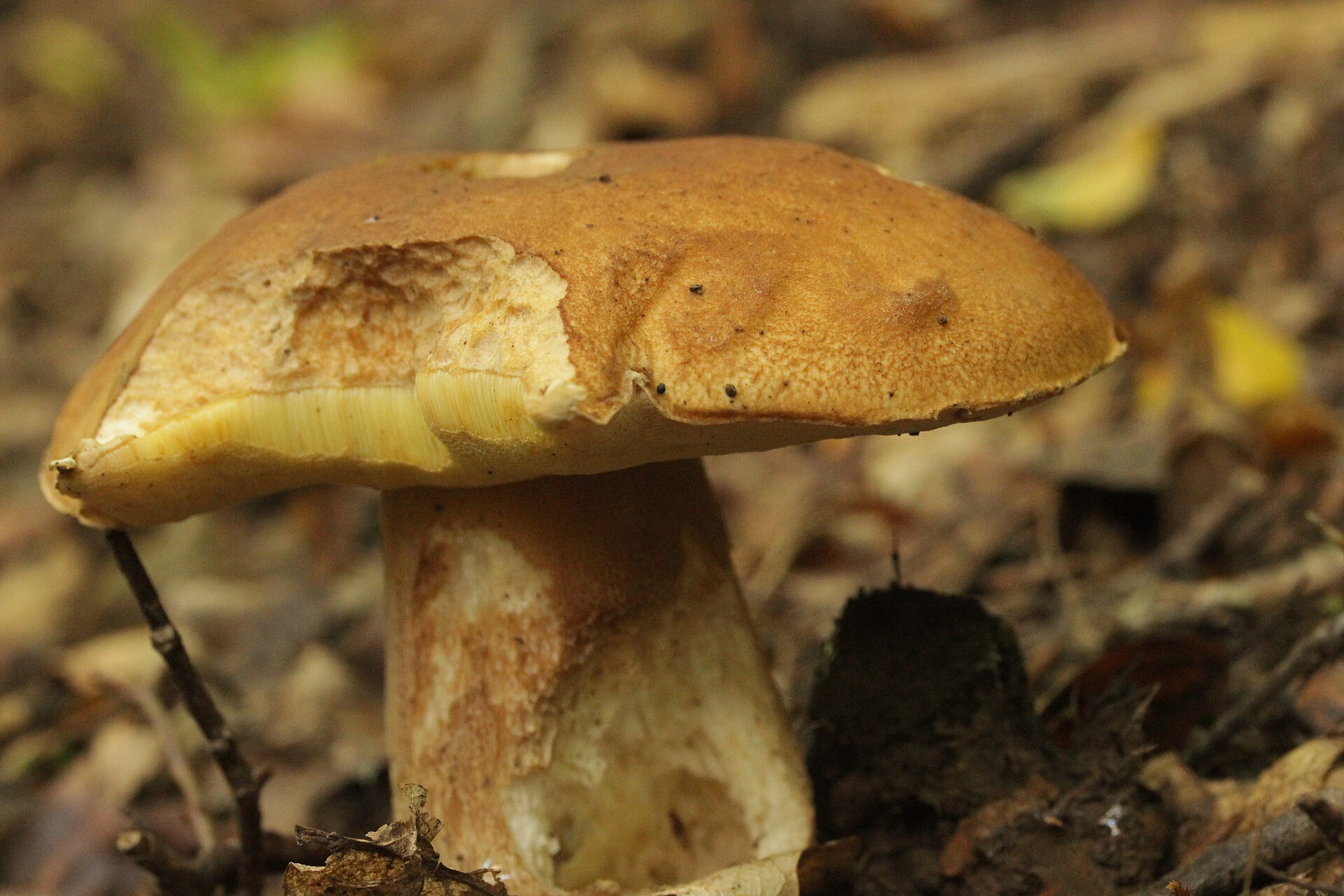
Boletus reticulatus, commonly known as the Summer Cep, is a large edible bolete closely related to Boletus edulis. It is usually recognized by its warm brown to ochre cap, thick pale stem with a strong net-like pattern, white-to-olive pores, and firm white flesh that generally does not turn blue when cut.
The species is especially associated with broadleaf trees such as oak and beech and often appears earlier in the year than classic autumn Porcini. Because several king boletes look very similar, the best identification comes from combining cap texture, stem reticulation, pore development, host trees, and season.
⚠️ Important: This guide is for identification and education only. Never eat a wild mushroom based solely on photographs, AI identification, or an online comparison.
Quick Identification
| Feature | Boletus reticulatus |
|---|---|
| Scientific name | Boletus reticulatus |
| Common names | Summer Cep, Summer Bolete |
| Family | Boletaceae |
| Cap color | Tan, ochre-brown, warm brown |
| Cap surface | Dry, often velvety or finely cracked |
| Underside | Pores, not gills |
| Young pores | White to cream |
| Mature pores | Yellow to olive |
| Stem | Thick, pale, often bulbous when young |
| Stem pattern | Strong pale reticulation |
| Flesh | White, firm |
| Bruising | Usually little or no blueing |
| Spore print | Olive-brown |
| Ecology | Mycorrhizal |
| Main hosts | Oak, beech, other broadleaf trees |
| Season | Late spring through summer, sometimes into autumn |
| Edibility | Edible when correctly identified |
| Main look-alikes | Boletus edulis, Boletus pinophilus, Boletus aereus, Tylopilus felleus |
What Does Boletus reticulatus Look Like?
Summer Cep has the classic king bolete shape: a thick fleshy cap, a stout stem, and a sponge-like pore layer underneath. Young specimens are compact and heavy, while older mushrooms become broader and more open.
The cap is usually lighter and warmer than that of Boletus pinophilus. Tan, ochre, hazel, and light chestnut tones are common.
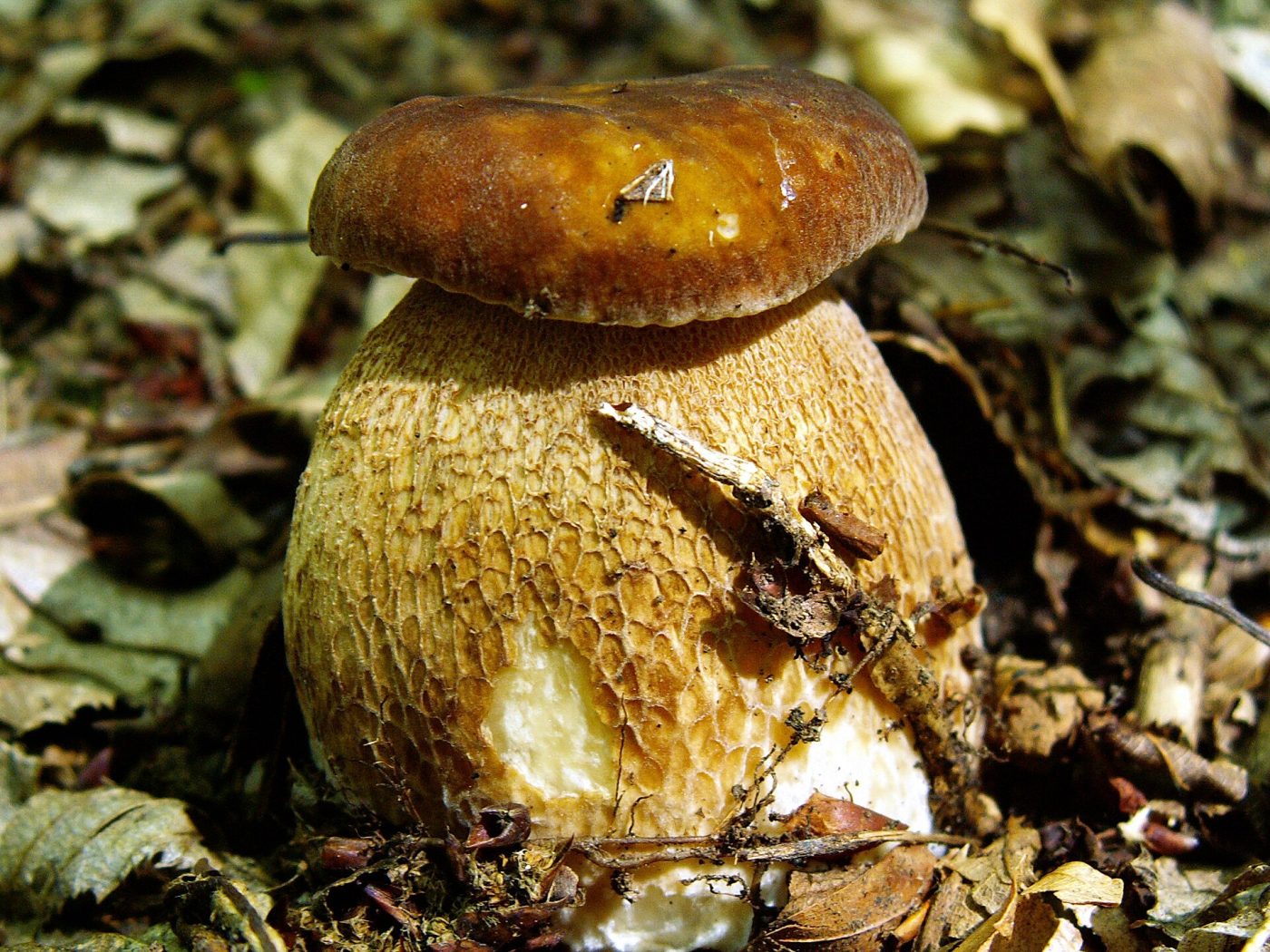
The stem often carries a very obvious pale network extending over much of its surface. This reticulation is one of the most useful field clues.
Cap
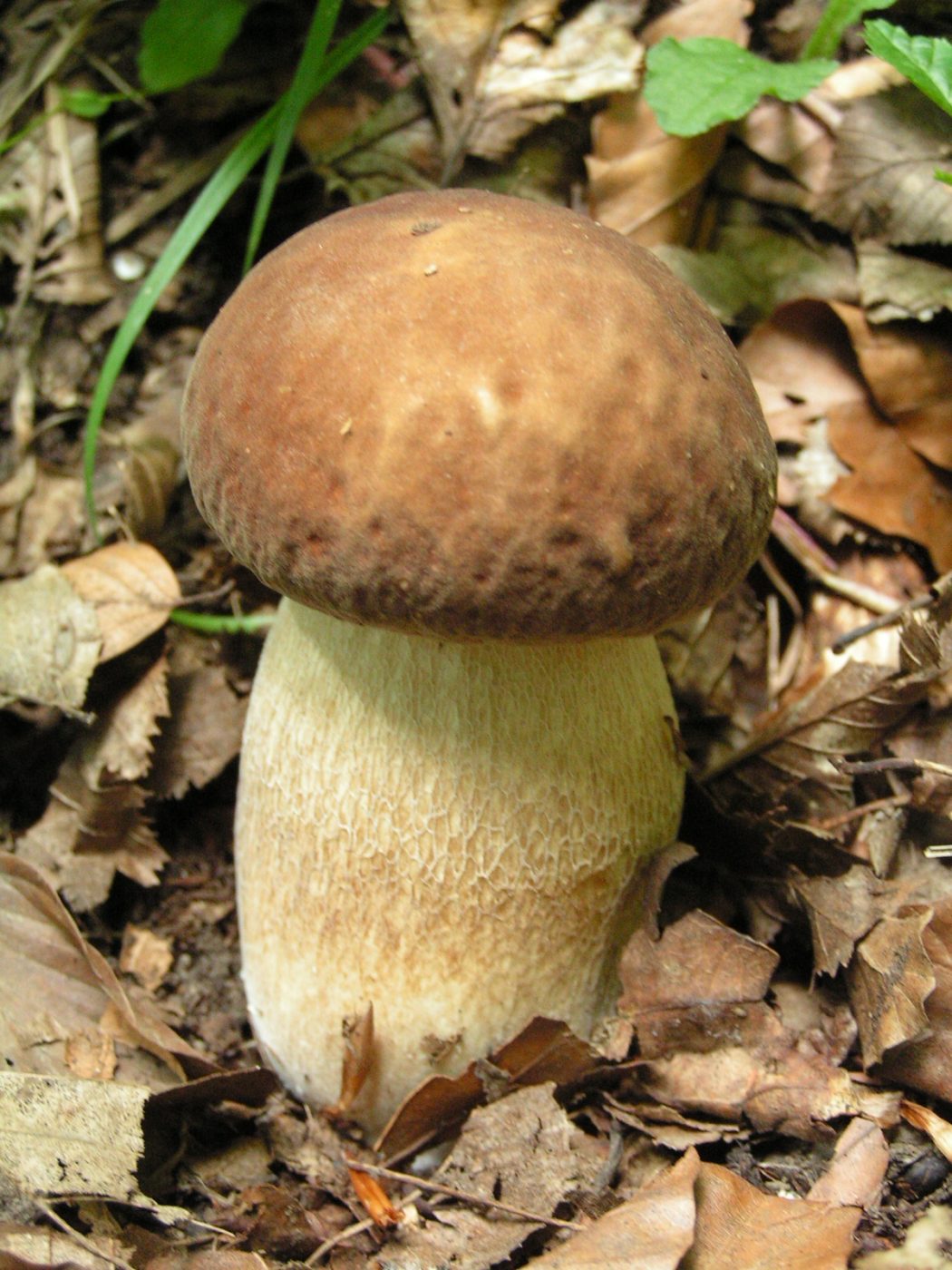
The cap starts hemispherical and gradually expands with age. Mature specimens can become broad, slightly flattened, and irregular around the edge.
Color ranges from pale brown and ochre to warm chestnut. The cap can appear especially light in dry weather.
Cap Surface
The surface is usually dry and can feel slightly velvety. In hot conditions it may develop fine cracks, especially toward the center.
This dry cracked appearance is more typical of Summer Cep than of some smoother, stickier king boletes. Weather still has a strong effect, so texture should not be used alone.
Pores
Young pore surfaces are white or cream. As the mushroom matures, they gradually become yellow and later olive-green.
The pores are fine and tightly packed. They do not begin red or orange.
Bruising
Strong blue bruising is not typical. Slight discoloration can occur, but dramatic dark blue staining should lead toward another bolete group.
This stable pale flesh helps place the mushroom within the king bolete complex. It does not by itself distinguish the exact species.
Stem
The stem is thick and often swollen or club-shaped when young. Older specimens can become more cylindrical while remaining robust.
It is usually pale cream to light brown. The most distinctive feature is the net-like reticulation.
Stem Reticulation
The network is generally pale and can extend far down the stem. In some specimens it is more obvious than in Boletus edulis.
This extensive reticulation is one of the strongest clues for Summer Cep. It should still be interpreted together with cap texture and broadleaf habitat.
Flesh
The flesh is thick, white, and firm in fresh mushrooms. It usually remains white after cutting.
Older specimens become softer, especially near the pore layer. Insect damage can also be extensive.
Texture
Young fruit bodies are dense and compact. The cap and stem feel substantial compared with many smaller boletes.
As the mushroom ages, the pore layer becomes increasingly spongy. Very old fruit bodies may lose much of their firm texture.
Smell
The smell is pleasant and mushroom-like. Some people describe it as nutty or earthy.
Odor is not distinctive enough for species identification. Stem reticulation, cap surface, and host trees are more useful.
Spore Print
The spore print is olive-brown. This is typical of many boletes.
Spore color confirms the broader group but does not separate Summer Cep from other king boletes. Morphology and ecology are more practical.
Where Does Boletus reticulatus Grow?
Boletus reticulatus is mycorrhizal and grows from soil in association with living broadleaf trees. Oak and beech are among its most important hosts. Warm deciduous woodland, woodland edges, parks with mature oaks, and mixed broadleaf forests can all support it. It can occur several meters from the nearest trunk because tree roots extend far underground.
Oak and Beech Association
Oak woodland is one of the classic habitats for Summer Cep. Beech forests can also be highly productive. This strong broadleaf association helps separate the species from Boletus pinophilus, which is more strongly associated with conifers.
When Does Boletus reticulatus Grow?
The species often appears earlier than many other king boletes. Late spring and summer are especially important. In warm regions, fruiting may begin after early summer rains. Later flushes can continue into autumn if conditions remain suitable.
Why It Is Called Summer Cep
The common name reflects its tendency to fruit during warm months. This is especially noticeable in regions where Boletus edulis becomes more abundant later in the year. Season is helpful but not decisive. Weather can shift fruiting by several weeks.
Distribution
Boletus reticulatus is widespread in Europe and parts of western Eurasia. It is especially characteristic of warm and temperate broadleaf forests. Similar king boletes occur elsewhere, but the name should not automatically be applied to every pale reticulated bolete worldwide. Regional taxonomy matters.
Is Boletus reticulatus Edible?
Yes. Summer Cep is considered an excellent edible mushroom when correctly identified. Young specimens have firm flesh and are highly valued. Older mushrooms often become soft and heavily attacked by insects. Accurate identification remains important because Bitter Bolete can resemble king boletes and may grow in similar habitats.
Boletus reticulatus Look-Alikes
The closest look-alikes are other king boletes. These species share thick stems, pale young pores, and white non-blueing flesh. The main differences involve cap color, cap texture, host trees, season, and how extensive the reticulation is.
Boletus edulis — Porcini
Identification
Boletus edulis usually has a medium to dark brown cap and pale reticulation concentrated more strongly near the upper stem. The cap can appear smoother and slightly more moist than that of Summer Cep.
Its pores also mature from white to yellow and olive. The flesh remains white.
Main Difference
Summer Cep often has a drier, paler cap and more extensive stem reticulation. It is also more strongly associated with warm broadleaf woodland.
The differences can be subtle. Some specimens may be difficult to separate confidently from photographs alone.
Boletus reticulatus vs Boletus edulis
| Feature | Boletus reticulatus | Boletus edulis |
|---|---|---|
| Cap | Pale to warm brown | Medium to darker brown |
| Cap surface | Dry, often velvety | Smoother, sometimes slightly tacky |
| Reticulation | Often extensive | Often strongest near upper stem |
| Main hosts | Oak, beech | Broadleaf and conifer trees |
| Main season | Late spring–summer | Summer–autumn |
| Bruising | Little or none | Little or none |
The combination of dry cap, strong reticulation, and broadleaf habitat is particularly useful.
Boletus pinophilus — Pine Bolete
Identification
Pine Bolete has a darker reddish-brown to wine-brown cap. It is strongly associated with pine and other conifers.
The stem is also thick and reticulated, and the pores mature in the same white-to-olive sequence.
Main Difference
Host trees and cap color are the strongest clues. A pale dry bolete beneath oak is more consistent with Summer Cep, while a dark reddish bolete beneath pine favors Boletus pinophilus.
Boletus aereus — Bronze Bolete
Identification
Bronze Bolete has a very dark brown to nearly black cap and a thick pale stem with reticulation. It favors warm oak and other broadleaf woodland.
Its flesh remains white and firm. The pore surface also follows the typical king bolete color progression.
Main Difference
The much darker cap is usually the first clue. Bronze Bolete often looks more strongly contrasted than the warm tan Summer Cep.
Both can grow under oak, so cap tone and overall appearance become important.
Tylopilus felleus — Bitter Bolete
Identification
Bitter Bolete can mimic the general Porcini shape. It has a brown cap, pale pores when young, and a thick stem with obvious netting.
As it matures, the pore surface develops a pinkish tint. The stem network is often darker and more pronounced.
Main Difference
Pink mature pores and dark reticulation point toward Tylopilus felleus. Summer Cep develops yellow to olive pores and usually has pale reticulation.
The species is intensely bitter and considered inedible.
Boletus reticulatus vs Bitter Bolete
| Feature | Summer Cep | Bitter Bolete |
|---|---|---|
| Mature pores | Yellow to olive | Pinkish |
| Stem netting | Pale | Dark brown |
| Cap | Warm brown, often dry | Brown |
| Flesh | White, mild | White, extremely bitter |
| Edibility | Edible when correctly identified | Inedible |
Mature pore color is one of the strongest practical differences.
How to Identify Boletus reticulatus Step by Step
Start by confirming that the mushroom has pores rather than gills. Then check for a dry warm-brown cap and a thick pale stem with strong net-like reticulation.
Next, cut the flesh and confirm that it remains broadly white. Finally, look at the nearby trees and check for oak, beech, or another broadleaf host.
Step 1: Check the Cap
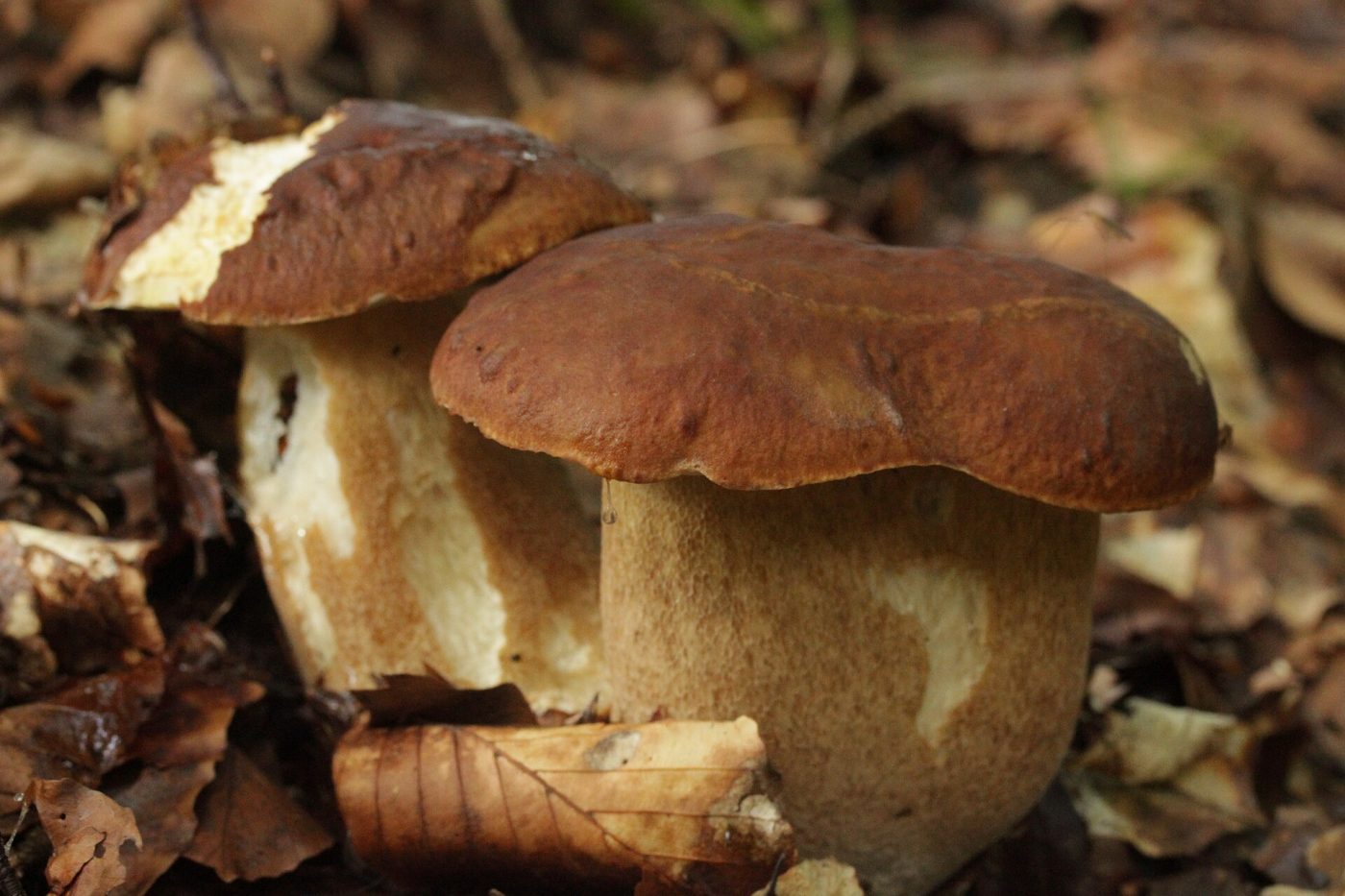
Look for tan, ochre, or warm brown coloration. A dry or slightly velvety surface supports the identification.
Fine cracking in hot weather is also common. A very dark reddish cap suggests another king bolete.
Step 2: Check the Pores
Young pores should be white to cream. Mature pores should shift toward yellow and olive.
Pink mature pores suggest Bitter Bolete. Red pores exclude the classic king bolete group.
Step 3: Examine the Stem
Look for a thick pale stem with clear reticulation. The network may extend over much of the stem.
Dark brown netting should raise suspicion for Tylopilus felleus. Weak or absent reticulation should also prompt a closer look.
Step 4: Cut the Flesh
The interior should remain white or show only minimal discoloration. Strong blue staining is not characteristic.
A clean cut also reveals insect damage. This is especially useful in large mature specimens.
Step 5: Check the Host Trees
Oak and beech strongly support Boletus reticulatus. Broadleaf habitat is a major ecological clue.
If the mushroom grows beneath pine or spruce, another king bolete may be more likely. Host evidence should always support the physical features.
Why Summer Cep Can Look Different in Dry Weather
Hot dry conditions can make the cap paler, rougher, and more cracked. The surface may lose the smooth appearance seen in fresh specimens after rain. Dry weather can also make the stem look more strongly reticulated as the surface contracts slightly. This variability can make one species appear quite different across the season. Moisture therefore changes appearance without changing identity. Structural features remain more reliable than exact color.
How to Photograph Boletus reticulatus for Identification
Take a side view showing the full cap and stem. This helps document proportions and the extent of reticulation. Then photograph the pore surface closely enough to show its color. A close-up of the stem network is especially important. A cut section can confirm the white non-blueing flesh. Finally, include oak leaves, beech leaves, or the nearby host tree if possible.
Can AI Identify Boletus reticulatus?
AI can usually recognize the king bolete group from the thick stem, brown cap, and pale pores. Distinguishing Summer Cep from Boletus edulis is more difficult. Cap texture, host tree, season, and stem reticulation improve the result. Multiple images are far more useful than one cap-only photograph. A cautious system should sometimes return a king bolete group identification rather than force an exact species name. This is especially appropriate when habitat information is missing.
Common Identification Mistakes
One common mistake is calling every Porcini-like mushroom Boletus edulis. Summer Cep can be equally robust but often has a drier cap and stronger reticulation.
Another mistake is ignoring mature pore color. Pink pores suggest Bitter Bolete rather than a king bolete.
A third mistake is assuming summer season alone proves the identification. Several boletes can fruit during the same warm period.
Frequently Asked Questions
Why do some Summer Ceps have deeply cracked caps?
Hot dry weather can cause the cap surface to split as the fruit body expands. Cracking is therefore common in exposed summer conditions and does not necessarily indicate another species.
Can Summer Cep grow in parks rather than forests?
Yes. Mature oaks and beeches in parks can support mycorrhizal fungi if the soil and root system remain suitable.
Why do some stems look almost entirely covered in netting?
The reticulation can be unusually extensive in this species. In some specimens it extends far below the upper stem and becomes one of the most obvious features.
Can the cap become very pale?
Yes. Sun, age, and dry weather can fade the cap toward beige or pale ochre. Pores, stem pattern, and habitat remain more reliable.
Why are young specimens sometimes almost completely hidden in leaf litter?
The thick cap can push upward through leaves as it develops. Young fruit bodies may remain partly buried until the stem elongates.
Can one oak produce both Summer Cep and other king boletes?
Yes. A mature oak can associate with several mycorrhizal fungi, and different bolete species may fruit around the same root system.
Does heavy rain wash away useful identification features?
Rain can darken the cap and make the dry surface look smoother. The stem reticulation and pore structure are generally less affected.
Can Summer Cep fruit again in the same place later in the season?
Yes. The underground mycelium can produce several flushes when rainfall and temperature remain favorable.
Final Identification Notes
Boletus reticulatus is best recognized by the combination of a warm brown dry cap, thick pale stem with extensive reticulation, white young pores becoming yellow to olive, firm white non-blueing flesh, and strong association with oak, beech, and other broadleaf trees.
Its closest comparisons are Boletus edulis, Boletus pinophilus, and Boletus aereus. Cap texture, host tree, season, and stem reticulation are the most useful ways to separate them.
The most important dangerous-looking confusion is usually not a deadly species but Bitter Bolete. Always check the mature pore color and stem netting before treating a Porcini-like mushroom as a king bolete.
Upload a photo and get possible matches in seconds.