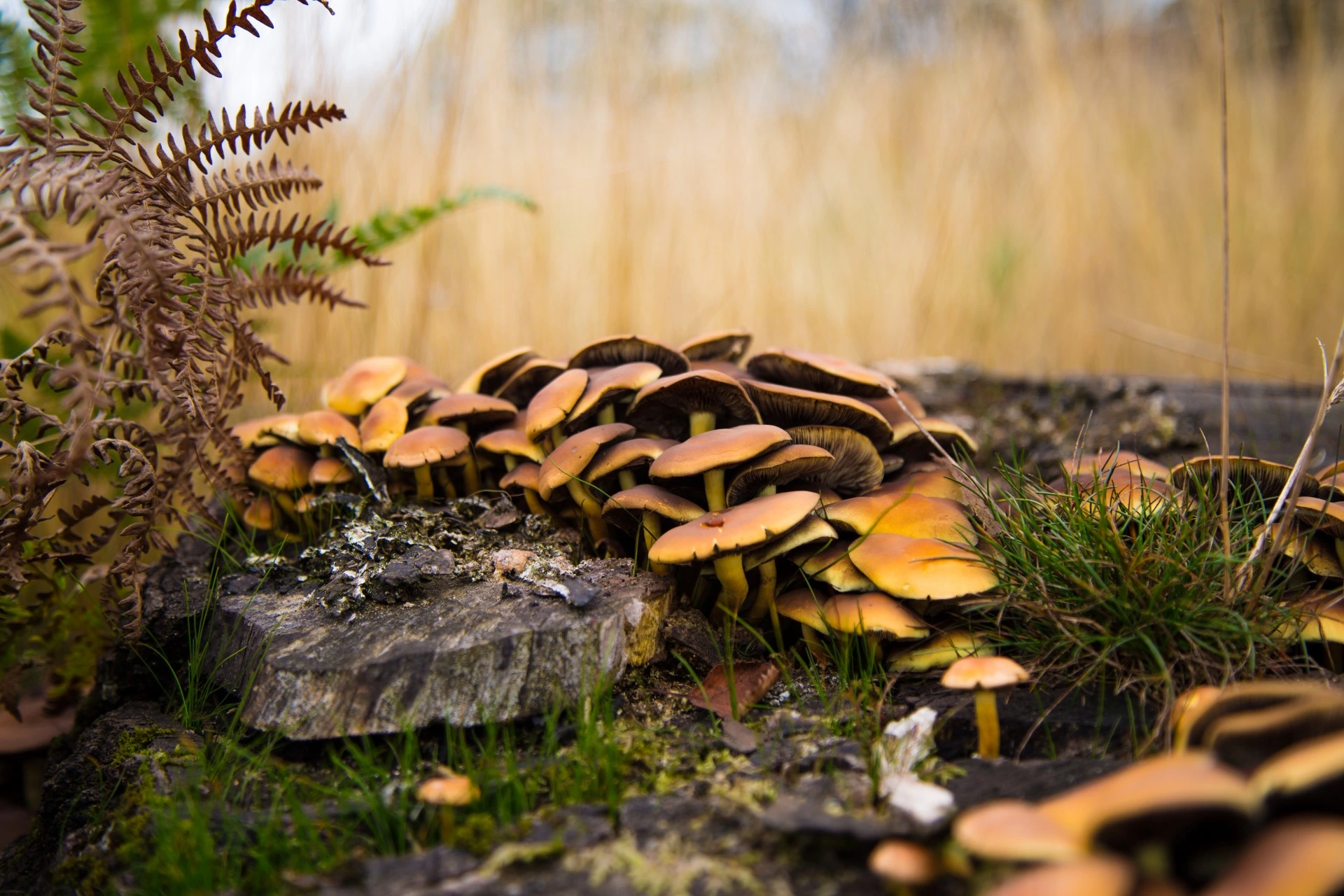
Autumn is often the most productive time of year for mushroom growth in temperate regions. Forest floors that looked almost empty during summer can suddenly fill with boletes, chanterelles, Amanitas, milkcaps, webcaps, puffballs, and dozens of other fungi after only a few days of cool, wet weather.
The reason is not simply that “mushrooms like rain.” Autumn combines several environmental conditions at once: moist soil, moderate temperatures, accumulated summer warmth, abundant organic material, and changing tree activity. Together, these conditions create an ideal window for many fungi to produce visible fruit bodies.
⚠️ Important: Mushroom fruiting varies by region, altitude, rainfall, and species. Autumn is a major season in many temperate areas, but some mushrooms fruit mainly in spring, summer, or winter.
Mushrooms Are Only the Visible Part of a Fungus
The mushroom you see above ground is only the reproductive structure of a much larger organism. Most of the fungus exists as a network of microscopic threads called mycelium, which grows through soil, wood, leaf litter, or other organic material.
This underground or hidden network may remain active for months or years without producing a visible mushroom. When environmental conditions become suitable, the mycelium redirects resources toward producing fruit bodies that release spores.
Autumn often provides exactly the combination of temperature and moisture needed to trigger this transition.
Autumn Brings More Reliable Moisture
Moisture is one of the most important factors controlling mushroom fruiting. Fungal fruit bodies contain a large amount of water, and developing mushrooms can dry out quickly if humidity is too low.
Summer rainfall may be followed by heat and rapid evaporation, preventing the soil surface from staying moist for long. In autumn, lower temperatures reduce evaporation, so rain remains available in the upper soil layers for a longer period.
This creates a much more stable environment for mushrooms to form and mature.
Why Repeated Rain Matters More Than One Storm
A single heavy rain does not always produce a major mushroom flush. What often matters more is repeated rainfall over several days or weeks.
This gradually rehydrates soil, wood, moss, and leaf litter. Once deeper layers become moist enough, fungal mycelium can remain active long enough to invest energy in fruiting.
That is why mushroom numbers can increase dramatically after a sequence of wet autumn days rather than immediately after the first rain.
Cooler Temperatures Reduce Water Loss
Autumn temperatures are generally cooler than summer temperatures, but the soil often remains relatively warm. This creates favorable conditions for many temperate fungi.
Cooler air reduces evaporation from both soil and mushroom surfaces. At the same time, residual summer warmth keeps fungal metabolism active.
This balance is especially useful for mushrooms that require moist conditions but do not tolerate extreme cold.
Soil Stays Warm After Summer
Air temperatures can fall quickly in autumn, but soil cools more slowly. The ground stores heat accumulated during summer and releases it gradually.
This means the soil can remain biologically active even when nights become much cooler. Tree roots, microorganisms, and fungal mycelium continue functioning below the surface.
For many mycorrhizal mushrooms, this period offers the moisture of autumn without the inactive frozen soil conditions of winter.
Trees Influence Autumn Mushroom Growth
Many familiar forest mushrooms are mycorrhizal, meaning they form partnerships with living tree roots. Boletes, chanterelles, Amanitas, milkcaps, russulas, and many Cortinarius species belong to this group.
Trees provide fungi with carbohydrates created through photosynthesis. In return, fungal networks help trees obtain water and mineral nutrients from the soil.
Seasonal changes in tree activity can influence how much energy is available to the fungus and when fruit bodies appear.
Mycorrhizal Mushrooms in Autumn
By late summer and early autumn, trees have spent months producing sugars through photosynthesis. Mycorrhizal fungi may have access to substantial energy reserves accumulated during this growing period.
If moisture and temperature are also favorable, the fungus can invest some of these resources into producing mushrooms.
This helps explain why forests can suddenly produce large numbers of boletes, Amanitas, chanterelles, and milkcaps during autumn.
Falling Leaves Change the Forest Floor
Autumn adds a fresh layer of leaves, twigs, bark, and other organic material to the forest floor.
Much of this material will eventually be decomposed by fungi and other organisms. Leaf litter also helps retain moisture by shading the soil and reducing direct evaporation.
The result is a cooler, damper microclimate close to the ground, exactly where many mushrooms develop.
Dead Wood Holds More Moisture in Autumn
Wood-decaying fungi also benefit from autumn conditions. Fallen logs, stumps, dead branches, and buried roots absorb moisture during prolonged wet weather.
This can trigger fruiting in species such as Oyster Mushrooms, Honey Mushrooms, Velvet Shank, Deadly Galerina, and many bracket fungi.
A log that remains too dry during summer may become an excellent fungal substrate after several weeks of autumn rain.
Why Mushroom Flushes Can Appear Overnight
People often describe mushrooms as appearing overnight, and this can be surprisingly close to the truth.
The fungal organism was already present long before the mushroom became visible. Once conditions are suitable, some fruit bodies can expand extremely quickly because much of their growth involves rapid water uptake and cell expansion rather than slow construction of entirely new tissue.
A lawn or forest path can therefore look empty one day and contain dozens of mushrooms shortly afterward.
Humidity Is as Important as Rainfall
Rainfall is easy to notice, but humidity also plays an important role.
High relative humidity slows water loss from developing fruit bodies. Autumn mornings often have fog, dew, and cool damp air that allow mushrooms to remain hydrated.
This is one reason shaded forests and mossy areas can produce mushrooms even when recent rainfall has not been especially heavy.
Shorter Days Can Also Matter
Day length itself is not a universal trigger for all mushroom species, but seasonal light changes often occur alongside temperature and moisture changes.
Some fungi respond to environmental cues associated with autumn, including cooling, humidity shifts, and changing soil conditions.
Because each species has its own fruiting strategy, no single autumn signal explains every mushroom.
Why Different Mushrooms Appear at Different Times
Autumn mushroom season does not happen all at once. Different species respond to different combinations of temperature, moisture, host tree activity, and soil conditions.
Some species appear in late summer and disappear by early autumn. Others peak in September or October, while cold-tolerant fungi may continue into November or even winter.
A forest can therefore change dramatically from week to week.
Early Autumn Mushrooms
Early autumn often produces species that still benefit from relatively warm soil.
Depending on region, this can include Porcini, chanterelles, Saffron Milk Caps, various russulas, boletes, and Amanitas.
Warm days combined with cooler nights and periodic rain can create excellent conditions for these groups.
Mid-Autumn Mushrooms
Mid-autumn is often the richest period for mushroom diversity.
Soil moisture is usually more consistent, leaf litter has begun accumulating, and temperatures remain moderate enough for many species.
Honey Mushrooms, Hedgehog Mushrooms, Oyster Mushrooms, boletes, milkcaps, Amanitas, webcaps, and many other fungi can all overlap during this period.
Late Autumn Mushrooms
As temperatures continue to fall, some warm-season fungi decline while cold-tolerant species become more prominent.
Oyster Mushrooms and Velvet Shank are classic examples of fungi that can continue fruiting after many other species have disappeared.
In mild climates, mushroom season may extend well into winter.
Why Autumn Mushroom Season Varies by Region
There is no universal autumn mushroom calendar.
Northern regions may experience peak fruiting in August or September, while warmer regions may not reach their best conditions until October or November. Mountain areas can shift even earlier because temperatures fall more rapidly with elevation.
Local rainfall can also override normal seasonal patterns. A dry autumn may produce fewer mushrooms than a wet late summer.
Autumn Mushrooms in Europe
In much of temperate Europe, late summer through autumn is one of the richest periods for woodland fungi. Common groups include boletes, chanterelles, milkcaps, russulas, Amanitas, Honey Mushrooms, Hedgehog Mushrooms, and numerous Cortinarius species. The exact timing differs between northern Scandinavia, central Europe, the Mediterranean region, and higher elevations.
Autumn Mushrooms in North America
North America contains enormous climatic variation, so autumn mushroom season differs greatly between regions. The Pacific Northwest can produce abundant forest mushrooms during cool rainy autumn weather, while eastern hardwood forests have their own waves of boletes, Amanitas, chanterelles, Honey Mushrooms, and wood-growing fungi. Warmer southern regions may continue producing mushrooms much later in the year.
Why Some Years Have More Mushrooms Than Others
Mushroom abundance can vary dramatically from year to year even at the same location.
Rainfall timing is one of the biggest factors. A wet autumn following a suitable growing season may produce large flushes, while prolonged drought can suppress fruiting even if temperatures are otherwise ideal.
Previous weather can matter too because the underground fungal network responds to conditions over longer periods than the few days when mushrooms are visible.
Does a Wet Summer Mean a Good Autumn Mushroom Season?
Not necessarily, but it can help.
Adequate summer moisture can support fungal growth and keep soil from becoming severely dry. However, heavy autumn rainfall is often still required to trigger fruiting.
A dry summer followed by consistent autumn rain can sometimes produce an excellent season, while a wet summer followed by dry autumn weather may produce fewer mushrooms than expected.
Does Warm Autumn Weather Help Mushrooms?
Moderately warm autumn weather can extend the fruiting season.
If temperatures remain mild and moisture is available, many species continue producing fruit bodies. Extremely warm and dry weather, however, may reduce mushroom activity by increasing evaporation.
The best conditions are usually moist rather than simply warm.
What Happens After the First Frost?
The first frost does not necessarily end mushroom season.
Some delicate species decline quickly, but others tolerate cold conditions surprisingly well. Oyster Mushrooms, Velvet Shank, and several wood-growing fungi can continue fruiting after light frost.
Repeated hard freezes eventually reduce activity in many terrestrial species because frozen soil limits biological processes and water availability.
Why Forests Produce More Mushrooms Than Dry Open Areas
Forests create stable microclimates. Tree canopies reduce direct sunlight and wind, while leaf litter, moss, and woody debris help retain moisture. These conditions prevent rapid drying after rain. Forests also contain abundant tree roots and dead organic material, supporting both mycorrhizal and decomposer fungi.
Why Lawns Also Produce Autumn Mushrooms
Lawns can become highly productive after autumn rain because grass roots, organic matter, and compact moist soil provide suitable habitat for many fungi. Shaggy Mane, Green-Spored Parasol, Fairy Ring Mushrooms, and numerous small grassland species may appear. Trees around lawns can also support mycorrhizal fungi whose underground roots extend far beyond the visible canopy.
Why Mushrooms Often Return to the Same Place
The visible mushroom disappears, but the mycelium usually remains. If the underground fungus continues to have access to suitable soil, wood, or host trees, it can produce new fruit bodies when seasonal conditions return. This is why productive mushroom locations may fruit repeatedly over many years.
Does Picking Mushrooms Stop Them From Growing Again?
Picking a fruit body does not usually remove the entire fungus because most of the organism remains in soil or wood. Future fruiting depends more on the health of the mycelium, habitat, moisture, and environmental conditions. However, repeated disturbance of soil or damage to the surrounding habitat can affect fungal communities over time.
How Quickly Do Mushrooms Grow After Rain?
There is no single answer because species differ greatly. Some mushrooms can become visible within a few days of favorable rainfall, while others respond more slowly or require a longer period of soil moisture. Temperature also matters, so the same amount of rain can produce different results in August, October, or December.
Best Places to Look for Mushrooms in Autumn
Woodlands are usually the most diverse places to search because they combine moist soil, tree roots, leaf litter, and dead wood.
Forest edges, mossy paths, old stumps, lawns near mature trees, pine plantations, and damp parks can also be productive.
Instead of looking only for mushrooms, look for the environmental conditions that fungi need: moisture, organic material, shade, and suitable host trees.
How Weather Helps With Mushroom Identification
Weather can provide useful context but should not be treated as a species-level identification feature.
Knowing that a mushroom appeared after several cool wet days in October can help explain why many autumn species are fruiting simultaneously.
Morphology still matters more. Cap shape, underside structure, stem features, substrate, spore color, and bruising reactions remain the main identification tools.
Can Climate Change Affect Mushroom Season?
Long-term changes in temperature and rainfall can alter fungal fruiting patterns. Warmer autumns may extend the season for some species, while drought can suppress fruiting even when temperatures remain suitable. Changes in tree distribution can also affect mycorrhizal mushrooms that depend on particular hosts. Because fungi respond to several environmental variables at once, changes are unlikely to be identical across all species or regions.
How to Photograph Autumn Mushrooms for Identification
Photograph the entire mushroom from several angles rather than only the cap.
Include the underside, stem, complete stem base, substrate, and nearby trees. These features often reveal far more than color.
If several mushrooms of different ages are present, photograph them together. Young and mature specimens can show changes in gill color, veil remnants, cap shape, or bruising that improve identification.
Frequently Asked Questions
Why do mushrooms grow more in autumn?
Autumn often provides the ideal combination of moisture, moderate temperatures, high humidity, and warm soil. These conditions allow fungal mycelium to produce and maintain fruit bodies more successfully than during hot dry summer weather.
Does rain make mushrooms grow?
Rain is an important trigger for many species, but one shower is not always enough. Repeated rainfall that keeps soil and wood consistently moist is usually more favorable.
How long after rain do mushrooms appear?
Some species can appear within a few days, while others take longer. The response depends on species, soil temperature, previous moisture levels, and local climate.
Why are there fewer mushrooms during summer?
Summer heat can dry soil and fruit bodies quickly, especially in exposed habitats. Some mushrooms still fruit in summer, but autumn conditions are generally more stable for moisture-loving species.
Can mushrooms grow in cold weather?
Yes. Several species tolerate low temperatures, and mushrooms such as Oyster Mushroom and Velvet Shank can continue fruiting into late autumn or winter.
Does the first frost end mushroom season?
Not always. A light frost may stop some species but have little effect on cold-tolerant fungi, especially wood-growing mushrooms.
Why do mushrooms grow near trees in autumn?
Many forest mushrooms form mycorrhizal partnerships with tree roots. Autumn moisture and accumulated energy from the growing season can favor fruiting of these fungi.
Why do mushrooms return to the same location every year?
The underground mycelium can survive for many years. When suitable conditions return, it may produce new fruit bodies in the same general area.
Is October the best month for mushrooms?
October is often excellent in temperate regions, but the peak month varies with latitude, altitude, rainfall, and local climate. Northern regions may peak earlier, while warmer regions may peak later.
What weather is best for mushroom hunting?
Several days of rain followed by cool to mild temperatures often create favorable conditions. Moist forests with high humidity are usually more productive than hot, dry, exposed areas.
Final Identification Notes
Autumn is peak mushroom season because several favorable conditions overlap at once. Soil is still relatively warm, rainfall becomes more frequent, humidity rises, and cooler temperatures slow evaporation.
At the same time, forests provide abundant tree roots, leaf litter, and dead wood for both mycorrhizal and decomposer fungi. These conditions allow many unrelated mushroom species to fruit simultaneously, producing the dramatic autumn flushes seen in temperate forests.
The exact timing changes from year to year and from one region to another. Instead of relying only on the calendar, watch for the combination of consistent rainfall, moist soil, moderate temperatures, high humidity, and suitable habitat that signals the beginning of a productive mushroom season.
Upload a photo and get possible matches in seconds.