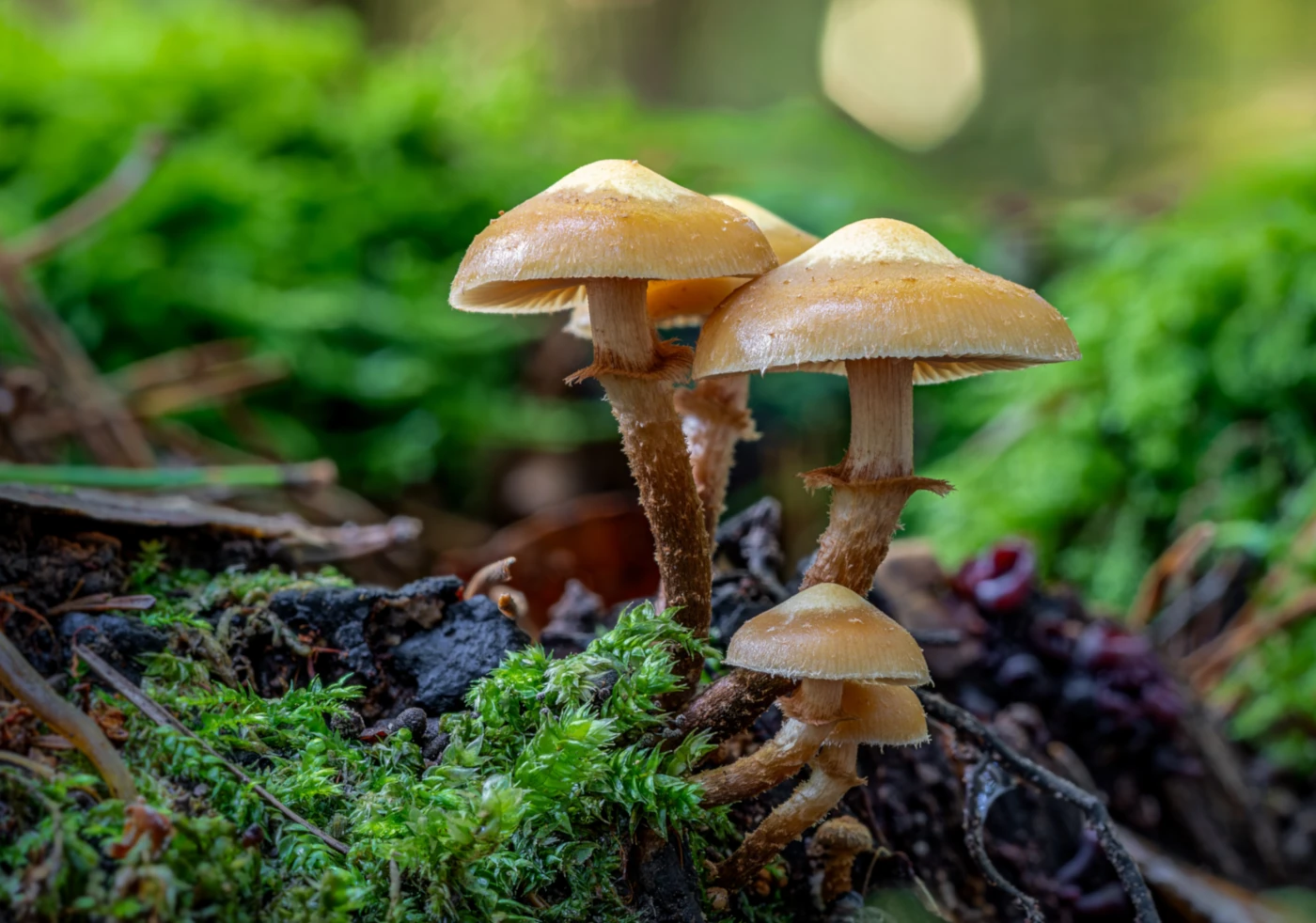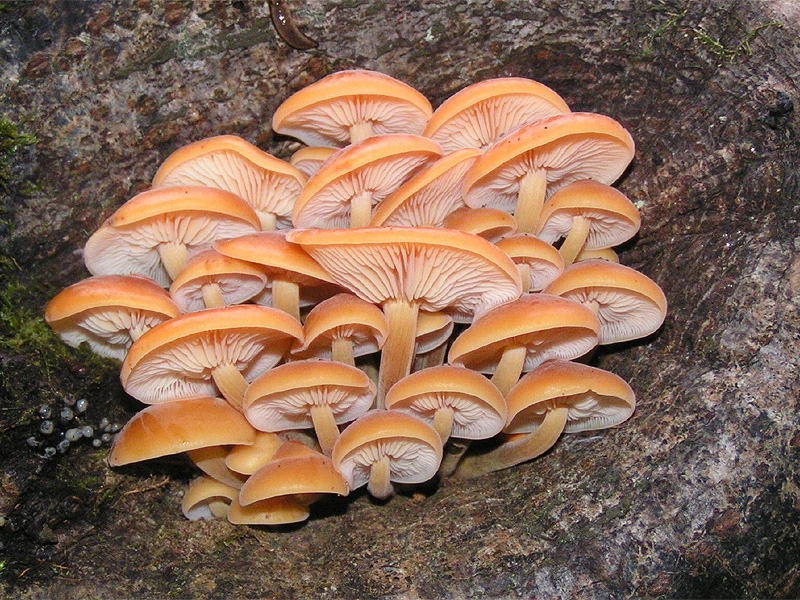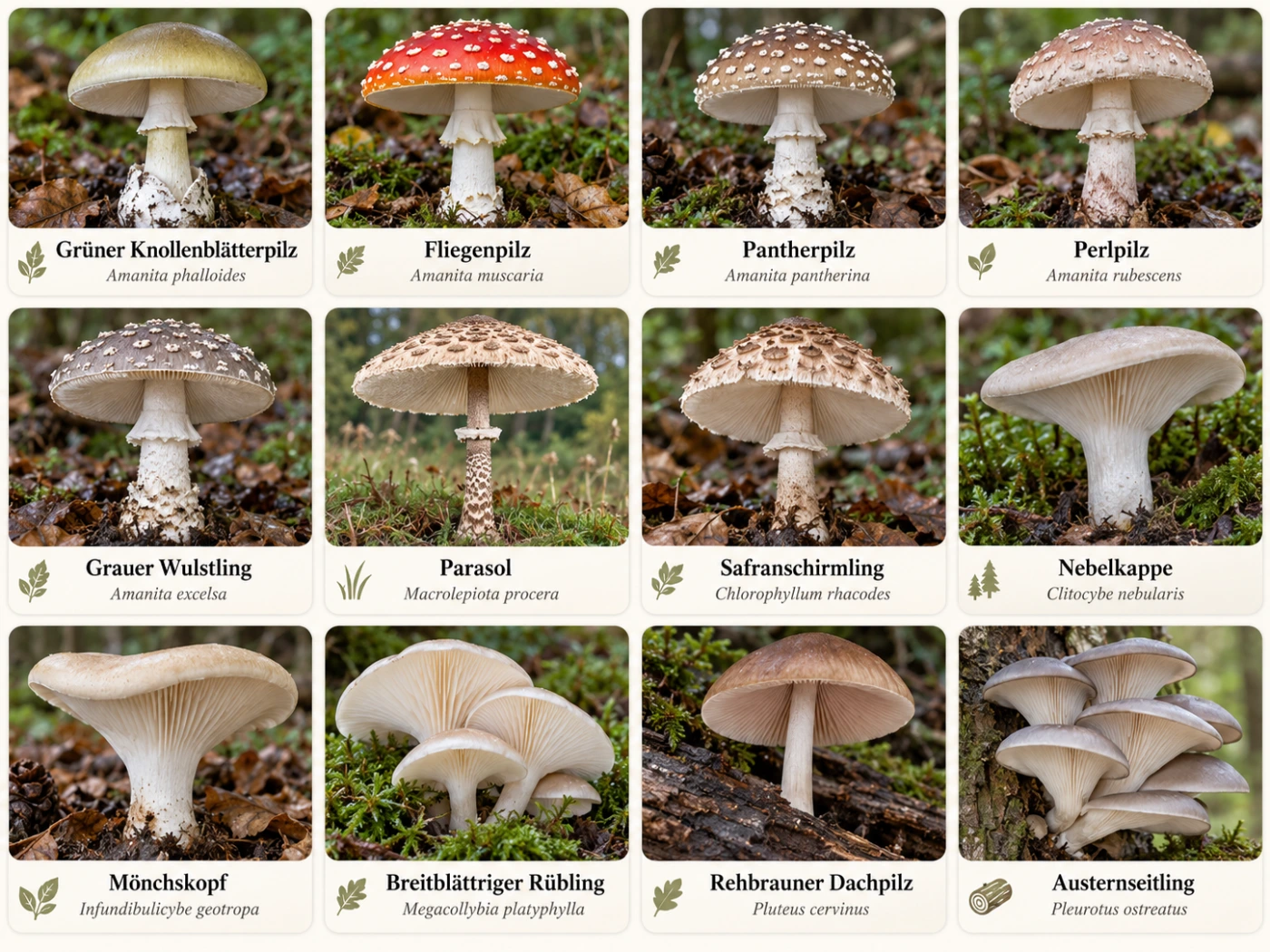
Pilze mit weißen Lamellen kommen in Deutschland sehr häufig vor. Unter ihnen befinden sich bekannte Speisepilze, ungenießbare Arten und einige der gefährlichsten Giftpilze Europas, weshalb die Lamellenfarbe niemals allein für eine Bestimmung ausreicht.
Wer einen Pilz mit weißen Lamellen bestimmen möchte, sollte zusätzlich auf Hut, Stiel, Ring, Stielbasis, Geruch, Standort und mögliche Farbveränderungen achten. Besonders wichtig ist die Frage, ob der Pilz eine Knolle oder eine sackartige Hülle an der Stielbasis besitzt, denn dieses Merkmal spielt bei mehreren Arten der Gattung Amanita eine zentrale Rolle.
Mit unserer Pilzbestimmung per Foto kannst du einen unbekannten Fund zunächst eingrenzen. Eine Fotoanalyse kann Hinweise liefern, sollte aber niemals allein darüber entscheiden, ob ein Pilz essbar ist.
Warum sind weiße Lamellen bei der Pilzbestimmung wichtig?
Die Lamellenfarbe ist ein hilfreiches erstes Merkmal, weil sie viele mögliche Arten bereits ausschließen kann. Trotzdem besitzen zahlreiche Pilze über weite Teile ihres Lebenszyklus weiße oder cremefarbene Lamellen, obwohl sie zu völlig unterschiedlichen Gattungen gehören.
Bei einigen Arten bleiben die Lamellen dauerhaft weiß. Bei anderen verfärben sie sich mit zunehmendem Alter, weil sich Farbe und Sporenpulver verändern. Deshalb sollte zusätzlich geprüft werden, ob die Lamellen frei am Stiel stehen, angewachsen sind oder am Stiel herablaufen.
Auch der Abstand zwischen den Lamellen kann relevant sein. Manche Arten besitzen sehr dicht stehende Lamellen, während andere deutlich größere Zwischenräume zeigen.
Woran erkennt man einen Pilz mit weißen Lamellen?
Am besten wird zuerst die Unterseite des Hutes betrachtet. Sind dort deutlich ausgeprägte helle Lamellen sichtbar, lohnt sich als Nächstes ein genauer Blick auf Stiel und Stielbasis.
Ein Ring am Stiel, eine knollige Basis oder Reste einer Hülle können bei der Bestimmung sehr wichtig sein. Auch die Struktur des Hutes hilft weiter, etwa ob er glatt, schuppig, faserig oder mit hellen Velumresten bedeckt ist.
Der Standort liefert zusätzliche Hinweise. Ein weißlamelliger Pilz auf Totholz gehört wahrscheinlich zu einer anderen Gruppe als ein ähnlich aussehender Pilz, der auf dem Waldboden unter Buchen wächst.
12 häufige Pilze mit weißen Lamellen in Deutschland
Die folgenden Arten gehören zu den bekannteren Pilzen, die zumindest in einem wichtigen Entwicklungsstadium weiße oder sehr helle Lamellen besitzen. Einige sind leicht zu erkennen, andere können nur durch die Kombination mehrerer Merkmale zuverlässig eingeordnet werden.
1. Grüner Knollenblätterpilz – Amanita phalloides
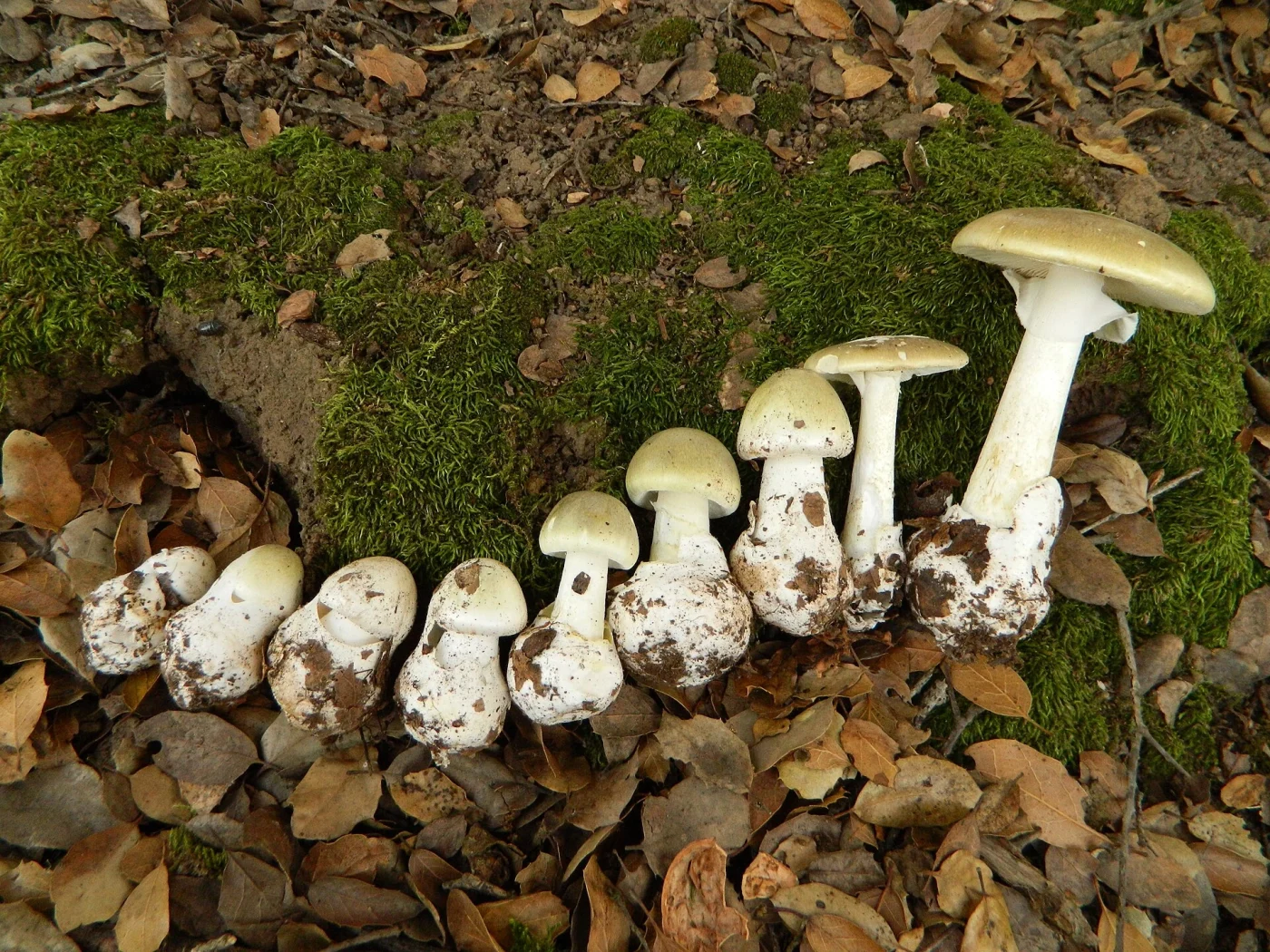
Der Grüne Knollenblätterpilz gehört zu den gefährlichsten Giftpilzen Europas. Seine Lamellen sind weiß, der Stiel ist hell und besitzt typischerweise einen Ring.
Besonders wichtig ist die sackartige Hülle an der Stielbasis. Der Hut kann olivgrün, gelbgrün, graugrün oder teilweise fast bräunlich wirken, sodass die Farbe allein keine sichere Bestimmung erlaubt.
Junge Exemplare können noch vollständig von einer weißen Hülle umgeben sein. Deshalb sollte bei weißlamelligen Pilzen mit Ring und knolliger Basis immer sehr vorsichtig bestimmt werden.
Mehr zu wichtigen gefährlichen Arten findest du in unserer Übersicht Giftige Pilze in Deutschland: 15 Arten, die du kennen solltest.
2. Fliegenpilz – Amanita muscaria
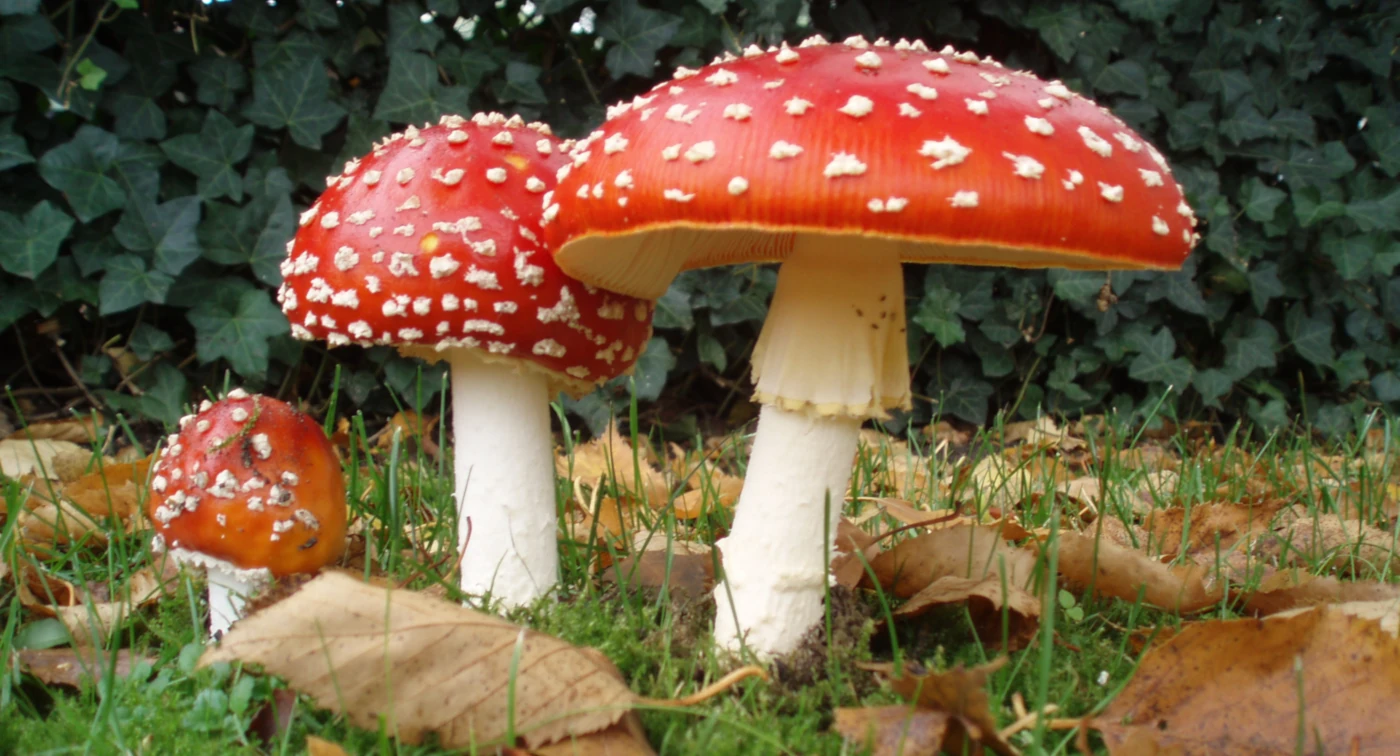
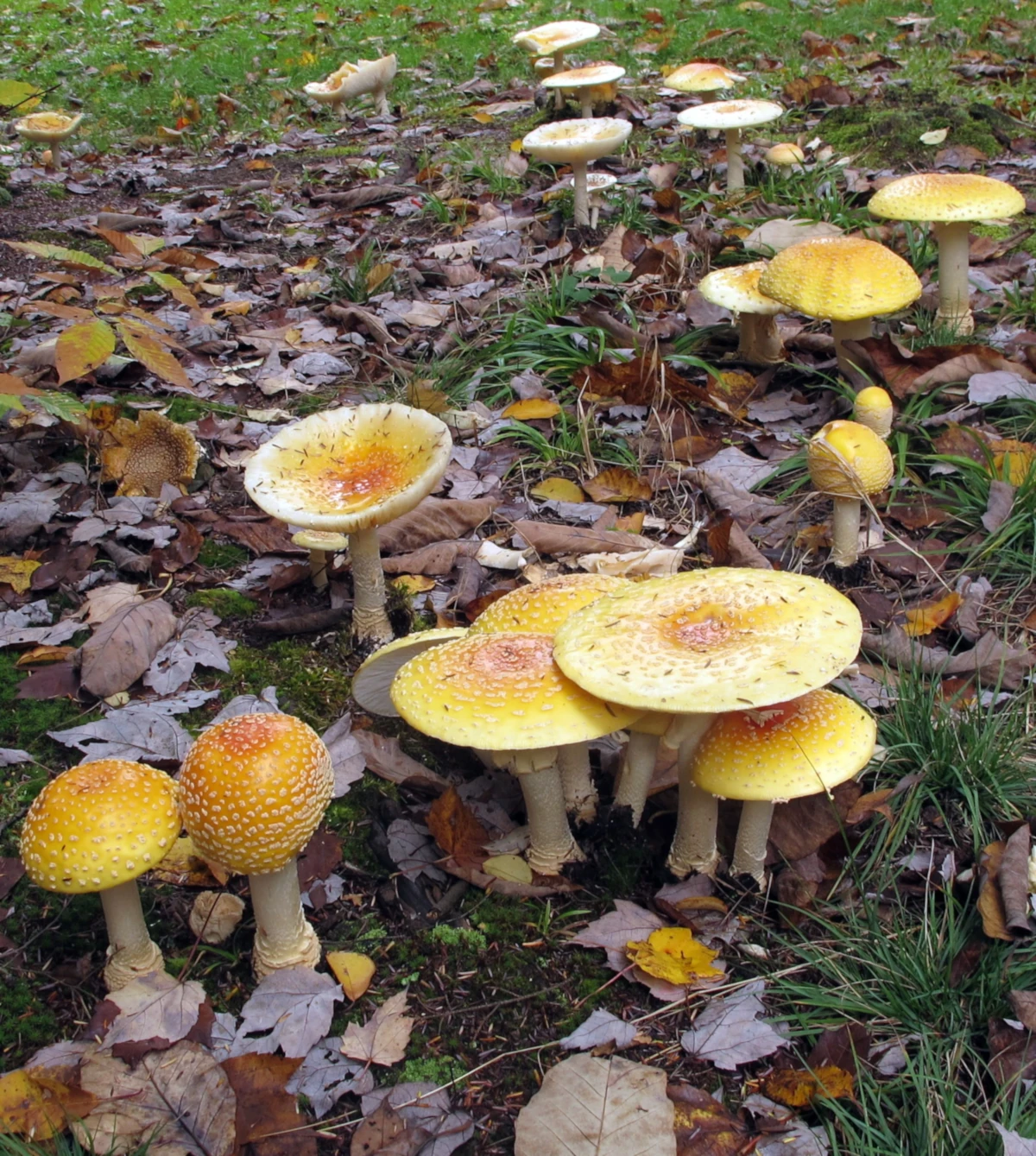
Der Fliegenpilz ist meist leicht an seinem roten bis orangefarbenen Hut mit weißen Punkten zu erkennen. Seine Lamellen sind weiß, der Stiel ist ebenfalls hell und trägt gewöhnlich einen Ring.
An der Stielbasis befinden sich verdickte Strukturen und Reste der ursprünglichen Hülle. Regen kann die weißen Velumreste vom Hut teilweise oder vollständig abwaschen, wodurch ältere Exemplare weniger typisch aussehen.
Der Fliegenpilz ist giftig und sollte nicht mit essbaren Arten verwechselt werden. Besonders ungewöhnlich gefärbte oder stark verwitterte Exemplare können weniger auffällig wirken als klassische Bilderbuch-Fruchtkörper.
3. Pantherpilz – Amanita pantherina
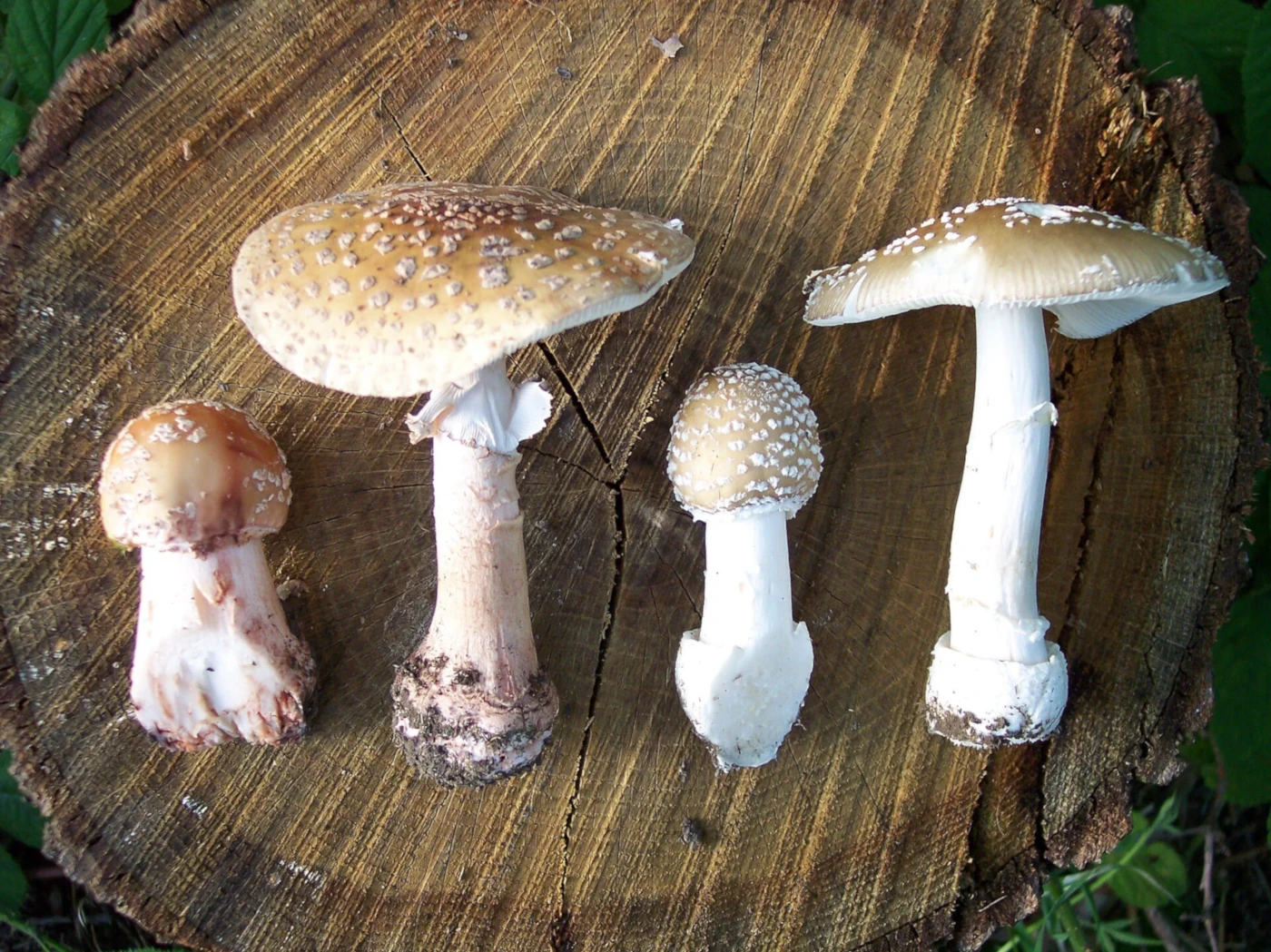
Der Pantherpilz besitzt einen grau- bis dunkelbraunen Hut mit hellen Velumresten. Die Lamellen sind weiß, der Stiel ist hell und trägt einen Ring.
Charakteristisch sind die Strukturen an der Stielbasis, die bei der Bestimmung unbedingt berücksichtigt werden sollten. Wird der Pilz direkt über dem Boden abgeschnitten, kann dieses wichtige Merkmal verloren gehen.
Der Pantherpilz ist giftig und kann mit anderen braunen Wulstlingen verwechselt werden. Gerade bei dieser Gruppe ist eine vollständige Ansicht des Fruchtkörpers besonders wichtig.
4. Perlpilz – Amanita rubescens
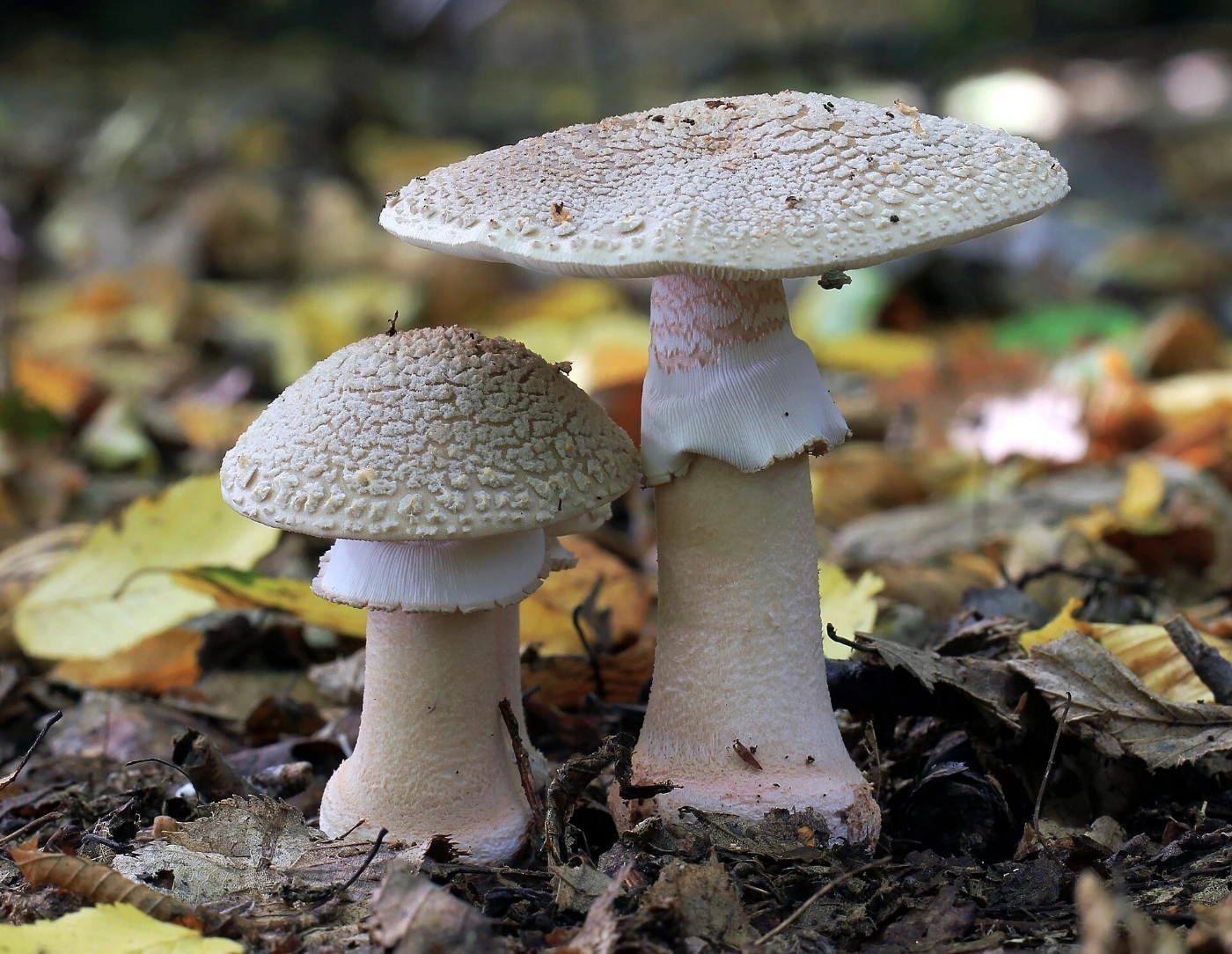
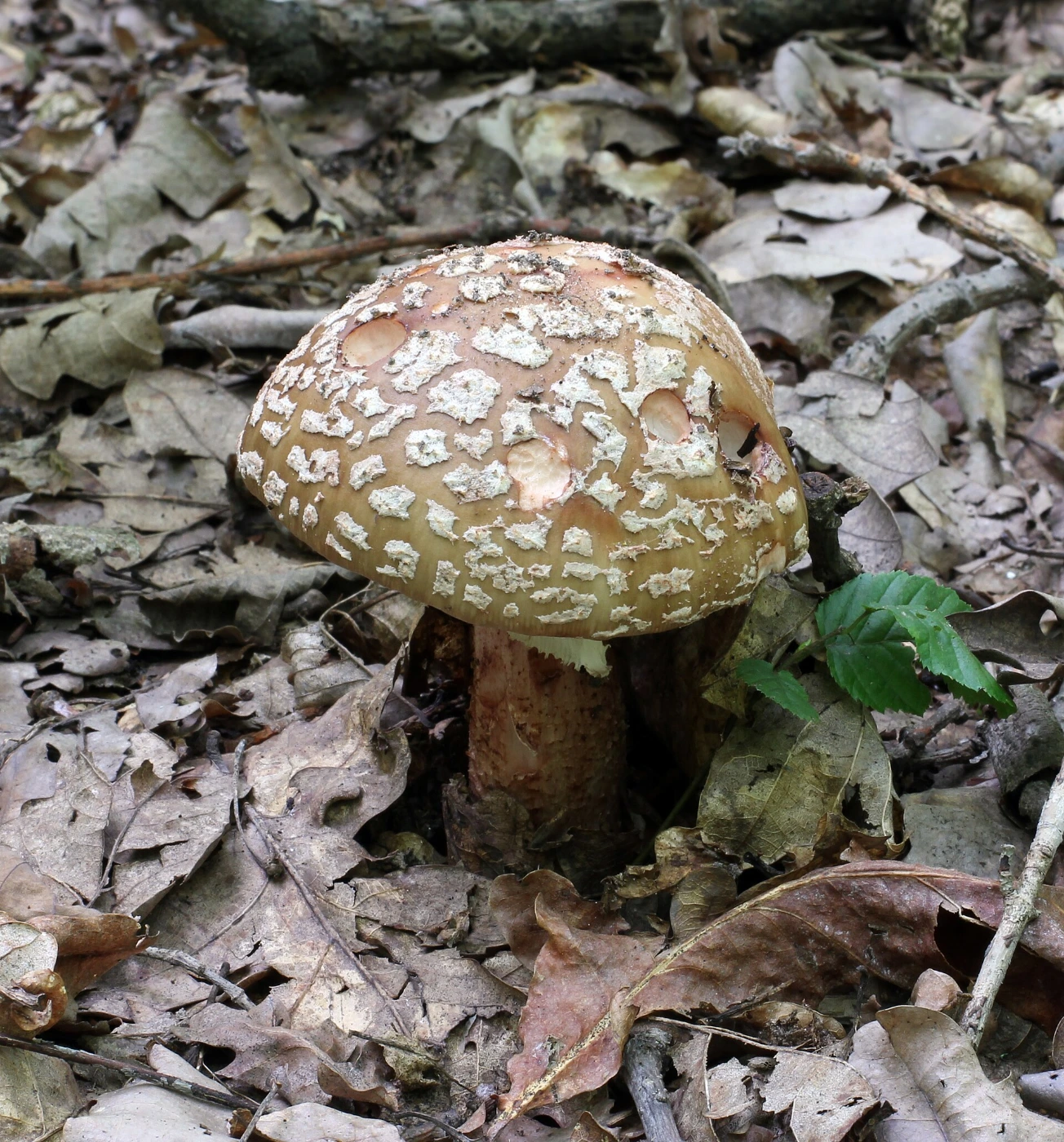
Der Perlpilz besitzt ebenfalls helle Lamellen und einen Ring am Stiel. Sein Hut kann braun, rötlichbraun oder grau wirken und trägt häufig helle Velumreste.
Ein wichtiges Merkmal ist die rötliche Verfärbung verletzter Stellen. Besonders an Fraßstellen, Stiel und Fleisch können rosa bis rötliche Töne auftreten.
Der Perlpilz wird in Pilzliteratur als essbar nach ausreichender Erhitzung beschrieben, kann aber mit giftigen Arten der Gattung Amanita verwechselt werden. Eine unsichere Bestimmung ist daher für den Verzehr nicht ausreichend.
5. Grauer Wulstling – Amanita excelsa
Der Graue Wulstling besitzt einen graubraunen bis dunkelbraunen Hut und weiße Lamellen. Der Stiel ist hell und trägt einen Ring, während an der Basis eine Verdickung vorhanden sein kann.
Die Art kann dem Pantherpilz ähneln. Für die Unterscheidung sind unter anderem Hutfarbe, Ringstruktur, Stielbasis und Gesamterscheinung wichtig.
Gerade bei älteren Exemplaren können typische Merkmale weniger deutlich werden. Eine Bestimmung allein anhand eines Fotos von oben ist deshalb problematisch.
6. Parasol – Macrolepiota procera
Der Parasol gehört zu den auffälligsten großen Lamellenpilzen. Seine Lamellen sind hell und stehen frei vom Stiel, während der Hut eine charakteristische schuppige Oberfläche besitzt.
Der lange Stiel zeigt meist eine deutlich genatterte Zeichnung und trägt einen verschiebbaren Ring. Ausgewachsene Exemplare können sehr groß werden und besitzen einen schirmartig ausgebreiteten Hut.
Obwohl der Parasol als bekannter Speisepilz gilt, gibt es ähnliche Arten. Besonders kleinere Schirmlinge sollten nicht allein aufgrund der Hutform als Parasol bestimmt werden.
7. Safranschirmling – Chlorophyllum rhacodes
Der Safranschirmling besitzt ebenfalls helle Lamellen und einen schuppigen Hut. Im Gegensatz zum Parasol fehlt jedoch häufig die typische deutliche Natterung des Stiels.
Das Fleisch kann nach Verletzung orange bis rötlich anlaufen. Dieses Merkmal ist bei der Einordnung hilfreich, sollte aber zusammen mit Hutstruktur, Stiel und Standort betrachtet werden.
Innerhalb der Gattung Chlorophyllum gibt es mehrere ähnliche Arten. Eine genaue Bestimmung kann deshalb schwieriger sein, als die auffällige Form zunächst vermuten lässt.
8. Nebelkappe – Clitocybe nebularis
Die Nebelkappe besitzt einen grauen bis graubraunen Hut und helle, oft cremeweiße Lamellen. Diese laufen etwas am Stiel herab und unterscheiden die Art damit von Pilzen mit frei stehenden Lamellen.
Der Fruchtkörper ist meist kräftig und kann einen intensiven Geruch besitzen. Die Art wächst häufig in größeren Gruppen oder Hexenringen in Laub- und Nadelwäldern.
Die Nebelkappe wird heute nicht allgemein als unproblematischer Speisepilz empfohlen. Sie kann bei empfindlichen Personen Beschwerden verursachen und sollte nicht aufgrund älterer Sammeltraditionen automatisch als geeignet betrachtet werden.
9. Mönchskopf – Infundibulicybe geotropa
Der Mönchskopf besitzt einen hellen bis lederfarbenen Hut und weißliche bis cremefarbene Lamellen. Der Hut entwickelt häufig eine trichterförmige Gestalt mit einer kleinen Erhebung in der Mitte.
Die Lamellen laufen am Stiel herab. Der Fruchtkörper kann relativ groß werden und wächst häufig in Gruppen oder Ringen.
Die Art zeigt, dass weiße Lamellen nicht automatisch mit weißen Hüten verbunden sind. Auch beige oder braun gefärbte Pilze können sehr helle Lamellen besitzen.
10. Breitblättriger Rübling – Megacollybia platyphylla
Der Breitblättrige Rübling besitzt einen graubraunen bis dunkelbraunen Hut und auffällig breite, helle Lamellen. Er wächst häufig auf stark zersetztem oder im Boden verborgenem Holz.
Der Stiel ist relativ schlank und kann an der Basis lange weiße Myzelstränge zeigen. Dieses Merkmal ist besonders hilfreich, wenn der Pilz vorsichtig vollständig entnommen wurde.
Die Art kann aufgrund ihrer unscheinbaren Hutfarbe leicht mit anderen braunen Lamellenpilzen verwechselt werden. Deshalb sollte besonders auf Lamellenbreite und Standort geachtet werden.
11. Rehbrauner Dachpilz – Pluteus cervinus
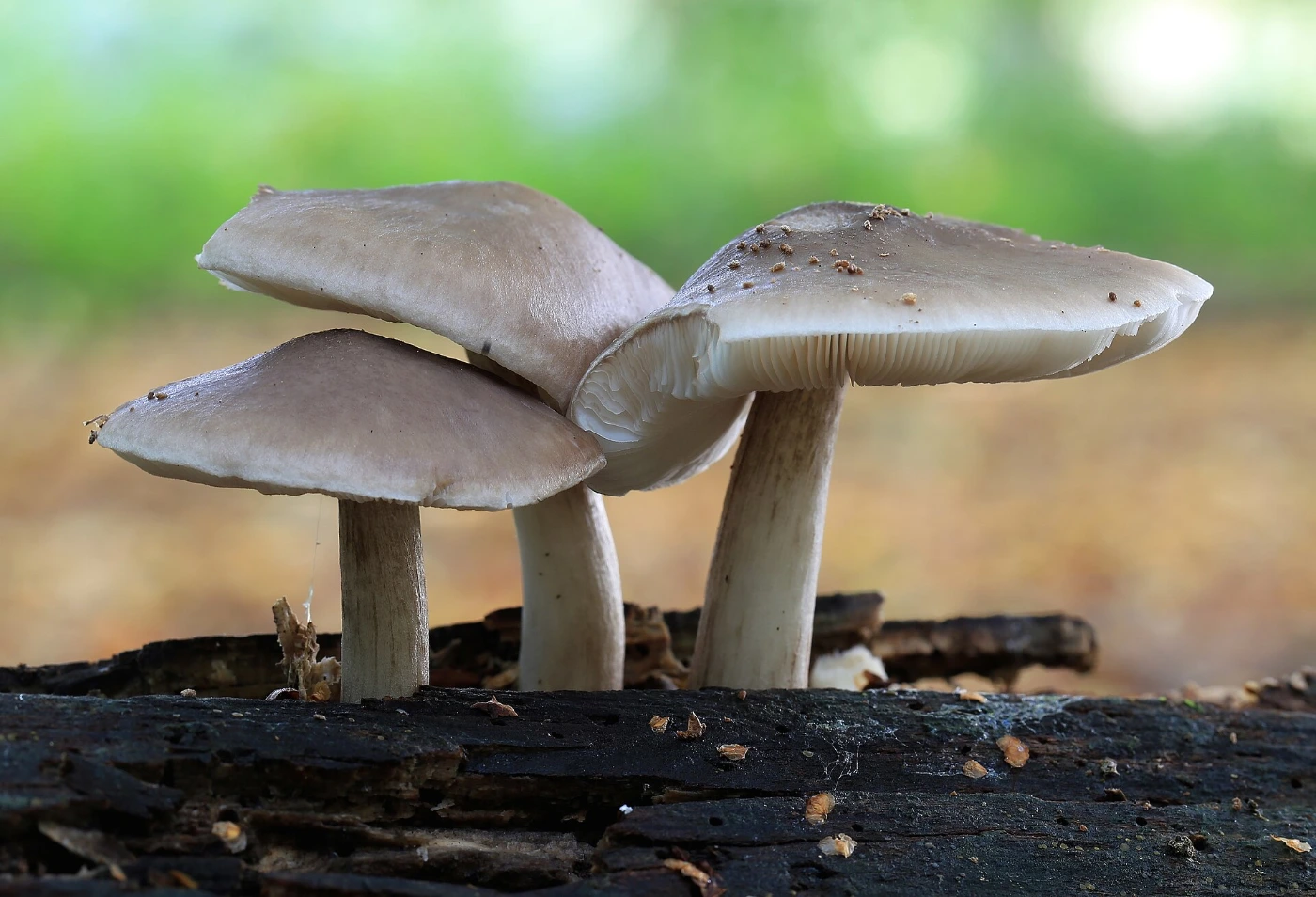
Der Rehbraune Dachpilz besitzt einen braunen Hut und zunächst sehr helle Lamellen. Im Verlauf der Entwicklung färben sich die Lamellen durch das rosa Sporenpulver zunehmend rosa.
Ein wichtiges Merkmal ist, dass die Lamellen frei vom Stiel stehen. Die Art wächst typischerweise auf Totholz oder stark zersetztem holzhaltigem Substrat.
Gerade junge Exemplare können wegen ihrer hellen Lamellen mit anderen Pilzen verwechselt werden. Bei älteren Fruchtkörpern liefert die rosa Lamellenfarbe einen zusätzlichen Hinweis.
12. Austernseitling – Pleurotus ostreatus
Der Austernseitling wächst typischerweise büschelig auf Holz. Seine Lamellen sind weiß bis cremefarben und laufen deutlich am meist seitlich sitzenden Stiel herab.
Der Hut kann grau, graubraun oder blaugrau wirken und besitzt eine muschelartige Form. Die Art tritt besonders häufig in der kühleren Jahreszeit auf und wächst vor allem an Laubholz.
Trotz seiner charakteristischen Form sollte auch ein vermeintlicher Austernseitling nicht allein anhand eines einzelnen Fotos bestimmt werden. Substrat, Lamellenverlauf und Wuchsform sollten gemeinsam passen.
Weiße Lamellen und Ring am Stiel
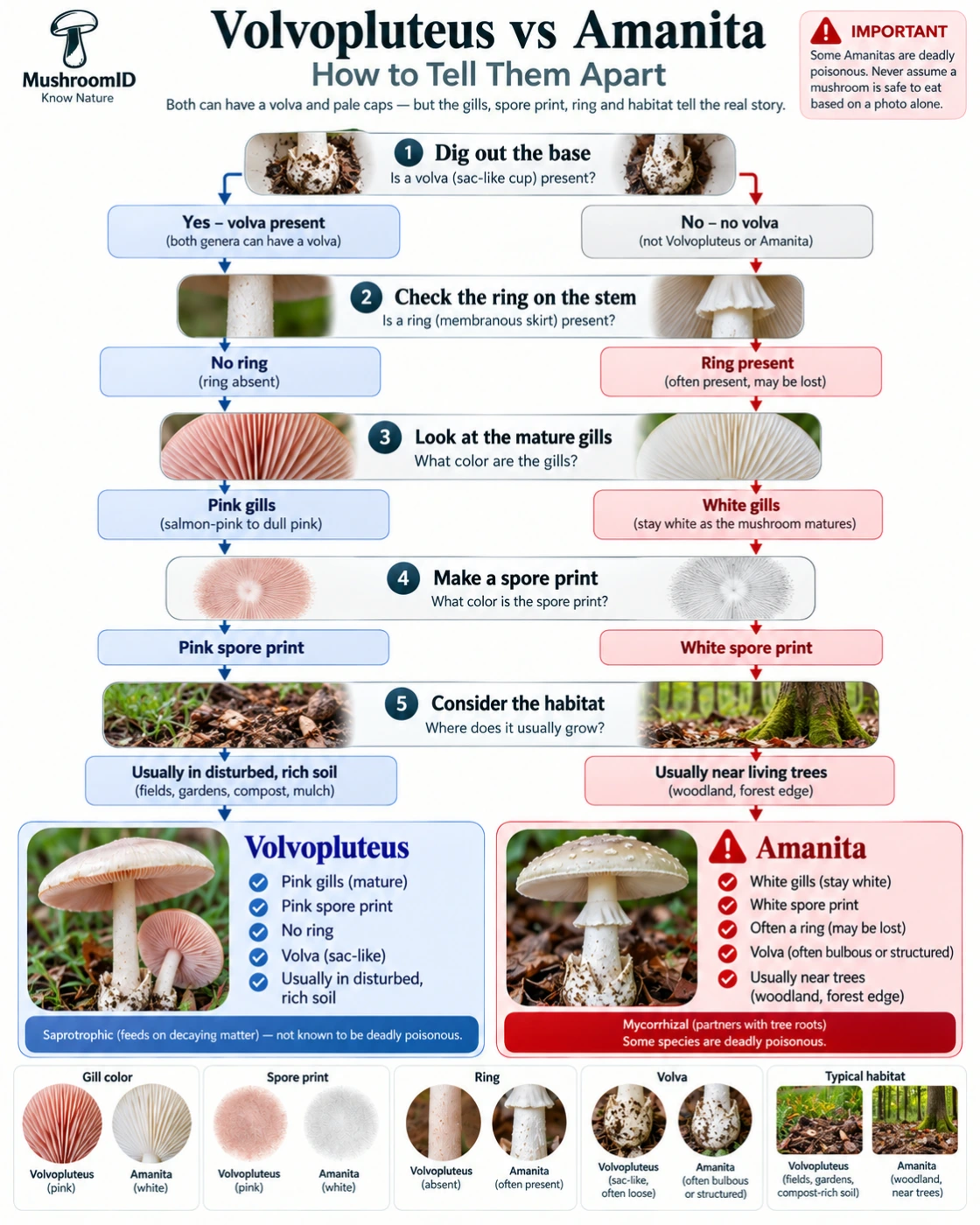
Ein Ring am Stiel kann die Zahl möglicher Arten deutlich einschränken. Besonders bei Arten der Gattung Amanita ist die Kombination aus weißen Lamellen, Ring und verdickter Stielbasis ein wichtiges Warnsignal.
Auch Schirmlinge wie Parasol und Safranschirmling besitzen einen Ring. Diese Pilze unterscheiden sich jedoch deutlich in Hutstruktur, Stielzeichnung und Gesamterscheinung.
Der Ring allein ist deshalb kein Beweis für eine bestimmte Art. Entscheidend ist immer die Kombination mehrerer Merkmale.
Weiße Lamellen und knollige Stielbasis
Eine verdickte oder knollige Stielbasis ist bei der Bestimmung besonders wichtig. Mehrere giftige Wulstlinge besitzen dort charakteristische Strukturen, die direkt über dem Boden leicht übersehen werden können.
Beim Grünen Knollenblätterpilz findet man eine deutlich sackartige Volva. Beim Pantherpilz und anderen Wulstlingen können dagegen andere Formen von Hüllresten an der Basis sichtbar sein.
Wenn ein unbekannter weißlamelliger Pilz bestimmt werden soll, sollte die Stielbasis deshalb möglichst vollständig erhalten bleiben. Ein Foto nur von Hut und oberem Stiel lässt gerade bei Amanita-Arten wichtige Informationen fehlen.
Weiße Lamellen ohne Ring
Nicht jeder weißlamellige Pilz besitzt einen Ring. Arten wie Mönchskopf, Nebelkappe oder Breitblättriger Rübling zeigen helle Lamellen, aber keine typische ringartige Struktur am Stiel.
In solchen Fällen werden Lamellenverlauf, Hutform und Standort wichtiger. Herablaufende Lamellen sprechen beispielsweise für andere Gruppen als frei stehende Lamellen.
Auch das Wachstum auf Holz kann die Bestimmung stark eingrenzen. Deshalb sollte immer mitfotografiert werden, ob der Pilz tatsächlich aus Erde, Totholz oder einem Baumstamm wächst.
Pilze mit weißen Lamellen auf Holz
Mehrere weißlamellige Arten wachsen direkt auf Holz. Austernseitlinge besitzen beispielsweise deutlich herablaufende Lamellen und wachsen häufig büschelig an Laubholz.
Auch der Rehbraune Dachpilz ist ein typischer Holzbewohner, entwickelt später jedoch rosa Lamellen. Der Breitblättrige Rübling kann dagegen scheinbar auf dem Boden wachsen, obwohl sich darunter vergrabenes Holz befindet.
Der Fundort ist deshalb besonders wertvoll. Ein Foto, das auch Stamm, Ast oder Baumstumpf zeigt, kann mehr Informationen liefern als eine weitere Nahaufnahme des Hutes.
Weiße Lamellen bedeuten nicht automatisch Champignon
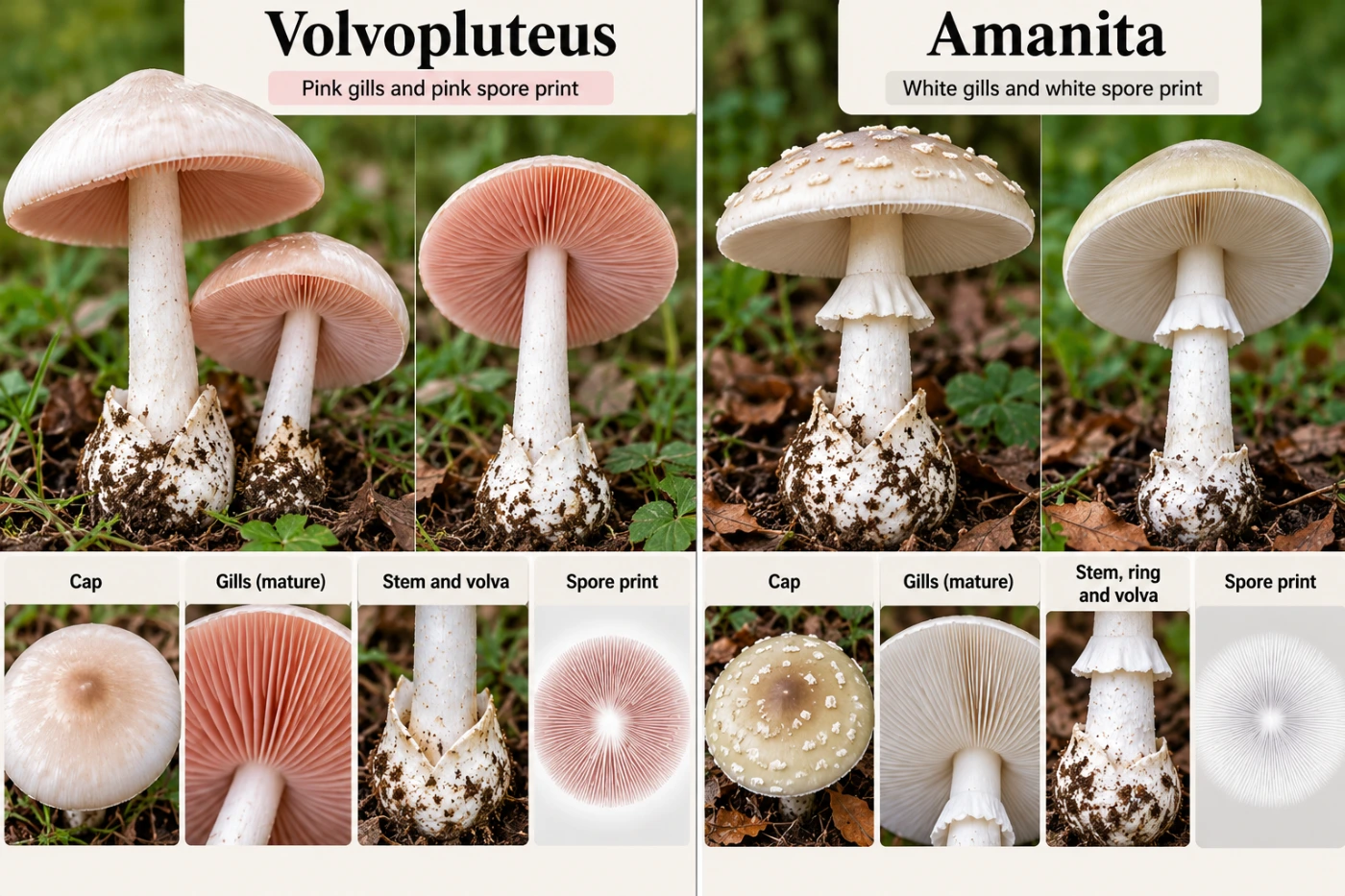
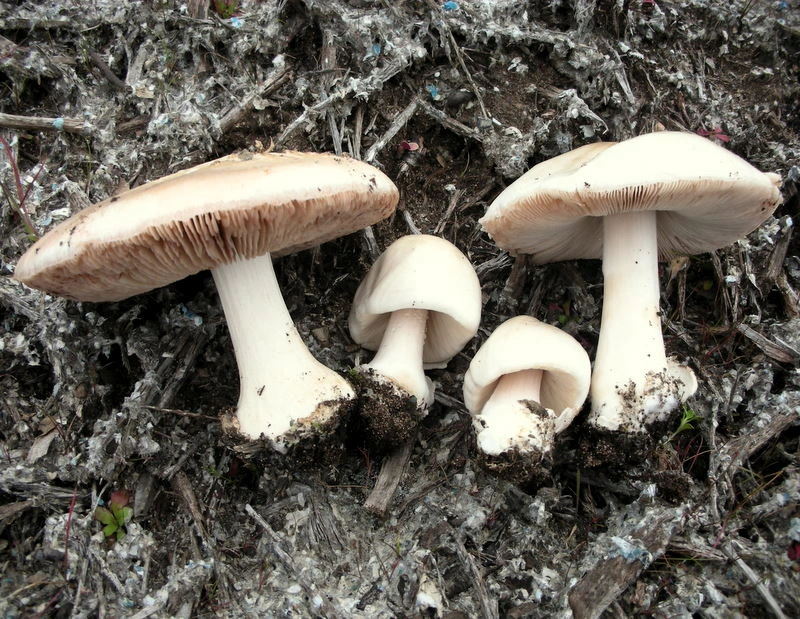
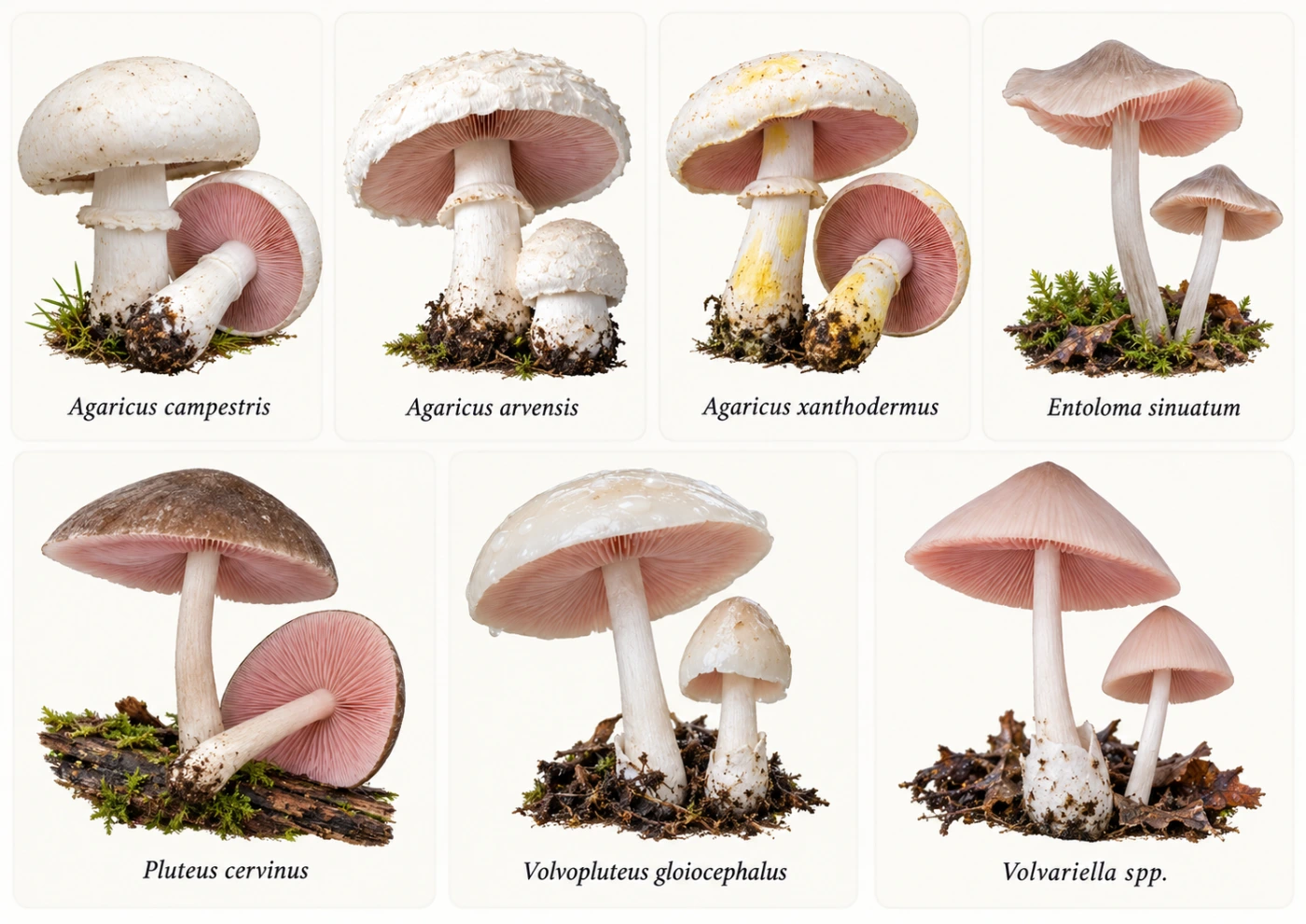
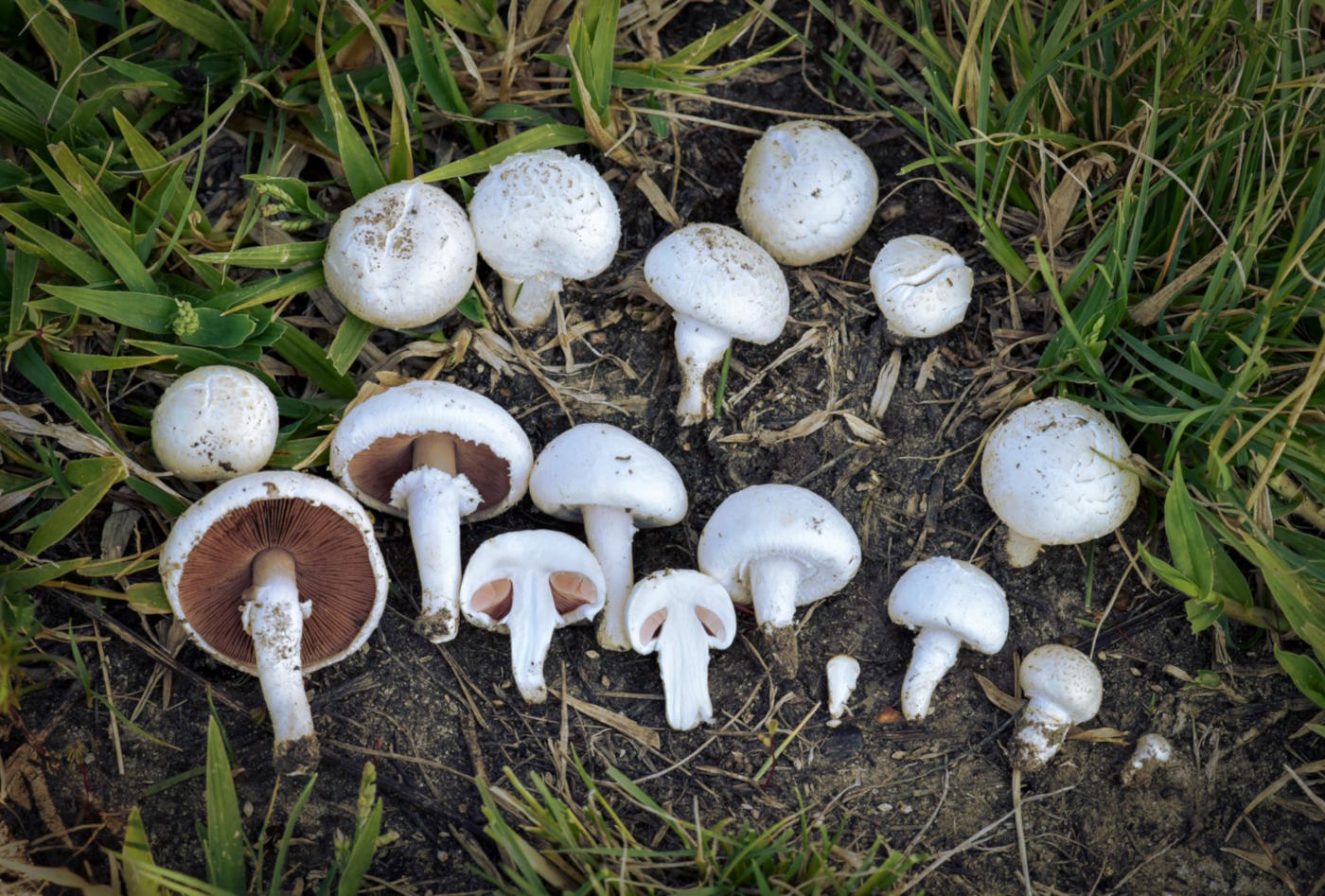
Ein häufiger Fehler besteht darin, einen Pilz mit hellem Hut und hellen Lamellen vorschnell als Champignon einzuordnen. Bei echten Champignons der Gattung Agaricus bleiben die Lamellen jedoch nicht dauerhaft weiß.
Sehr junge Champignons besitzen zunächst helle bis rosafarbene Lamellen, die später deutlich dunkler werden und bei reifen Exemplaren schokoladenbraun erscheinen. Rein weiße Lamellen bei einem ausgewachsenen Pilz sprechen daher eher gegen einen typischen Agaricus.
Diese Unterscheidung ist besonders wichtig, weil junge Knollenblätterpilze von unerfahrenen Sammlern mit Champignons verwechselt werden können. Lamellenfarbe, Stielbasis und Geruch sollten deshalb immer sorgfältig geprüft werden.
Sind Pilze mit weißen Lamellen giftig?
Die Lamellenfarbe erlaubt keinerlei zuverlässige Aussage über die Essbarkeit. Unter den weißlamelligen Pilzen befinden sich sowohl bekannte Speisepilze als auch hochgiftige Arten.
Gerade der Grüne Knollenblätterpilz zeigt, warum einfache Regeln wie „weiße Lamellen sind harmlos“ gefährlich wären. Die Bestimmung muss immer über mehrere Merkmale erfolgen.
Auch bei einer vermeintlich bekannten Art sollte die Frage der Essbarkeit nicht allein durch eine automatische Bilderkennung beantwortet werden. Unsichere Funde gehören nicht in die Küche.
Pilz mit weißen Lamellen per Foto bestimmen
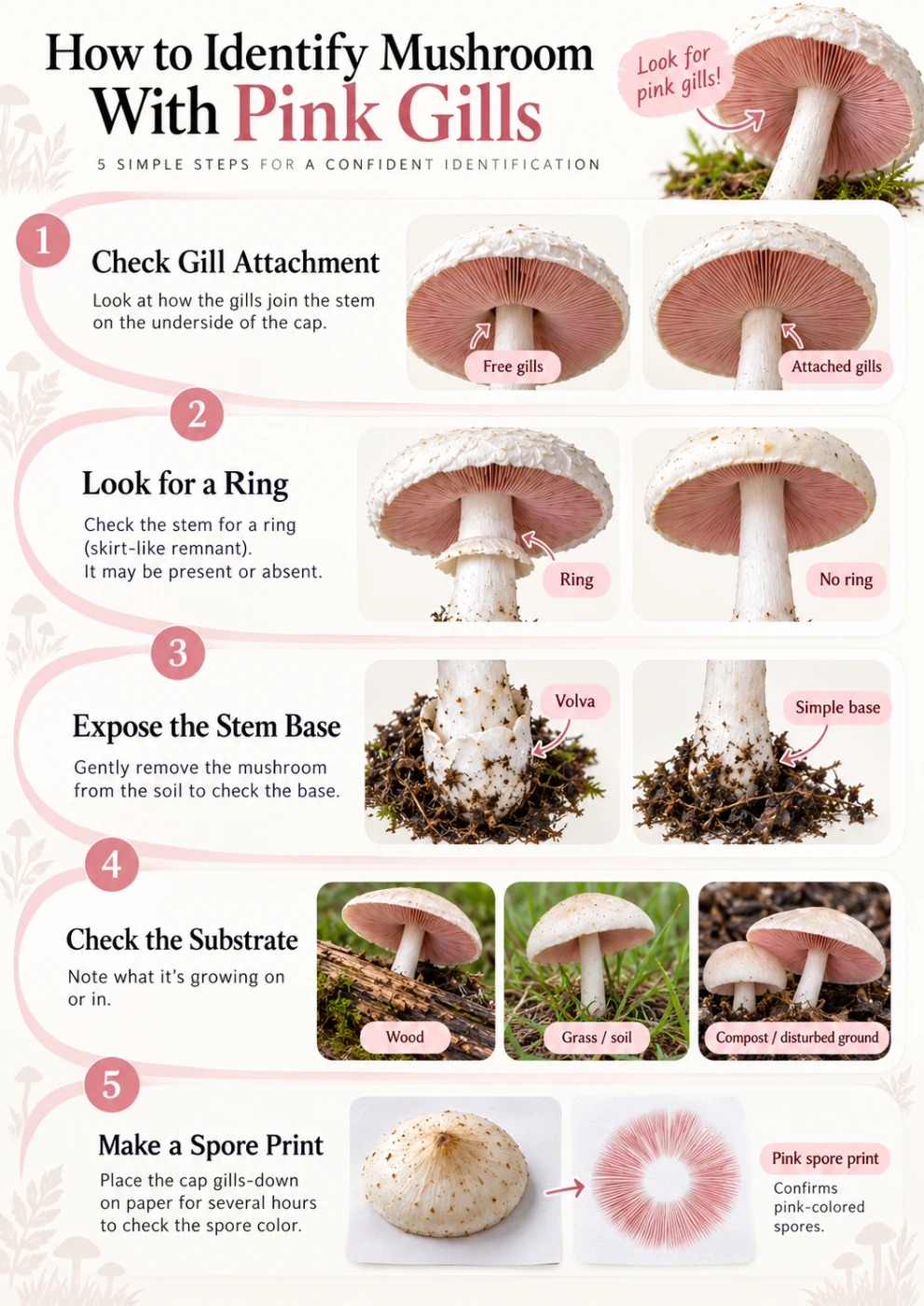
Für eine Fotoanalyse sollte die Unterseite des Hutes gut sichtbar sein. Ein Bild von oben allein reicht nicht aus, weil Lamellenansatz, Lamellenfarbe und Stielbasis verborgen bleiben.
Am hilfreichsten sind mehrere Aufnahmen: eine Ansicht von oben, eine Aufnahme der Lamellen und ein Foto des vollständigen Stiels einschließlich Basis. Bei Holzbewohnern sollte zusätzlich das Substrat sichtbar sein.
Mit MushroomID kannst du einen unbekannten Fund eingrenzen und mögliche Arten vergleichen.
Pilz mit weißen Lamellen per Foto bestimmen
Eine automatische Pilzerkennung kann auf wahrscheinliche Arten und wichtige Doppelgänger hinweisen. Sie ersetzt jedoch keine sichere Bestimmung, wenn ein Pilz gegessen werden soll.
Häufige Fragen zu Pilzen mit weißen Lamellen
Warum werden weiße Lamellen später rosa oder braun?
Bei manchen Pilzarten verändert sich die sichtbare Farbe der Lamellen durch die reifenden Sporen. Deshalb können junge und alte Exemplare derselben Art deutlich unterschiedlich aussehen.
Dieses Merkmal ist bei Dachpilzen und Champignons besonders hilfreich. Die Entwicklung der Lamellenfarbe kann daher ein wichtiger Hinweis auf die Gattung sein.
Können weiße Lamellen durch Regen ihre Farbe verändern?
Feuchtigkeit kann das Erscheinungsbild verändern, die eigentliche Lamellenfarbe wird jedoch meist stärker durch Alter und Sporenreife beeinflusst. Nasse Lamellen können dunkler oder transparenter wirken.
Auch Kamera und Licht verändern die Farbwahrnehmung. Eine leicht cremefarbene Lamelle kann auf einem Smartphone-Foto deshalb fast reinweiß erscheinen.
Warum sind die Lamellen bei jungen Pilzen manchmal noch verdeckt?
Bei einigen Arten schützt eine Teilhülle die Lamellen während der frühen Entwicklung. Beim Wachstum reißt diese Hülle auf und kann später als Ring am Stiel zurückbleiben.
Dieses Merkmal findet man beispielsweise bei mehreren Wulstlingen und Schirmlingen. Ein sehr junger Fruchtkörper kann deshalb wichtige Bestimmungsmerkmale noch nicht vollständig zeigen.
Sind frei stehende Lamellen ein wichtiges Merkmal?
Ja. Frei stehende Lamellen berühren den Stiel nicht und können bestimmte Pilzgruppen deutlich eingrenzen.
Dieses Merkmal sollte jedoch zusammen mit Sporenfarbe, Ring, Stielbasis und Standort betrachtet werden. Mehrere unterschiedliche Gattungen können freie Lamellen besitzen.
Kann man einen Pilz bestimmen, wenn die Stielbasis fehlt?
Manchmal ist eine grobe Einordnung trotzdem möglich, doch bei bestimmten Gruppen fehlt dann ein entscheidendes Merkmal. Besonders bei Wulstlingen kann die Stielbasis für die Bestimmung unverzichtbar sein.
Wenn ein Pilz bereits abgeschnitten wurde, sollte die Art daher entsprechend vorsichtig eingeschätzt werden. Ein zweiter vollständiger Fruchtkörper vom selben Standort kann wesentlich hilfreicher sein.