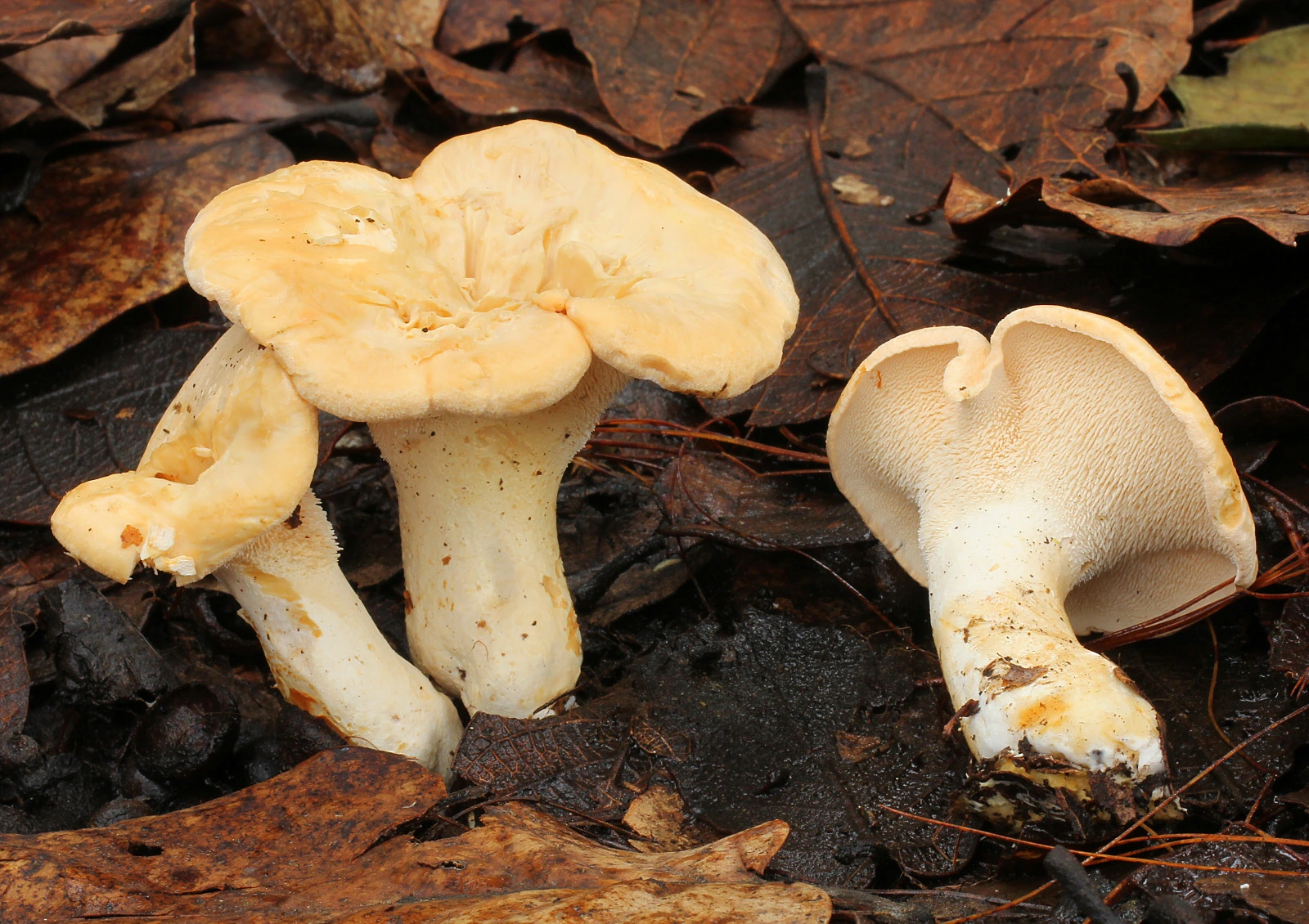
Hydnum repandum, commonly known as the Hedgehog Mushroom or Wood Hedgehog, is one of the easiest woodland mushrooms to recognize once you know what to look for. Instead of gills or pores, the underside of the cap is covered with soft, downward-pointing teeth.
The cap is usually cream, pale yellow, buff, or light orange, and the flesh is thick and brittle. Hedgehog Mushrooms grow from soil in forests, often in association with broadleaf trees and conifers.
⚠️ Important: This guide is for identification and education only. Never eat a wild mushroom based solely on a photograph, AI result, or comparison with an online guide.
Quick Identification
| Feature | Hydnum repandum |
|---|---|
| Scientific name | Hydnum repandum |
| Common names | Hedgehog Mushroom, Wood Hedgehog |
| Family | Hydnaceae |
| Cap color | Cream, pale yellow, buff, light orange |
| Cap shape | Convex to irregular, often wavy |
| Underside | Soft hanging teeth |
| Gills | Absent |
| Stem | Solid, pale, often off-center |
| Flesh | White to pale, firm and brittle |
| Spore print | White to cream |
| Ecology | Mycorrhizal |
| Habitat | Woodland soil |
| Season | Summer through autumn |
| Edibility | Edible when correctly identified |
| Main look-alikes | Other Hydnum species, some toothed fungi |
What Does Hydnum repandum Look Like?
The Hedgehog Mushroom usually has a thick, irregular cap with a smooth or slightly uneven surface. The color ranges from cream and buff to pale apricot or light orange.
The cap may begin rounded or convex, but older specimens often become flatter, lobed, or uneven around the edges. The margin can become wavy with age.
The most important feature is underneath. Instead of gills, the mushroom has numerous soft teeth that hang downward from the cap.
The Teeth Under the Cap
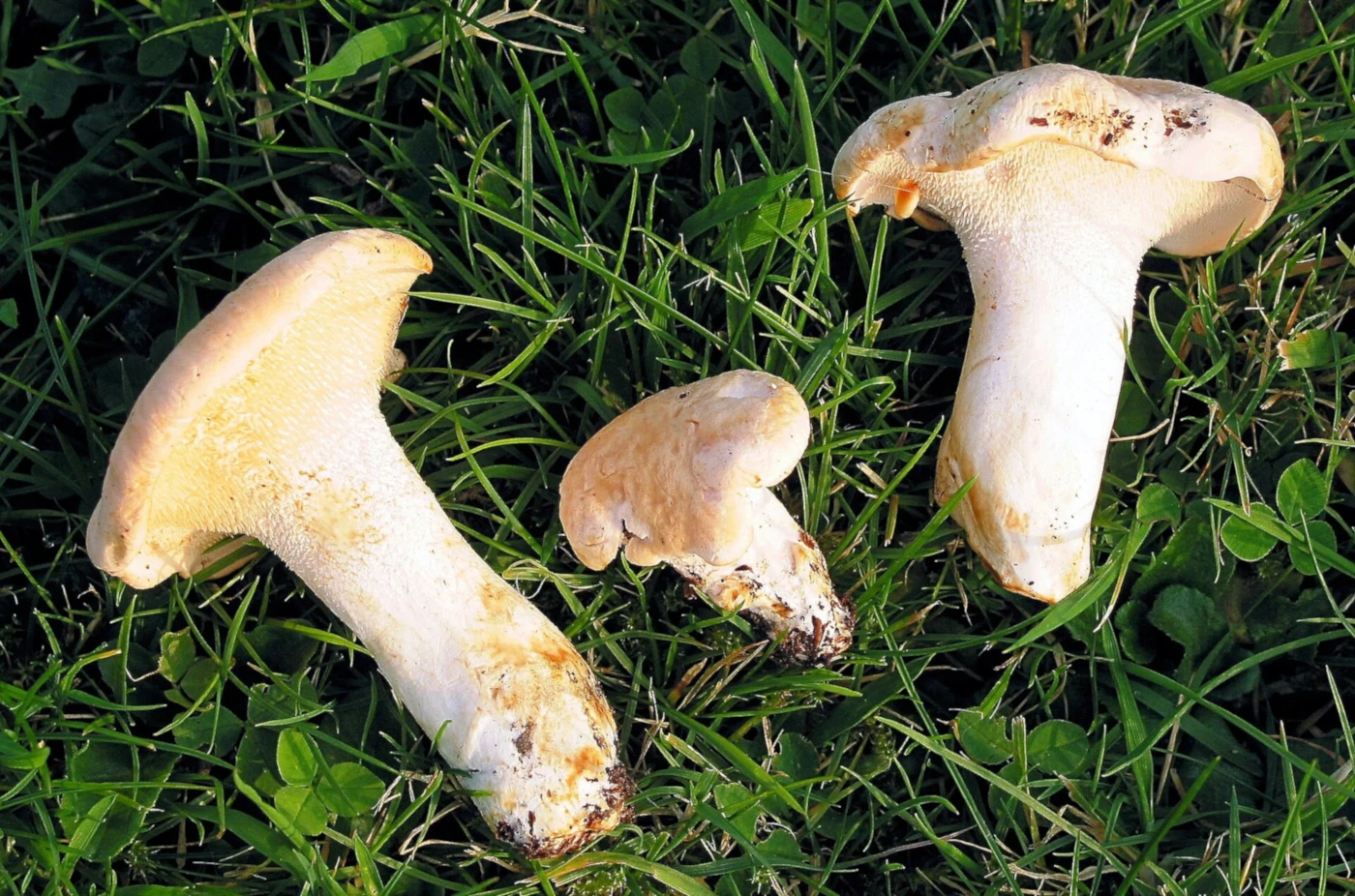
The underside of Hydnum repandum is covered with hundreds of short, pale spines or teeth.
These teeth are soft and brittle rather than hard or woody. They are usually white, cream, or pale yellow and can break off easily when rubbed.
This feature makes the Hedgehog Mushroom much easier to distinguish from gilled mushrooms.
Does Hydnum repandum Have Gills?
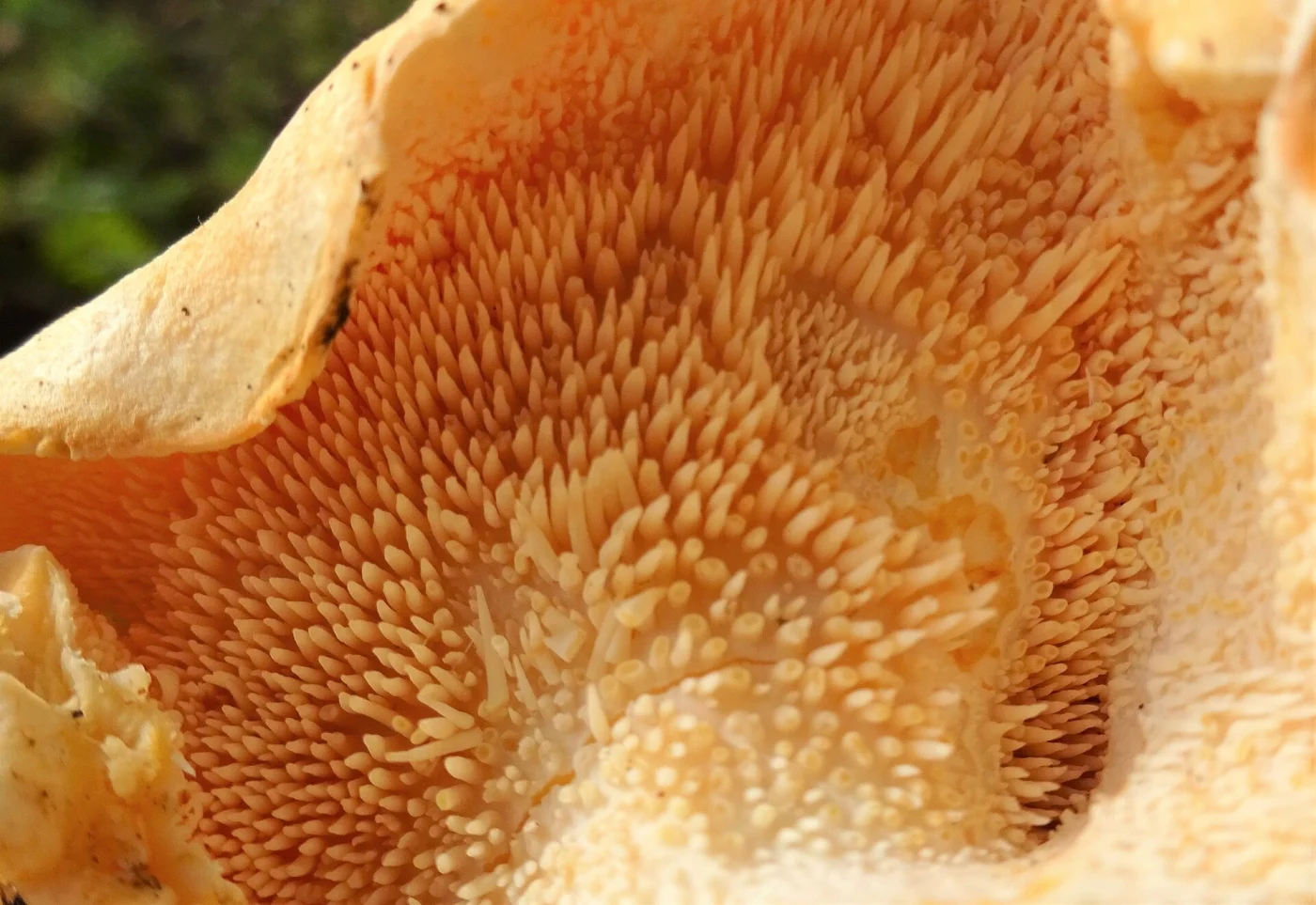
No. It has teeth rather than gills.
This is the single most useful identification feature. If the underside has thin blade-like gills, the mushroom is not Hydnum repandum.
The teeth are part of the spore-producing surface and function in a similar way to gills or pores in other mushroom groups.
Cap
The cap is usually several centimeters across and can become relatively broad in mature specimens.
Its surface is typically dry and smooth to slightly uneven. The color may be pale cream in shaded conditions or more yellow-orange in older or sun-exposed mushrooms.
The cap is often asymmetrical, especially when several fruit bodies grow close together.
Stem
The stem is thick, solid, and usually similar in color to the cap or slightly paler.
It may be central or somewhat off-center, particularly in irregular mature specimens.
There is no ring or volva. The stem usually blends gradually into the cap rather than forming a sharply defined junction.
Flesh
The flesh is white to pale cream and relatively firm.
It has a brittle texture and can break cleanly rather than bending extensively. Older specimens may become softer or develop a more pronounced bitter taste.
Fresh flesh generally does not show dramatic bruising reactions.
Smell and Taste
The smell is usually mild and pleasant, sometimes slightly fruity or nutty.
Taste can be mild in young specimens but may become more bitter with age. This bitterness is one reason younger fruit bodies are generally preferred for culinary use.
Taste should never be used as a primary identification method.
Spore Print
The spore print is white to cream.
Because the spores are pale, the print is easiest to see on dark paper or glass placed over a dark background.
Spore color can support identification but is less distinctive than the toothed underside.
Where Does Hydnum repandum Grow?
Hedgehog Mushrooms grow from soil in woodland rather than directly from wood.
They form mycorrhizal associations with living trees and may occur in both deciduous and coniferous forests.
Common habitats include mossy forest floors, woodland edges, and areas with deep leaf litter.
What Trees Are Associated With Hedgehog Mushrooms?
Hydnum repandum can occur with several tree species, including beech, oak, birch, pine, spruce, and other suitable hosts.
The exact associations vary by region.
Because the fungus is connected to tree roots underground, mushrooms may appear some distance from the nearest trunk.
When Does Hydnum repandum Grow?
The main fruiting season is usually summer through autumn.
In temperate regions, it often becomes more common after periods of regular rainfall.
Fruiting can continue late into the season in mild weather.
Is Hydnum repandum Edible?
Yes. The Hedgehog Mushroom is widely regarded as edible when correctly identified.
Young specimens are generally preferred because older fruit bodies can become tougher or develop a stronger bitter flavor.
The teeth can sometimes collect soil or debris, so careful cleaning may be needed before cooking.
Hedgehog Mushroom Look-Alikes
The Hedgehog Mushroom has relatively few dangerous look-alikes because the toothed underside is so distinctive.
Most confusion occurs with other species in the genus Hydnum or unrelated toothed fungi.
Hydnum rufescens — Terracotta Hedgehog
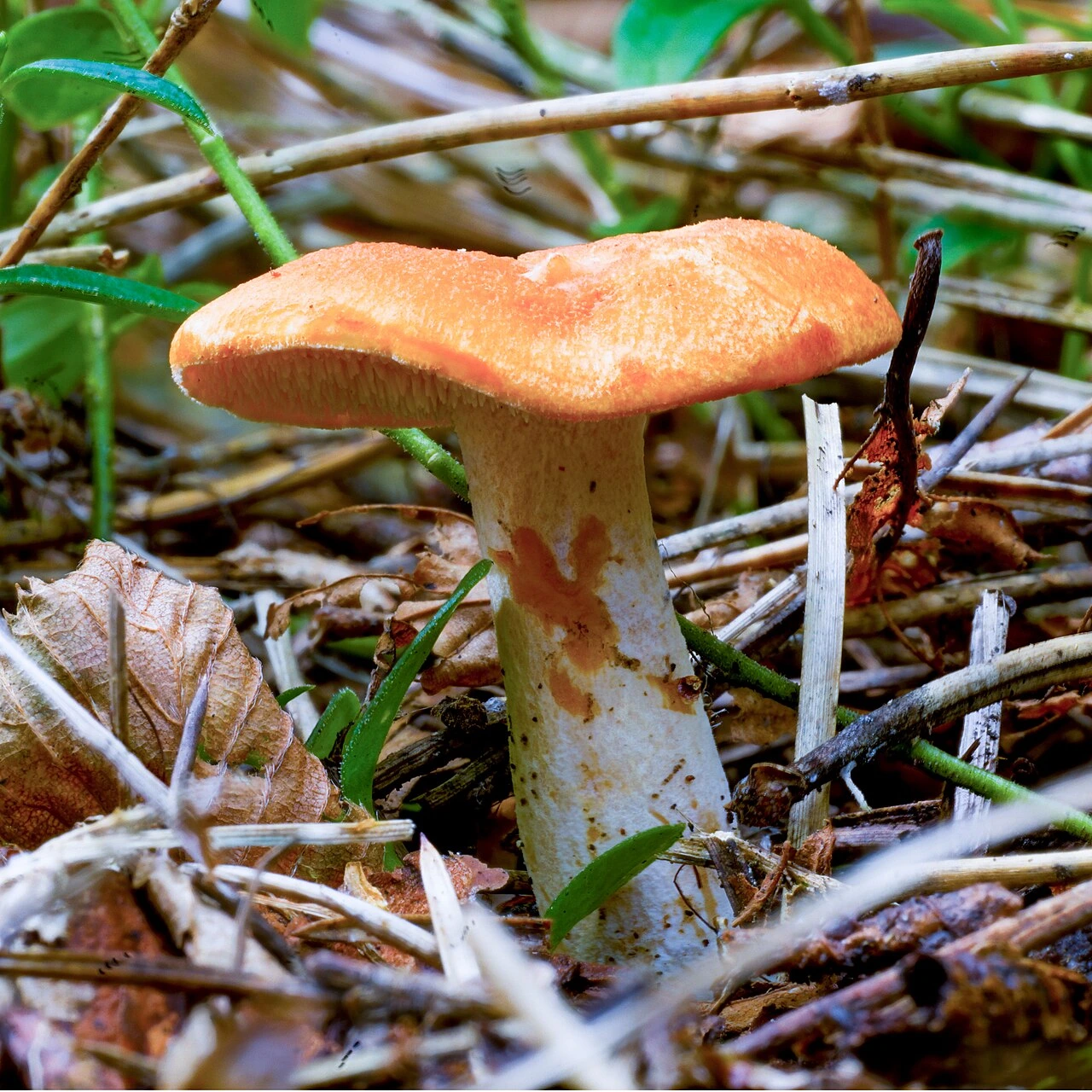
- Scientific name: Hydnum rufescens
- Common name: Terracotta Hedgehog
Hydnum rufescens is smaller and usually more orange or reddish than H. repandum.
Its cap is generally thinner, more regular, and more strongly colored. The teeth are similar in structure.
Main Difference
H. repandum is usually larger, paler, and more robust, while H. rufescens tends to be smaller and more orange.
Geography can also help because modern taxonomy recognizes several regional Hydnum species that were once grouped together.
Other Hydnum Species
The genus Hydnum includes numerous species with pale caps and toothed undersides.
Many are difficult to distinguish from photographs alone because they share the same basic structure.
Size, cap color, host trees, spore dimensions, and geographic range may all be needed for species-level identification.
Sarcodon Species
Some Sarcodon species also have teeth underneath the cap.
However, they usually have darker brown caps, rougher surfaces, thicker flesh, and more robust overall appearances.
Some species also have strongly bitter tastes or darker scales.
Bankera and Related Toothed Fungi
Other toothed fungi can grow on soil and may superficially resemble Hedgehog Mushrooms.
Many are grayer, browner, more fibrous, or more strongly scented.
Their caps often look less smooth and more textured than Hydnum repandum.
Hedgehog Mushroom vs Chanterelle
| Feature | Hedgehog Mushroom | Chanterelle |
|---|---|---|
| Underside | Soft teeth | Blunt ridges or folds |
| Cap color | Cream to pale orange | Yellow to golden-orange |
| Texture | Thick and brittle | Firm and fleshy |
| Habitat | Woodland soil | Woodland soil |
| Ecology | Mycorrhizal | Mycorrhizal |
| Edibility | Edible when correctly identified | Edible when correctly identified |
The underside is the easiest way to separate them.
A chanterelle has ridges, while a Hedgehog Mushroom has clearly defined hanging teeth.
Hedgehog Mushroom vs Tooth Fungi on Wood
Several tooth fungi grow directly from logs or trunks.
These include species such as Lion’s Mane and Coral Tooth Fungus.
The habitat separates them quickly. Hydnum repandum grows from soil, while wood-inhabiting tooth fungi grow directly from woody substrates.
How to Identify Hydnum repandum Step by Step
Start by checking the underside.
If the cap has soft, downward-pointing teeth instead of gills or pores, Hydnum becomes a strong possibility.
Then examine the cap color and texture. A pale cream to yellow-orange cap with thick flesh and a solid stem fits Hydnum repandum well.
Finally, check the habitat. The mushroom should be growing from soil in woodland rather than from wood.
How to Photograph Hedgehog Mushrooms for Identification
Photograph the cap from above, then turn the mushroom carefully to show the teeth underneath.
Include the entire stem and the point where it enters the soil.
A wider photograph showing nearby trees, moss, and leaf litter can help with habitat-based identification.
Can Hedgehog Mushrooms Be Identified From a Photo?
Typical specimens can often be recognized from photographs because the toothed underside is so distinctive.
Species-level identification within Hydnum may be harder, especially in regions with several closely related species.
Clear underside photos combined with geographic and habitat information improve accuracy significantly.
Why Are the Teeth Important?
The teeth are not merely decorative.
They form the spore-producing surface of the mushroom, increasing the area available for spore development.
This type of structure appears in several unrelated fungal groups, so the presence of teeth does not automatically mean every toothed fungus is closely related.
Are Hedgehog Mushrooms Common?
They can be locally common in suitable forests, especially during wet periods.
In some years they may appear in large numbers, while in dry seasons they can be scarce.
Because they are mycorrhizal, their distribution depends heavily on suitable trees and soil conditions.
Common Identification Mistakes
One common mistake is confusing shallow ridges with true teeth. Another is assuming every toothed mushroom growing on wood is a Hedgehog Mushroom. Hydnum repandum grows from soil. A third mistake is identifying every pale Hydnum as H. repandum. Modern taxonomy recognizes several closely related species that can be difficult to separate visually.
Frequently Asked Questions
What does a Hedgehog Mushroom look like?
It has a pale cream to orange cap and soft hanging teeth underneath instead of gills.
Does Hydnum repandum have gills?
No. The underside is covered with short teeth.
Where does Hydnum repandum grow?
It grows from soil in deciduous and coniferous forests.
When do Hedgehog Mushrooms appear?
They usually fruit from summer through autumn.
Is Hydnum repandum edible?
Yes, it is widely regarded as edible when correctly identified.
What is the main Hedgehog Mushroom look-alike?
Other Hydnum species are the most common look-alikes.
Can Hedgehog Mushrooms grow on wood?
Hydnum repandum normally grows from soil, not directly from logs or trunks.
What color is the spore print?
White to cream.
Why is it called a Hedgehog Mushroom?
The name refers to the many short spines or teeth hanging from the underside of the cap.
Can Hedgehog Mushrooms be confused with poisonous species?
Dangerous confusion is less common than with many gilled mushrooms, but accurate identification is still essential.
Final Identification Notes
Hydnum repandum is one of the more distinctive edible woodland mushrooms because of its unusual underside.
The strongest combination of features is a pale cream to orange cap, soft downward-pointing teeth, thick brittle flesh, a solid pale stem, and growth from woodland soil.
Most confusion occurs with other closely related Hydnum species rather than dangerous gilled mushrooms. For practical identification, always check the underside first, then combine tooth structure with cap color, habitat, host trees, and geographic location.
Upload a photo and get possible matches in seconds.