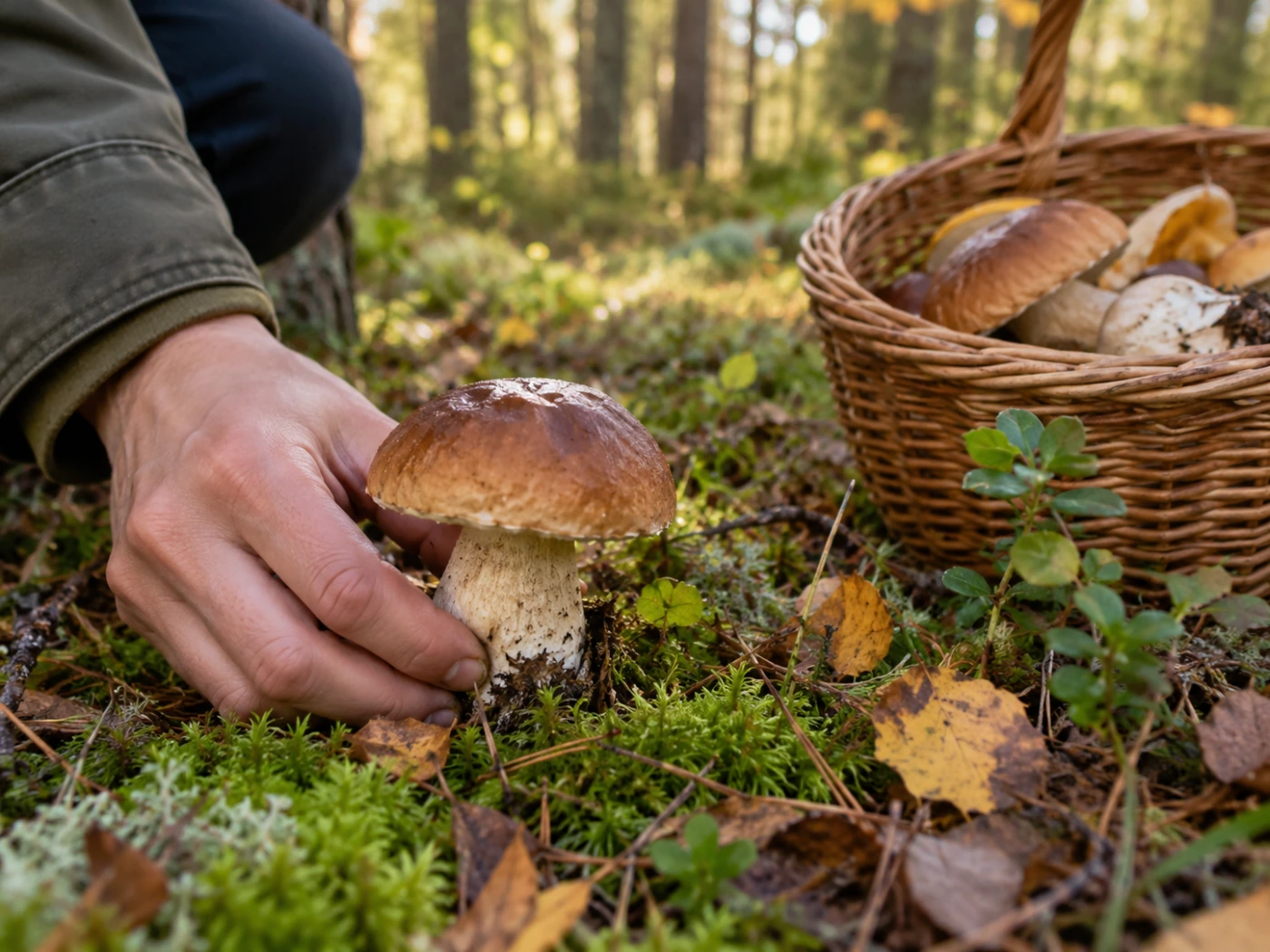
Yes, mushrooms can grow back after picking because the visible mushroom is usually only the fruiting body of a much larger fungal organism. The main body of the fungus, called mycelium, remains hidden in soil, wood, leaf litter, or another substrate and can produce new mushrooms later.
Picking a mushroom usually does not remove or kill the mycelium. If moisture, temperature, nutrients, and other conditions become favorable again, the same fungal network may produce another flush of fruit bodies in the same area.
⚠️ Important: A mushroom growing back in the same place does not prove that it is the same individual mushroom. What returns is usually a new fruit body produced by the same or a nearby fungal mycelium.
What Happens When You Pick a Mushroom?
When you pick a mushroom, you remove the reproductive structure that has grown above the ground or out of wood. Most of the fungal organism remains hidden as a network of microscopic threads called hyphae.
These hyphae form the mycelium, which can spread through soil, roots, dead wood, or other organic material. As long as that mycelium remains alive, it may produce more mushrooms when conditions are suitable.
Is a Mushroom Like a Fruit?
A useful comparison is to think of a mushroom as something like a fruit produced by a much larger organism. Picking an apple does not remove the apple tree, and picking a mushroom usually does not remove the fungus living underneath.
The comparison is not perfect, but it explains why mushrooms can reappear in the same place. The visible fruit body is temporary, while the mycelium may survive for years or even much longer.
How Quickly Can Mushrooms Grow Back?
The timing varies enormously between species and habitats. Some mushrooms can produce another flush within days or weeks, while others may not appear again until the following season.
Weather is especially important. Rain followed by suitable temperatures can trigger rapid fruiting, while dry or very cold conditions may stop mushroom production even when the mycelium remains healthy.
Do Mushrooms Grow Back in the Same Spot?
They often do, especially when the underground or wood-inhabiting mycelium remains active. Mushroom hunters frequently return to productive areas because the same fungal network may fruit repeatedly.
However, the exact position of each mushroom can change from year to year. Mycelium grows and shifts through its substrate, so new fruit bodies may appear several centimeters or even meters away from previous ones.
Does Picking Damage the Mycelium?
Normal careful picking usually causes very little damage to the main fungal network. Most mycelium lies deeper in the soil, inside wood, or around plant roots and is not removed with the mushroom.
Repeated disturbance of the ground can cause more damage than picking the fruit body itself. Digging deeply, raking away soil, or tearing apart decaying wood can disturb the habitat and reduce future fruiting.
Is Cutting Better Than Picking?
There is no strong general reason to assume that cutting a mushroom at the base is always better for the fungus than gently picking it. In both cases, most of the mycelium remains in the substrate.
For identification, carefully removing the complete mushroom can actually be useful because important features may be hidden at the stem base. Amanitas, for example, may have a volva or bulb that would be lost if the stem were cut above ground level.
Do Mushrooms Grow Back After Cutting?
Yes, they can. Cutting removes the fruit body but usually leaves the mycelium intact, just as careful picking does.
The cut stem itself normally does not regenerate into the same mushroom. Instead, the fungus produces a new fruit body from the mycelium when environmental conditions allow.
Can the Same Mushroom Regrow?
The same individual fruit body generally does not grow back after it has been removed. Once picked, damaged, or decayed, that particular mushroom is finished.
What people describe as a mushroom “growing back” is usually a new fruit body emerging from the same mycelium. This distinction matters because the fungus itself can live much longer than any one mushroom.
How Long Does Mycelium Live?
Mycelium can survive far longer than the mushrooms it produces. Depending on the species and environment, a fungal network may persist for years, decades, or in some cases much longer.
This is why mushrooms can appear repeatedly in the same woodland, lawn, or tree stump. The fruit bodies come and go, while the hidden mycelium remains active between fruiting periods.
Why Do Mushrooms Reappear After Rain?
Rain increases moisture in the soil, wood, and leaf litter, which helps fungal hyphae grow and supports fruit body development. Many species are especially responsive to a period of rain after dry weather.
Temperature matters at the same time. A heavy rain during unsuitable heat or cold may produce little fruiting, while the right combination of moisture and temperature can trigger many mushrooms at once.
Do Mushrooms Come Back Every Year?
Many species can return to the same general area year after year. This is common with mycorrhizal fungi living with tree roots and with wood-decaying fungi using the same stump or log.
Annual appearances are not guaranteed, however. Weather, habitat changes, tree health, competition, and the condition of the substrate can all affect whether the fungus produces visible mushrooms in a particular year.
What About Mushrooms Growing on Trees?
Wood-growing mushrooms can also return after being picked. Their mycelium often lives deep inside the trunk, stump, or fallen log and continues decomposing the wood after the visible fruit bodies disappear.
Species such as oyster mushrooms, turkey tail, and many polypores can produce repeated flushes from the same piece of wood. Fruiting may continue until the substrate becomes too decomposed or environmental conditions change.
What About Lawn Mushrooms?
Lawn mushrooms often reappear because their mycelium is spread through soil and decomposing organic material beneath the grass. Removing the visible mushrooms does not usually remove that underground network.
This is why mowing or picking lawn mushrooms rarely eliminates them permanently. They may return after another period of rain or during the next favorable season.
Do Fairy Rings Grow Back?
Yes, fairy rings can persist and expand for many years. They form when fungal mycelium grows outward through the soil and produces mushrooms around the active edge of the colony.
As the mycelium expands, the visible ring may gradually become larger. The mushrooms in one year are not the same fruit bodies as those from the previous year, but they can be produced by the same long-lived fungal network.
Does Picking Reduce Future Mushroom Numbers?
Careful harvesting does not automatically prevent future fruiting. The fungus can continue producing mushrooms as long as its mycelium and habitat remain healthy.
Heavy trampling, soil disturbance, removal of large amounts of leaf litter, and damage to surrounding vegetation may have a greater impact than picking itself. Sustainable collecting therefore means protecting the habitat as well as the mushrooms.
Should You Leave Some Mushrooms Behind?
Leaving some mature fruit bodies can allow them to release spores naturally. Spores are one way fungi spread to new habitats, even though an established local colony can continue fruiting from existing mycelium.
It is also good practice to avoid taking every specimen from a small or unusual population. This is especially important in sensitive habitats or where rare species may be present.
Do Edible Mushrooms Grow Back After Picking?
Many edible mushrooms can fruit repeatedly from the same mycelium. Chanterelles, porcini, oyster mushrooms, morels, and many other species may return to productive areas when conditions are favorable.
The timing varies greatly between groups. Wood-growing species may produce several flushes in one season, while many mycorrhizal woodland mushrooms are more strongly tied to seasonal weather patterns.
Do Morels Grow Back After Picking?
Morels can appear again in the same general area because their mycelium or other persistent fungal structures remain in the habitat. Picking the visible morel does not normally remove the entire fungus.
However, morel fruiting is especially unpredictable. A productive location can produce many mushrooms one spring and very few the next because weather and ecological conditions strongly influence fruiting.
Do Chanterelles Grow Back After Picking?
Chanterelles can return because they form mycorrhizal relationships with living tree roots. The fungal network remains in the soil even after the fruit bodies are harvested.
A productive chanterelle patch may fruit repeatedly during a wet season and return in later years. The mushrooms that appear are new fruit bodies rather than regrowth of the ones previously picked.
Do Oyster Mushrooms Grow Back After Picking?
Oyster mushrooms often produce multiple flushes from the same log, stump, or tree. Their mycelium remains inside the wood and continues breaking it down after the first cluster is removed.
A second or third flush may appear if moisture and temperature remain favorable. Eventually, fruiting declines as the wood becomes exhausted or environmental conditions change.
Can Picking Mushrooms Help Them Spread?
Picking itself does not necessarily help the fungus, but carrying mature mushrooms can sometimes move spores to new places. Spores may fall from the gills, pores, or other reproductive surfaces while the mushroom is being transported.
This does not mean that every dropped spore will create a new colony. Successful establishment depends on suitable substrate, moisture, temperature, competition, and many other ecological factors.
Common Misunderstandings
One common misunderstanding is that the mushroom above ground is the whole fungus. In reality, the visible mushroom is usually only a temporary reproductive structure.
Another misconception is that removing every mushroom will eliminate the fungus. Unless the underlying mycelium or substrate is removed or destroyed, new fruit bodies may continue to appear.
Interesting Facts About Mushroom Regrowth
Some fungal colonies are much older and larger than the fruit bodies they produce. A single mycelial network can spread through a large area and produce mushrooms in different places over many seasons.
The famous fairy-ring pattern is one visible example of this underground expansion. As the fungal colony grows outward, new mushrooms can appear along its advancing edge while older parts of the ring become less productive.
Mushroom fruiting is also highly responsive to environmental conditions. A fungus may remain hidden for months or years before suddenly producing many fruit bodies after the right combination of rain and temperature.
Frequently Asked Questions
Will a mushroom grow back from the stem left in the ground?
Usually not from the cut stem itself. New mushrooms normally develop from the surrounding mycelium rather than regenerating directly from the remains of the old fruit body.
Does pulling a mushroom out by the base kill the fungus?
Usually no, because most of the fungal organism remains in the soil or substrate. Careful picking removes only a small part of the overall fungal network.
Why do mushrooms return after I mow the lawn?
Mowing removes the visible fruit bodies but leaves the underground mycelium intact. When moisture and temperature become favorable again, the fungus can produce more mushrooms.
Can mushrooms grow back overnight?
A completely new mature mushroom usually does not develop from nothing in a single night, but some species grow extremely quickly. Fruit bodies that were already developing can become much more noticeable within a short period.
Do mushrooms stop growing if they are touched?
No. Touching a mushroom does not automatically stop its growth, although heavy damage can injure the fruit body.
Do mushrooms grow back after frost?
The visible mushrooms may be damaged or killed by frost, but the underlying mycelium can survive. Fruiting may resume later if the species and weather conditions allow it.
Can one mycelium produce hundreds of mushrooms?
Yes. A large and healthy fungal network can produce many fruit bodies over time, sometimes across a wide area.
Should I twist or pull mushrooms when collecting them?
Gentle removal is usually more important than the exact technique. Avoid unnecessary digging or disturbance of the surrounding soil, roots, and leaf litter.
Final Notes
Mushrooms can grow back after picking because the visible fruit body is only one part of the fungus. The long-lived mycelium remains hidden in the substrate and can produce new mushrooms when conditions become favorable again.
Picking normally removes one fruit body rather than the entire organism. The practical rule is simple: the mushroom you pick does not regrow, but the fungus that produced it can often make another one.
Upload a photo and get possible matches in seconds.