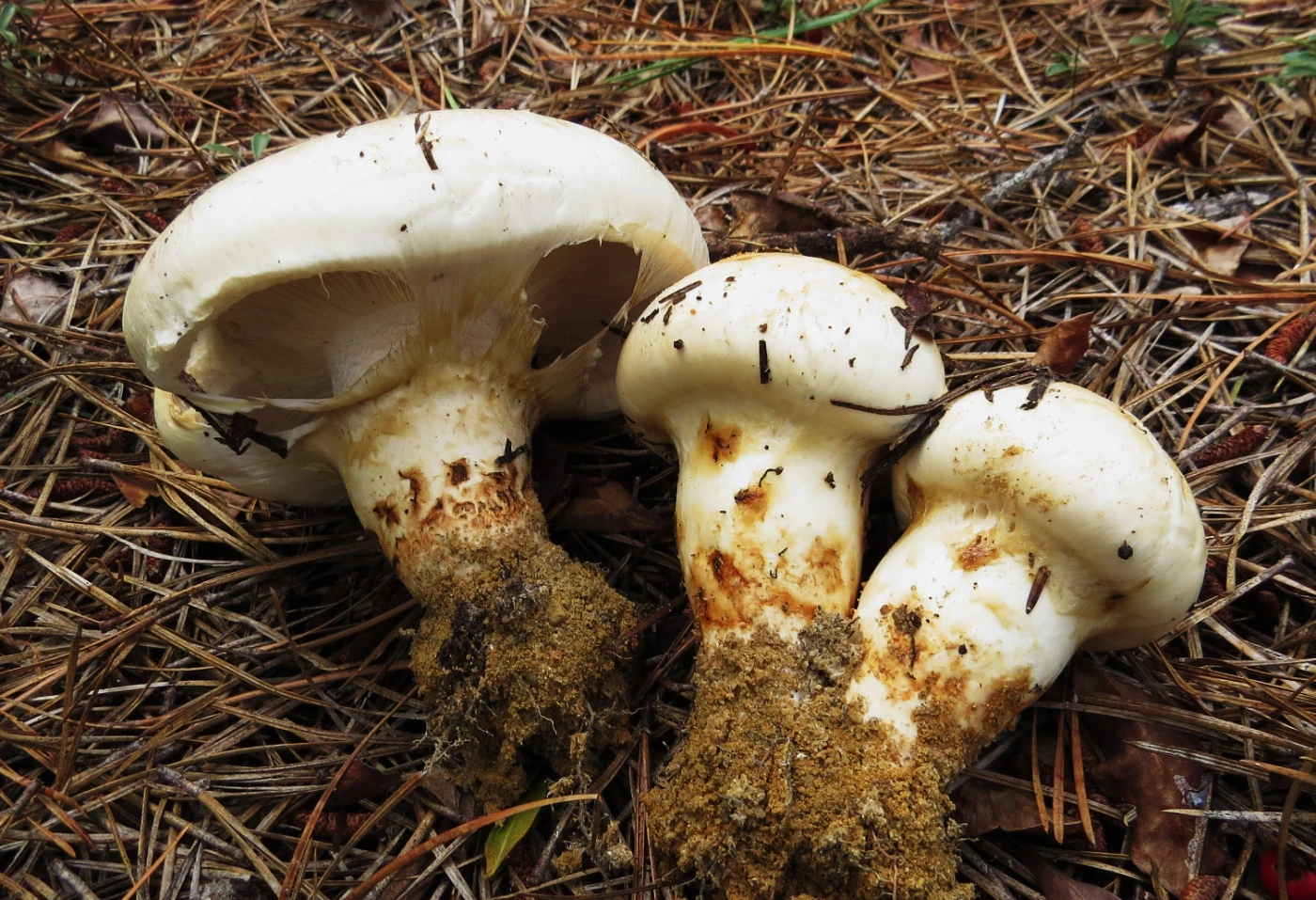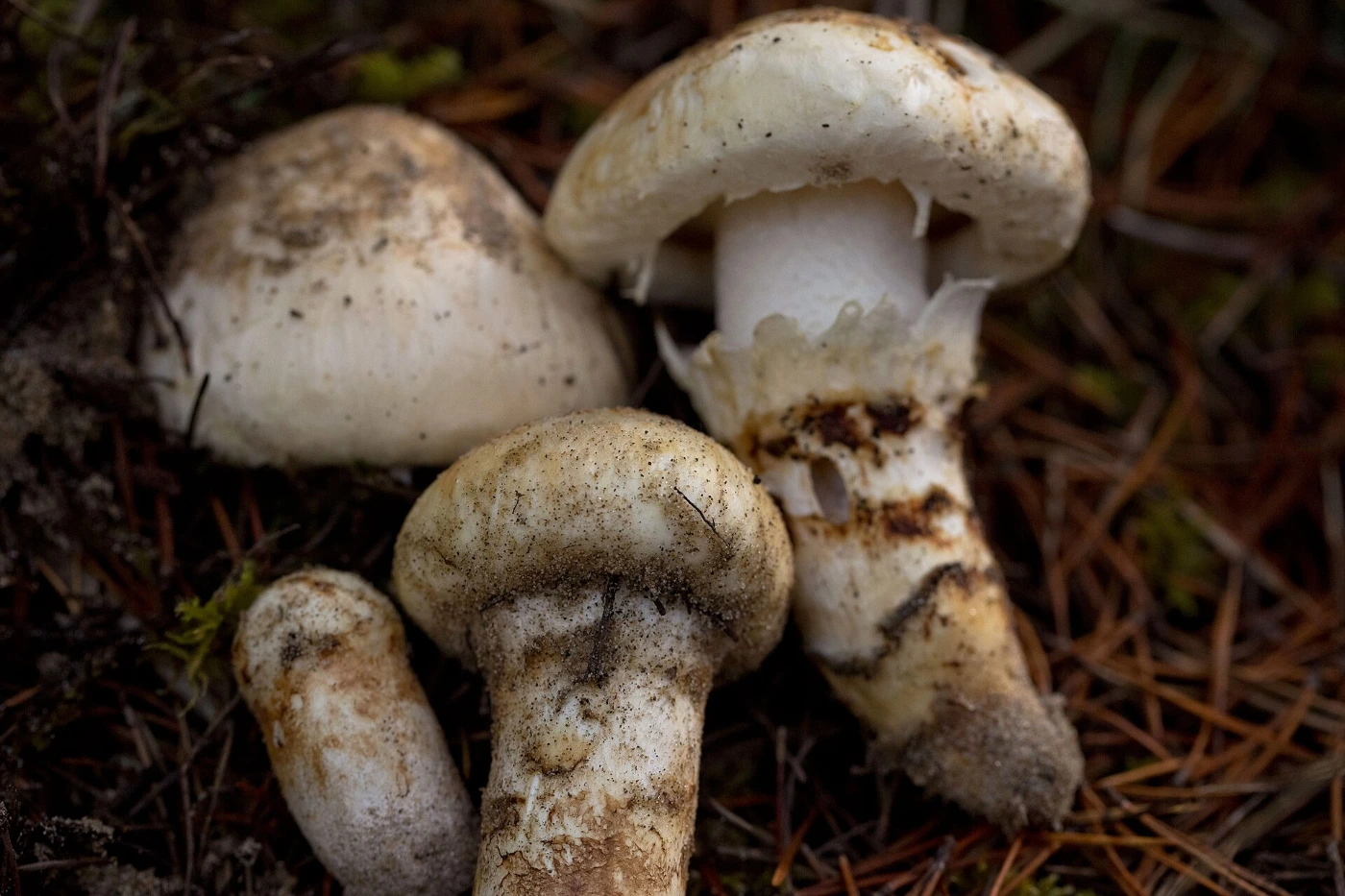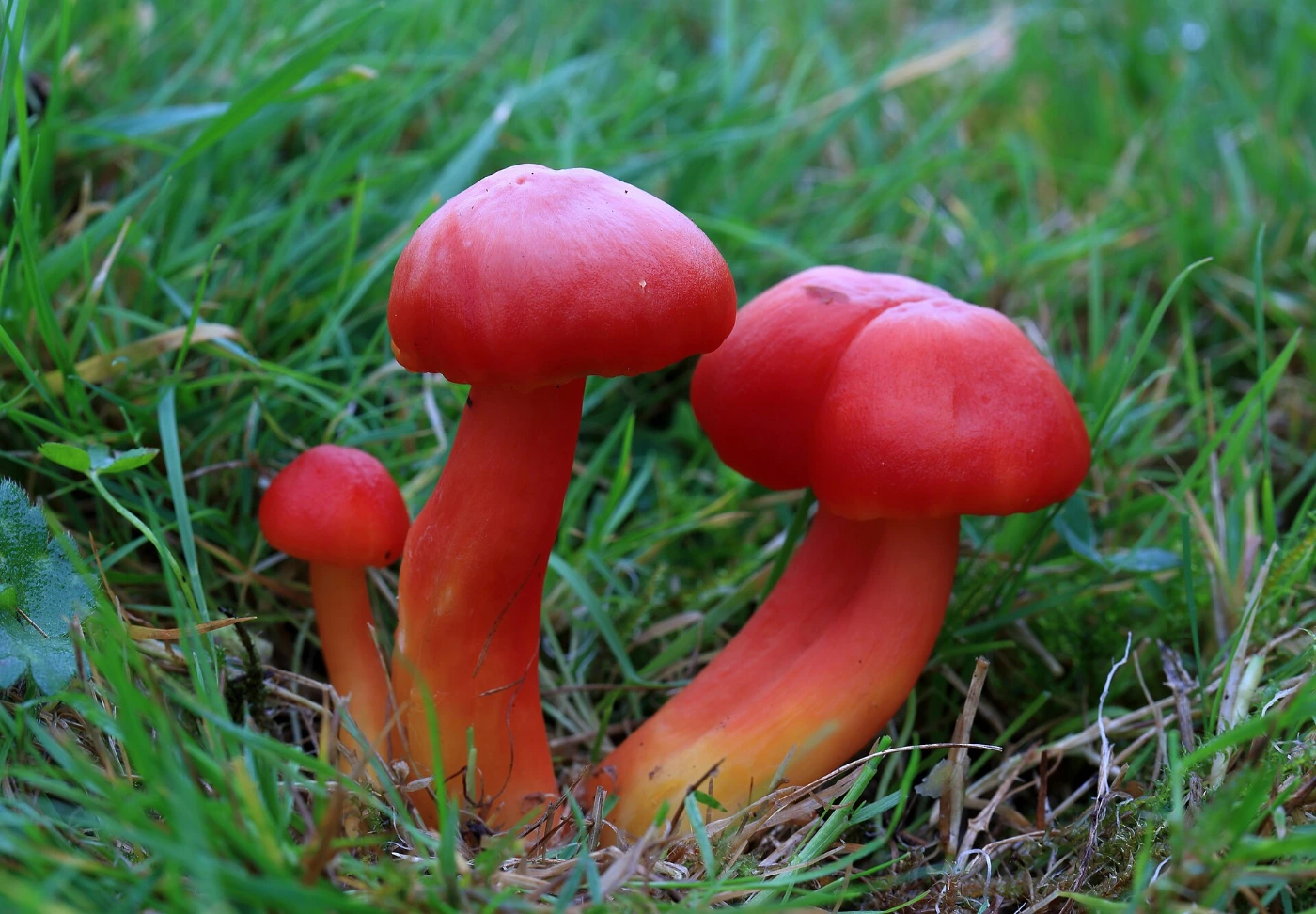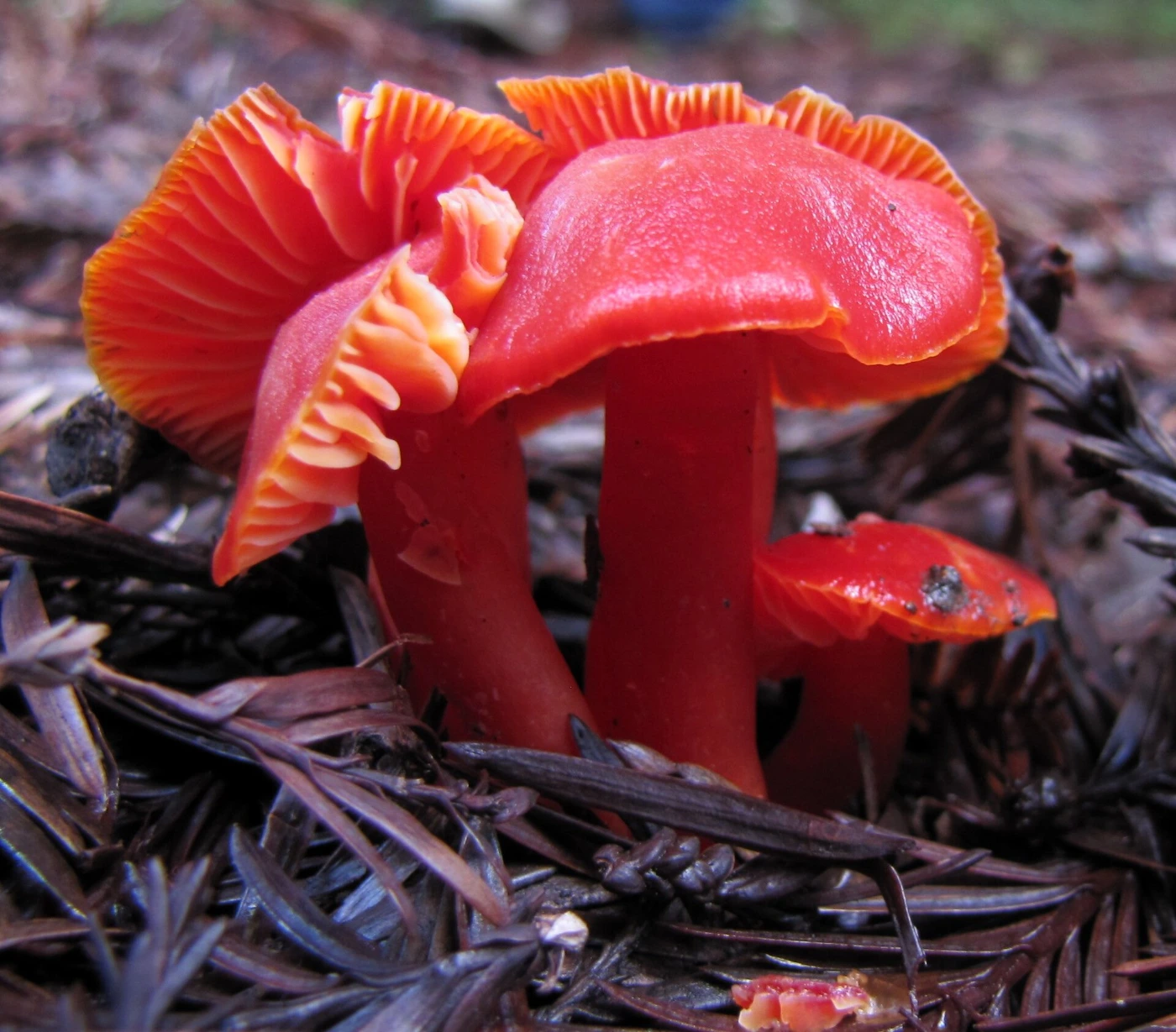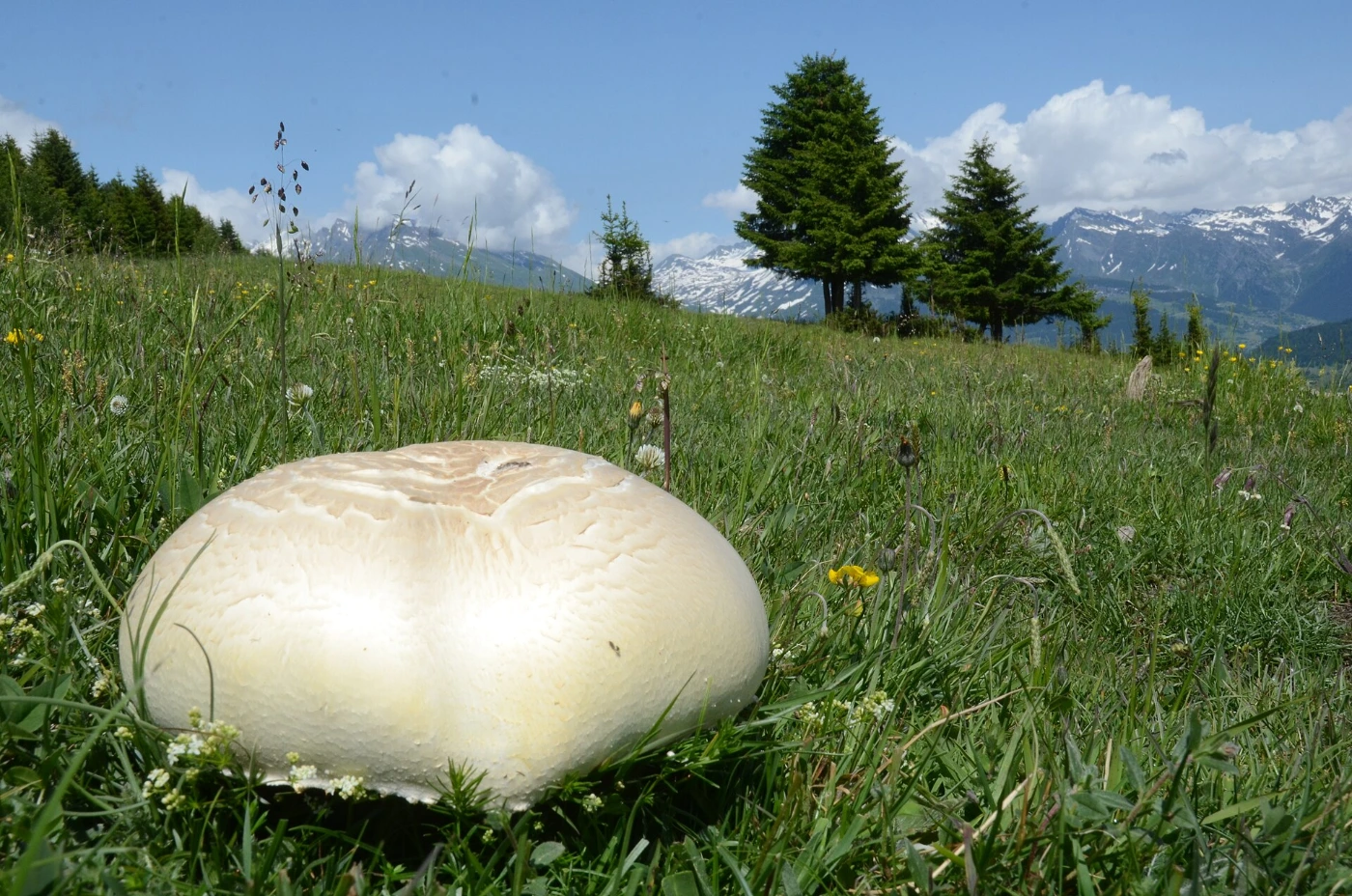
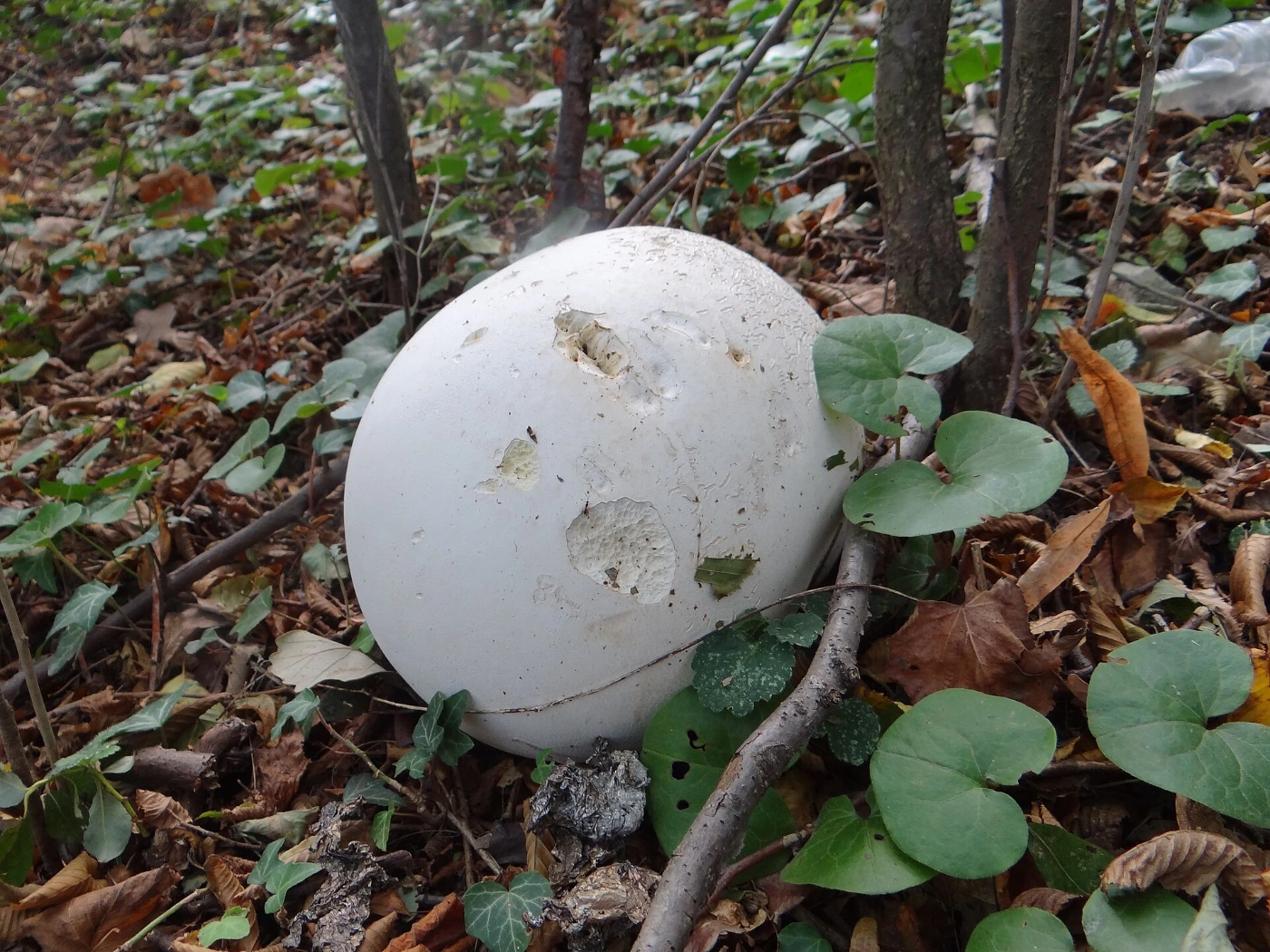
Calvatia gigantea, commonly known as the Giant Puffball, is one of the largest and easiest-to-recognize puffball mushrooms. Mature fruit bodies can become larger than a football and may look like white balls resting directly on grass.
The species is best known for its smooth white exterior and completely solid white interior when young. The most important identification rule is simple: a true young Giant Puffball should be uniformly white inside, with no outline of a developing cap, gills, stem, or other mushroom structures.
Important: Never eat a puffball based only on its outside appearance. Always cut it vertically from top to bottom first, because young Amanitas can resemble small puffballs from the outside.
Quick Identification
| Feature | Calvatia gigantea |
|---|---|
| Scientific name | Calvatia gigantea |
| Common name | Giant Puffball |
| Family | Agaricaceae |
| Shape | Round to irregularly globe-shaped |
| Size | Large to enormous |
| Surface | White, smooth to slightly textured |
| Stem | Absent or only a short basal attachment |
| Gills | None |
| Pores | None |
| Interior when young | Solid, uniform white |
| Interior when mature | Yellowish, olive, then brown and powdery |
| Spore mass | Olive-brown to brown |
| Habitat | Grassland, meadows, lawns, woodland edges |
| Ecology | Saprotrophic |
| Season | Summer to autumn |
| Edibility | Edible only when correctly identified and pure white inside |
| Main danger | Young Amanita and earthballs |
What Does Giant Puffball Look Like?
Giant Puffball usually appears as a large white rounded mass sitting directly on the ground. It has no normal cap-and-stem structure. Young fruit bodies are bright white and firm. As they age, they become cream, yellowish, olive-brown, and eventually brown.
Size
This species can become extremely large. Many specimens are around the size of a grapefruit, football, or basketball, while exceptional fruit bodies can grow much larger.
Size is helpful, but it should not be used alone. Smaller young Giant Puffballs can overlap in size with other puffballs and with immature Amanitas.
Shape
The fruit body is usually round, oval, or slightly flattened. It may become irregular when growing against grass, roots, or neighboring puffballs.
There is usually no distinct stem. Instead, the mushroom is attached to the soil by a small basal area.
Surface
Young Giant Puffballs have a white outer surface that is usually smooth or only slightly textured. They do not have the strong pyramidal warts or spines seen on many smaller puffball species.
The outer skin may become cracked or discolored with age. Weather, insects, and contact with vegetation can also damage the surface.
Interior
The inside is the single most important feature.
Young Interior
A fresh Giant Puffball should be pure, solid, and uniformly white from edge to edge when cut open. The texture should be firm and consistent, with no internal mushroom shape.
This uniform interior is what separates a true edible-stage puffball from several dangerous look-alikes.
Aging Interior
As the mushroom matures, the white flesh begins turning yellow, olive, or brown. The interior gradually becomes soft and then powdery as spores develop.
Once the flesh is no longer completely white, the mushroom should not be considered suitable for eating.
How Giant Puffballs Release Spores
Unlike ordinary mushrooms, Giant Puffballs do not produce spores on exposed gills or pores. The spores develop inside the fruit body.
When mature, the interior becomes a dry brown spore mass. Damage to the outer wall allows clouds of spores to escape into the air.
Where Does Calvatia gigantea Grow?
Giant Puffball commonly grows in open grassy habitats. Meadows, pastures, lawns, parks, field edges, and woodland clearings are typical locations.
It often appears in nutrient-rich soil. Fruit bodies may emerge singly, in small groups, or in loose arcs.
Grasslands and Meadows
Open grassland is one of the classic habitats for this species. Large white fruit bodies can be visible from a considerable distance.
Permanent pastures and old meadows can produce repeated fruiting in favorable years. Rainfall and warm soil conditions strongly influence appearances.
Lawns and Parks
Giant Puffballs can also occur in managed lawns and urban green spaces. They may appear surprisingly close to paths, gardens, and buildings.
Their large size often makes them one of the first mushrooms noticed by people who are not normally interested in fungi.
Woodland Edges
The species can occur at the edge of woods or in grassy clearings. It generally prefers open ground rather than dense forest.
A partly shaded grassland habitat can still produce very large specimens.
Season
Giant Puffballs most often fruit from summer into autumn. Timing varies with region, rainfall, and temperature.
Warm periods followed by substantial rain can trigger rapid growth. A fruit body may become very large in a relatively short time.
Distribution
Calvatia gigantea is widely distributed across temperate regions, including Europe and North America. It is well known in the United States and Canada.
Its large size and open-habitat preference make it one of the most recognizable puffballs across much of its range.
Is Giant Puffball Edible?
Giant Puffball is considered edible when correctly identified, fresh, and completely white inside. The texture is mild and soft, and the flesh is often cut into slices for cooking.
Any yellowing, olive coloration, browning, softness, or internal mushroom structure means the specimen should not be treated as an edible-stage Giant Puffball.
The Most Important Safety Check
Always cut the mushroom vertically through the center before considering identification complete. A true young Giant Puffball should show nothing except homogeneous white tissue. If you can see a developing cap, stem, gills, or layered internal structure, it is not a Giant Puffball.
Look-Alikes
The most important look-alikes include young Amanitas, earthballs, and other puffball species. The internal structure is usually more important than the outer appearance.
Young Amanita Species
Identification
Young Amanitas can begin as rounded white “eggs” enclosed by a universal veil. From the outside, these immature mushrooms may look remarkably similar to small puffballs.
When cut vertically, however, an Amanita egg reveals a developing mushroom inside. You may see the outline of a cap, folded gills, stem, and surrounding veil tissue.
Main Difference
A Giant Puffball is uniformly solid white inside. An Amanita egg contains recognizable internal mushroom structures.
This is the most important safety distinction because some Amanitas are deadly poisonous.
Scleroderma Species — Earthballs
Identification
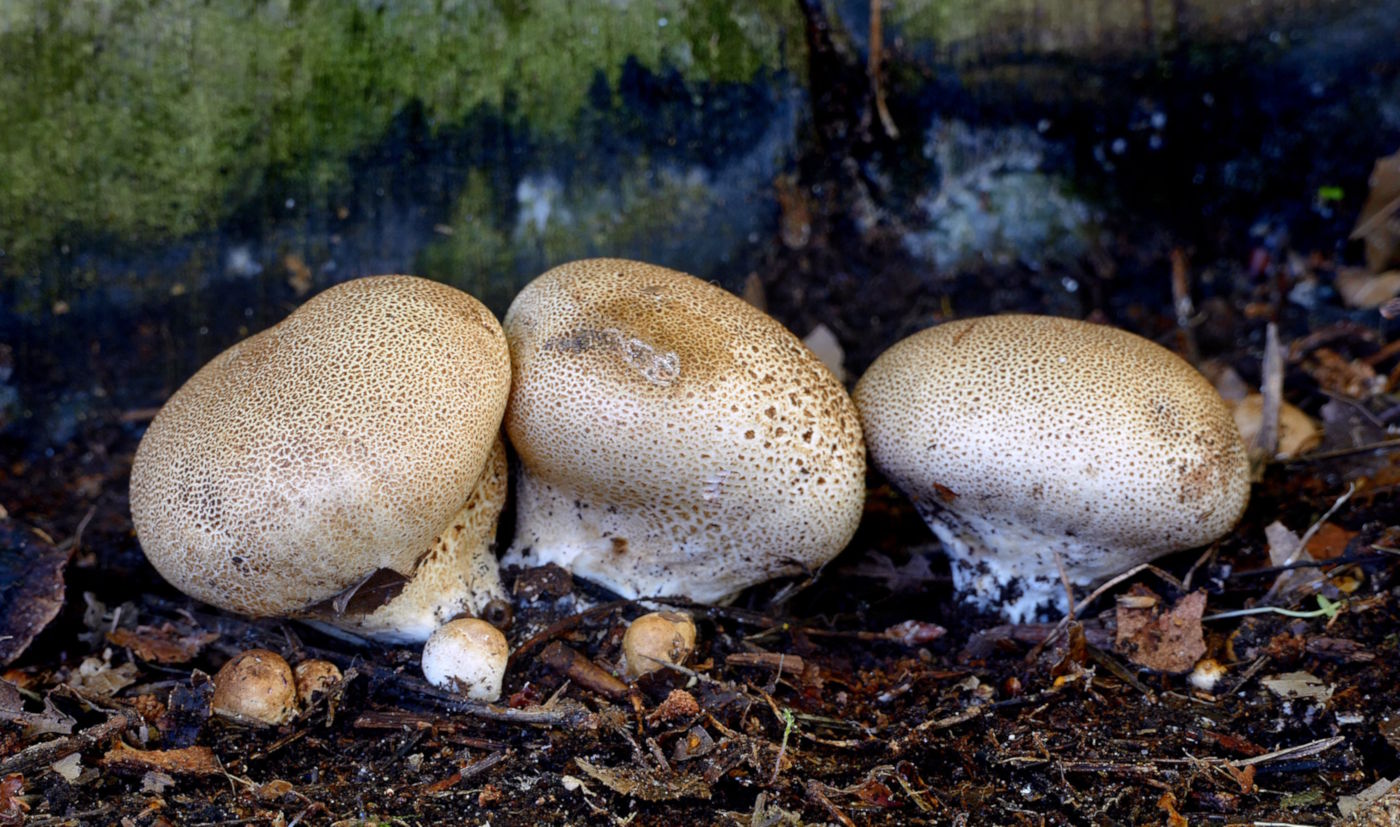
Earthballs are usually smaller, tougher, and darker than Giant Puffballs. Their outer skin is often thick, rough, cracked, or covered with coarse scales.
The interior becomes dark purple, gray-black, or almost black relatively early.
Main Difference
Young Giant Puffballs remain pure white inside. Earthballs usually have a darker, denser interior and a much tougher outer wall.
Earthballs should not be treated as edible puffballs.
Lycoperdon perlatum — Common Puffball
Identification
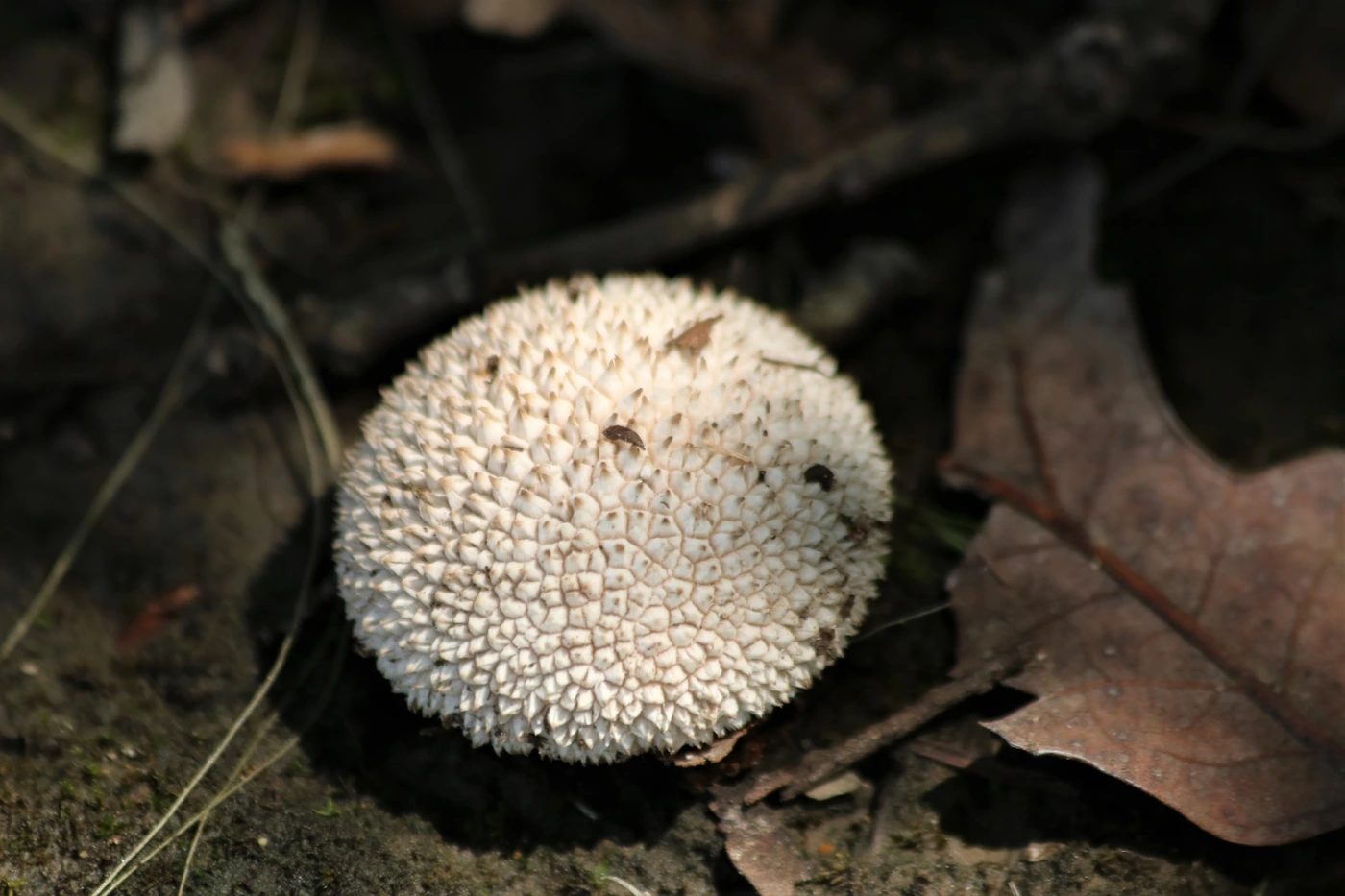
Common Puffball is much smaller and usually pear-shaped rather than giant and spherical. Its surface is covered with numerous small spines or warts.
It also has a more obvious sterile base below the spore-bearing upper portion.
Main Difference
Size and surface texture are the easiest clues. Giant Puffball is much larger and generally smoother.
Calvatia booniana — Western Giant Puffball
Identification
Calvatia booniana is another large North American puffball. It often has a more strongly cracked or polygonal surface.
It is especially associated with western North America.
Main Difference
Surface texture and geography help separate it from Calvatia gigantea. Large western puffballs should not automatically be called Giant Puffball without considering regional species.
Handkea utriformis — Mosaic Puffball
Identification
Mosaic Puffball is usually smaller and develops a distinctive cracked, mosaic-like outer surface. It may also become more pear-shaped or flattened.
The mature surface often forms clear polygonal patches.
Main Difference
Giant Puffball is generally larger and smoother when young. Mosaic Puffball develops much more obvious patterned cracking.
Giant Puffball vs Amanita Egg
| Feature | Giant Puffball | Amanita Egg |
|---|---|---|
| Outside | White, rounded | White, rounded |
| Interior | Uniform white | Developing mushroom visible |
| Gills inside | None | Present in developing form |
| Stem inside | None | Present |
| Volva | No separate volva | Universal veil forms outer covering |
| Main clue | Solid homogeneous interior | Internal cap and stem structure |
| Risk | Edible only when correctly ID | Some species deadly |
This comparison is the reason every puffball should be cut open before identification is considered complete.
Giant Puffball vs Earthball
| Feature | Giant Puffball | Earthball |
|---|---|---|
| Size | Often very large | Usually smaller |
| Surface | Smooth to slightly textured | Thick, rough, cracked |
| Young interior | Pure white | Often grayish to dark |
| Mature interior | Olive-brown powder | Dark purple-brown to black |
| Texture | Soft to firm | Tough |
| Edibility | Edible only when young and white | Not recommended |
The dark interior of an earthball is usually the strongest clue.
How to Identify Giant Puffball Step by Step
The process should begin with cutting the mushroom open rather than judging the outside alone.
Step 1: Check the Shape
Look for a large rounded or irregular white fruit body without a normal cap and stem.
A strongly pear-shaped or spiny mushroom is more likely another puffball species.
Step 2: Cut It in Half
Cut vertically through the entire fruit body from top to bottom.
This is essential for excluding Amanita eggs.
Step 3: Check the Interior
The inside should be completely white and uniform. There should be no cap outline, gills, stem, chambers, or colored areas.
Any internal structure means you should stop and reconsider the identification.
Step 4: Check for Aging
Yellow, olive, brown, or powdery tissue indicates a mature puffball.
Only completely white, fresh interior tissue represents the young stage.
Step 5: Consider the Habitat
Open grassland, parks, pastures, lawns, and meadow edges fit Giant Puffball well.
Habitat supports the identification but does not replace the internal check.
How to Photograph a Giant Puffball
Take one photograph of the complete mushroom in its habitat. Include grass, nearby vegetation, or other fruit bodies to show scale.
Then photograph the mushroom cut vertically in half. The interior image is far more useful for safe identification than a photo of the outside alone.
Can AI Identify Giant Puffball?
AI can usually recognize a large mature Giant Puffball from its overall appearance. The bigger challenge is identifying small, young white fruit bodies.
A photo of the cut interior greatly improves reliability. Without an interior view, a cautious system should keep Amanita eggs among the possible alternatives.
Common Identification Mistakes
One common mistake is assuming that every round white mushroom is a puffball. Young Amanitas can look very similar before opening.
Another mistake is using size alone. Even Giant Puffballs begin small, and other puffball species can become fairly large.
A third mistake is eating specimens that have started turning yellow or olive inside. The pure white interior is the key stage.
Interesting Facts
Giant Puffballs are among the largest mushroom fruit bodies in temperate regions. Some specimens can become enormous while remaining almost perfectly spherical.
A single mature puffball can produce an extraordinary number of microscopic spores. When the outer wall breaks, wind and physical disturbance help release them.
The visible fruit body is temporary, but the fungus itself lives as mycelium in the soil. Large puffballs can therefore reappear in the same general area in later years.
Their rapid growth is also remarkable. Under suitable warm and wet conditions, a fruit body can increase dramatically in size over only a few days.
Frequently Asked Questions
Can a Giant Puffball be smaller than a football?
Yes. Young specimens can be much smaller, which is exactly when confusion with other white mushrooms becomes more important.
Can the outside turn yellow while the inside remains white?
Yes, surface discoloration can happen before the interior changes. The internal flesh is more important than external color for judging maturity.
Can Giant Puffballs grow in groups?
Yes. Several fruit bodies may occur close together or in loose arcs.
Can they grow in forests?
They can occur near woodland edges and clearings, but open grassy habitats are more typical.
What happens if the inside is slightly yellow?
The mushroom is already moving beyond the young white stage. It should not be treated as an ideal edible-stage puffball.
Can Giant Puffballs have a stem?
They do not have a true stem like an ordinary cap mushroom. A small basal attachment may be visible where the fruit body connects to the ground.
Why does an old puffball produce brown dust?
That dust is the mature spore mass. It develops as the white internal tissue transforms during maturation.
Can rain make the surface crack?
Yes. Aging, drying, rainfall, and physical damage can all produce cracks and irregularities on the outer surface.
Final Identification Notes
Calvatia gigantea is best recognized as a large white rounded puffball with no true cap or stem and a completely uniform white interior when young.
The most dangerous look-alike is a young Amanita. The safest field rule is therefore to cut every suspected puffball vertically through the center.
The key identification pattern is: large white ball + no gills or stem + completely homogeneous white interior = strong Giant Puffball candidate.