Spruce forests can support an impressive variety of mushrooms. Some grow in close partnership with spruce roots, while others simply prefer the cool, acidic, needle-covered conditions commonly found beneath these trees.
Finding a mushroom under spruce is therefore an important clue, but it does not identify the species by itself. The most useful approach is to combine host tree, underside structure, stem features, bruising, latex, smell, and season.
⚠️ Important: Spruce forests contain edible, inedible, and poisonous mushrooms, including dangerous species. Never decide that a mushroom is safe to eat only because it grows under a familiar tree.
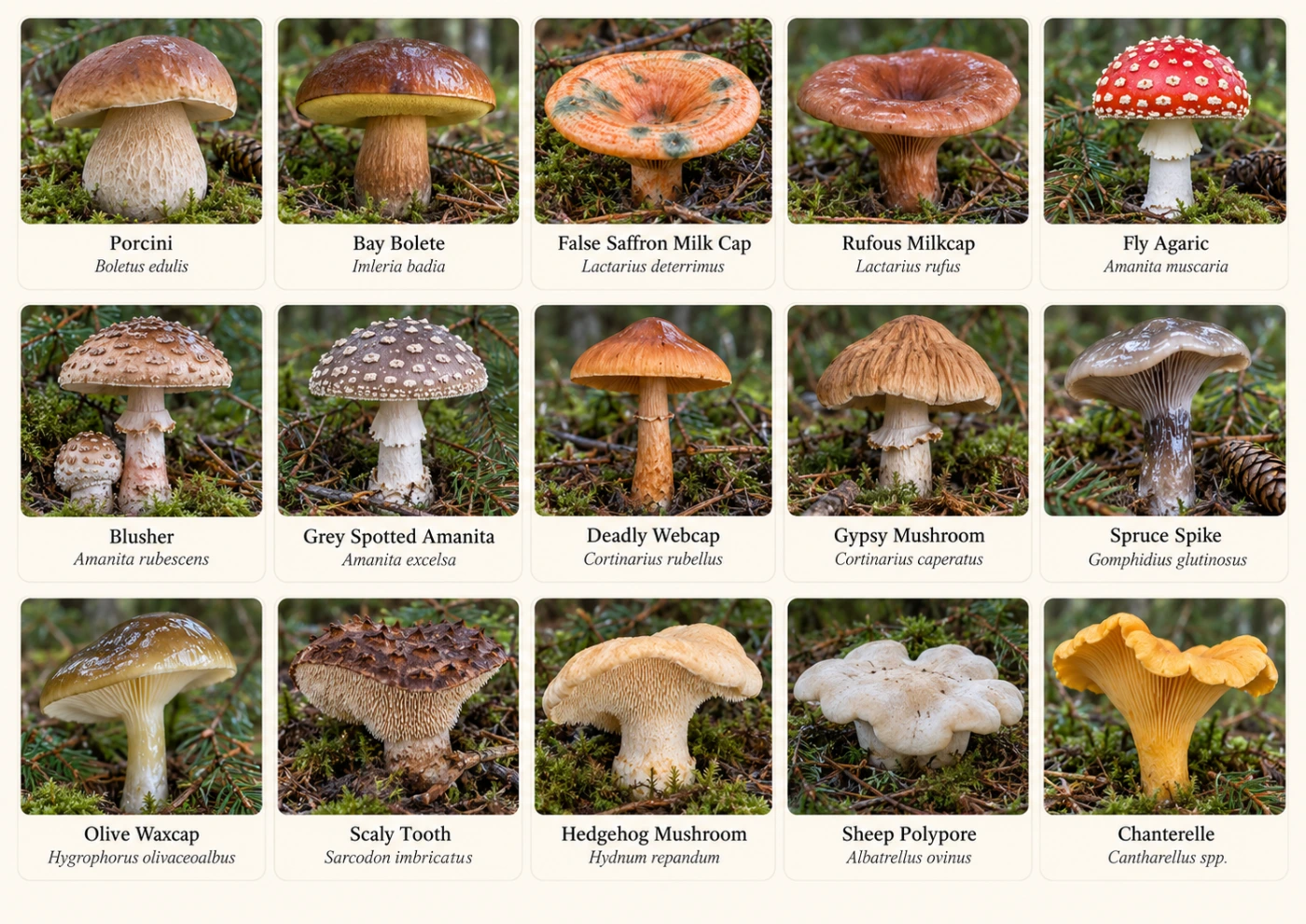
15 Mushrooms Commonly Found Under Spruce
| Mushroom | Scientific name | Main clue |
|---|---|---|
| Porcini | Boletus edulis | White-to-olive pores, pale stem netting |
| Bay Bolete | Imleria badia | Brown cap, yellow pores often blue when pressed |
| False Saffron Milk Cap | Lactarius deterrimus | Orange latex, green staining |
| Rufous Milkcap | Lactarius rufus | Reddish-brown cap, white acrid latex |
| Fly Agaric | Amanita muscaria | Red cap with pale veil remnants |
| Blusher | Amanita rubescens | Flesh turns pink to wine-red |
| Grey Spotted Amanita | Amanita excelsa | Gray-brown cap, pale veil patches |
| Deadly Webcap | Cortinarius rubellus | Orange-brown pointed cap, rusty gills |
| Gypsy Mushroom | Cortinarius caperatus | Wrinkled cap, ring, rusty spores |
| Spruce Spike | Gomphidius glutinosus | Slimy gray cap, decurrent gills |
| Olive Waxcap | Hygrophorus olivaceoalbus | Slimy olive-brown cap and stem |
| Scaly Tooth | Sarcodon imbricatus | Brown scaly cap, teeth underneath |
| Hedgehog Mushroom | Hydnum repandum group | Pale cap, soft teeth underneath |
| Sheep Polypore | Albatrellus ovinus | Pale ground-growing polypore |
| Chanterelle | Cantharellus spp. | Thick false gills, fruity smell |
Why Do So Many Mushrooms Grow Under Spruce?
Spruce trees form mycorrhizal relationships with many fungi. In this partnership, fungal mycelium connects with fine tree roots and exchanges mineral nutrients and water for sugars produced by the tree.
A spruce forest can therefore contain many different fungal partners at the same time. Several species may fruit within only a few meters of one another even though they belong to completely different genera.
How to Recognize a Spruce Habitat
Spruce forests usually have a thick layer of needles, cones, moss, and acidic organic material. The ground can remain cool and damp even when surrounding open areas are dry.
Before using spruce as an identification clue, make sure the tree really is spruce. Pine and fir can grow in the same forest and support different mushroom species.
Spruce vs Pine vs Fir
Spruce needles are usually attached individually and often feel stiff or sharp. Pine needles occur in bundles, while fir needles tend to be flatter and softer.
This distinction becomes especially important with milkcaps. An orange milkcap under spruce may be Lactarius deterrimus, while a very similar mushroom under pine may belong to the Lactarius deliciosus group.
1. Boletus edulis — Porcini
Identification
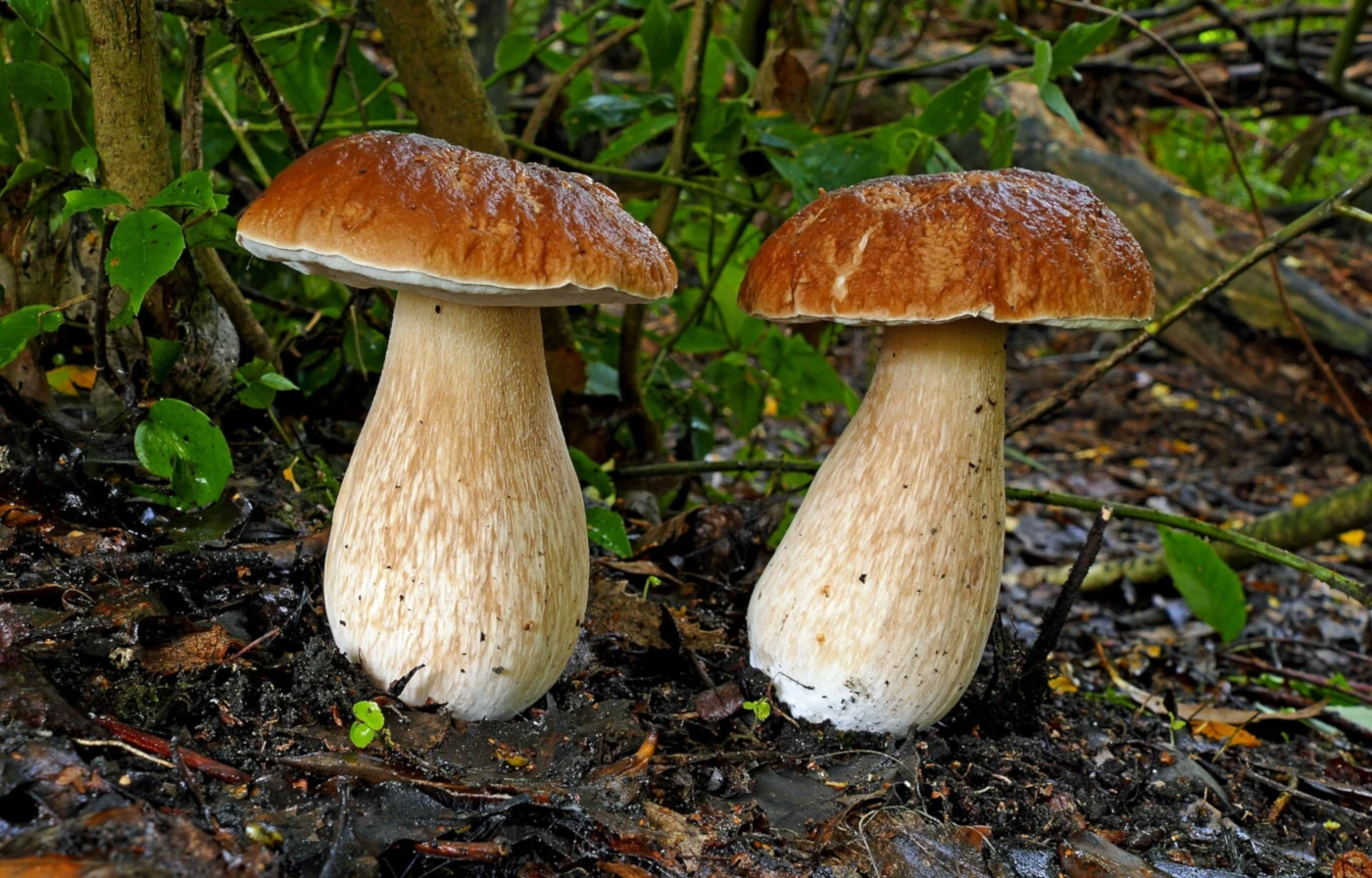
Boletus edulis is one of the best-known mushrooms associated with spruce. It has a brown cap, a thick pale stem with fine reticulation, and pores rather than gills underneath.
Young pores are white and gradually become yellow and then olive. The white flesh usually does not turn strongly blue when cut.
Spruce Association
Porcini commonly forms mycorrhiza with spruce in many parts of Europe. It can also associate with other conifers and broadleaf trees, so spruce does not prove the identification by itself.
In productive spruce forests, fruit bodies may appear repeatedly in the same general area over several seasons.
2. Imleria badia — Bay Bolete
Identification
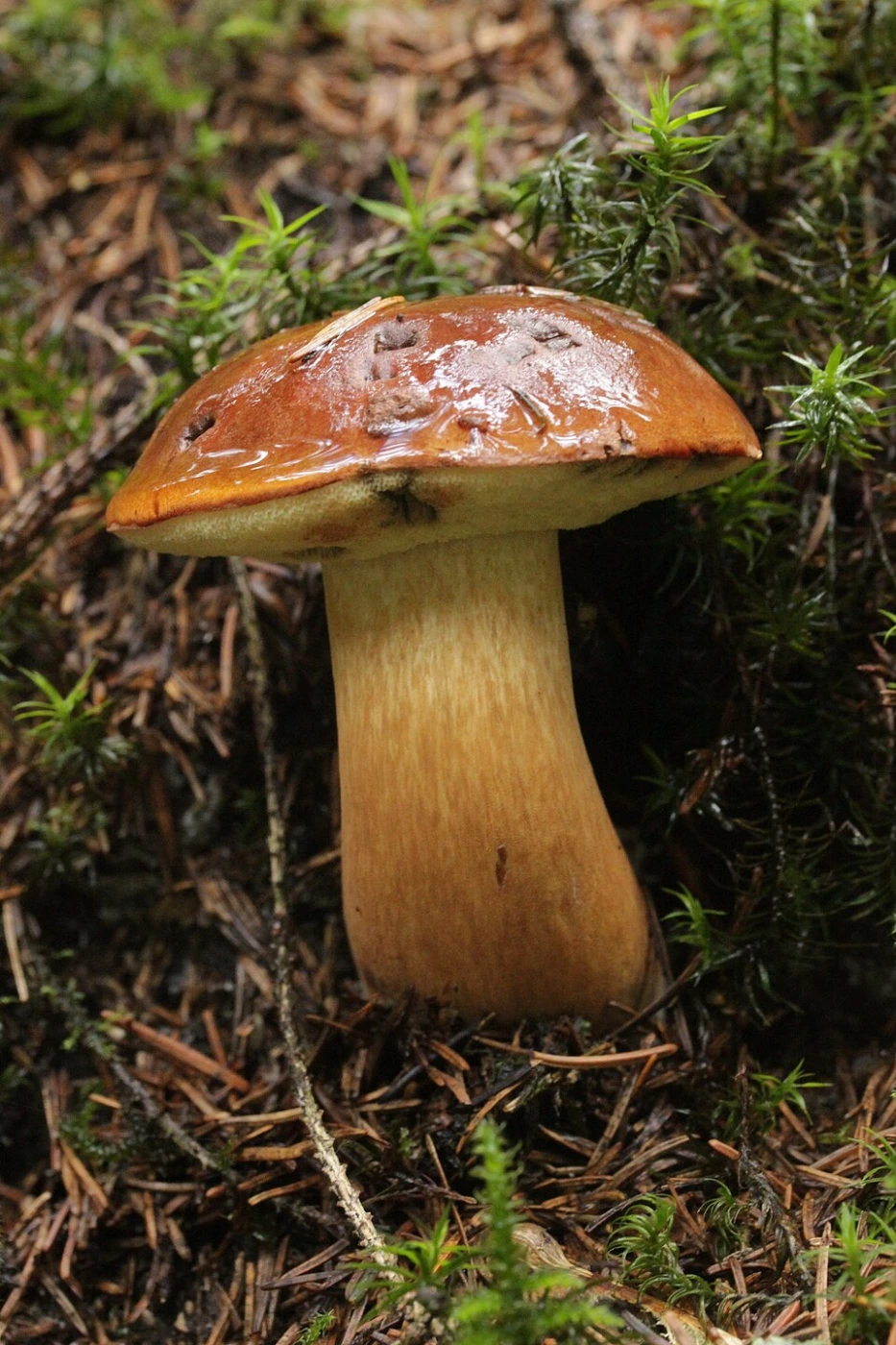
Bay Bolete has a chestnut-brown cap and yellow pores. The pore surface often develops blue staining when pressed or damaged.
The stem is usually brownish and lacks the strong pale netting typical of Porcini. This combination makes it one of the easier brown boletes to recognize once the underside is visible.
Spruce Association
The species is common in coniferous woodland and is frequently found with spruce. It can occur among moss, needles, and decomposing conifer litter.
A brown bolete under spruce with yellow pores and blue bruising is a strong Bay Bolete candidate.
3. Lactarius deterrimus — False Saffron Milk Cap
Identification
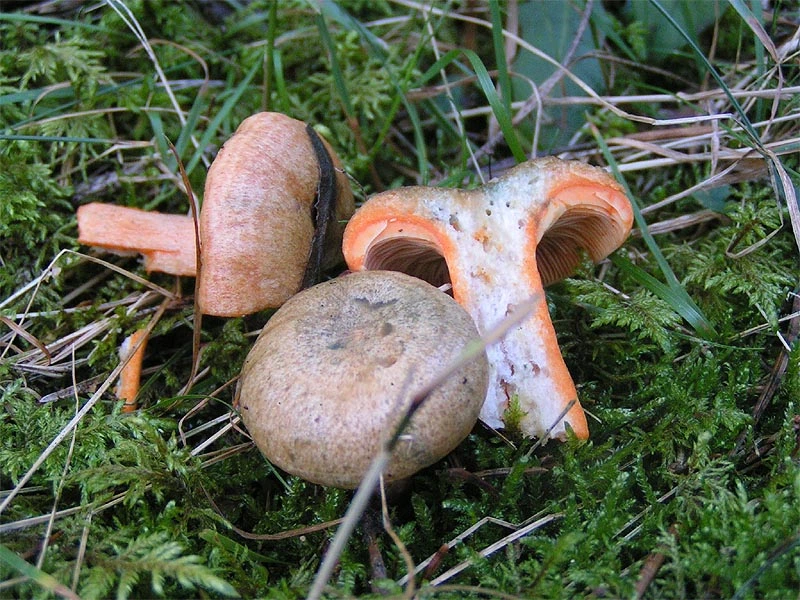
False Saffron Milk Cap is orange to carrot-colored and produces orange latex when the gills are damaged. Older specimens often develop extensive green or blue-green staining.
The gills are orange and run slightly down the stem. The stem itself is also orange and may become green where damaged.
Spruce Association
Spruce is one of the strongest clues for this species. In Europe, Lactarius deterrimus is especially associated with spruce rather than pine.
This ecological difference is very useful because Lactarius deliciosus and related orange milkcaps can look extremely similar.
4. Lactarius rufus — Rufous Milkcap
Identification
Rufous Milkcap usually has a reddish-brown to brick-brown cap, often with a small central bump. The gills are pale, and damaged tissue releases white latex.
The latex has a strongly acrid character, although taste testing is not recommended as a beginner identification method. Color and conifer habitat are more practical field clues.
Spruce Association
The species commonly occurs with spruce, pine, and other conifers. It often grows in acidic woodland and among moss.
Several fruit bodies can appear together, especially after wet weather.
5. Amanita muscaria — Fly Agaric
Identification
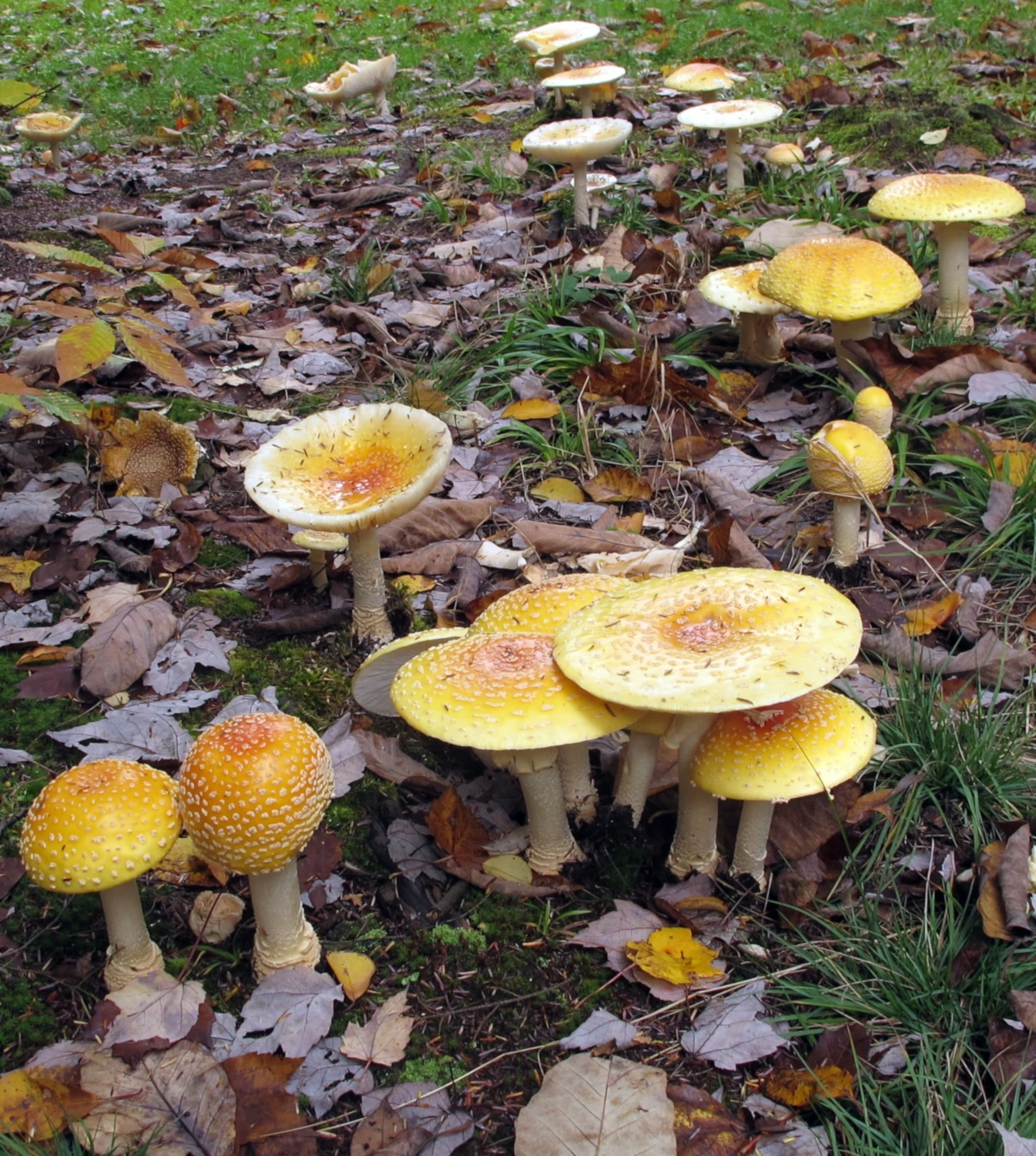
Fly Agaric is famous for its red to orange-red cap covered with pale veil remnants. It has white gills, a ring on the stem, and a bulbous base with universal veil remnants.
Rain can wash away many of the cap spots. Older specimens can therefore look much less typical than the classic red-and-white image.
Spruce Association
Fly Agaric frequently occurs with spruce and other conifers as well as some broadleaf trees. It is a mycorrhizal fungus and can fruit repeatedly near the same trees.
The species is toxic and contains ibotenic acid and muscimol. Its poisoning syndrome is neurological rather than the amatoxin liver toxicity associated with Death Cap.
6. Amanita rubescens — Blusher
Identification
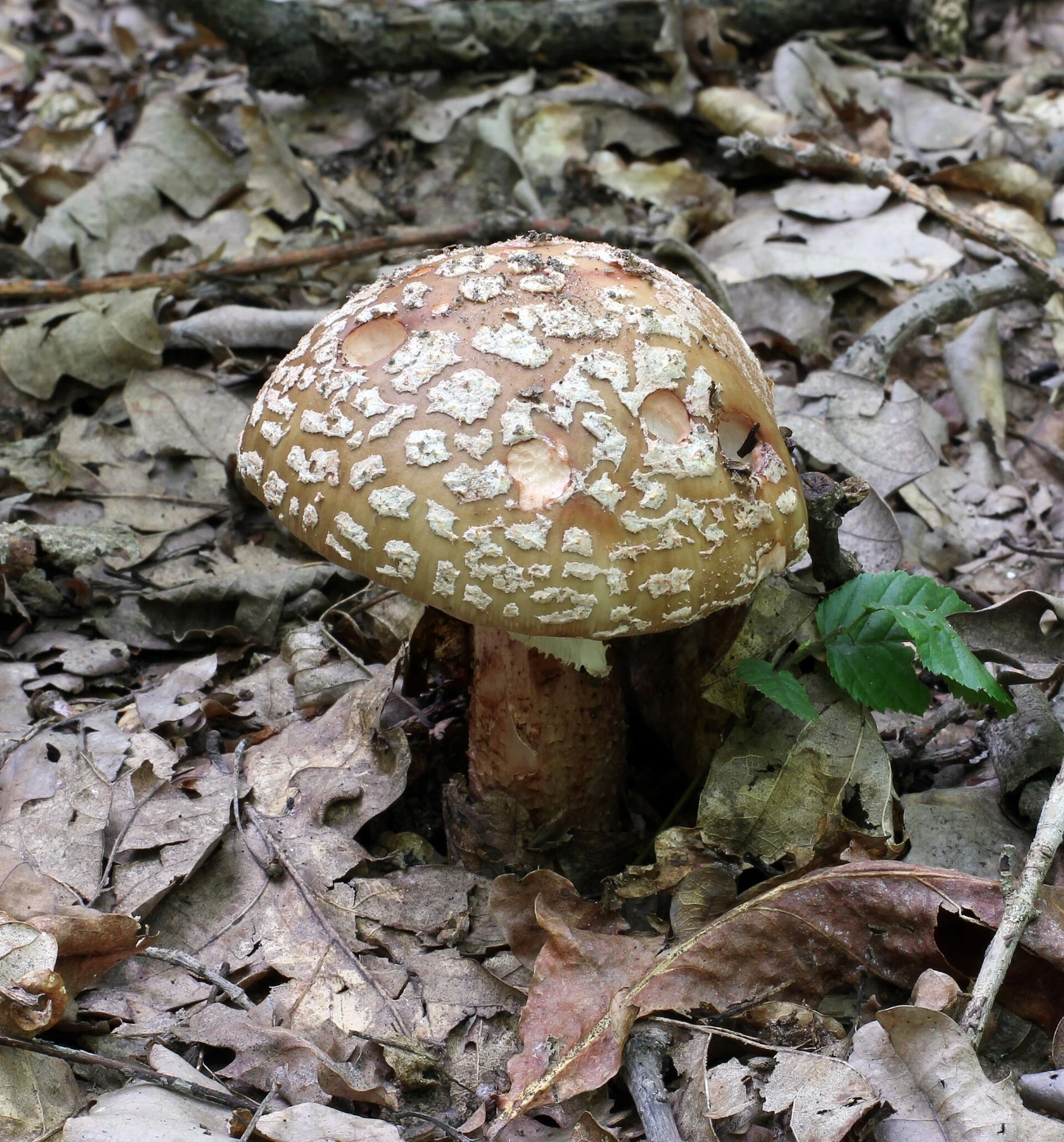
The Blusher has a brown to reddish-brown cap with pale veil remnants, white gills, a ring, and a swollen stem base. Its most useful feature is the pink to wine-red staining that develops after damage.
Insect tunnels inside the flesh often reveal the reddish reaction particularly clearly. The cap color itself can be highly variable.
Spruce Association
Amanita rubescens can grow with spruce as well as broadleaf trees. It is therefore common in mixed and coniferous woodland.
The main dangerous comparison is Panther Cap, which does not characteristically redden and has a more clearly structured basal volva.
7. Amanita excelsa — Grey Spotted Amanita
Identification
Amanita excelsa usually has a gray-brown cap with grayish or dirty-white veil remnants. The mushroom has white gills, a ring, and a bulbous stem base.
Unlike the Blusher, its flesh does not normally develop clear wine-red staining. This difference becomes useful when both occur in the same forest.
Spruce Association
The species is common in European woodland and can occur under spruce. It also associates with other trees, so ecology should be combined with stem-base and cap characters.
Brown Amanitas should always be collected with the entire base intact for identification.
8. Cortinarius rubellus — Deadly Webcap
Identification
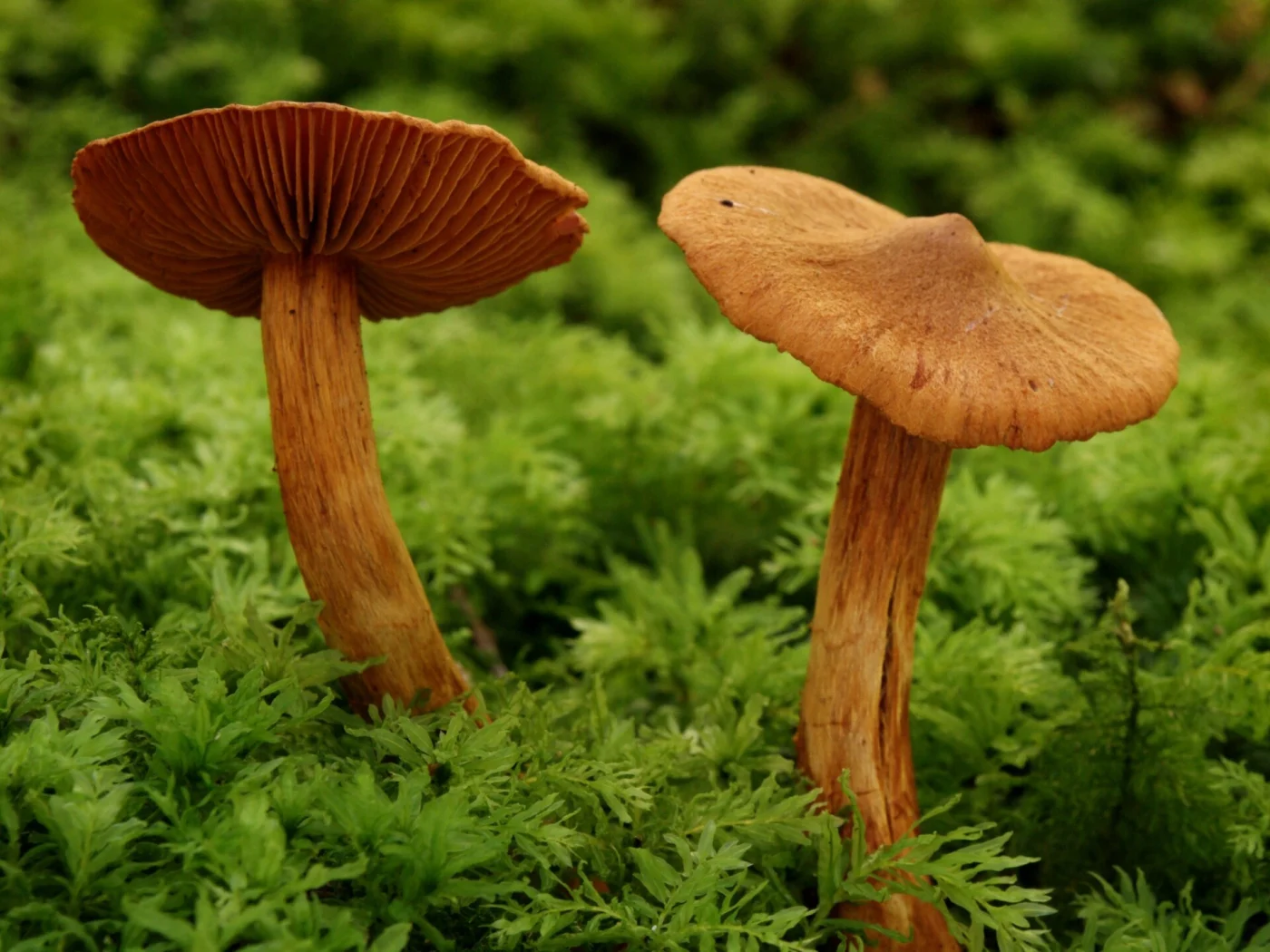
Deadly Webcap is an orange-brown to reddish-brown mushroom with a dry, often pointed cap. Young specimens have a cobweb-like cortina connecting the cap edge to the stem.
The gills become rusty brown as spores mature. The overall warm orange-brown color can make the mushroom attractive despite its severe toxicity.
Spruce Association
Cortinarius rubellus is strongly associated with coniferous woodland, including spruce forests. It often grows among moss in acidic conditions.
The species contains orellanine, a toxin capable of causing severe kidney damage. Symptoms may be delayed for several days, making identification especially important.
9. Cortinarius caperatus — Gypsy Mushroom
Identification
Gypsy Mushroom has a yellow-brown to ochre cap that can look wrinkled or frosted when young. It develops a distinct ring, while the gills gradually become rusty as spores mature.
The cap is usually broader and more rounded than that of Deadly Webcap. However, identification within Cortinarius and related groups requires care.
Spruce Association
The species occurs in coniferous and mixed woodland, often with spruce. It may grow among moss and low vegetation.
Because toxic Cortinarius species can occur nearby, confident species-level identification is essential before any discussion of edibility.
10. Gomphidius glutinosus — Spruce Spike
Identification
Spruce Spike has a gray to brown-gray cap covered with a thick slimy layer in wet weather. The gills are thick, widely spaced, and run distinctly down the stem.
Young mushrooms may have a veil, while mature gills darken as spores develop. The lower stem often shows yellow coloration.
Spruce Association
As the common name suggests, this species is strongly associated with spruce. It is one of the more characteristic mushrooms of spruce woodland in Europe.
The slimy cap and decurrent grayish gills make it look quite different from most ordinary gilled forest mushrooms.
11. Hygrophorus olivaceoalbus — Olive Waxcap
Identification
This woodland Hygrophorus has an olive-brown to gray-brown cap that becomes very slimy when wet. The stem is pale but often decorated with darker olive-brown fibrils or bands.
The gills are pale, thick, and waxy. They may run slightly down the stem.
Spruce Association
The species has a particularly strong association with spruce. Finding a slimy olive-brown waxy-gilled mushroom beneath spruce is therefore a useful ecological combination.
It should not be confused with grassland waxcaps of the genus Hygrocybe, despite the similar common-name terminology.
12. Sarcodon imbricatus — Scaly Tooth
Identification
Scaly Tooth has a large brown cap covered with coarse darker scales. Instead of gills or pores, the underside is covered with numerous downward-pointing teeth.
The fruit body is robust and usually brown throughout. Older specimens can become quite large and conspicuous.
Spruce Association
In Europe, Sarcodon imbricatus is strongly associated with spruce. Similar tooth fungi may have different tree preferences.
This is a useful example of why host tree can help separate species that look very similar from above.
13. Hydnum repandum Group — Hedgehog Mushrooms
Identification
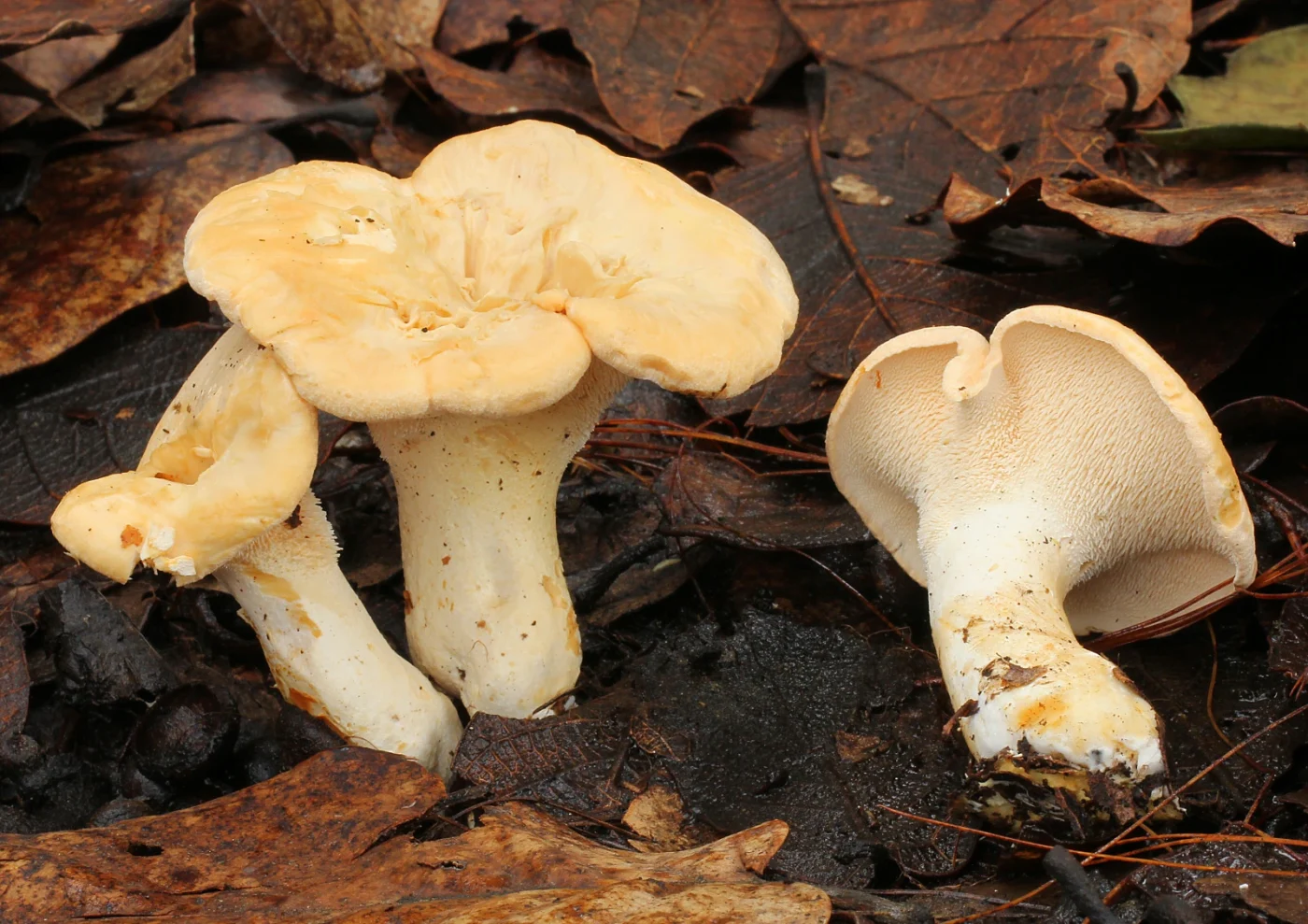
Hedgehog mushrooms have pale cream, buff, or orange-tinted caps and a distinctive underside covered with soft hanging teeth. Those teeth are usually the fastest way to identify the group.
The flesh is firm and pale. Fruit bodies often grow in groups or scattered patches across forest soil.
Spruce Association
Members of the Hydnum repandum group can occur in both coniferous and broadleaf woodland. Spruce forests are therefore suitable habitat for several related species.
Modern taxonomy recognizes multiple similar Hydnum species, so geography and tree association can matter for exact identification.
14. Albatrellus ovinus — Sheep Polypore
Identification
Sheep Polypore grows from the ground but has pores rather than gills underneath. The cap is pale cream to yellowish or grayish and often becomes irregular with age.
Several fruit bodies may fuse or grow closely together. The flesh is pale and relatively firm.
Spruce Association
The species is strongly associated with conifer forests, particularly spruce. It often grows in mossy woodland and can form noticeable groups.
Its ground-growing habit can be confusing because many people expect polypores to grow only from wood.
15. Cantharellus Species — Chanterelles
Identification
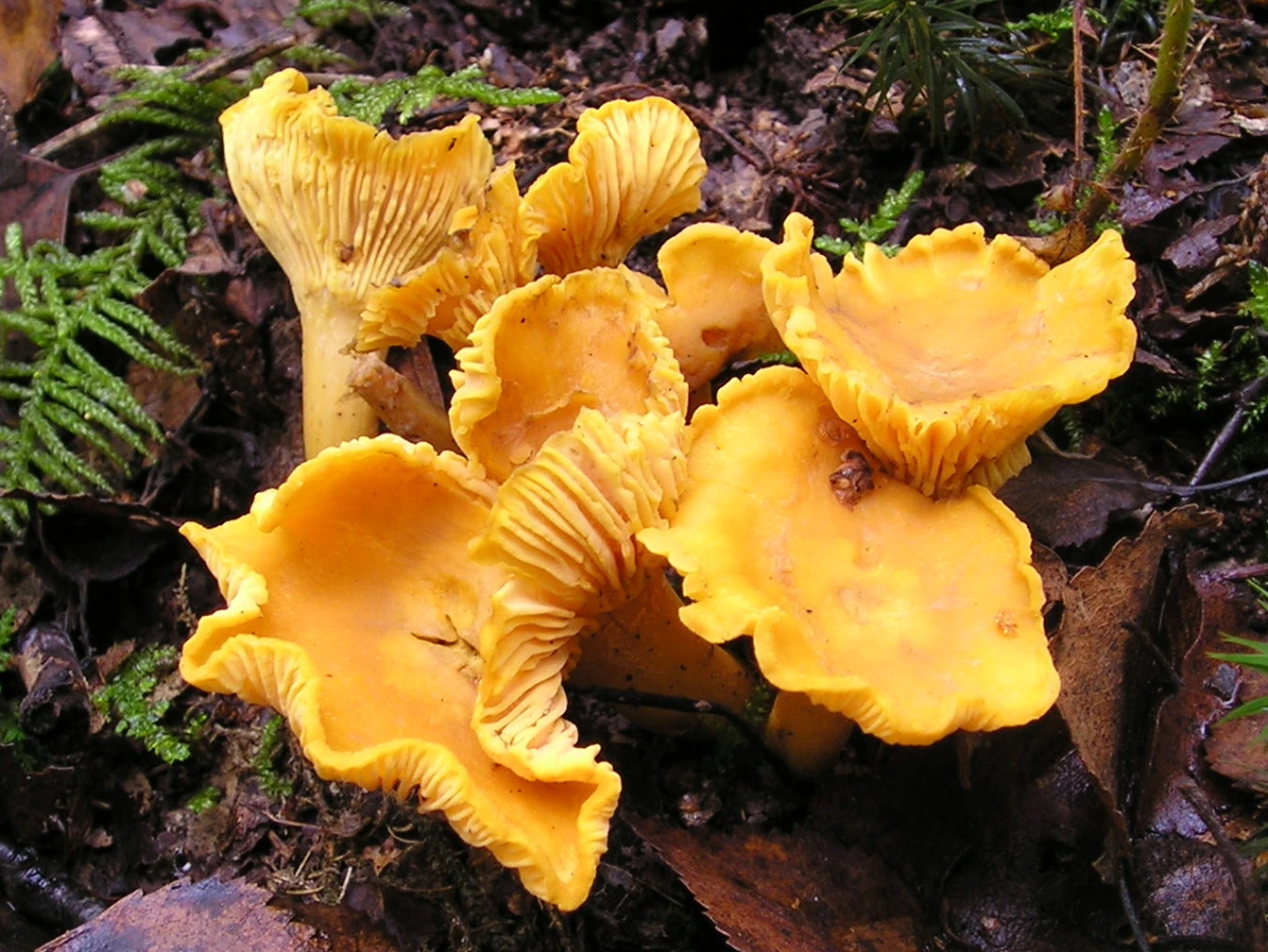
Chanterelles have yellow to orange fruit bodies with thick, blunt false gills or ridges rather than thin true lamellae. These ridges fork and run down the stem.
The flesh is firm, and many species have a fruity smell. Exact species depends strongly on region.
Spruce Association
Some chanterelles occur in spruce and mixed conifer forests, although other species prefer different trees. In Europe, members of the Cantharellus cibarius complex can occur with conifers as well as broadleaf trees.
North American chanterelles should not automatically be identified as European Cantharellus cibarius. Regional species such as Cantharellus formosus and others need to be considered.
How to Identify a Mushroom Under Spruce
The tree gives you a useful starting point, but the underside of the mushroom usually tells you where to go next. Begin by determining whether the mushroom has gills, pores, teeth, false gills, or another structure.
After that, features such as latex, bruising, stem ornamentation, ring, volva, and spore color can rapidly narrow the possibilities.
Step 1: Look Under the Cap
Pores suggest boletes or ground-growing polypores, while teeth point toward Hydnum or Sarcodon. True gills lead toward groups such as Amanita, Lactarius, Cortinarius, and Gomphidius.
Thick branching ridges instead of true gills strongly suggest chanterelles.
Step 2: Check for Latex
Cut or scratch the gills of a suspected milkcap. Orange latex under spruce strongly suggests the saffron milk cap group, especially Lactarius deterrimus in Europe.
White latex points toward a different milkcap group. Always observe whether the liquid changes color over time.
Step 3: Look for Bruising
Blue bruising is important in many boletes, while reddish staining can support the Blusher. Green staining is especially useful with orange milkcaps.
No universal rule connects bruising color with edibility. The reaction is an identification clue, not a safety test.
Step 4: Inspect the Stem Base
Amanitas may have bulbs, rings, rims, or other veil remnants at the bottom of the stem. The complete base should therefore be exposed rather than cut off.
This is particularly important with brown or pale Amanitas, where cap color alone may be misleading.
Step 5: Confirm the Tree
Make sure the mushroom really is associated with spruce rather than a nearby pine, fir, birch, or beech. Tree roots can extend some distance from the visible trunk.
In mixed forests, ecology narrows the identification but should not be treated as absolute proof.
Edible Mushrooms Under Spruce
Several prized edible mushrooms can occur beneath spruce, including Porcini, Bay Bolete, some Hedgehog Mushrooms, chanterelles, and certain saffron milk caps when correctly identified.
Spruce habitat also contains poisonous and deadly mushrooms. The presence of edible species nearby does not make an unknown mushroom safe.
Poisonous Mushrooms Under Spruce
Deadly Webcap is one of the most important dangerous species in spruce woodland. Fly Agaric is also toxic, while several other Cortinarius and Amanita species may require careful identification.
This is why “found under spruce” should never be used as an edibility rule. The same patch of forest can contain edible, inedible, and highly poisonous species at the same time.
How to Photograph Spruce-Forest Mushrooms
Take one wide photograph that includes the mushroom and surrounding forest floor. Spruce needles, cones, bark, and nearby trees provide valuable ecological information.
Then photograph the cap, underside, full stem, and complete stem base. For milkcaps, photograph fresh latex; for boletes, include bruising reactions; and for tooth fungi, show the underside clearly.
Can AI Identify Mushrooms Growing Under Spruce?
AI can use spruce habitat as a useful additional clue, especially when comparing mushrooms with strong host preferences. It becomes much more effective when the underside and complete stem are also visible.
Tree information should not replace mushroom morphology. In mixed woodland, the nearest visible spruce may not necessarily be the fungal partner.
Common Identification Mistakes
One common mistake is assuming that every mushroom beneath a spruce is specifically associated with spruce. Roots from nearby trees can overlap, and some fungi have several possible hosts.
Another mistake is focusing only on cap color. Brown caps occur in boletes, milkcaps, Cortinarius, Amanita, and many other unrelated groups.
The third mistake is ignoring the underside. Pores, teeth, false gills, and true gills immediately separate major groups that may look similar from above.
Interesting Facts About Spruce-Forest Mushrooms
A mature spruce can interact with many different mycorrhizal fungi at the same time. The fungal community around its roots changes with soil, climate, tree age, and surrounding vegetation.
Some fungi are much more host-specific than others. Lactarius deterrimus is closely associated with spruce, while Boletus edulis can partner with several different conifer and broadleaf trees.
Ground-growing mushrooms can also have very different lifestyles despite appearing side by side. A Porcini may be connected to living roots while another fungus nearby is decomposing dead needles or buried wood.
Spruce plantations can develop rich fungal communities over time. Even human-planted forests may eventually support boletes, milkcaps, Amanitas, Cortinarius, tooth fungi, and many other species.
Frequently Asked Questions
Why do mushrooms sometimes form circles under spruce trees?
Mycelium can expand outward through soil and fruit along an active growing edge. Root distribution and soil conditions can also influence where mushrooms appear.
Can mushrooms grow directly from buried spruce cones?
Some decomposer fungi can use cones and small woody debris as substrate. A mushroom appearing terrestrial may therefore actually be attached to buried organic material.
Why are some spruce forests rich in mushrooms while others have very few?
Soil chemistry, moisture, forest age, tree diversity, management, and weather all influence fungal communities. Two visually similar spruce forests can contain very different fungi.
Can the same mushroom appear under spruce every year?
Yes. Long-lived mycelium can remain associated with the same root system and produce fruit bodies repeatedly when conditions are favorable.
Do young spruce trees have the same mushrooms as old spruce forests?
Not necessarily. Fungal communities can change as trees and soils mature, and some species are more strongly associated with older forest ecosystems.
Can mushrooms continue growing after the spruce tree dies?
Mycorrhizal species may lose their living partner, while decomposer fungi can take advantage of the dead roots and wood. The fungal community can therefore change substantially after tree death.
Why are mossy spruce forests especially good for mushrooms?
Moss can help maintain a cool, humid surface environment. These conditions reduce drying and can favor the development of many fruit bodies.
Can one spruce tree have several different mushroom species around it at once?
Yes. A tree root system can interact with multiple mycorrhizal fungi, and decomposers can occur in the same area at the same time.
Final Identification Notes
Spruce forests support a broad range of mushrooms, including Porcini, Bay Bolete, False Saffron Milk Cap, Fly Agaric, Blusher, Deadly Webcap, Spruce Spike, Scaly Tooth, Hedgehog Mushrooms, and chanterelles.
The tree is an important clue, but it is only the beginning. The safest identification sequence is confirm spruce → examine the underside → check latex or bruising → inspect the stem and base → consider geography and season.
The simplest rule is: use spruce to narrow the possibilities, not to name the mushroom.
Upload a photo and get possible matches in seconds.