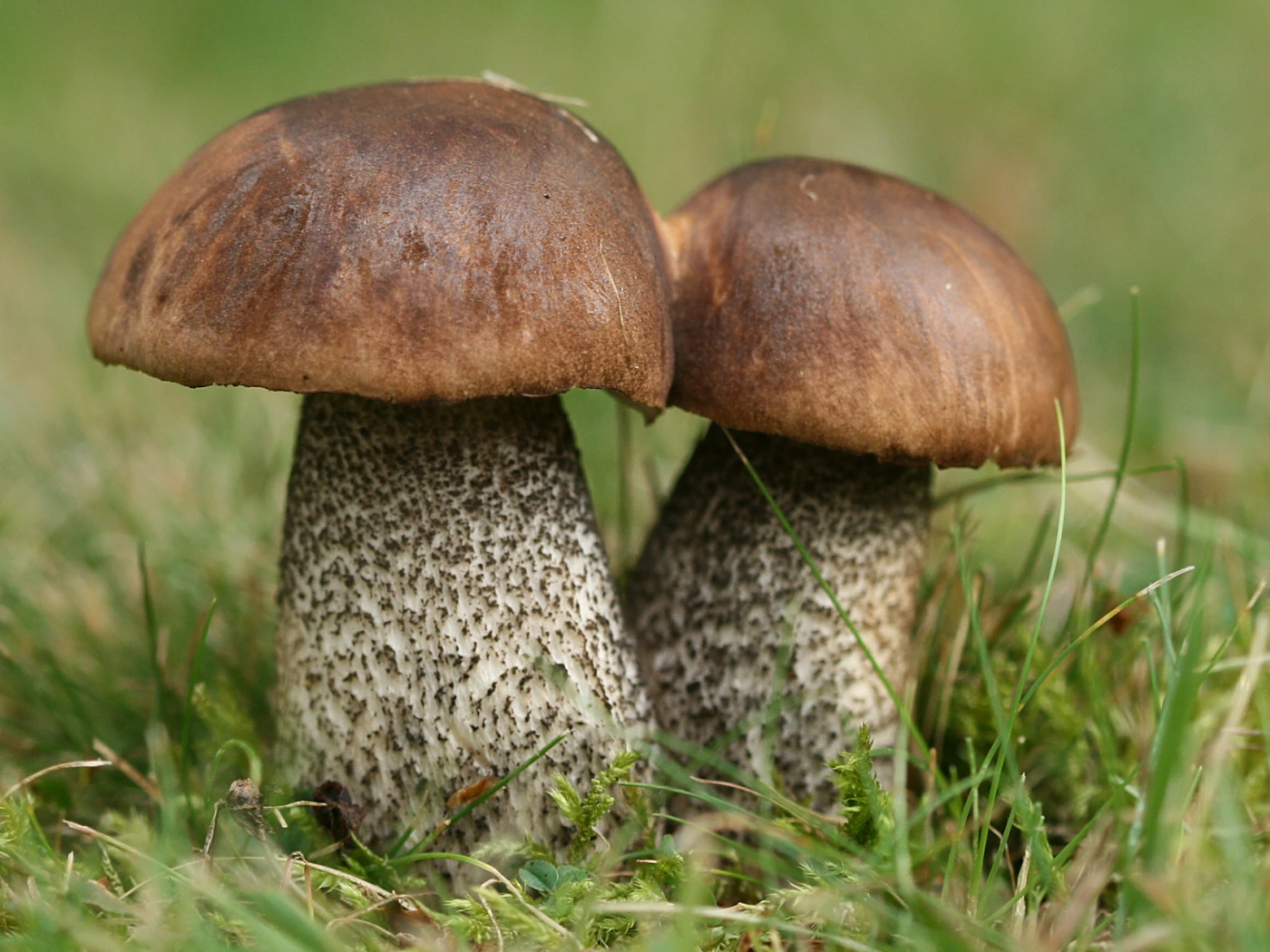
Leccinum scabrum, commonly known as the Brown Birch Bolete or Birch Bolete, is one of the most characteristic mushrooms associated with birch trees. It has a brown cap, a pale pore surface, and a distinctive stem covered with dark rough scales known as scabers.
The species is widespread across much of Europe and northern temperate regions and is strongly linked to birch through a mycorrhizal relationship. Because several other Leccinum species can look very similar, the best identification comes from combining cap color, stem scabers, flesh reactions, habitat, and host tree.
⚠️ Important: This guide is for identification and education only. Never eat a wild mushroom based solely on photographs, AI identification, or one visible feature.
Quick Identification
| Feature | Leccinum scabrum |
|---|---|
| Scientific name | Leccinum scabrum |
| Common name | Brown Birch Bolete / Birch Bolete |
| Family | Boletaceae |
| Cap color | Brown to gray-brown |
| Cap surface | Dry to slightly velvety |
| Underside | Pores, not gills |
| Young pores | White to pale cream |
| Mature pores | Grayish to dull olive |
| Stem | Pale with dark scabers |
| Reticulation | Absent |
| Flesh | White to pale, may darken slightly |
| Strong blue bruising | Usually absent |
| Spore print | Olive-brown |
| Ecology | Mycorrhizal |
| Main host | Birch |
| Season | Summer through autumn |
| Edibility | Commonly regarded as edible when correctly identified and properly cooked |
| Main look-alikes | Other Leccinum species, especially orange-capped and pale birch boletes |
What Does Leccinum scabrum Look Like?
Brown Birch Bolete has the classic shape of a medium-sized bolete. The cap is usually brown, the underside is sponge-like, and the pale stem is covered with numerous darker projections.
Those stem markings are the most important visible clue. They give the stem a rough, speckled appearance and are very different from the net-like reticulation seen in Porcini.
Cap
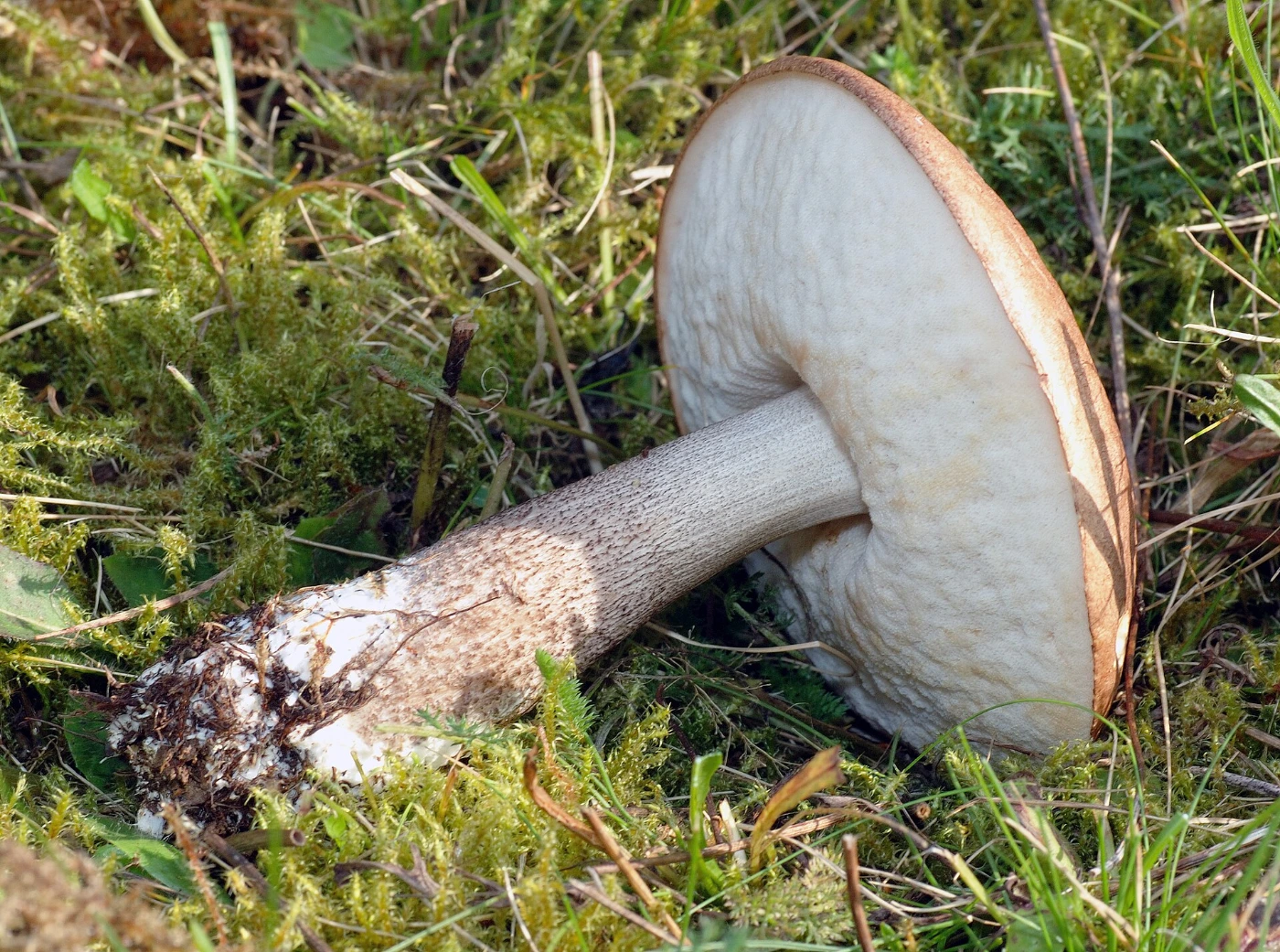
The cap is usually medium brown, gray-brown, or warm chestnut-brown. Young mushrooms have rounded caps that gradually become broader and flatter with age.
The surface is generally dry or slightly velvety rather than strongly slimy. In wet weather it may darken and appear smoother.
Cap Color
Color varies considerably. Some specimens are pale tan, while others are much darker and can approach deep brown.
This variation means cap color alone is not enough. The stem and birch association are much more useful.
Pores
The underside consists of tubes ending in fine pores. Young pores are white or cream and gradually become grayish, beige, or dull olive as the mushroom matures.
The pore surface may bruise slightly, but dramatic blue staining is not typical.
Pore Color With Age
Very young fruit bodies can have almost pure white pores. Older specimens often look much duller underneath.
This age-related change can make the same species look surprisingly different in the field.
Stem
The stem is usually long, pale, and somewhat cylindrical or slightly swollen toward the base. It is covered with numerous dark scabers.
These scabers can be gray, brown, or almost black and often become darker as the mushroom matures.
Scabers
Scabers are one of the defining features of the genus Leccinum. They look like tiny rough scales or dots embedded in the stem surface.
Unlike reticulation, they do not form a continuous net. Their presence is one of the fastest ways to recognize a Leccinum-type bolete.
Flesh
The flesh is white or pale cream. It generally does not show strong rapid blue bruising.
Some specimens may develop grayish, pinkish, or slightly brownish discoloration after cutting, depending on age and condition.
Texture
Young mushrooms are firm, while older fruit bodies become soft and spongy. The pore layer can become especially loose with age.
Mature specimens are also frequently damaged by insects. Young intact fruit bodies are easier to identify.
Smell
The smell is mild and not particularly distinctive. It may simply be described as mushroom-like.
Odor is not an important identification feature for this species. Stem structure and host tree are much more reliable.
Spore Print
The spore print is olive-brown. This is typical of many boletes.
It helps confirm the broader bolete group but does little to separate Leccinum scabrum from close relatives.
Where Does Leccinum scabrum Grow?
Brown Birch Bolete is strongly associated with birch. It forms mycorrhiza with living birch roots and therefore grows from soil rather than directly from dead wood.
It can occur in natural birch woodland, mixed forest, parks, roadsides, and gardens where suitable birch trees are present.
Birch Association
The birch relationship is one of the strongest identification clues. A brown Leccinum with dark stem scabers found beneath birch is a strong candidate for L. scabrum.
However, other birch-associated Leccinum species also exist. Host tree narrows the possibilities but does not always prove the exact species.
When Does Brown Birch Bolete Grow?
The main season is summer through autumn. Fruiting often increases after periods of rain.
In suitable climates, mushrooms may appear in repeated flushes during the season. The same birch stand can produce them year after year.
Distribution
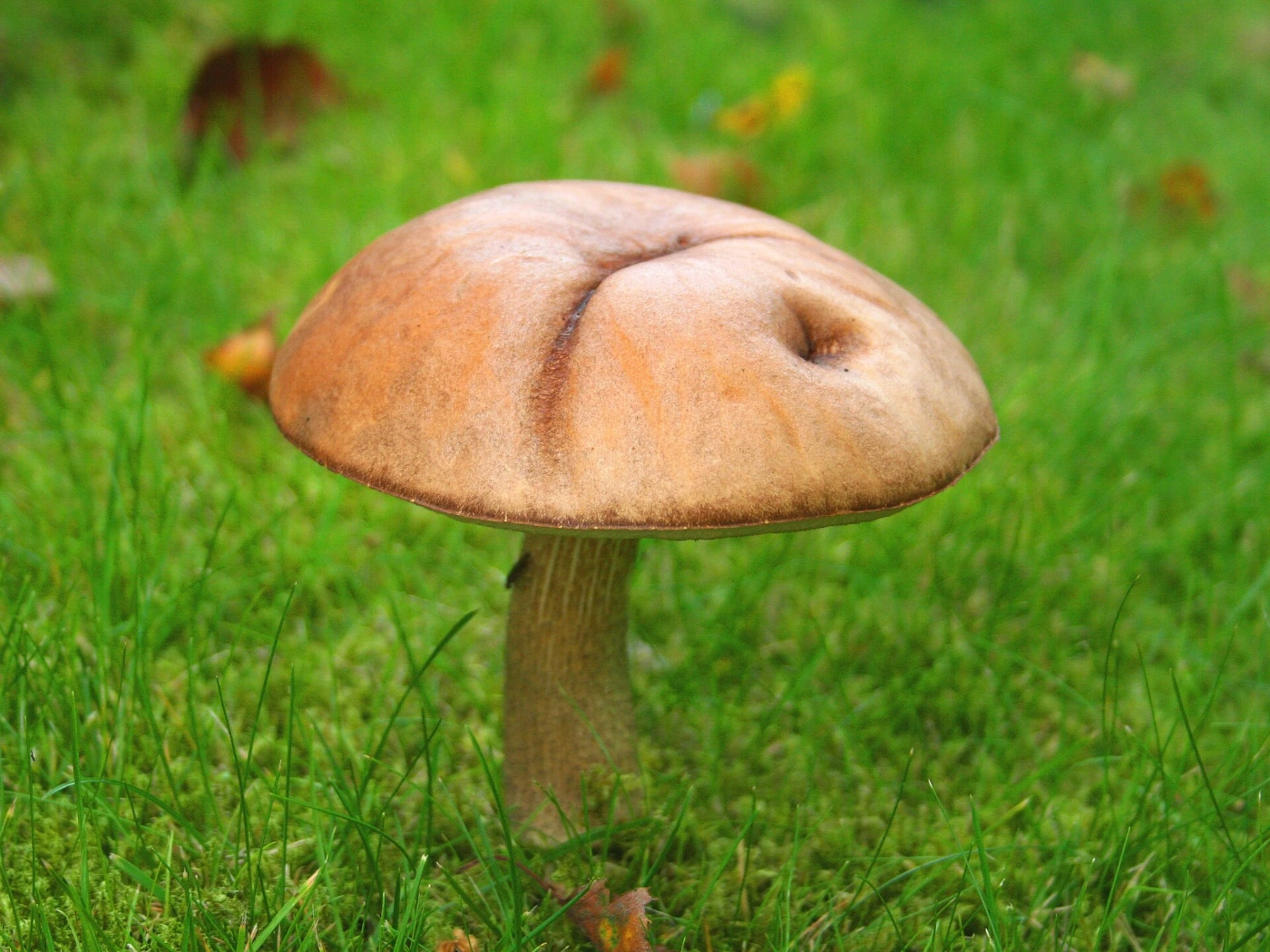
Leccinum scabrum is widespread across Europe and northern temperate regions. It is particularly common wherever birch is abundant.
Regional taxonomy can be complicated, especially because closely related Leccinum species may overlap. Exact identification sometimes requires more than field appearance.
Is Leccinum scabrum Edible?
Brown Birch Bolete is commonly regarded as edible when correctly identified and properly cooked. Young firm specimens are usually preferred.
As with other Leccinum, undercooked or poorly identified specimens may cause gastrointestinal problems. Proper preparation and correct identification are important.
Why Proper Cooking Matters
Some Leccinum species have been associated with gastrointestinal upset when eaten raw or insufficiently cooked. This is one reason they should not be treated casually.
Wild mushroom edibility should always be considered only after the identification is secure.
Leccinum scabrum Look-Alikes
The main look-alikes are other Leccinum species. Many share the same pale stem with dark scabers and similar pore structure.
The most useful differences involve cap color, flesh staining, habitat moisture, and exact host tree.
Leccinum versipelle Group — Orange Birch Boletes
Identification
Orange Birch Boletes have orange to orange-brown caps and pale stems with dark scabers. They are also strongly associated with birch.
Their flesh may darken more strongly after cutting than typical L. scabrum.
Main Difference
Cap color is the most obvious distinction. Brown Birch Bolete has a brown to gray-brown cap, while L. versipelle-type mushrooms are clearly orange or reddish-orange.
Because faded orange caps can become duller, stem and flesh reactions should also be checked.
Leccinum holopus — Ghost Bolete
Identification
Leccinum holopus is much paler, with whitish to pale gray caps and the same characteristic scabrous stem.
It is especially associated with wet birch habitats, boggy ground, and mossy areas.
Main Difference
The pale almost ghostly cap and wetter habitat are the best clues. Brown Birch Bolete is usually much darker.
Leccinum variicolor Group
Identification
Some Leccinum species associated with birch can have mottled or unevenly colored caps and more pronounced flesh discoloration.
These taxa may be difficult to separate reliably in the field.
Main Difference
A strongly patchy cap or more complex staining pattern may point away from typical L. scabrum. Regional knowledge becomes important.
Porcini — Boletus edulis Group
Identification
Porcini can also have brown caps and pale pores, but the stem is completely different. Instead of dark scabers, it usually shows pale reticulation.
The stem is also often thicker and more club-shaped.
Main Difference
Scabers vs reticulation is the fastest comparison. Leccinum scabrum has dark rough dots, while Porcini has a pale net-like pattern.
Bay Bolete — Imleria badia
Identification
Bay Bolete has a chestnut-brown cap and yellow pores that often bruise blue. Its stem is relatively smooth and lacks the dark scabers typical of Leccinum.
It is more commonly associated with coniferous and mixed woodland.
Main Difference
Blue-bruising yellow pores and a smooth brownish stem point toward Bay Bolete. Dark scabers and birch habitat favor Brown Birch Bolete.
Leccinum scabrum vs Orange Birch Bolete
| Feature | Brown Birch Bolete | Orange Birch Bolete |
|---|---|---|
| Cap | Brown to gray-brown | Orange to orange-brown |
| Stem | Pale with dark scabers | Pale with dark scabers |
| Pores | Pale to grayish | Pale to grayish |
| Flesh reaction | Usually mild | Often stronger darkening |
| Main host | Birch | Birch |
| Best clue | Brown cap | Orange cap |
These two can occur in very similar habitats. Cap color and flesh reaction are therefore especially useful.
Leccinum scabrum vs Porcini
| Feature | Leccinum scabrum | Porcini |
|---|---|---|
| Cap | Brown to gray-brown | Brown to chestnut |
| Stem surface | Dark scabers | Pale reticulation |
| Stem shape | Long, relatively slender | Often thick and bulbous |
| Pores | Pale → grayish | White → yellow → olive |
| Blue bruising | Usually absent | Usually absent |
| Main host | Birch | Several tree species |
The stem alone often solves this comparison.
How to Identify Leccinum scabrum Step by Step
Start by confirming that the mushroom has pores rather than gills. Then look for a brown cap and a pale stem covered with dark scabers.
Finally, confirm that birch is present and check for the absence of strong blue staining.
Step 1: Check the Underside
The mushroom should have a sponge-like pore surface. Young pores are pale and later become duller.
True gills would immediately rule out Leccinum.
Step 2: Examine the Stem
Look for many dark rough dots or scales. These should be clearly separated rather than forming a net.
This is the strongest structural clue.
Step 3: Check the Cap
A brown to gray-brown cap supports L. scabrum. A bright orange or nearly white cap suggests another birch bolete.
Use cap color as a secondary feature.
Step 4: Cut the Flesh
Check whether the flesh remains mostly pale or develops only mild discoloration. Strong blackening or dramatic color reactions may suggest another Leccinum species.
Reaction strength can vary, so this should not be used alone.
Step 5: Confirm Birch
Look carefully for birch trunks, leaves, or roots nearby. In mixed woodland, check whether other trees are also present.
A Leccinum with no birch anywhere nearby deserves reconsideration.
How to Photograph Brown Birch Bolete for Identification
Take one photograph of the whole mushroom in habitat, ideally with birch leaves or trunks visible. This helps document the host relationship.
Then photograph the stem closely so the scabers are clearly visible. A separate underside image should show the pores.
A cut specimen can also help record flesh discoloration. Several mushrooms of different ages are even more useful.
Can AI Identify Leccinum scabrum?
AI can often recognize the general Leccinum type because the dark scabers are visually distinctive. Distinguishing L. scabrum from close birch-associated relatives is harder.
Accuracy improves when the cap color, stem, pores, flesh reaction, and birch habitat are all shown. A cap-only photograph is much less reliable.
For difficult specimens, an identification such as “brown birch-associated Leccinum” may be more accurate than forcing an exact species name.
Common Identification Mistakes
One common mistake is identifying every scabrous-stem bolete beneath birch as Leccinum scabrum. Several related species share the same basic structure.
Another mistake is using cap color without considering flesh reactions. Orange, pale, and mottled birch boletes can overlap with weathered brown specimens.
A third mistake is confusing scabers with reticulation. Learning the difference between rough dots and a true net pattern is essential.
Interesting Facts About Leccinum scabrum
The common name Brown Birch Bolete reflects one of the clearest tree-mushroom relationships in European woodland. The species is so strongly associated with birch that the host tree becomes part of the practical identification.
The genus name Leccinum includes many boletes whose stems are covered with scabers. These rough projections are one of the most recognizable structural features among boletes.
Birch itself is a pioneer tree that often colonizes disturbed or nutrient-poor ground. Mycorrhizal fungi such as Leccinum help birch obtain minerals and water from the soil, while receiving sugars from the tree.
The visible mushroom is only the reproductive structure. Most of the fungus remains underground around the birch roots as a network of mycelium.
Frequently Asked Questions
Why do the stem scabers become darker with age?
Pigments and surface tissues change as the mushroom matures. Older fruit bodies often have much darker and more obvious scabers than very young ones.
Can the cap become almost gray instead of brown?
Yes. Weather, age, and hydration can shift the cap from warm brown to dull gray-brown.
Can Brown Birch Bolete grow in lawns?
Yes, if birch roots extend beneath the grass. Parks and gardens with mature birch can support the species.
Why do some specimens have much longer stems?
Soil depth, moss thickness, vegetation, and moisture can all affect stem proportions. Mushrooms pushing through deep moss may develop noticeably elongated stems.
Can Brown Birch Bolete grow several meters from a birch trunk?
Yes. Birch roots and fungal mycelium extend well beyond the trunk, so fruit bodies can appear at some distance.
Do all Leccinum species grow with birch?
No. Different Leccinum species associate with birch, aspen, poplar, oak, and other trees depending on the species.
Why is the exact species sometimes difficult to confirm?
Many Leccinum species overlap in cap color and stem appearance. Flesh reactions, ecology, geography, and sometimes microscopic traits are needed for confident separation.
Can old specimens lose the scabers?
They can become less crisp through rain, insects, and handling, but some rough stem markings are usually still visible.
Final Identification Notes
Leccinum scabrum is best recognized by the combination of a brown to gray-brown cap, pale pores, a white to pale stem covered with dark scabers, little strong bruising, and a close association with birch.
The main challenge is separating it from other birch-associated Leccinum species. Orange caps, very pale caps, unusual mottling, or stronger flesh discoloration can all point toward related taxa.
The simplest rule is: find the scabers first, confirm birch second, and use cap color and flesh reaction to narrow the species.
Upload a photo and get possible matches in seconds.