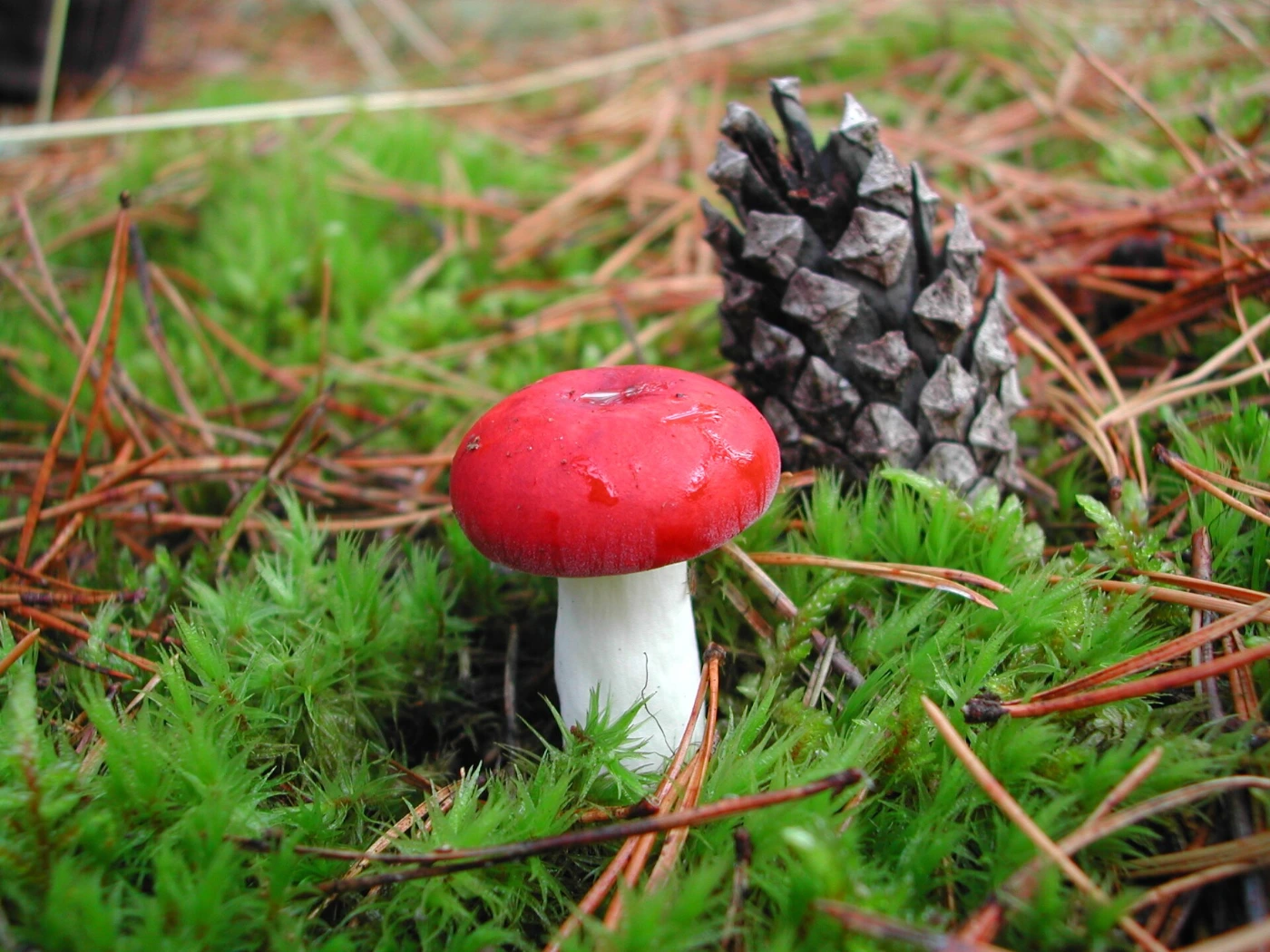
Russula emetica, commonly known as The Sickener, is a bright red brittlegill that often attracts attention in wet conifer woods and boggy habitats. It is best known for its vivid cap, white gills, brittle flesh, and reputation for causing gastrointestinal illness if eaten.
At first glance, The Sickener looks like a simple red mushroom, but identification is not always that easy. Many red Russula species resemble one another, and several differ only in subtle details such as habitat, taste, cap texture, or microscopic characters. For that reason, the most reliable identification comes from combining structure, ecology, and overall appearance rather than trusting cap color alone.
⚠️ Important: This guide is for identification and education only. Russula emetica is traditionally regarded as poisonous or at least strongly unsuitable for eating because it can cause nausea and vomiting. Never eat a wild mushroom based solely on photographs, AI identification, or an online comparison.
Quick Identification
| Feature | Russula emetica |
|---|---|
| Scientific name | Russula emetica |
| Common name | The Sickener |
| Family | Russulaceae |
| Cap color | Bright red to scarlet, sometimes fading |
| Cap surface | Smooth, often shiny when moist |
| Gills | White to cream, crowded |
| Stem | White, smooth, brittle |
| Flesh | White, brittle |
| Spore print | White to pale cream |
| Smell | Usually mild or not distinctive |
| Taste | Acrid, very hot or peppery |
| Habitat | Wet acidic ground, often with conifers and moss |
| Main hosts | Pine, spruce and other conifers |
| Season | Summer through autumn |
| Edibility | Poisonous / causes gastrointestinal upset |
| Main look-alikes | Other red Russula species, especially Russula nobilis and similar brittlegills |
What Does Russula emetica Look Like?
The Sickener is a classic red brittlegill. It usually has a bright red cap, white gills, and a white stem, and like many Russula species it snaps cleanly rather than bending like a fibrous mushroom.
Its overall appearance is often neat and attractive, especially when fresh. That attractive appearance can be misleading, because many mushroom hunters are drawn to the vivid cap long before they notice the brittle structure and acrid taste associated with this species.
Cap
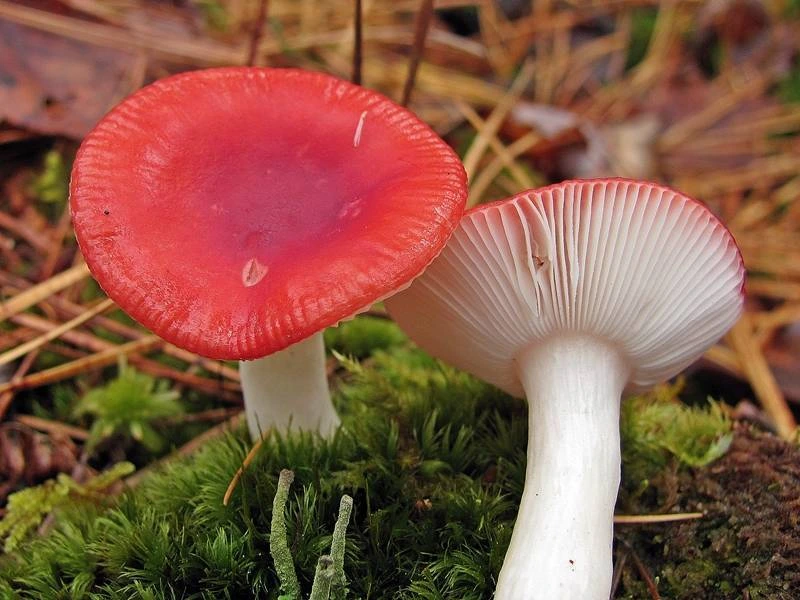
The cap usually begins convex and later becomes flatter or shallowly depressed in the middle. Fresh specimens are often a strong scarlet, cherry-red, or bright crimson. With age or exposure to sunlight, the cap may fade, especially toward the center. This means older mushrooms can look pinker or less vividly red than fresh young ones.
Cap Surface
The cap surface is usually smooth and can be slightly sticky or shiny in damp weather. In dry conditions it becomes more matte, although it often keeps a clean polished appearance. The skin can sometimes be peeled part of the way from the margin toward the center. This is common in several Russula species, so it is a supporting rather than decisive feature.
Cap Margin
The cap margin is usually smooth when young and may become faintly lined or grooved with age. This striation is not usually dramatic in fresh firm specimens, but it can become more noticeable as the cap expands.
A strongly damaged or dried cap can distort the margin, making the mushroom harder to identify. Fresh specimens give the clearest picture.
Gills
The gills are white to pale cream and are fairly crowded. They are attached to the stem but remain delicate and brittle, which is characteristic of the genus.
As with many Russula species, the gills can chip or break easily if handled roughly. This brittle nature is often one of the first clues that the mushroom belongs in Russula rather than in a more fibrous gilled group.
Gill Color
The gills generally stay pale and do not become dark chocolate, rusty brown, or purple-brown with age. This helps separate The Sickener from unrelated red-capped mushrooms with darker spores. Slight creaminess may develop in older fruit bodies, but the overall impression remains pale.
Stem
The stem is usually white, smooth, and fairly even in width, though it can become slightly tapered toward the base. It is not ringed and does not have a volva or sack-like base. Like the rest of the mushroom, the stem is brittle. It often breaks with a chalk-like snap rather than bending.
Stem Texture
Fresh stems are firm but fragile. Older stems can become softer or slightly spongy in the center, especially in waterlogged specimens. A fibrous or stringy stem should make you reconsider the identification, because true brittlegills usually fracture cleanly.
Flesh
The flesh is white and very brittle. It breaks rather than tears, which is one of the defining features of Russula mushrooms. This brittleness applies to both the cap and the stem. When handled, the mushroom can look surprisingly fragile compared with many other woodland species.
Taste
The traditional field description of Russula emetica includes a distinctly acrid, peppery, or burning taste. This hot taste is one of the reasons the species received the name “The Sickener.”
However, taste testing in Russula should never be treated as a beginner method. Some mycologists use a tiny nibble-and-spit approach for brittlegills, but beginners should not rely on taste as a primary identification tool and should never swallow any part of an unknown mushroom.
Spore Print
The spore print is white to very pale cream. This fits the classic appearance of many pale-spored red brittlegills. Spore print color helps place the mushroom within a narrower part of the genus, but it does not by itself prove the species. Several similar red Russula species have comparable spore prints.
Where Does Russula emetica Grow?
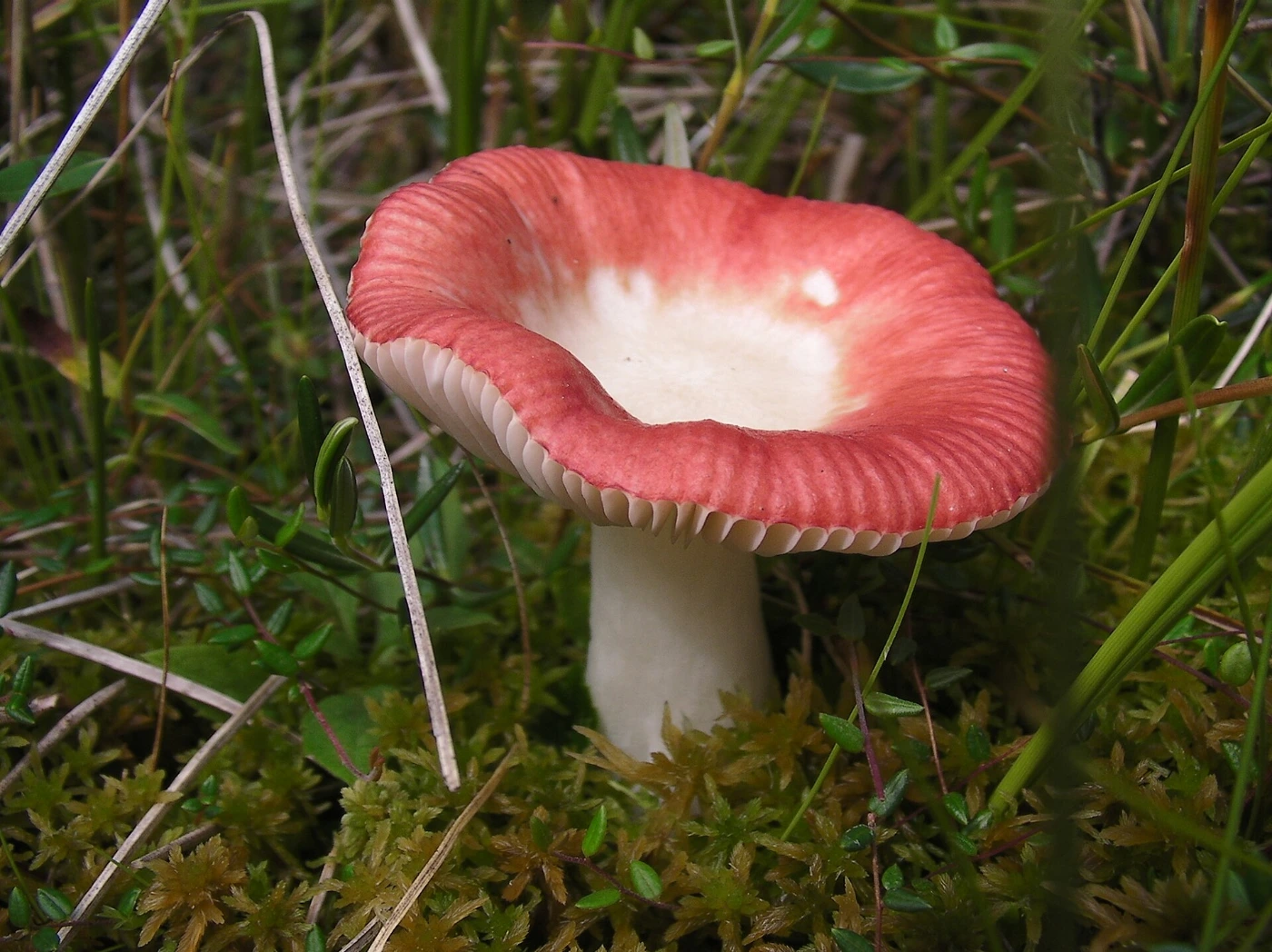
The Sickener is especially associated with wet acidic habitats, often with conifers. It is a mycorrhizal species, which means it lives in partnership with tree roots rather than growing directly from dead wood.
The species is frequently found in mossy forest floors, bog margins, damp heaths, and wet woodland. Sphagnum moss is often mentioned as a useful habitat clue.
Typical Host Trees
Pine and spruce are especially important hosts. Other conifers may also be associated depending on region and habitat.
Because it is mycorrhizal, the mushroom may appear a short distance from the visible trunk. The surrounding tree community is therefore more informative than the exact point where the fruit body emerges from the ground.
Wet Acidic Ground
This ecological preference is one of the best clues for the species. A bright red brittle Russula in wet mossy conifer ground fits Russula emetica much better than a very similar mushroom in dry beech woodland.
Habitat does not replace morphology, but in this case it is extremely helpful. Many red brittlegills are easier to separate by tree association and soil type than by cap color alone.
When Does Russula emetica Grow?
The main season is summer through autumn. In cooler and wetter climates, it may fruit abundantly during late summer and continue well into autumn.
Rainfall has a strong effect on fruiting. After wet weather, the bright caps can stand out clearly against moss and dark forest litter.
Is Russula emetica Poisonous?
Yes, Russula emetica is traditionally regarded as poisonous or at least strongly inedible. It is associated mainly with gastrointestinal symptoms such as nausea, vomiting, stomach pain, and diarrhea.
It is important to distinguish this type of poisoning from the deadly amatoxin syndrome caused by mushrooms such as Death Cap. The Sickener is not generally described as a liver-destroying Amanita-type poison, but it is still a mushroom that should not be eaten.
Why the Name “The Sickener”?
The species name emetica refers to vomiting. This reflects the long-standing belief that the mushroom can make people ill if consumed.
Even if some field traditions discuss processing or regional use of acrid russulas, this is not a species for casual experimentation. For practical identification and safety purposes, it should simply be treated as poisonous.
Russula emetica Look-Alikes
The main difficulty with The Sickener is not confusion with unrelated mushrooms, but confusion with other red Russula species. Many of them have red caps, pale gills, brittle white stems, and similar overall proportions.
Because of that, exact species identification may be difficult from a photograph alone. Ecology, taste, and sometimes microscopy may all matter.
Russula nobilis / Russula mairei — Beechwood Sickener
Identification
These beech-associated red russulas can look extremely similar to Russula emetica. They also have red caps, white stems, pale gills, and acrid flesh.
At a glance, they can be nearly indistinguishable from The Sickener. The most useful practical difference is ecology.
Main Difference
Russula nobilis and closely related forms are associated mainly with beech, while Russula emetica is more typical of wet acidic conifer habitats.
This means that a “Sickener-like” red russula under beech should not automatically be called R. emetica. Habitat matters greatly in this comparison.
Russula paludosa — Swamp Russula
Identification
Swamp Russula is another red to red-orange brittlegill that can grow in wet conifer habitats. It is often larger and more robust than The Sickener.
Its cap may be more orange-red or less sharply scarlet, and the taste is generally milder rather than strongly acrid.
Main Difference
The milder taste and often sturdier build point toward Russula paludosa. Its cap tones can also be slightly less pure scarlet and more reddish-orange.
This is a good example of how red russulas are often separated by a combination of subtle traits rather than one obvious character.
Russula xerampelina Group — Shrimp Russulas
Identification
Some members of the Russula xerampelina group can show reddish caps, though many are darker wine-red, brown-red, or mixed in tone. They usually have a different smell, often described as fishy or shrimp-like in older specimens.
Their flesh and ecology also differ, depending on the exact species.
Main Difference
A distinctly seafood-like odor points away from The Sickener. The cap color range also tends to be broader and often darker or duller than the clean scarlet of R. emetica.
Other Red Russulas
Identification
There are many additional red brittlegills in Europe and North America. Some are mild, some acrid, and some difficult to name confidently without microscopic work.
This means that “red russula” is often only the beginning of the identification process rather than the end.
Main Difference
For Russula emetica, the most supportive combination is bright red cap + pale gills and stem + brittle flesh + acrid taste + wet acidic conifer habitat.
If one of those major elements is missing, another red brittlegill may be more likely.
Russula emetica vs Other Red Russulas
| Feature | Russula emetica | Similar Red Russulas |
|---|---|---|
| Cap | Bright scarlet to red | Red, pink-red, orange-red, wine-red |
| Gills | White to pale cream | Usually pale in many species |
| Stem | White, brittle | Often similar |
| Taste | Strongly acrid | Mild or acrid, depending on species |
| Habitat | Wet acidic conifer woods, bogs | Variable, often tied to different trees |
| Best clue | Conifer + wet habitat + acrid red russula | Ecology and subtle structural differences |
How to Identify Russula emetica Step by Step
Begin by confirming that the mushroom really belongs to Russula. The brittle stem and gills are usually the fastest clue.
Then examine the cap color, gill color, and the complete habitat. Finally, compare the tree association and moisture conditions of the site.
Step 1: Confirm the Russula Structure
Look for a mushroom with brittle white flesh, pale gills, and a clean-snapping stem. There should be no ring and no volva.
This structural step is important because it separates brittlegills from many other red woodland mushrooms right away.
Step 2: Check the Cap
Look for a vivid red to scarlet cap with a smooth surface. Some fading is normal, especially in older fruit bodies.
Do not rely on cap color alone, because many red Russula species overlap heavily in this feature.
Step 3: Check the Gills and Stem
The gills should be pale and brittle, and the stem should be white and fragile rather than fibrous. Strongly colored stems would suggest another type of brittlegill.
A ringed stem or a bulbous volva-bearing base would point away from Russula entirely.
Step 4: Check the Habitat
This is one of the most important steps. Wet mossy conifer woodland, bog edges, and acidic ground strongly support Russula emetica.
A similar mushroom under beech or in drier deciduous woodland may be another red russula instead.
Step 5: Use Caution With Taste-Based Characters
Experts sometimes mention the hot acrid taste of The Sickener. However, beginners should treat that as background information rather than a primary method.
It is much better to rely on visible structure and ecology than to turn taste into a shortcut.
How to Photograph Russula emetica for Identification
Take one photograph showing the whole mushroom in its habitat, including moss, soil, and nearby trees if possible. This is especially helpful because habitat is so important for red russulas.
Then photograph the cap from above, the gills from below, and the full stem from the side. A broken stem or snapped gill can also help show the brittle structure.
If there are several mushrooms, photograph both young and mature specimens together. Color variation within the same patch can be informative.
Can AI Identify Russula emetica?
AI can often recognize the general red russula / brittlegill type, especially when the white gills and brittle structure are visible. Distinguishing Russula emetica from close red look-alikes is much harder.
Results improve significantly when habitat information is visible or provided. A scarlet brittle russula growing among wet moss and conifers is much easier to interpret than a single cap photo with no context.
A cautious identification may therefore be “red acrid Russula” or “Russula emetica group” rather than a confident exact species name. In difficult red russulas, that caution is often appropriate.
Common Identification Mistakes
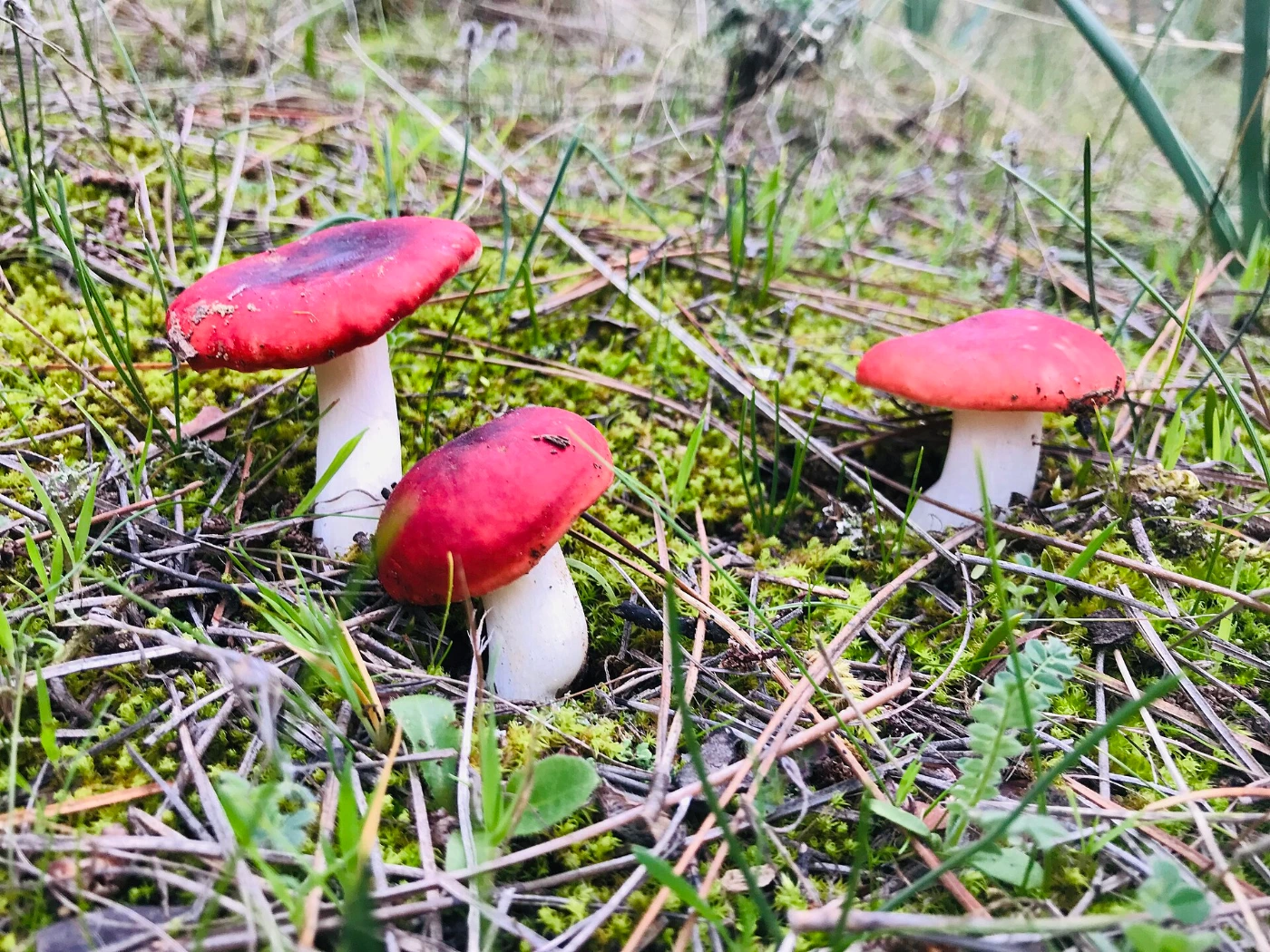
One common mistake is calling every red brittlegill The Sickener. The genus contains many similar red species, and several are difficult to separate.
Another mistake is ignoring habitat. In this group, host trees and wet acidic ground can be just as important as cap color.
A third mistake is focusing only on the cap and failing to confirm brittleness. The clean-snapping structure of Russula is one of the first things that should be checked.
Interesting Facts About Russula emetica
The name Russula refers to the reddish tones common in many species of the genus, although not all russulas are red. In the case of Russula emetica, the vivid cap color is so eye-catching that it has made the species one of the best-known brittlegills.
The genus is famous for its unusual texture. Russulas and their close relatives contain spherical cells called sphaerocysts, which make the flesh snap cleanly instead of tearing into fibers like many other mushrooms.
The name emetica is directly tied to vomiting, reflecting the traditional view of the mushroom as a gastrointestinal poison. Few species carry such a blunt warning in their scientific names.
The Sickener is also a good example of how mushroom identification often depends on ecology. A red cap alone is not enough, but a red brittle russula in wet mossy conifer habitat immediately narrows the possibilities.
Frequently Asked Questions
Why do some specimens fade to pink instead of staying bright red?
Sunlight, age, and weather can all fade the cap. Older specimens often become paler in the center, and prolonged exposure can shift a vivid red mushroom toward a pinker appearance.
Can heavy rain wash away useful cap characters?
Yes. Rain can dull the surface, alter the shine, and sometimes make the cap look less richly colored. This is one reason fresh specimens from the same patch are often easier to interpret than a single rain-beaten mushroom.
Why do so many red russulas seem impossible to tell apart?
The genus contains many species built on the same basic plan: red cap, pale gills, white brittle stem, and pale spores. Exact identification often depends on small differences in habitat, taste, odor, chemistry, or microscopic traits.
Can insects or slugs eat The Sickener even if it is poisonous to humans?
Yes. Toxicity to humans does not mean a mushroom is protected from insects or slugs. Many species considered poisonous can still show feeding damage from woodland invertebrates.
Does a broken chalky stem always mean Russula?
It strongly suggests Russula or a close relative such as Lactarius, but you should still check the rest of the structure. In Lactarius, damaged gills often release milk, which The Sickener does not.
Why is wet moss such a useful clue?
The Sickener is especially associated with damp acidic conditions, and mossy ground often reflects exactly that kind of habitat. While moss alone never proves the species, it supports the identification strongly when the other features fit.
Can The Sickener grow alone rather than in groups?
Yes. It may appear singly, scattered, or in small loose groups. The growth pattern is not usually the most important character for this species.
Why is the spore print not enough to prove the species?
Many pale-spored red russulas produce a similar white to cream print. The spore print helps narrow the group, but habitat and morphology are still needed for a more confident identification.
Final Identification Notes
Russula emetica is best recognized by the combination of a bright red cap, pale brittle gills, white brittle stem, acrid taste, white to pale cream spore print, and strong preference for wet acidic conifer habitats.
The greatest challenge is not separating it from unrelated mushrooms, but from other red russulas. In practice, tree association and moisture level are often as important as the cap itself.
For reliable identification, think in layers: first confirm a brittlegill, then confirm a red acrid species, and finally check whether the habitat matches The Sickener. That sequence is much safer than trying to identify the mushroom from color alone.
Upload a photo and get possible matches in seconds.