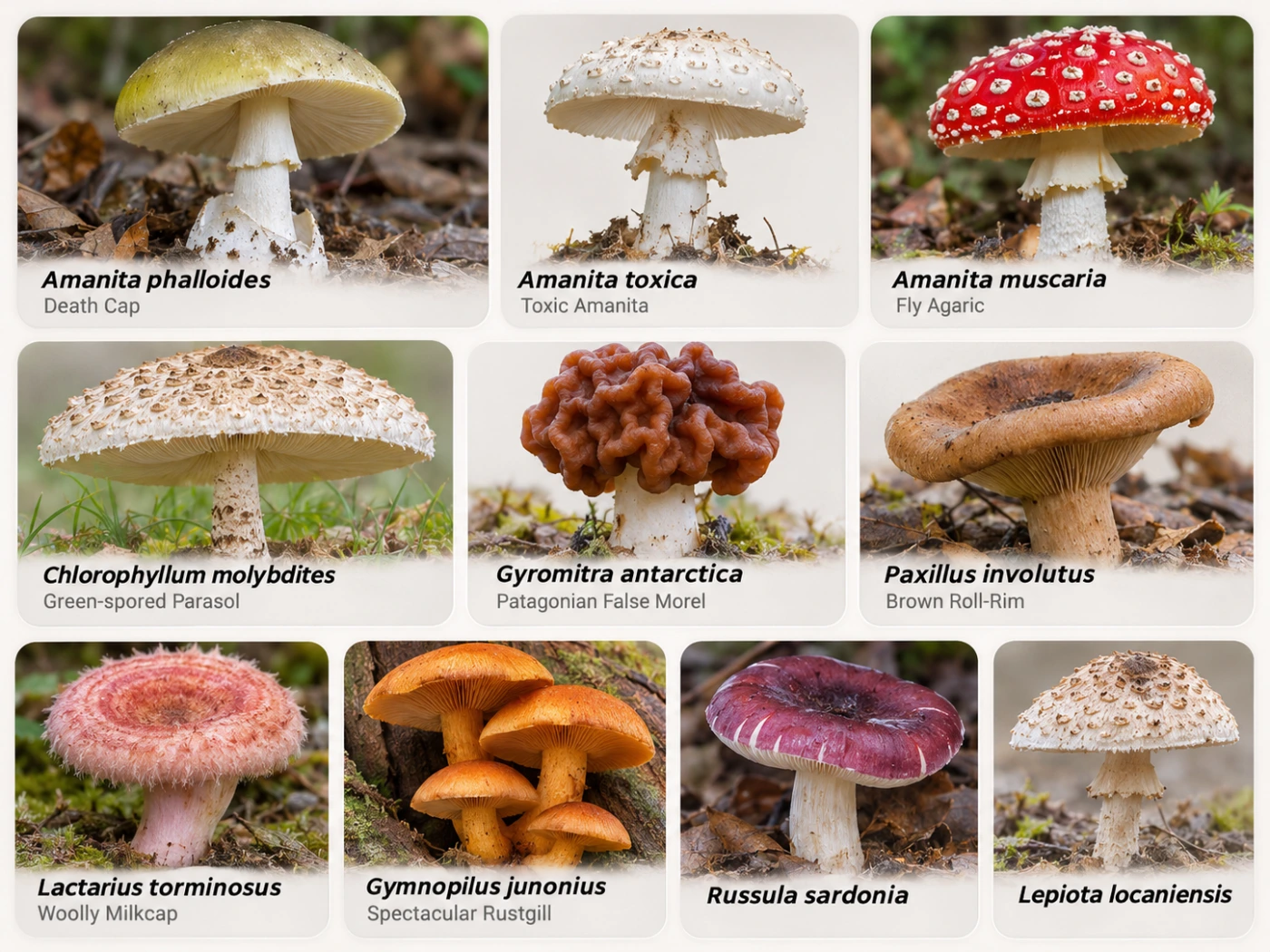
South America has an enormous diversity of fungi, ranging from tropical Amazonian species to temperate mushrooms of Patagonia. Poisonous mushrooms occur throughout the continent, but the species and risks differ considerably between Brazil, Chile, Argentina, Uruguay, the Andean regions, and tropical northern South America.
Some of the most dangerous species were introduced with non-native trees and forestry plantations. Others are native South American fungi whose toxicology is still less thoroughly studied than comparable mushrooms in Europe or North America.
⚠️ Important: Never use a general poisonous-mushroom guide to decide that an unidentified mushroom is safe to eat. South American fungal diversity remains incompletely documented in many regions, and photo identification alone cannot establish edibility.
Poisonous Mushrooms in South America at a Glance
| Species | Main South American relevance | Main risk |
|---|---|---|
| Amanita phalloides | Chile and southern temperate regions | Deadly amatoxins |
| Amanita toxica | Chile, Argentina, Uruguay | Severe poisoning |
| Amanita muscaria | Chile, Argentina, Uruguay | Ibotenic acid / muscimol |
| Chlorophyllum molybdites | Brazil and other tropical/subtropical regions | Severe gastrointestinal poisoning |
| Gyromitra antarctica | Patagonia | Hydrazine-related toxicity |
| Paxillus involutus | Southern South America | Immune-mediated hemolysis |
| Lactarius torminosus | Chile and temperate forests | Gastrointestinal poisoning |
| Gymnopilus junonius | Chile and elsewhere | Neuroactive / toxic effects |
| Russula sardonia | Chile and introduced forests | Gastrointestinal irritation |
| Lepiota locaniensis | Historical Chilean records | Historically severe/fatal poisoning |
The list is not exhaustive. Many South American regions remain poorly surveyed from a toxicological perspective, and species names can change as molecular studies clarify regional taxonomy.
Why South American Mushroom Identification Is Different
South America covers tropical rainforest, Mediterranean-type woodland, temperate rainforest, grassland, high Andes, and subantarctic forests. A mushroom expected in southern Chile may have little relevance to the Amazon, while a common Brazilian lawn species may be absent from Patagonia.
Introduced trees further complicate the picture. Pines, oaks, eucalyptus, and other imported trees can bring associated mycorrhizal fungi with them, including poisonous species that were historically absent from native ecosystems.
This is particularly important in Chile, where several toxic Amanitas are associated with introduced trees. Published Chilean records document both severe poisoning and fatalities from wild mushrooms.
Amanita phalloides — Death Cap
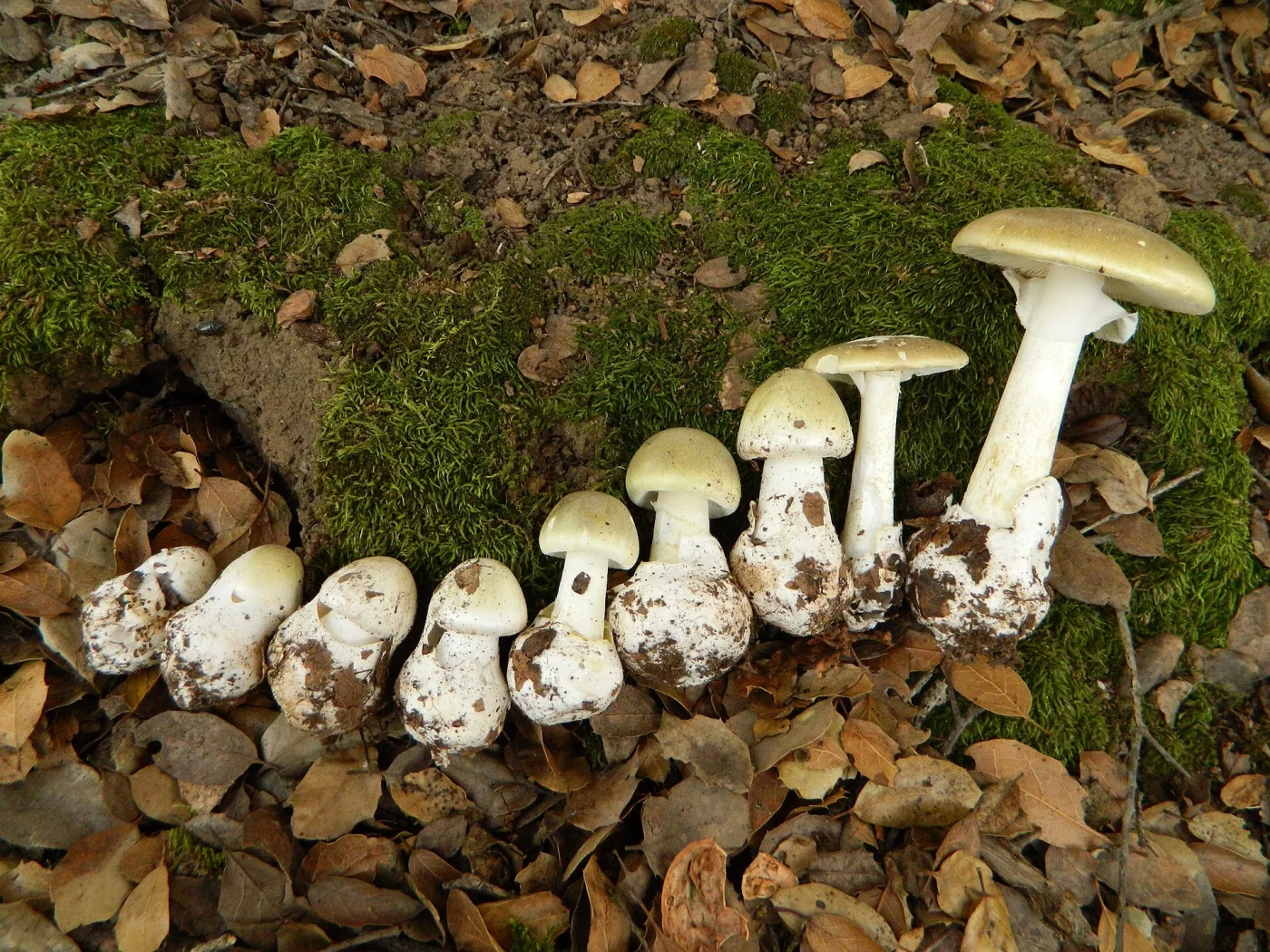
Amanita phalloides is the most important deadly mushroom to recognize in temperate parts of South America. The species is native to Europe but has been introduced to regions including Chile in association with non-native trees.
Chile has documented severe and fatal poisonings from A. phalloides. Nine people were poisoned in one reported 1999 incident after eating mushrooms collected near Linares, and two died. More recently, Chilean health authorities reported another poisoning outbreak involving A. phalloides in 2025.
Identification
The cap is typically olive-green, yellow-green, brownish, or sometimes quite pale. The gills remain white, and the stem has both a ring and a large sack-like volva around the base.
The volva can be buried beneath soil or leaf litter. Any pale woodland mushroom with white gills + ring + volva should therefore be treated as a potentially deadly Amanita.
Toxicity
Death Cap contains amatoxins that can cause severe liver failure. Symptoms may be delayed for hours, creating a dangerous period during which a poisoned person may initially feel well.
Amatoxin-containing mushrooms are responsible for most fatal mushroom poisonings worldwide. Cooking, drying, boiling, or freezing does not make Death Cap safe.
Amanita toxica — Toxic Amanita
Amanita toxica is especially important in Chile and has also been reported as an introduced species in Argentina and Uruguay. Chilean biodiversity records list it as an exotic Amanita occurring discontinuously from Valparaíso south to Los Lagos.
The taxonomic history is complicated. Older literature has used names including Amanita gemmata and Amanita gemmata var. toxica, so historical poisoning reports may appear under different names.
Identification
The cap is generally pale yellow to yellowish cream, sometimes with whitish veil patches. The mushroom has pale gills and typical Amanita veil structures.
Because morphology can overlap with other Amanitas, exact identification should not be attempted from cap color alone. Habitat with introduced trees and regional records are important supporting clues.
Toxicity
This mushroom has been associated with serious poisoning in Chile. Historical Chilean literature records severe cases and treats the species as one of the country’s important toxic Amanitas.
Amanita muscaria — Fly Agaric
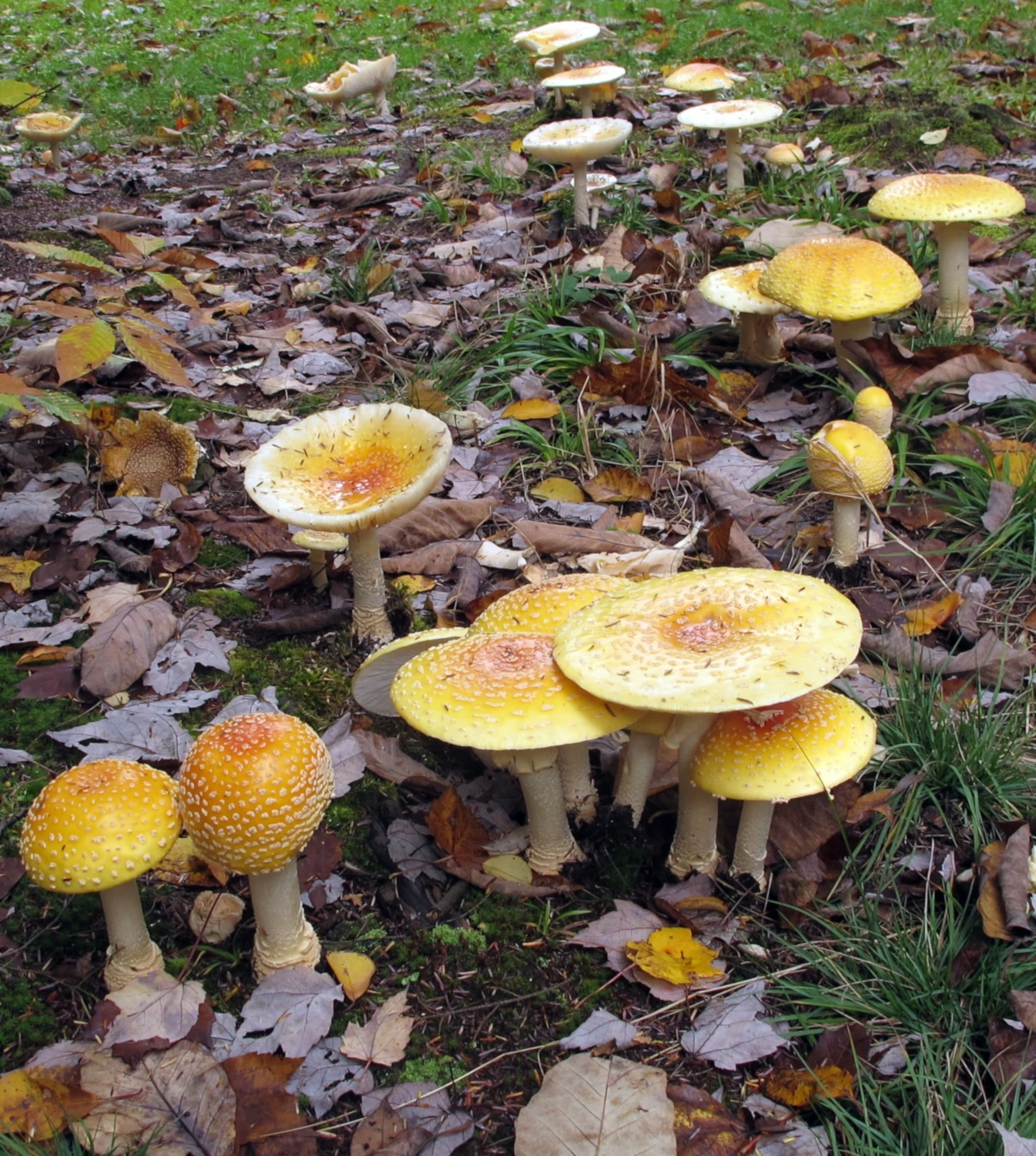
Fly Agaric is one of the easiest poisonous mushrooms to recognize when it has its classic appearance. It has a red to orange-red cap covered with white veil patches, white gills, a stem ring, and a swollen or structured stem base.
The species is not native to South America. Chilean biodiversity records describe it as exotic in Chile, Argentina, and Uruguay, with Chilean records particularly associated with regions from Biobío to Los Lagos.
Toxicity
Amanita muscaria does not contain the deadly amatoxins characteristic of Death Cap. Its principal psychoactive and toxic compounds are ibotenic acid and muscimol.
Poisoning can cause nausea, confusion, altered perception, agitation, drowsiness, and other neurological effects. The appearance may be distinctive, but faded or rain-washed specimens can lose many white cap patches.
Chlorophyllum molybdites — Green-Spored Parasol
Chlorophyllum molybdites is one of the most important poisonous mushrooms in warmer South American environments. It commonly grows in lawns, gardens, parks, pastures, and other grassy areas, often in fairy rings.
Brazil has well-documented poisonings from this species. A 2024 study also confirmed its occurrence in Pará, expanding confirmed records into the Brazilian Amazon, while older records show the mushroom across several South American countries.
Identification
Young mushrooms have pale gills, but mature gills develop a distinctive gray-green to greenish coloration. The spore print is olive-green, one of the most useful diagnostic characters.
The cap is large and pale with brownish scales, and the stem usually has a ring. From above it can resemble edible parasol mushrooms, which is a frequent source of confusion.
Toxicity
The species primarily causes severe gastrointestinal poisoning. Nausea, vomiting, abdominal pain, and diarrhea can be intense.
Brazilian poisoning cases have been specifically documented, particularly in southern regions. The species should not be treated as edible despite reports of consumption after special preparation in some parts of the world.
Gyromitra antarctica — Patagonian False Morel
Gyromitra antarctica occurs in southern South America and is especially relevant to Patagonia. It has an irregular folded or brain-like cap and differs fundamentally from true morels despite superficial similarities.
Recent research confirmed G. antarctica in Patagonian collections and detected hydrazine-related toxicity that varied with altitude. This makes it particularly important because some communities have traditions of collecting and eating these mushrooms.
Identification
The cap is irregular, folded, lobed, or saddle-like rather than covered with the regular pits and ridges of a true morel. The overall structure can vary considerably between specimens.
A vertical section also helps separate false morels from true Morchella. Regional knowledge is important because southern South American Gyromitra taxonomy cannot simply be copied from Northern Hemisphere guides.
Toxicity
Recent analysis detected hydrazine compounds in fresh specimens. Boiling substantially reduced concentrations but did not change the fact that toxic compounds were present, including in the discarded cooking water.
For a general public identification guide, the safest advice is not to recommend wild Gyromitra for food.
Paxillus involutus — Brown Roll-Rim
Paxillus involutus, the Brown Roll-Rim, is a brown mushroom with strongly decurrent gills and an inrolled cap margin, especially when young. It is associated with trees and can occur in temperate forest environments.
The species has historically been eaten in some regions, which makes its reputation particularly dangerous. Chilean educational resources include it among toxic mushrooms occurring in the country.
Identification
The cap is brown to olive-brown and usually has a distinctly rolled-in margin when young. The crowded gills run down the stem and can bruise or darken after handling.
Its appearance can seem ordinary and edible-looking. There are no bright warning colors that reliably indicate its danger.
Toxicity
Repeated or even previous apparently uneventful consumption does not establish safety. Paxillus involutus is associated with Paxillus syndrome, an immune-mediated reaction that can produce severe hemolysis.
This is fundamentally different from simple gastrointestinal mushroom poisoning. The species should not be regarded as edible.
Lactarius torminosus — Woolly Milkcap
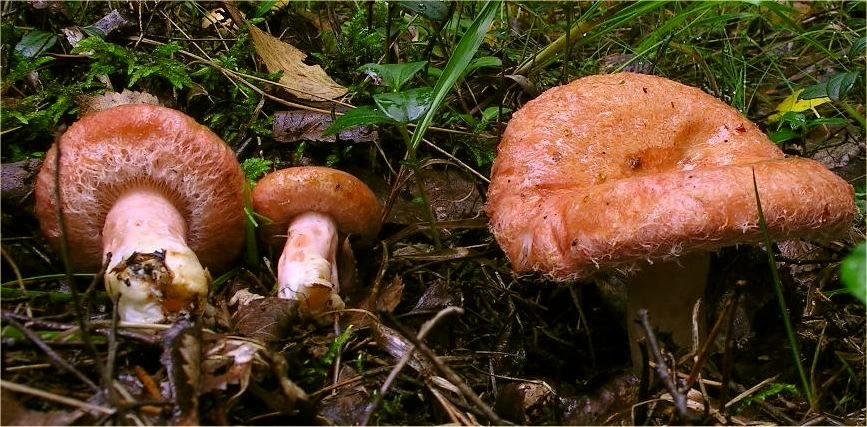
Lactarius torminosus is a pink to salmon-colored milkcap with a conspicuously woolly cap margin. It produces white latex when the gills are damaged and is strongly associated with birch.
It is listed among toxic wild mushrooms occurring in Chile.
Identification
The cap usually shows pink concentric zones and a hairy, inrolled margin. White latex appears when the gills are cut or damaged.
Birch association is an important ecological clue. The combination of woolly cap edge, pink zoning, and white latex is highly characteristic.
Toxicity
Raw or improperly prepared specimens can cause gastrointestinal illness. Traditional processing practices in some regions should not be generalized into a recommendation that unidentified milkcaps are safe.
Gymnopilus junonius — Spectacular Rustgill
Gymnopilus junonius forms conspicuous yellow-orange to rusty-orange clusters on wood. Large groups may develop at tree bases, stumps, or buried woody material.
Chilean educational material lists the species among toxic mushrooms found in the country.
Identification
The mushroom has true gills that become rusty with mature spores. Caps are typically golden-yellow, orange, or rusty, and a ring may be visible on the stem.
The rusty-brown spore print helps separate Gymnopilus from several pale-spored wood-growing mushrooms. Dense clustered growth is also common.
Toxicity
The genus contains biologically active compounds, and G. junonius should not be treated as a culinary mushroom. Exact chemistry and reports vary geographically, making regional identification particularly important.
Russula sardonia – Primrose Brittlegill
Russula sardonia is a purple, reddish-purple, or wine-colored brittlegill associated mainly with pine. Like other Russula, the flesh and gills are brittle and snap rather than bend.
It is included in Chilean educational material among toxic or irritating wild mushrooms.
Identification
The cap may be purple, reddish, or violet-brown, while the gills are pale to yellowish. The mushroom grows near pine because of its mycorrhizal relationship with tree roots.
The stem can show pink or violet coloration. Several other purple Russula species look similar, so color alone is insufficient.
Toxicity
The species is associated primarily with gastrointestinal irritation rather than the delayed organ failure caused by amatoxins. Nevertheless, unidentified acrid Russula should not be collected as food based on color or general appearance.
Lepiota locaniensis — Historical Chilean Poisoning Species
Lepiota locaniensis has a particularly interesting place in South American mushroom toxicology. Historical Chilean reports associated the species with serious poisoning, including an outbreak involving multiple people.
Modern Chilean epidemiological literature notes that the species has not been collected for many decades and has been regarded as possibly extinct. It therefore belongs more to the history of South American mushroom poisoning than to a practical list of commonly encountered modern species.
Its inclusion remains useful because it demonstrates an important principle: South America has its own regional toxic fungi and historical taxonomy. Identification guides should not consist only of Northern Hemisphere species imported into a South American context.
Poisonous Mushrooms in Chile
Chile has some of the best-documented mushroom poisoning data in South America. A recent analysis of hospital records identified 124 mushroom-related poisoning events between 2001 and 2024, with eight deaths recorded during that period.
Amanita phalloides is the most serious modern concern because of its amatoxins. Amanita toxica, A. muscaria, Gyromitra antarctica, Paxillus involutus, and several gastrointestinal irritants also occur or have been reported in the country.
The risk has also changed over time because introduced tree plantations brought non-native mycorrhizal fungi into landscapes where traditional mushroom gathering already existed.
Poisonous Mushrooms in Brazil
Brazil’s enormous size and fungal diversity make a simple national list difficult. Tropical, subtropical, Atlantic Forest, cerrado, and southern temperate habitats each support different fungal communities.
One of the best-documented toxic species is Chlorophyllum molybdites. Poisoning cases are known from Brazil, and the species is particularly well recorded in southern and southeastern regions, with recent confirmed expansion of occurrence data in the Amazonian state of Pará.
Urban and suburban lawns deserve particular attention. A large parasol-like mushroom growing in grass should never be assumed edible without checking mature gill color and obtaining a spore print.
Poisonous Mushrooms in Argentina and Uruguay
Temperate parts of Argentina and Uruguay contain both native fungi and introduced species associated with planted European and North American trees. Amanita muscaria and the taxonomic group represented in Chile as Amanita toxica have documented introduced South American distributions that include Argentina and Uruguay.
Chlorophyllum molybdites has also been documented from Argentina and other parts of South America. In warm grassy environments it may appear far from natural woodland, which makes it especially relevant to ordinary gardens and parks.
Patagonia Has Its Own Risks
Patagonia deserves separate treatment from tropical and subtropical South America. The region contains extensive Nothofagus forests and a distinctive fungal community.
Gyromitra antarctica is particularly important because recent work demonstrated toxin-related hydrazine content in Patagonian collections. Northern Hemisphere advice about false morels should therefore not simply be copied without considering local species and research.
Introduced Amanitas are another concern in planted forests. Native and introduced fungal communities can overlap, increasing identification difficulty.
The Amazon Is Not Well Represented by European Field Guides
The Amazon supports immense fungal diversity, much of which remains poorly documented compared with European and North American mushroom floras. A familiar-looking mushroom should not automatically receive a familiar Northern Hemisphere species name.
Even well-known cosmopolitan toxic species continue to receive new regional records. The first confirmed published occurrence of Chlorophyllum molybdites in Pará, Brazil, was reported only recently, illustrating how distribution knowledge is still changing.
This makes regional scientific records especially important when identifying tropical South American fungi.
Introduced Trees Can Bring Introduced Mushrooms
Mycorrhizal mushrooms live in close association with tree roots. When trees such as pine or oak are planted outside their native ranges, their fungal partners can sometimes spread with them.
This process helps explain the presence of species such as Amanita muscaria and Amanita phalloides in southern South America. Chile provides particularly clear examples of poisonous introduced fungi becoming established in forest environments.
How to Recognize a Potentially Dangerous Amanita
The most important structural pattern is white gills + ring + volva. A volva is a cup, sack, or veil remnant around the stem base and may be buried beneath the soil.
Always remove the whole stem when examining an Amanita-like mushroom. Cutting the mushroom at ground level can leave the most important identification feature behind.
Cap color is secondary. Death Caps can range from green and olive to yellowish, brown, or unusually pale.
Why Common Names Can Be Dangerous
Names such as Death Cap, Fly Agaric, parasol, false morel, or field mushroom are useful for communication but do not establish species identity. Similar names may also refer to different taxa in different countries.
South American taxonomy is especially vulnerable to old European names being applied too broadly. Scientific names should still be interpreted with geography in mind.
Can You Tell a Poisonous Mushroom by Color?
No. Poisonous mushrooms can be white, brown, yellow, red, green, orange, or purple.
Likewise, bright coloration is not evidence of toxicity. Many edible mushrooms are colorful, while the deadly Death Cap can appear dull and ordinary.
Do Insects Avoid Poisonous Mushrooms?
No. Insects, slugs, and other animals can eat mushrooms that are poisonous to humans.
Animal feeding marks therefore provide no useful test for human edibility. Different organisms respond to fungal toxins in very different ways.
Does Cooking Make Poisonous Mushrooms Safe?
Not reliably. Amatoxins in Amanita phalloides survive ordinary culinary preparation, and dangerous mushrooms should never be treated as foods requiring a special cooking method.
Some fungi such as Gyromitra contain compounds whose concentrations can be reduced through processing, but residual toxin risk and cooking fumes or liquid create additional concerns. For a general identification guide, avoidance is much safer than attempting detoxification.
Symptoms That Require Urgent Attention
Mushroom poisoning can produce vomiting, diarrhea, abdominal pain, confusion, hallucinations, neurological changes, hemolysis, liver injury, or other effects depending on the toxin.
Delayed symptoms are particularly concerning because amatoxin poisoning may not become obvious until significant internal injury has already begun. Any significant symptoms after eating unidentified wild mushrooms warrant urgent professional medical or poison-center advice.
Keep mushroom leftovers, photographs, and information about the collection location if possible. These can help specialists determine what was eaten.
Common Identification Mistakes
One common mistake is using a European field guide for a South American mushroom without checking whether the species actually occurs in that region. Superficially similar fungi may represent completely different taxa.
Another mistake is assuming that traditional local experience protects against introduced species. In parts of Chile, poisonous introduced Amanitas now occur in landscapes where people have long collected native mushrooms.
A third mistake is trusting one feature, such as cap color or ring presence. Reliable identification usually requires the underside, entire stem base, substrate, nearby trees, spore characters, geography, and sometimes microscopy.
A fourth mistake is assuming that a mushroom growing in a lawn cannot be seriously toxic. Chlorophyllum molybdites is a clear example of a poisonous mushroom commonly encountered in managed grassy environments.
How to Photograph a South American Mushroom for Identification
Photograph the mushroom before picking it so the substrate and habitat remain visible. Include nearby trees whenever possible, especially for mushrooms likely to be mycorrhizal.
Then photograph the cap, underside, entire stem, and stem base. For Amanita-like mushrooms, carefully excavate the volva rather than cutting the stem at ground level.
A cross-section can also reveal internal structure, staining, and veil anatomy. Geographic location at country or regional level is especially useful because South American fungal distributions differ dramatically.
Can AI Identify Poisonous South American Mushrooms?
AI can help narrow possible groups when photographs show the complete mushroom and the habitat is known. It can be particularly useful for distinguishing broad structures such as pores versus gills, rings, volvas, and characteristic lawn or wood-growing habits.
However, South American fungal datasets remain incomplete for many regions. A confident-looking result does not mean the species has been established reliably enough for an edibility decision.
Frequently Asked Questions
What is the most dangerous poisonous mushroom in South America?
In temperate regions where it has become established, Amanita phalloides is among the most dangerous because it contains potentially fatal amatoxins. Chile has documented severe and fatal Death Cap poisonings.
Are Death Caps native to South America?
No. Amanita phalloides is an introduced species in South America and has become established with non-native trees in places including Chile.
Are there poisonous mushrooms in the Amazon?
Yes. The region has enormous fungal diversity, and Chlorophyllum molybdites has now been confirmed in parts of the Brazilian Amazon. Many Amazonian fungi remain less thoroughly documented than temperate species.
What poisonous mushroom commonly grows in South American lawns?
Chlorophyllum molybdites is an important example. Mature specimens develop greenish gills and an olive-green spore print.
Does Amanita muscaria occur in South America?
Yes. It has been introduced to countries including Chile, Argentina, and Uruguay, often in association with introduced trees.
Are there false morels in Patagonia?
Yes. Gyromitra antarctica occurs in southern South America, and recent research has confirmed hydrazine-related toxicity in Patagonian specimens.
Can a poisonous mushroom become safe after cooking?
There is no reliable general rule. Deadly Amanitas remain dangerous after ordinary cooking, and unidentified wild mushrooms should never be treated as foods that simply require more heat.
Why is geographic location important for mushroom identification?
South America contains very different ecosystems and many regional fungi. A species common in southern Chile may be absent from Brazil or Colombia, while tropical lawn fungi may have little relevance to Patagonia.
Final Notes
Poisonous mushroom identification in South America requires a regional approach. The continent contains both native toxic fungi and introduced species that arrived with forestry, landscaping, and non-native trees.
The most important life-threatening concern is amatoxin poisoning from mushrooms such as Amanita phalloides. Other major risks include Amanita toxica, neurotoxic A. muscaria, gastrointestinal Chlorophyllum molybdites, toxic Gyromitra antarctica, and dangerous Paxillus involutus.
The practical safety rule is: identify the region → photograph the entire mushroom → check gills or pores → preserve the stem base → identify nearby trees and substrate → confirm the species from regional evidence before considering edibility.
Upload a photo and get possible matches in seconds.