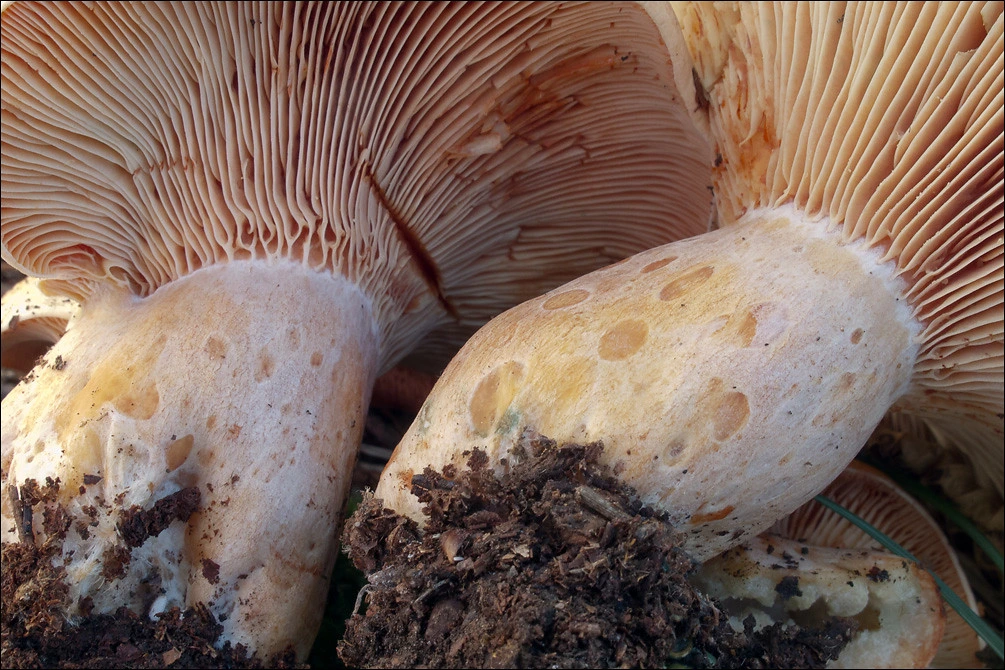
Milkcap mushrooms are famous for releasing a milky liquid when their gills or flesh are damaged. This liquid is called latex, and it can be white, orange, red, yellow, or almost transparent depending on the species.
The latex is not the same thing as plant sap. It is produced inside specialized fungal cells and tissues, and its chemistry can change rapidly after exposure to air.
What Is Mushroom Latex?
In milkcaps, latex is a liquid stored in specialized structures known as laticifers. When the mushroom is cut, broken, or scratched, these structures rupture and release the liquid onto the damaged surface.
The amount of latex varies between species and individual mushrooms. Fresh young fruit bodies often produce much more than old or dry specimens.
Which Mushrooms Produce Latex?
Latex is characteristic of milkcaps, especially species in Lactarius and Lactifluus. These genera belong to the family Russulaceae, together with Russula.
Russulas have the same brittle type of flesh but normally do not release latex. This makes the presence or absence of milk one of the easiest ways to separate the two groups in the field.
Why Is It Called Latex?
The name comes from the similarity to milky plant latex, such as the white liquid released by some flowering plants. The resemblance is visual rather than botanical.
Fungal latex has a completely different origin and chemical composition. It is produced by fungal hyphae rather than plant vascular tissues.
Why Do Milkcaps Produce Latex?
The exact ecological role is probably not limited to one function. Latex may help protect damaged tissue, deter insects or other animals, transport chemical compounds, and respond to injury.
Its chemistry suggests that it is more than simple water. Many milkcap species contain bitter, acrid, aromatic, or biologically active compounds in the latex and surrounding tissues.
Latex as a Defense Mechanism
One likely function is defense. A damaged mushroom that immediately releases bitter or peppery liquid may become less attractive to insects, slugs, and other animals.
This does not mean every milkcap is avoided by predators. Many insects still feed on them, but chemical defenses can influence which organisms consume the fruit body and how much damage they cause.
Why Some Latex Tastes Peppery
Some milkcaps are strongly acrid, producing a burning or peppery sensation. These sensations come from chemical compounds in the latex and flesh rather than from physical irritation.
The strength varies enormously between species. Some milkcaps are mild, while others are so acrid that older field guides used taste as an identification character.
Why Latex Changes Color
One of the most useful features of milkcaps is that the latex may change color after exposure to air. This happens because compounds in the liquid oxidize or react chemically after the tissue is damaged.
The change may happen almost instantly or take several minutes. In some species the latex itself changes color, while in others the surrounding flesh or gills stain instead.
White Latex
White is the most common latex color in many milkcaps. Some species keep the latex white even after prolonged exposure.
Examples include Lactarius torminosus and Lactarius rufus. In these species, white latex is useful but not enough to separate them because many unrelated milkcaps share the same feature.
Orange Latex
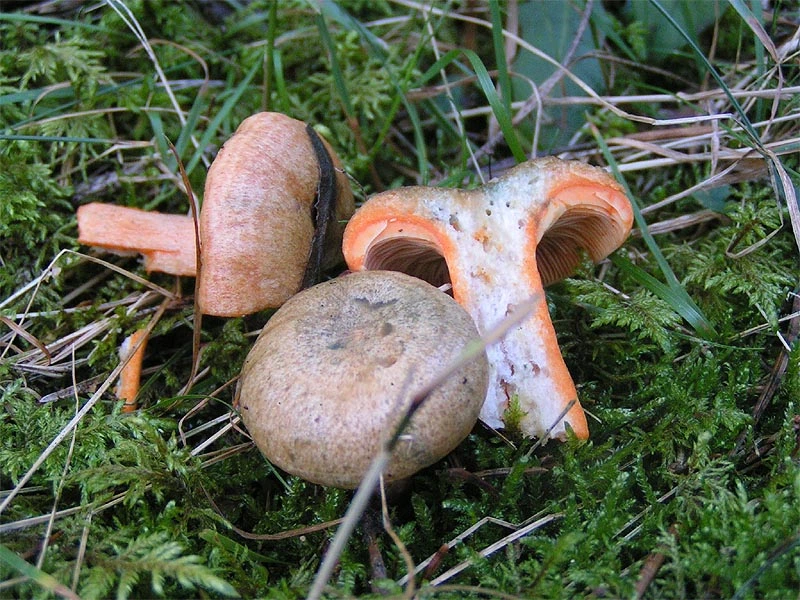
Orange latex is characteristic of several saffron milkcaps. Species such as Lactarius deliciosus and Lactarius deterrimus release bright orange milk when the gills are damaged.
The orange color immediately narrows the identification considerably. Host tree, greening reaction, cap zoning, and stem features are then used to separate the species.
Red and Wine-Colored Latex
Some milkcaps produce reddish, blood-red, or wine-colored latex. Lactarius sanguifluus is a classic example associated with red to wine-colored milk.
Other species may begin with orange latex that later turns reddish. This timing can be an important diagnostic feature.
Latex That Changes From Orange to Red
In some species, the latex begins orange and gradually darkens toward wine-red. Lactarius semisanguifluus is a well-known example.
This is why observing only the first second after cutting can miss important information. A mushroom should sometimes be watched for several minutes after damage.
Yellow Latex
Certain milkcaps produce white latex that changes yellow, while others may release yellowish latex more directly. This reaction is useful in several groups of pale milkcaps.
As always, the reaction should be recorded together with cap color, smell, habitat, and host tree. Latex color alone rarely identifies a species with certainty.
Clear or Watery Latex
Some milkcaps produce very little visible milk or release a watery, translucent liquid. This is more common in old, dry, or weathered fruit bodies.
Low latex production does not automatically mean the mushroom is not a milkcap. Freshness and humidity strongly affect how much liquid is released.
Why Old Milkcaps Produce Less Latex
As mushrooms age, their tissues lose moisture and become less active. The latex-producing structures can therefore release much less liquid than in young fruit bodies.
Dry weather has a similar effect. A mushroom collected after several hot days may appear almost milkless even though the same species produces abundant latex after rain.
Why Rain Changes Latex Production
Moist conditions hydrate the fruit body and increase the amount of liquid available in the tissues. Fresh mushrooms collected after rain often bleed much more strongly when damaged.
This is one reason latex characters are easier to observe in fresh specimens. Weathered mushrooms can make identification more difficult.
How Latex Helps With Identification
Latex is one of the strongest field characters in the milkcap group. Useful observations include the initial color, whether it changes, how quickly the change happens, and whether nearby flesh or gills also stain.
These details are especially powerful when combined with host trees. For example, orange latex under pine suggests a different group than orange latex under spruce or fir.
Latex Color and Host Tree
Tree association is extremely important in milkcap identification. Many species are mycorrhizal and grow with particular hosts.
Lactarius deliciosus is strongly associated with pine, while Lactarius deterrimus is linked with spruce and Lactarius salmonicolor with fir. All may look orange, so latex and host tree should be considered together.
Why the Gills Are the Best Place to Check
The gills usually contain abundant latex-producing tissue and are easy to damage without destroying the entire mushroom. A small scratch or cut often produces visible droplets quickly.
The cap flesh can also be tested, but results may be less obvious. Fresh gills usually provide the clearest reaction.
How Long Should You Watch the Latex?
Some reactions occur immediately, while others take several minutes. Record the first color and then check again after one, five, or even ten minutes when the species group requires it.
A quick photograph immediately after cutting can be useful. A second photograph later can document color change that would otherwise be forgotten.
Latex vs Bruising
Latex color and bruising are not the same thing. The milk may stay white while the gills or cap turn brown, green, or another color after damage.
In other species, the latex itself changes color. Careful observation helps separate these two processes.
Why Orange Milkcaps Turn Green
Several orange milkcaps develop green stains where the cap, gills, or stem are damaged. This reaction is caused by chemical changes in pigments and other compounds after injury.
The degree of greening varies between species. Lactarius deterrimus often greens strongly, while Lactarius deliciosus may show less intense or more localized green staining.
Does Latex Mean a Mushroom Is Edible?
No. Latex tells you that the mushroom belongs to a particular biological group, not that it is safe to eat.
Some milkcaps are edible when correctly identified and prepared, while others are strongly acrid, inedible, or capable of causing gastrointestinal problems. Never use the presence of milk as an edibility test.
Does White Latex Mean the Mushroom Is Safe?
No. Many white-latex milkcaps differ greatly in edibility and chemistry.
For example, Woolly Milkcap and Rufous Milkcap both release white latex but have very different appearances and habitat preferences. The milk color is only one part of the identification.
Does Orange Latex Mean Saffron Milk Cap?
Not automatically. Several related species produce orange latex and can look very similar.
Host tree becomes critical in this group. Pine, spruce, and fir associations can separate species that would otherwise be difficult to distinguish visually.
Milkcaps vs Russulas
Milkcaps and Russulas share brittle flesh because they belong to the same family. Both can snap rather than tear into fibers.
The practical difference is latex. A Russula normally breaks dry, while a Lactarius or Lactifluus releases liquid from damaged tissues.
Why Is Russula Flesh So Brittle?
Russulaceae contain many rounded cells called sphaerocysts rather than only long thread-like hyphae. These rounded cells help create the chalky, brittle texture characteristic of the family.
This texture is useful even before latex is checked. A mushroom that tears into long fibers is unlikely to belong to a typical Russula or milkcap.
What Happens to Latex After It Dries?
Latex often darkens, stains, or becomes difficult to see after drying. Chemical reactions continue after the liquid reaches the air.
This means dried herbarium specimens can lose one of the most obvious field characters. Collectors often record latex color before preservation for exactly this reason.
Can Latex Stain Your Hands?
Yes, some species can leave orange, brown, greenish, or other stains on fingers. The color usually comes from pigments and oxidation products rather than anything resembling paint or dye.
Staining intensity varies between species. Gloves are not normally necessary just for identification, although washing hands after handling wild mushrooms is sensible.
Why Some Milkcaps Smell Strongly
Latex chemistry is only one part of the chemical diversity in milkcaps. Some species also produce distinctive fruity, spicy, coconut-like, curry-like, or other odors.
These smells arise from volatile compounds in the fruit body. When combined with latex behavior and habitat, odor can become a useful supporting identification character.
Can AI See Latex in a Photo?
Yes, if the photograph clearly shows fresh droplets on damaged gills or flesh. Orange or red latex can be particularly visible.
White latex is harder because it may blend into pale gills. A close-up photograph immediately after damage gives much more useful information than a distant image of the cap.
How to Photograph Latex for Identification
Take a sharp photograph of the gills before damage and another immediately after cutting or scratching them. Include enough of the mushroom to show where the liquid is coming from.
If the latex changes color, photograph it again after several minutes. This creates a visual record of both initial and delayed reactions.
Common Identification Mistakes
One common mistake is assuming that any white liquid proves a specific species. Many milkcaps produce white latex, so the observation usually identifies a group rather than an individual species.
Another mistake is ignoring timing. Orange latex that later turns wine-red can indicate something very different from latex that remains orange.
A third mistake is checking only old or dry mushrooms. Weak latex production in a weathered specimen can hide a normally important identifying feature.
Interesting Facts
Milkcap latex is produced by specialized fungal structures rather than by a circulatory system like plant sap. These structures run through the tissues and rupture when the mushroom is damaged.
Some milkcap chemicals become active only after injury. Damage can trigger rapid chemical changes that produce new colors, odors, or tastes.
This makes milkcaps unusually dynamic mushrooms to identify. A specimen can visibly change within minutes after being cut.
The latex also demonstrates why mushroom identification often involves observation over time rather than a single photograph. Initial color, delayed staining, and host tree can together reveal much more than cap color alone.
Frequently Asked Questions
Why does milk come out of Lactarius mushrooms?
The liquid is stored in specialized structures called laticifers. When the mushroom is cut or scratched, these structures break and release latex.
Is mushroom latex the same as plant sap?
No. It may look similar, but fungal latex comes from fungal tissues and has a different chemical composition and biological origin.
Why does milkcap latex change color?
Compounds in the latex react with oxygen and other chemicals after exposure. This can cause orange, red, yellow, greenish, or brown color changes.
Do all milkcaps produce visible latex?
Most do when fresh, but some produce very little. Dry or old specimens may release almost no visible liquid.
Can latex identify a mushroom species?
It can strongly narrow the possibilities, especially when color changes are distinctive. Exact identification usually also requires cap features, host tree, smell, and habitat.
Do Russula mushrooms produce latex?
Normally no. This is one of the easiest ways to separate Russula from Lactarius and Lactifluus.
Is orange latex always a sign of an edible mushroom?
No. Orange latex identifies a group of related milkcaps but does not guarantee edibility or correct species identification.
Why should I check the latex immediately after cutting?
Some reactions begin within seconds. Waiting too long can make it impossible to know the original color before oxidation started.
Final Notes
Milkcaps produce latex because specialized fungal tissues release liquid when damaged. The latex likely serves several functions, including chemical defense and response to injury, while its exact role varies between species.
For identification, the most useful features are initial latex color, delayed color change, staining of the surrounding tissue, host tree, and freshness of the mushroom. White, orange, red, yellow, and color-changing latex can all provide valuable clues.
The simplest rule is: damage the gills → observe the first latex color → wait for changes → check the host tree → combine all features before naming the species.
Upload a photo and get possible matches in seconds.