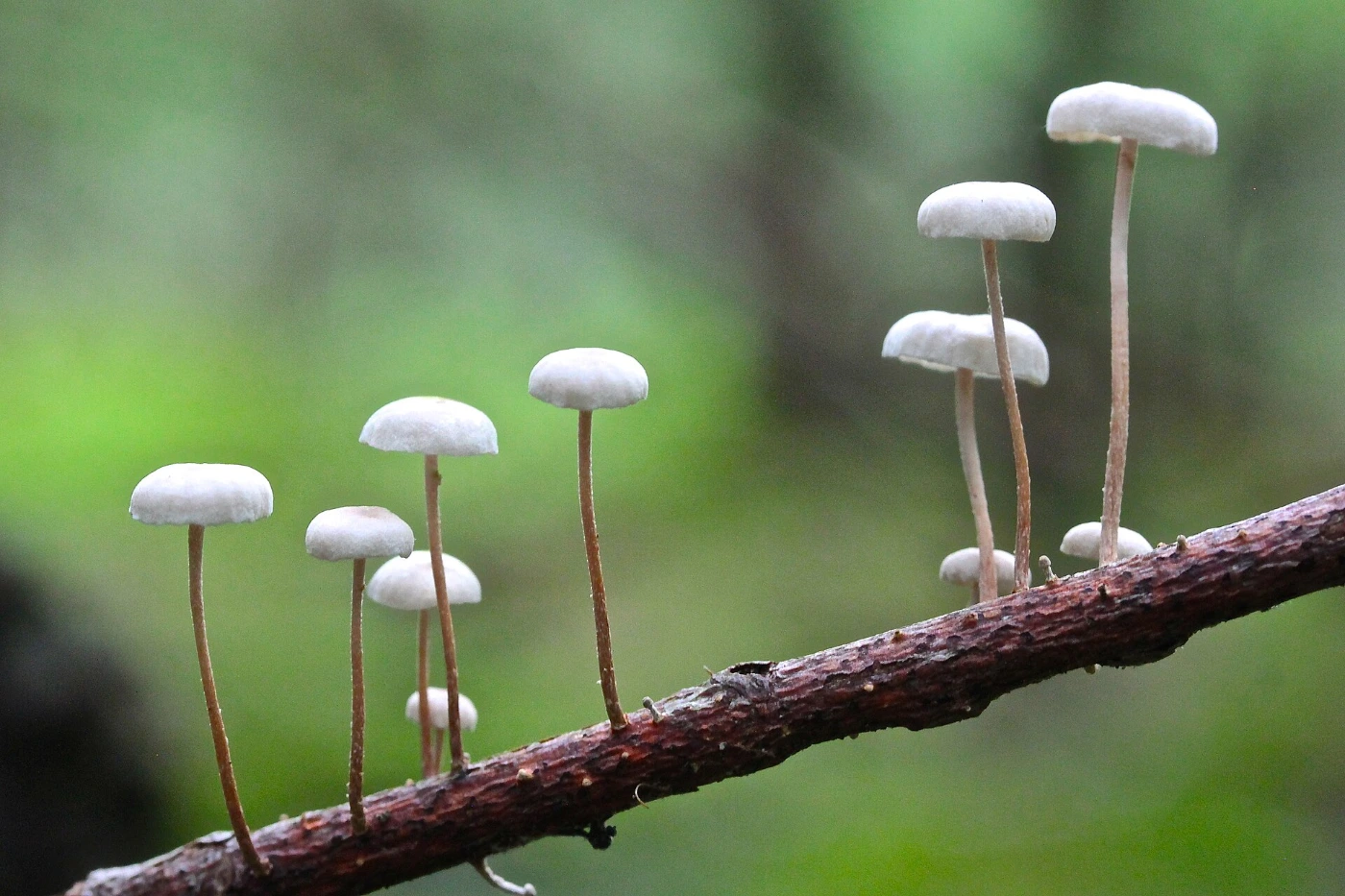
Mushrooms often seem to appear suddenly after rain. A forest floor that looked empty can be covered with caps only a day or two later, while lawns, wood chips, and fallen logs may produce entire clusters almost overnight.
The rain does not create the fungus from nothing. In most cases, the fungus was already present underground or inside wood as a network of microscopic threads called mycelium, and rainfall simply creates the conditions needed for it to produce visible fruit bodies.
The Mushroom Is Only the Fruit Body
What we usually call a mushroom is only the reproductive structure of a much larger organism. Most of the fungus remains hidden in soil, leaf litter, wood, roots, or other organic material.
This hidden network is called mycelium. It can live for months, years, or even decades without producing an obvious mushroom above the surface.
When conditions become favorable, the mycelium redirects energy into building fruit bodies. These structures release spores and allow the fungus to reproduce and spread.
Why Rain Triggers Mushroom Growth
Rain changes several environmental conditions at once. It adds moisture to the soil and air, raises humidity near the ground, softens dry organic material, and reduces water stress on fungal tissues.
For many fungi, these changes act as a signal that conditions are suitable for fruiting. A mushroom can then expand rapidly because fungal tissues absorb water very efficiently.
Moisture Is the Main Trigger
Mushroom fruit bodies contain a large amount of water. Without enough moisture, young developing mushrooms can stop growing, dry out, or fail to emerge from the substrate.
After rainfall, the surrounding soil or wood becomes moist enough to support rapid expansion. This is why mushroom numbers often increase dramatically after several hours or days of wet weather.
Humidity Matters Too
Rain also increases humidity in the air close to the ground. High humidity slows water loss from delicate mushroom tissues.
This is especially important for small mushrooms with thin caps and stems. In dry air, they may lose moisture faster than the fungus can replace it.
Rain Softens the Substrate
Dry soil and compact leaf litter can physically restrict emerging mushrooms. Wet conditions soften the ground and make it easier for developing fruit bodies to push upward.
Wood-decaying fungi also benefit when dead branches and logs absorb moisture. Their mycelium can become more metabolically active when dry wood becomes wet again.
Temperature Often Changes After Rain
Rainfall is frequently accompanied by a change in temperature. Depending on the season, the important signal may be cooling after a summer storm or mild temperatures following autumn rain.
Many species respond not to rain alone but to a combination of moisture and temperature. This is why two identical rain events can produce very different mushroom flushes at different times of year.
Why Mushrooms Can Appear So Quickly
Mushrooms do not usually begin growing from zero after the rain starts. Tiny undeveloped fruit bodies may already be present in the soil or mycelium before they become visible.
Once moisture becomes available, these structures can expand quickly. Fungal cells enlarge largely by taking up water, allowing some mushrooms to reach full size in a surprisingly short time.
How Soon After Rain Do Mushrooms Appear?
Some species can become visible within about 24 hours of suitable rainfall. Others need several days, and some may respond only after repeated wet periods.
A practical range for many common mushrooms is one to several days after substantial rain. The exact timing depends on species, temperature, soil moisture, and how dry the habitat was beforehand.
One Day After Rain
Fast-growing lawn and mulch mushrooms may appear very quickly. Small inkcaps and other delicate species can emerge, mature, and disappear in a short period.
Wood-chip beds can also respond rapidly if the mycelium was already active. Warm temperatures combined with heavy rain can make the effect especially dramatic.
Two to Four Days After Rain
This is often a productive period for many woodland mushrooms. Boletes, Russulas, milkcaps, and other larger fruit bodies may begin appearing as moisture penetrates more deeply into the soil.
The timing is still highly variable. A forest that was already moist may respond faster than ground that had been dry for weeks.
A Week or More After Rain
Some fungi respond slowly or require several wet periods before producing fruit bodies. Large mycorrhizal mushrooms may appear after a sequence of rainfall rather than one isolated shower.
Local conditions can also delay fruiting. Cool nights, dry wind, shallow rainfall, or compacted soil may reduce or postpone a flush.
Why One Rainstorm Is Sometimes Not Enough
A brief shower may wet only the surface while deeper soil remains dry. In that case, the mycelium may not receive enough sustained moisture to support fruiting.
Several days of rain or repeated showers can be much more effective. Slow, steady rainfall often penetrates the soil better than a short intense storm followed by immediate drying.
Soil Moisture Before the Rain Matters
If the ground is already moist, even moderate rain can trigger a strong response. The fungal network is already hydrated, so fruiting can begin quickly.
After a long drought, the same amount of rainfall may not be enough. The soil first has to replenish lost moisture before fungi can invest energy in mushrooms.
Why Mushrooms Often Appear in Waves
Mushrooms commonly fruit in flushes rather than continuously. One group may appear after the first wet period, disappear, and then be followed by another after additional rain.
This pattern reflects the condition of the mycelium and its environment. Moisture, temperature, available nutrients, and previous fruiting all influence whether another wave develops.
Why Different Species Appear After Different Rains
Not all mushrooms respond to the same conditions. Some prefer warm summer rain, while others fruit mainly after cool autumn weather.
Certain species are strongly seasonal even when moisture is abundant. A heavy July rain will not necessarily produce a mushroom that normally fruits only in late autumn.
Summer Rain
Warm summer storms can trigger boletes, Amanitas, Russulas, and other woodland mushrooms in suitable regions. The strongest flushes often occur when warm soil receives several days of moisture.
Grassland and lawn species can also respond quickly. Warm temperatures speed both fungal metabolism and evaporation, so the productive window may be short.
Autumn Rain
Autumn is the main mushroom season in many temperate regions because moisture increases while temperatures remain suitable. Leaf litter also accumulates, creating favorable conditions for many decomposers.
Repeated rain can support long fruiting periods. New species may appear as temperatures gradually decline through the season.
Winter Rain
In mild climates, winter rain can trigger cold-tolerant species such as Oyster Mushrooms, Velvet Shanks, and various wood-decaying fungi. These species can remain active when many classic autumn mushrooms have stopped fruiting.
In colder regions, frozen soil limits the effect. Rain followed by hard frost may produce little visible growth.
Spring Rain
Spring rainfall can trigger morels and other seasonal fungi where soil temperatures are suitable. Timing is often closely linked to warming ground temperatures rather than rainfall alone.
A wet spring does not guarantee mushrooms if temperatures are still too low. Moisture and seasonal development must occur together.
Why Mushrooms Appear After Rain on Lawns
Lawns contain fungal mycelium even when no mushrooms are visible. Grass roots, dead plant material, thatch, and buried organic matter provide food for many species.
After rain, moisture reaches this hidden fungal network and may trigger fruiting. Lawn mushrooms can appear especially quickly because the upper soil layer responds rapidly to rainfall.
Why Mushrooms Appear in Wood Chips
Wood chips act like a sponge and retain moisture after rain. This makes them an excellent habitat for decomposer fungi.
Species such as Wine Cap, Redlead Roundhead, and many small dark-spored mushrooms can fruit heavily from mulch after wet weather. Freshly irrigated landscaped beds can behave much like naturally rain-soaked forest litter.
Why Mushrooms Appear on Dead Wood
Dead wood can remain dry for long periods and then absorb large amounts of water during rain. Fungi living inside the wood respond when moisture levels rise.
Oyster Mushrooms, Turkey Tail, Sulphur Tuft, and many other wood-decaying species may become more active after wet weather. Some persistent brackets remain visible year-round but release spores more effectively when conditions are moist.
Why Mushrooms Sometimes Appear Without Recent Rain
Rain is not the only source of moisture. Irrigation, heavy dew, fog, snowmelt, underground water, and consistently damp soil can all create similar conditions.
A mushroom appearing during apparently dry weather may therefore still be responding to moisture. The water source may simply be less obvious.
Irrigation Can Mimic Rain
Gardens, parks, golf courses, and lawns can produce mushrooms during dry weather if they are watered regularly. Fungi respond to available moisture rather than to rainfall itself.
This is why mushrooms often appear around sprinklers or in heavily irrigated flower beds. Artificial watering can create localized fruiting when nearby dry areas remain empty.
Why Mushrooms Often Disappear So Quickly
Many mushrooms are built to release spores rapidly rather than survive for a long time. Thin fruit bodies may dry out within hours when sunshine and wind return.
Others are eaten by insects, slugs, mammals, or other organisms. A strong mushroom flush can therefore seem to vanish almost as quickly as it appeared.
Does Heavy Rain Damage Mushrooms?
Yes. Intense rainfall can bruise caps, wash away pigments, tear delicate tissues, and flatten small mushrooms.
Heavy rain can also make identification more difficult. Veil remnants, scales, and surface textures may disappear, while colors become faded or waterlogged.
Can Too Much Rain Reduce Mushroom Growth?
Extremely wet conditions can also be unfavorable. Waterlogged soil contains less oxygen, and some fungi fruit poorly when the substrate remains saturated.
Persistent heavy rain may also cause young mushrooms to rot before they mature. The most productive conditions are often moist rather than continuously flooded.
Why Mushrooms Grow in Rings After Rain
Fairy rings occur when underground mycelium expands outward from an older central point. Mushrooms then form around the active outer edge when conditions become suitable.
Rain can make the entire ring fruit at once, creating a striking circle of mushrooms. The rain reveals the pattern, but the underground fungal colony existed before the fruit bodies appeared.
Do Mushrooms Grow Faster at Night?
Mushrooms may appear to grow faster overnight because nighttime conditions are often cooler and more humid. Reduced sunlight and wind also slow water loss.
Growth does not necessarily stop during the day. The apparent overnight burst is often the result of several hours of ideal moisture and temperature conditions.
Can You Predict Mushroom Flushes From Rain?
Rainfall can help predict when mushrooms are more likely to appear, but it cannot give an exact schedule. Different species respond at different speeds, and local soil conditions can vary over very short distances.
The best prediction combines recent rainfall with temperature, previous soil moisture, habitat, and season. Knowing which species normally occur in that location makes the forecast much more useful.
Best Time to Look for Mushrooms After Rain
For general mushroom observation, checking suitable habitats over the next two to five days after good rain is often productive. Some species will appear earlier, while others may continue emerging for a week or more.
Returning to the same habitat several times is more effective than visiting only once. A site can change dramatically from one morning to the next.
Common Misconceptions
One common misconception is that rain causes mushrooms to grow instantly from spores. In reality, spores usually germinate and develop into mycelium long before visible mushrooms appear.
Another misconception is that more rain always means more mushrooms. Excessive water, unsuitable temperatures, or the wrong season can prevent fruiting even when the ground is very wet.
A third misconception is that a mushroom appearing after rain must be young and fresh. Some persistent fungi simply rehydrate and become more noticeable after wet weather.
Interesting Facts
Some mushrooms can expand extremely quickly because much of their growth comes from water uptake rather than production of entirely new tissue. This allows a fruit body to become dramatically larger in only a short period.
Rain can also affect how mushrooms release spores. High humidity protects fruit bodies from drying, while changing air currents after storms can help distribute spores through the surrounding habitat.
Different fungal species have evolved very different moisture strategies. Some produce fragile fruit bodies that last only a day, while others survive repeated drying and rehydration over long periods.
The familiar phrase “mushrooms spring up overnight” is therefore not far from reality. What appears suddenly above ground is usually the visible result of a fungal organism that has been developing unseen for much longer.
Frequently Asked Questions
How many days after rain should I look for mushrooms?
Many mushrooms begin appearing within one to several days after substantial rain. A useful general window is about two to five days, although some species respond faster or slower.
Do mushrooms need rain to grow?
They need moisture, but that moisture does not have to come from rain. Irrigation, dew, fog, snowmelt, and consistently damp substrates can also support fruiting.
Why are there mushrooms after rain but none before it?
The mycelium may already have been present but unable to support visible fruit bodies under dry conditions. Rain provides the water needed for rapid development and expansion.
Does more rain always mean more mushrooms?
No. Too much water can saturate soil, reduce oxygen, damage fruit bodies, or promote decay. Temperature and season are just as important as moisture.
Why do mushrooms appear overnight?
Small developing fruit bodies may already exist before they are visible. Once moisture and temperature become favorable, they can expand very quickly.
Can mushrooms appear several days after the rain stops?
Yes. Moisture can remain in soil, leaf litter, and wood long after the surface looks dry. Fungi can continue developing while these deeper layers remain damp.
Do all mushrooms respond to rain the same way?
No. Different species have different moisture, temperature, and seasonal requirements. One rain event may trigger some fungi while having little effect on others.
Is rainwater necessary for mushroom spores to germinate?
Moisture is generally important for spore germination, but visible mushrooms after rain usually come from established mycelium rather than newly germinated spores. The fungal network may have been present in the habitat for years.
Final Notes
Mushrooms appear after rain because the fungal organism is usually already present as hidden mycelium and is waiting for favorable conditions. Rain provides moisture, raises humidity, softens the substrate, and often combines with suitable temperatures to trigger fruiting.
The visible mushroom can then develop quickly because fungal tissues absorb water efficiently. This is why lawns, forests, mulch beds, and dead wood can suddenly produce large numbers of mushrooms only a few days after wet weather.
The most useful rule is simple: rain does not create the fungus — it helps an existing fungal network produce the fruit bodies we can see.
Upload a photo and get possible matches in seconds.