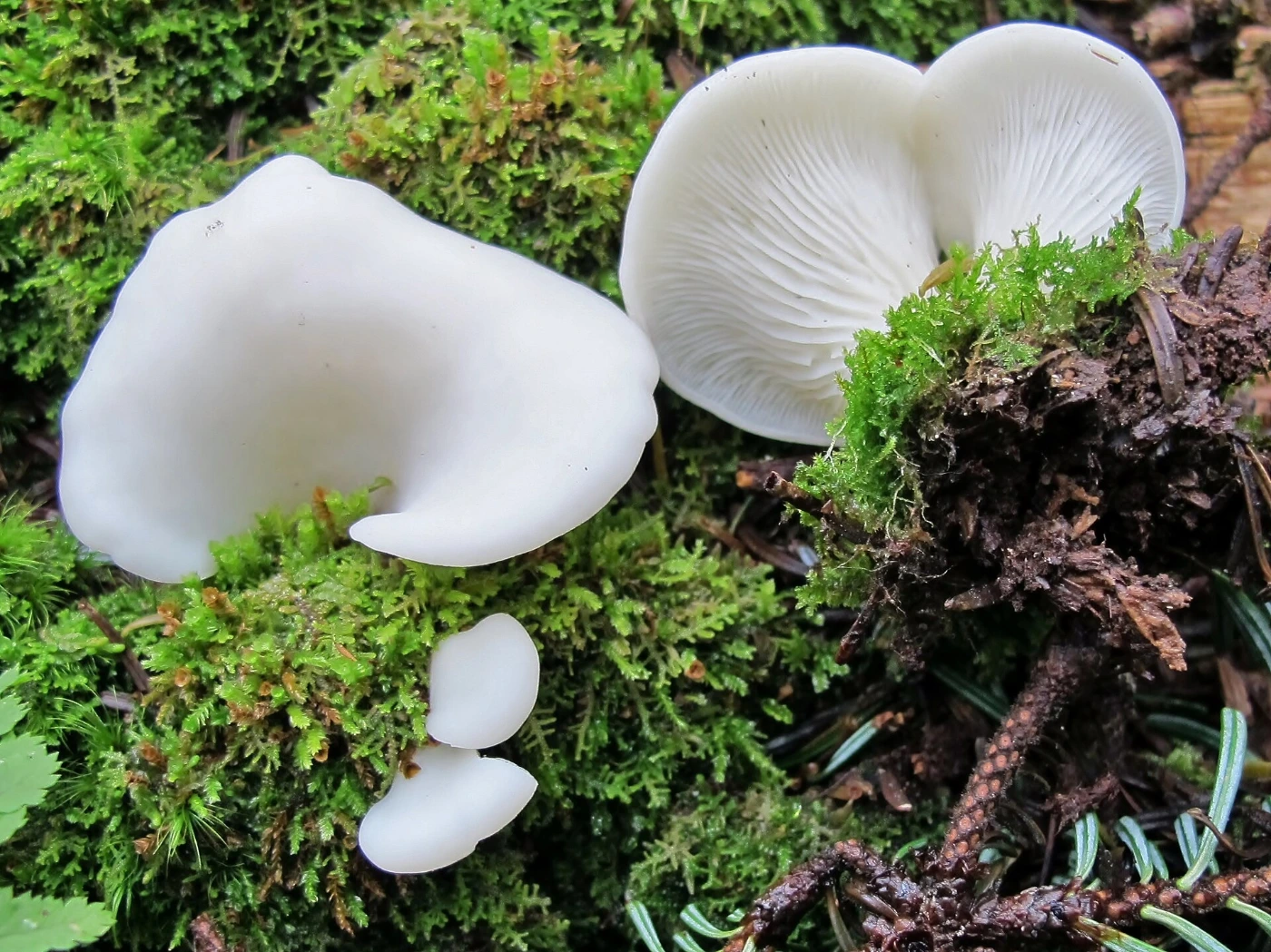
Pleurocybella porrigens, commonly known as Angel Wings, is a delicate white mushroom that grows in overlapping clusters on decaying conifer wood. Its thin fan-shaped caps, white gills, almost complete lack of a stem, and preference for conifer logs make it distinctive once the main features are recognized.
The most useful field pattern is thin white fan-shaped caps + crowded white gills + little or no stem + growth on conifer wood. The species can resemble Oyster Mushrooms from a distance, but Angel Wings are thinner, paler, and usually more delicate.
⚠️ Important: Angel Wings were historically eaten, but the species has been associated with severe and sometimes fatal encephalopathy. It should not be recommended as an edible wild mushroom.
Quick Identification
| Feature | Pleurocybella porrigens |
|---|---|
| Common name | Angel Wings |
| Cap color | White to ivory |
| Cap shape | Fan-shaped, shell-shaped, spoon-shaped |
| Cap texture | Thin, smooth, sometimes translucent-striate |
| Margin | Often wavy with age |
| Gills | White, crowded, narrow |
| Stem | Usually absent or extremely reduced |
| Flesh | Thin, white, elastic to slightly tough |
| Spore print | White |
| Substrate | Decaying conifer wood |
| Typical hosts | Hemlock, fir, spruce and other conifers |
| Growth | Often overlapping clusters |
| Season | Late summer to autumn |
| Distribution | North America, Europe, Asia and other temperate regions |
| Edibility | Not recommended |
| Main look-alikes | Oyster Mushrooms, White Oyster-like fungi, Crepidotus |
What Does Pleurocybella porrigens Look Like?
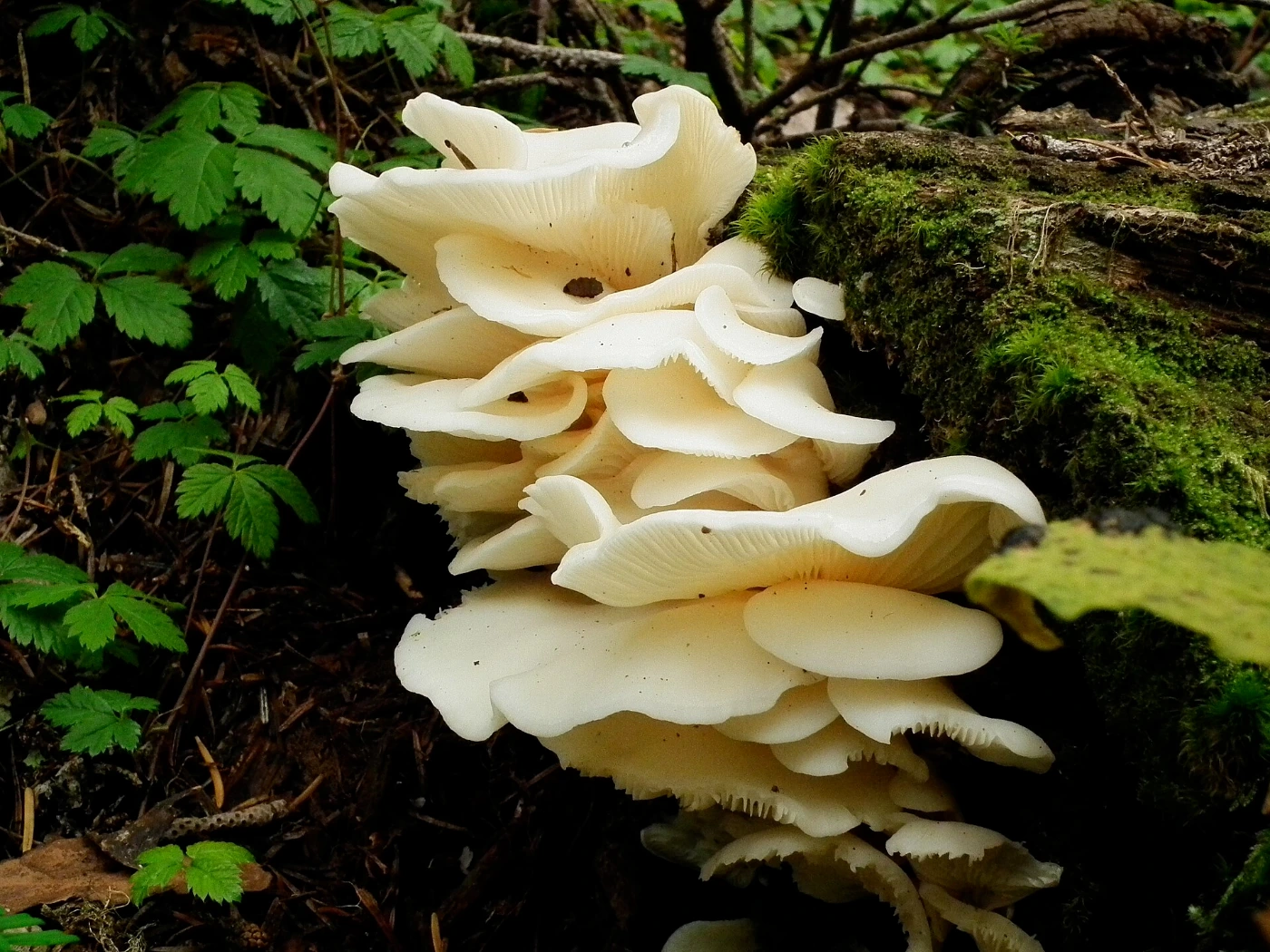
Angel Wings form thin white caps that grow directly from logs and stumps. Individual fruit bodies are usually fan-shaped, spoon-shaped, or shell-like and often overlap in elegant layered clusters.
Fresh caps can look almost translucent near the margin. Older mushrooms often develop wavy edges and may become slightly cream or ivory rather than pure white.
Cap
The cap is usually thin and relatively delicate. It lacks the thick fleshy structure typical of many Oyster Mushrooms.
Young caps are often smooth and curved, while mature specimens expand and become more irregular. The outer edge may become strongly wavy or lobed.
Cap Color
Fresh specimens are white to ivory. Slight yellowing or grayish tones can appear with age or weathering.
The pale color is useful but not diagnostic by itself. Several unrelated wood-growing mushrooms can also produce white fan-shaped caps.
Gills
The gills are white, crowded, and relatively narrow. They radiate outward from the point where the fruit body attaches to the wood.
Because there is usually no normal stem, the gills can appear to originate almost directly from the substrate. This gives the underside a neat, fan-like pattern.
Stem
A true stem is normally absent or extremely short. The cap attaches laterally to the wood.
This is one of the easiest differences from many conventional gilled mushrooms. The overall form is closer to a thin shelf than to a cap on a central stalk.
Flesh
The flesh is white, thin, and somewhat elastic or tough despite the delicate appearance. It is much less substantial than the thick flesh of a typical Oyster Mushroom.
Older specimens may become dry, brittle, or slightly leathery. Fresh fruit bodies remain flexible enough to bend without immediately breaking.
Spore Print
The spore print is white. This fits the pale overall appearance of the species.
Spore color does not separate Angel Wings from Oyster Mushrooms because both groups can produce pale prints. Substrate, cap thickness, and overall form are more useful in practice.
Where Does Angel Wings Grow?
Pleurocybella porrigens is a wood-decaying fungus that grows on dead conifer wood. Fallen logs, old stumps, and decaying trunks are the most typical substrates.
In the Pacific Northwest, hemlock is especially important. Fir, spruce, and other conifer wood can also support fruiting.
Conifer Logs
Large colonies can cover sections of rotting conifer logs. The white caps may overlap like roof tiles and stand out sharply against dark bark.
This growth pattern can create spectacular displays in wet forests. Several generations of fruit bodies may appear along the same piece of wood.
Season
Angel Wings usually fruit from late summer into autumn. Cool, wet conditions favor development, especially in damp conifer forests.
In regions with mild autumn weather, fruiting can continue later into the season. Timing varies with elevation and rainfall.
Distribution
The species has a broad temperate distribution and is known from North America, Europe, and Asia. It is particularly familiar in cool conifer forests.
The Pacific Northwest is one of the regions where it is commonly encountered. Moist hemlock forests provide especially suitable habitat.
Is Pleurocybella porrigens Edible?
Angel Wings were historically regarded as edible in some regions, especially in Japan. That view changed after serious poisoning incidents involving acute encephalopathy.
Because the mechanism is still not completely understood and severe neurological illness has occurred, the species should not be recommended for consumption. A history of traditional use does not make it a safe modern edible.
Why Is Angel Wings Considered Dangerous?
The most serious poisoning reports involved neurological symptoms rather than the more common gastrointestinal mushroom poisoning pattern. Symptoms included weakness, involuntary movements, convulsions, and disturbances of consciousness.
Many severe cases involved people with kidney disease, but that does not mean the mushroom is safe for everyone else. The uncertainty itself is enough reason to avoid treating the species as edible.
Look-Alikes
The main look-alikes are other pale fan-shaped mushrooms growing on wood. Oyster Mushrooms are the most important comparison because they can occur in overlapping habitats and seasons.
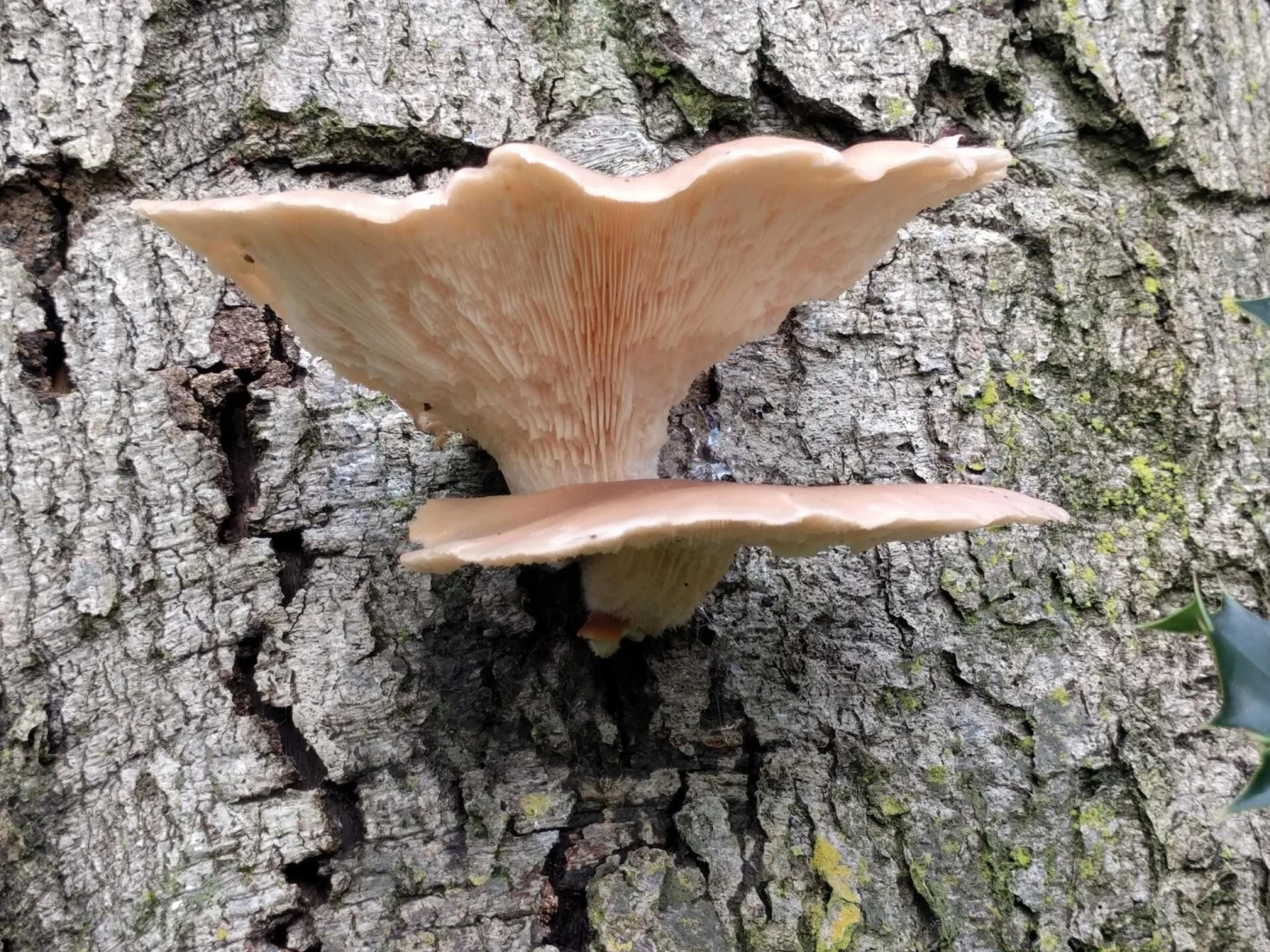
Pleurotus ostreatus — Oyster Mushroom
Identification
Oyster Mushrooms form thicker, fleshier caps that range from white and gray to blue-gray or brown. Their gills run down toward a short lateral stem or attachment point.
They usually grow on hardwood rather than conifer wood. The fruit bodies are also much more substantial and robust.
Main Difference
Thin white caps on conifer wood favor Angel Wings; thicker gray to brown caps on hardwood favor Oyster Mushroom.
Pleurotus pulmonarius — Phoenix Oyster
Identification
Phoenix Oyster is often paler than Pleurotus ostreatus and can approach white or cream. It forms fleshy fan-shaped caps with decurrent gills.
It usually grows on hardwood and has a thicker, more conventional Oyster Mushroom texture. The cap is rarely as thin and delicate as Angel Wings.
Main Difference
Substrate and cap thickness are especially useful. Angel Wings are strongly associated with conifer wood and have much thinner fruit bodies.
Crepidotus Species
Identification
Crepidotus species are small shell-shaped mushrooms that grow laterally from dead wood. Some are white or cream when young and may resemble small Angel Wings.
Mature spores are usually brownish rather than white. The caps are often smaller and may become buff or tan with age.
Main Difference
A brownish spore print points toward Crepidotus. Angel Wings produce white spores and typically form larger overlapping white fans on conifer wood.
Panellus Species
Identification
Some Panellus species form small fan-shaped caps on logs and branches. They can be pale, grayish, brownish, or yellowish depending on species.
Their caps are often smaller or tougher, and substrate preferences vary. Gill spacing and cap texture can also differ.
Main Difference
Angel Wings are usually pure white to ivory, very thin, and strongly associated with conifer logs. Other small fan-shaped fungi often show different colors or textures.
Angel Wings vs Oyster Mushroom
| Feature | Pleurocybella porrigens | Pleurotus ostreatus |
|---|---|---|
| Cap | White to ivory | Gray, brown, blue-gray, cream |
| Thickness | Very thin | Thick and fleshy |
| Stem | Usually absent | Short lateral stem often present |
| Gills | White, crowded | White to cream, decurrent |
| Substrate | Conifer wood | Mostly hardwood |
| Texture | Thin, elastic | Fleshy |
| Edibility | Not recommended | Edible when correctly identified |
| Best clue | Thin white fan on conifer | Thick fleshy oyster on hardwood |
This comparison is especially important because both can grow in overlapping clusters. Substrate and cap thickness are more reliable than color alone.
Angel Wings vs White Oyster Mushrooms
Very pale Oyster Mushrooms can look deceptively similar from above. The distinction becomes easier once the substrate and flesh thickness are checked.
Angel Wings are usually much thinner and more delicate. A substantial fleshy cap with a short lateral stem fits Pleurotus better.
How to Identify Pleurocybella porrigens
Start with the substrate. A white fan-shaped mushroom growing from a decaying conifer log is immediately more suggestive of Angel Wings than of a typical Oyster Mushroom.
Next examine cap thickness and the stem. Very thin white caps with almost no stem strongly support Pleurocybella porrigens.
Finally, check the underside. Crowded white gills radiating from the lateral attachment complete the typical pattern.
Young vs Mature Angel Wings
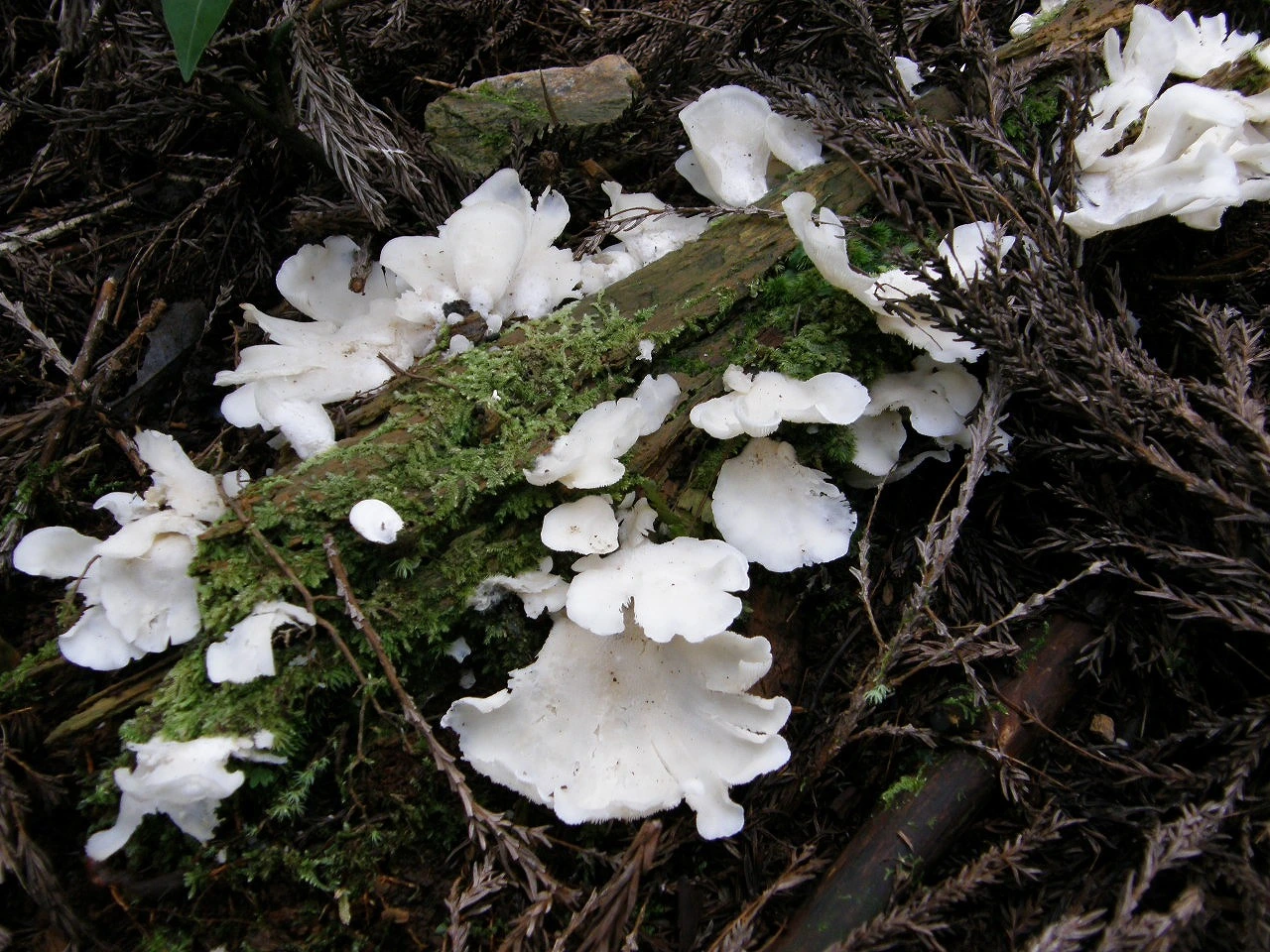
Young fruit bodies are small, smooth, and often spoon-shaped. Their margins are curved and relatively even.
Mature caps expand into wider fans and frequently become wavy. Large colonies can develop layered overlapping shelves across the log.
How Weather Changes the Appearance
Rain makes fresh caps look more translucent and can emphasize radial lines near the edge. Prolonged dry weather makes them tougher and less delicate.
Older mushrooms may yellow slightly or collect debris. Pure white color is therefore most useful in fresh fruit bodies.
Common Identification Mistakes
One common mistake is assuming that every white shelf-like mushroom is an Oyster Mushroom. Several unrelated fungi have evolved a similar lateral growth form.
Another mistake is ignoring the type of wood. Conifer substrate is one of the strongest practical clues for Angel Wings.
A third mistake is relying on outdated edible classifications. Older field guides may still describe the species as edible even though serious neurological poisonings changed modern safety recommendations.
How to Photograph Angel Wings
Photograph the entire colony on the log before removing any fruit bodies. This records both the overlapping growth pattern and the conifer substrate.
Take close-up images from above and below. A side view is especially useful for showing how thin the cap is compared with an Oyster Mushroom.
Can AI Identify Pleurocybella porrigens?
AI can often recognize typical Angel Wings when the thin white caps, crowded gills, and conifer log are visible together. Confusion becomes much more likely when only the top of the cap is shown.
Substrate information is especially valuable. A photograph that clearly shows conifer bark or wood structure can significantly improve the identification.
Interesting Facts
The common name Angel Wings comes from the thin pure-white fan-shaped caps, which can resemble overlapping wings along a dark log. Large colonies can be especially striking in wet conifer forests.
The species also became important in toxicology after the 2004 poisoning outbreak in Japan. That event changed its reputation from a traditional edible mushroom to one that is now treated with considerable caution.
Angel Wings are structurally quite different from Oyster Mushrooms despite their superficial resemblance. Their thin elastic flesh and strong association with conifer wood reflect a different ecological and evolutionary history.
The mushroom is also a good example of why edibility information can change over time. A species may have a long history of consumption before rare but serious risks become recognized.
Frequently Asked Questions
Is Pleurocybella porrigens the same as Oyster Mushroom?
No. Angel Wings belong to a different genus and are much thinner than typical Oyster Mushrooms. They also prefer conifer wood rather than the hardwood habitat typical of most Pleurotus.
Is Angel Wings edible?
It was historically eaten, but serious neurological poisonings have been reported. Modern identification guides should not recommend it as an edible species.
Does Angel Wings have a stem?
Usually not. The cap is attached laterally to the wood, sometimes through only a very short narrowed base.
What color are the gills?
The gills are white and crowded. They radiate outward from the point of attachment.
Does it grow on hardwood?
Its characteristic substrate is conifer wood. A similar mushroom on hardwood is more likely to belong to another group, especially Pleurotus.
Can Angel Wings grow in large clusters?
Yes. Large overlapping colonies are common and can cover long sections of decaying logs.
Is it common in the Pacific Northwest?
Yes. It is well known from moist conifer forests in the region, especially on hemlock logs and stumps.
How can I separate it from a white Oyster Mushroom?
Check the wood and the thickness of the cap. Thin white caps on conifer wood favor Angel Wings, while thick fleshy caps on hardwood favor Oyster Mushrooms.
Final Identification Notes
Pleurocybella porrigens is best recognized by the combination of thin white to ivory fan-shaped caps, crowded white gills, almost no stem, overlapping growth, and direct attachment to decaying conifer wood.
The main practical look-alike is Oyster Mushroom. Angel Wings are thinner, paler, more delicate, and much more strongly associated with conifer logs.
The practical field pattern is: thin white fan + no real stem + crowded white gills + conifer log = strong Pleurocybella porrigens candidate. Because of documented severe neurological poisoning, the species should not be treated as an edible mushroom.
Upload a photo and get possible matches in seconds.