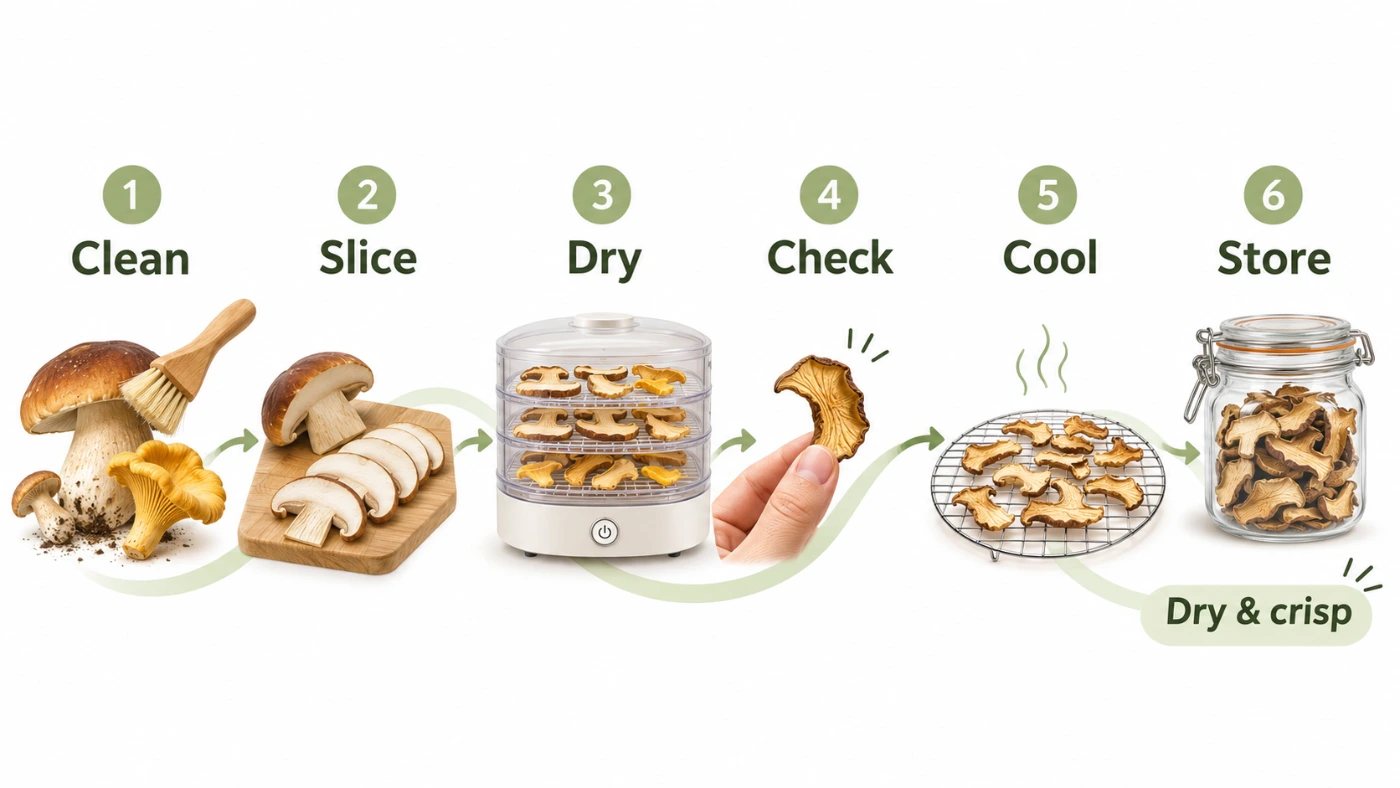
Drying is one of the best ways to preserve wild mushrooms for months without taking up much freezer space. When done correctly, it concentrates flavor, reduces weight dramatically, and works especially well for porcini, morels, chanterelles, oyster mushrooms, and many other firm species.
The key is to dry mushrooms quickly enough to prevent spoilage but gently enough to preserve aroma and texture. For most species, thin slices, steady airflow, and moderate heat give the best result.
⚠️ Important: Only dry mushrooms that have already been confidently identified. Drying does not make a poisonous mushroom safe, and dried specimens can become harder to identify because color, odor, and texture change during preservation.
Quick Drying Guide
| Method | Typical Temperature | Typical Time |
|---|---|---|
| Food dehydrator | 45–55°C / 113–131°F | 4–10 hours |
| Oven | 50–60°C / 122–140°F | 3–8+ hours |
| Air drying | Room temperature with strong airflow | 1–3 days |
| Small delicate mushrooms | Lower end of range | Often faster |
| Thick boletes or large caps | Thin slices recommended | Often longer |
Exact drying time depends on species, slice thickness, humidity, and equipment. Mushrooms are finished only when fully dry, not when a timer reaches a particular number.
Which Wild Mushrooms Are Best for Drying?
Some mushrooms become significantly better after drying because their aroma intensifies. Porcini are the classic example, but many other species also preserve very well.
Firm mushrooms with relatively low water content are usually easiest to dry. Very watery, gelatinous, or extremely delicate species may be less suitable.
Porcini and Other Boletes
Porcini are among the best mushrooms for drying. Their nutty aroma becomes stronger and deeper after dehydration.
Slice them relatively thinly because the caps and stems are dense. Inspect carefully for insect tunnels before drying, since larvae can remain hidden inside thick tissue.
Morels
Morels dry extremely well and rehydrate effectively. Their hollow structure also allows moisture to escape relatively quickly.
Split large morels lengthwise before drying. This makes it easier to remove insects, dirt, and debris trapped inside the hollow stem and cap.
Chanterelles
Chanterelles can be dried, although their texture after rehydration is not always as good as porcini. Their aroma remains useful for sauces, soups, powders, and seasoning.
Small chanterelles can be dried whole, while larger ones should be split or sliced. They need good airflow because the folds and thick stems can retain moisture.
Oyster Mushrooms
Oyster Mushrooms dry efficiently because their caps are relatively thin. Large clusters should be separated into individual caps or smaller sections.
Older tough stems can be removed before drying. The dried caps are useful in soups, broths, sauces, and mushroom powder.
Hedgehog Mushrooms
Hedgehog Mushrooms can also be dried successfully. Their firm flesh holds up well, although larger specimens should be sliced.
Brush away dirt and debris from the teeth underneath. Once dry, they can be rehydrated or ground into powder.
Matsutake
Matsutake can be dried, but some of its distinctive aroma may change during dehydration. Thin slices work best if drying is chosen.
Fresh use or freezing may preserve the characteristic spicy fragrance better. Drying is still useful when a large harvest cannot be used immediately.
Puffballs
Young puffballs can be dried if the inside is completely white and uniform. Slice them into even pieces before drying.
Do not dry puffballs that are yellowing, olive, or beginning to mature internally. Once spores start developing, they are no longer suitable for food.
Mushrooms That Are Less Suitable for Drying
Very watery mushrooms may become tough or lose much of their appeal. Some species are simply better preserved by freezing or cooking first.
Gelatinous fungi, very fragile mushrooms, and species with unpleasant texture after rehydration are usually poor candidates. The best preservation method depends on how you plan to use them later.
Clean Mushrooms Before Drying
Dry mushrooms should begin as clean and fresh as possible. Brush off soil, leaves, pine needles, and other forest debris before slicing.
Avoid soaking them in water. Excess moisture lengthens drying time and can encourage spoilage before the process is complete.
Should You Wash Wild Mushrooms Before Drying?
Usually, brushing and trimming are enough. A quick rinse is acceptable if the mushroom is very dirty, but it should be dried thoroughly on towels before going into the dehydrator or oven.
Do not leave wet mushrooms piled together. Surface water dramatically increases the time needed to reach a safely dry state.
Inspect for Insects
Boletes and other thick mushrooms often contain insect larvae even when the exterior looks perfect. Slice through the stem and cap before drying to reveal hidden damage.
Minor insect tunnels can be trimmed away. Heavily infested mushrooms are usually better discarded than preserved.
Slice Mushrooms Evenly
Even thickness is one of the most important factors in successful drying. Uneven pieces finish at different times, which can leave some sections damp while others become overly dry.
For most dense mushrooms, slices around 4–7 mm thick work well. Thin mushrooms can often be left whole or divided only into manageable pieces.
Should You Dry Caps and Stems Together?
Yes, if they are similar in thickness. However, dense stems often dry more slowly than caps.
For porcini and other thick boletes, slicing the stem lengthwise helps everything finish at roughly the same time. Tough or dirty stem bases can be trimmed away first.
Method 1: Food Dehydrator
A food dehydrator is the easiest and most reliable method. It provides steady low heat and continuous airflow.
Arrange mushrooms in a single layer with space between pieces. Do not overlap slices because trapped moisture slows drying.
Best Dehydrator Temperature
A temperature around 45–55°C / 113–131°F works well for many wild mushrooms. This is warm enough to remove moisture efficiently without aggressively cooking the mushrooms.
Very aromatic or thin species can be dried toward the lower end of the range. Thick boletes may benefit from the upper end.
How Long Does Dehydrator Drying Take?
Many mushrooms dry in roughly 4–10 hours. Thick slices, humid weather, or dense mushrooms can take longer.
Do not judge only by time. Check the thickest pieces before stopping.
Method 2: Drying Mushrooms in the Oven
An oven works well if you do not have a dehydrator. Use the lowest practical temperature and provide airflow.
Arrange mushrooms on a rack or parchment-lined tray in a single layer. Turning slices during drying helps both sides lose moisture evenly.
Best Oven Temperature
Use approximately 50–60°C / 122–140°F if your oven can maintain such a low temperature. Higher heat can darken the mushrooms and reduce aroma.
Many ovens do not regulate accurately at very low temperatures. An oven thermometer can help reveal whether the actual temperature is much higher than the setting.
Keep the Oven Door Slightly Open
A small gap allows moisture to escape. Without ventilation, the oven can become humid and slow the drying process.
If your oven has a convection or fan setting, use it at low temperature. Airflow matters almost as much as heat.
Method 3: Air Drying
Air drying can work in a dry climate with good ventilation. Mushrooms can be placed on mesh screens, drying racks, or threaded onto string.
This method is less reliable in humid weather. Slow drying creates more opportunity for mold and bacterial growth.
Best Conditions for Air Drying
Choose a warm, dry, well-ventilated area away from direct rain or kitchen steam. A fan can dramatically improve results.
Keep pieces separated so air can move around them. Turn or rearrange them if one side remains damp.
Can You Dry Mushrooms in the Sun?
Direct sunlight can dry mushrooms, but it is harder to control than a dehydrator. Strong sun may cause uneven drying and can affect color and aroma.
Indirect warmth with good airflow is more predictable. If sun drying is used, protect mushrooms from insects and bring them indoors before evening humidity rises.
How to Arrange Mushrooms for Drying
Place pieces in a single layer and leave visible gaps between them. Dense piles trap moisture and dry unevenly.
Small mushrooms should not be allowed to touch excessively. Air needs to reach as much surface area as possible.
How to Know When Mushrooms Are Fully Dry
Properly dried mushrooms should feel very dry and lightweight. Thin pieces often become crisp, while thicker pieces should snap rather than bend.
There should be no soft, cool, leathery, or damp center. If any thick piece remains flexible inside, continue drying.
Why “Almost Dry” Is Not Good Enough
Residual moisture is the main cause of mold during storage. A mushroom that feels dry on the surface can still contain water deeper inside.
This is especially common with thick stems and large bolete slices. Always test the thickest pieces.
What Happens If Mushrooms Are Over-Dried?
Slight over-drying is usually less problematic than under-drying. Very dry mushrooms can become brittle but remain useful for rehydration or powder.
Excessive heat is the bigger issue. High temperatures can scorch the mushrooms, darken them, and reduce their aroma.
Cool Before Storage
Let dried mushrooms cool completely before sealing them in containers. Warm mushrooms can release residual vapor that condenses inside the jar.
This condensation can reintroduce moisture and create mold risk. Cooling usually takes only a short time in a dry room.
How to Store Dried Mushrooms
Use airtight glass jars, food-safe containers, or sealed bags once the mushrooms are completely dry and cool. Store them in a cool, dark place.
Light, heat, and humidity gradually reduce quality. A cupboard away from the stove is better than a warm shelf near cooking steam.
Should You Use a Desiccant Packet?
Food-safe desiccant packets can help in humid climates, especially if containers are opened frequently. They are optional when mushrooms have been dried thoroughly and stored correctly.
Never use unknown industrial desiccants around food. Only products specifically intended for food storage should be used.
How Long Do Dried Mushrooms Last?
Well-dried mushrooms stored airtight can retain good quality for many months and often a year or longer. Aroma gradually weakens over time even when the mushrooms remain dry.
For the best flavor, use them within the first year. Label containers with the species and drying date.
How to Rehydrate Dried Mushrooms
Place dried mushrooms in warm water and allow them to soften. Depending on thickness, this may take around 15–30 minutes or longer.
The soaking liquid often contains a lot of flavor. Strain it through a fine filter if you want to use it in soups or sauces because dried wild mushrooms can release fine grit.
Do You Need to Cook Rehydrated Mushrooms?
Yes. Rehydration only adds water back to the tissue and is not a substitute for proper cooking.
Cook the mushrooms according to the requirements of the species. Never assume that drying or soaking eliminates natural toxins or makes an uncertain species edible.
Making Mushroom Powder
Fully dried mushrooms can be ground into powder using a spice grinder or blender. Porcini powder is especially useful for adding concentrated mushroom flavor to sauces, soups, risotto, and gravies.
Store powder airtight because its large surface area absorbs moisture and loses aroma faster than whole dried slices. Make smaller batches if possible.
Can You Mix Different Mushroom Species?
Yes, but keeping species separate is often better. Different mushrooms dry at different speeds and have different flavors.
Separate storage also helps preserve identification information. This matters if questions arise later about what was collected.
Should You Blanch Mushrooms Before Drying?
Usually not. Most wild mushrooms can be dried directly after cleaning and slicing.
Blanching adds moisture and can reduce flavor. It is more commonly used before freezing than before dehydration.
Drying Mushrooms After Rain
Mushrooms collected during wet weather may contain significantly more water. They need extra surface drying before going into the dehydrator.
Spread them out on towels and allow excess moisture to evaporate first. Very waterlogged or deteriorating specimens are poor candidates for preservation.
Why Dried Mushrooms Sometimes Smell Stronger
Drying concentrates aromatic compounds as water leaves the tissue. In porcini, this creates the deep savory aroma that makes dried specimens especially prized.
Rehydration releases these compounds into both the mushrooms and the soaking liquid. This is why a small amount of dried mushroom can strongly flavor an entire dish.
Why Some Dried Mushrooms Turn Dark
Some darkening is normal because pigments oxidize during cutting and drying. The degree varies between species.
Very rapid blackening, wet spots, or unpleasant odor during drying may indicate spoilage rather than normal color change. Fresh, clean mushrooms should not develop a rotten smell.
Can Moldy Dried Mushrooms Be Saved?
No. Visible mold means the mushrooms were not dried completely or absorbed moisture during storage.
Discard moldy batches rather than trying to re-dry them. Mold can extend beyond the visible surface.
Common Drying Mistakes
One common mistake is cutting pieces too thick. Thick slices can remain damp inside even after the surface feels dry.
Another mistake is crowding trays. Poor airflow greatly increases drying time and creates uneven results.
A third mistake is sealing mushrooms while they are still warm. Condensation inside the container can undo hours of careful drying.
How to Dry Wild Mushrooms Safely
Identify first, inspect for spoilage and insects, clean without soaking, slice evenly, and dry with steady airflow. Test the thickest pieces before storage.
Once fully dry, cool them completely and store airtight. Check the container during the first few days for any signs of condensation or softening.
Interesting Facts
Dried mushrooms can be dramatically lighter than fresh mushrooms because most of their original weight is water. This makes drying especially useful for large forest harvests.
Many traditional cuisines developed dried-mushroom techniques because dehydration allowed seasonal fungi to be used throughout winter. Porcini, morels, and shiitake are among the best-known examples.
Mushroom powder is also an efficient way to use broken dried pieces. Fragments that are too small for normal rehydration can still become a highly concentrated seasoning.
Drying also changes texture and aroma differently from freezing. For some species, especially porcini, the dried form is not merely a preserved substitute but a distinct culinary ingredient.
Frequently Asked Questions
What temperature should I use to dry wild mushrooms?
For many species, around 45–55°C / 113–131°F in a dehydrator works well. An oven can usually be used around 50–60°C / 122–140°F with good ventilation.
How thick should mushroom slices be?
For dense mushrooms such as porcini, slices around 4–7 mm are practical. Thinner mushrooms may be dried whole or in larger pieces.
Do mushrooms need to be washed before drying?
Usually not. Brush and trim them first, and use only a quick rinse if necessary.
How can I tell when mushrooms are completely dry?
They should be lightweight, dry throughout, and usually crisp or brittle. No piece should have a soft or flexible center.
Can mushrooms be air-dried without a dehydrator?
Yes, in dry conditions with strong airflow. Humid climates make air drying much less reliable.
How long do dried mushrooms last?
Properly dried mushrooms stored airtight can remain good for many months and often a year or longer. Flavor is usually best within the first year.
Can dried mushrooms become moldy?
Yes, if they contain residual moisture or absorb humidity during storage. Any moldy dried mushrooms should be discarded.
Does drying make poisonous mushrooms safe?
No. Drying does not neutralize many mushroom toxins and should never be used as a safety treatment.
Final Notes
Successful mushroom drying depends on fresh mushrooms, even slices, moderate heat, strong airflow, and complete removal of moisture. A dehydrator is the easiest method, but a low oven or careful air drying can also work.
For many wild mushrooms, a temperature around 45–55°C / 113–131°F provides a good balance between speed and flavor preservation. Dense species such as porcini should be sliced around 4–7 mm thick and dried until fully crisp with no soft center.
The simplest workflow is: identify → clean → slice evenly → dry with airflow → test the thickest pieces → cool completely → store airtight in a dark, dry place.
Upload a photo and get possible matches in seconds.