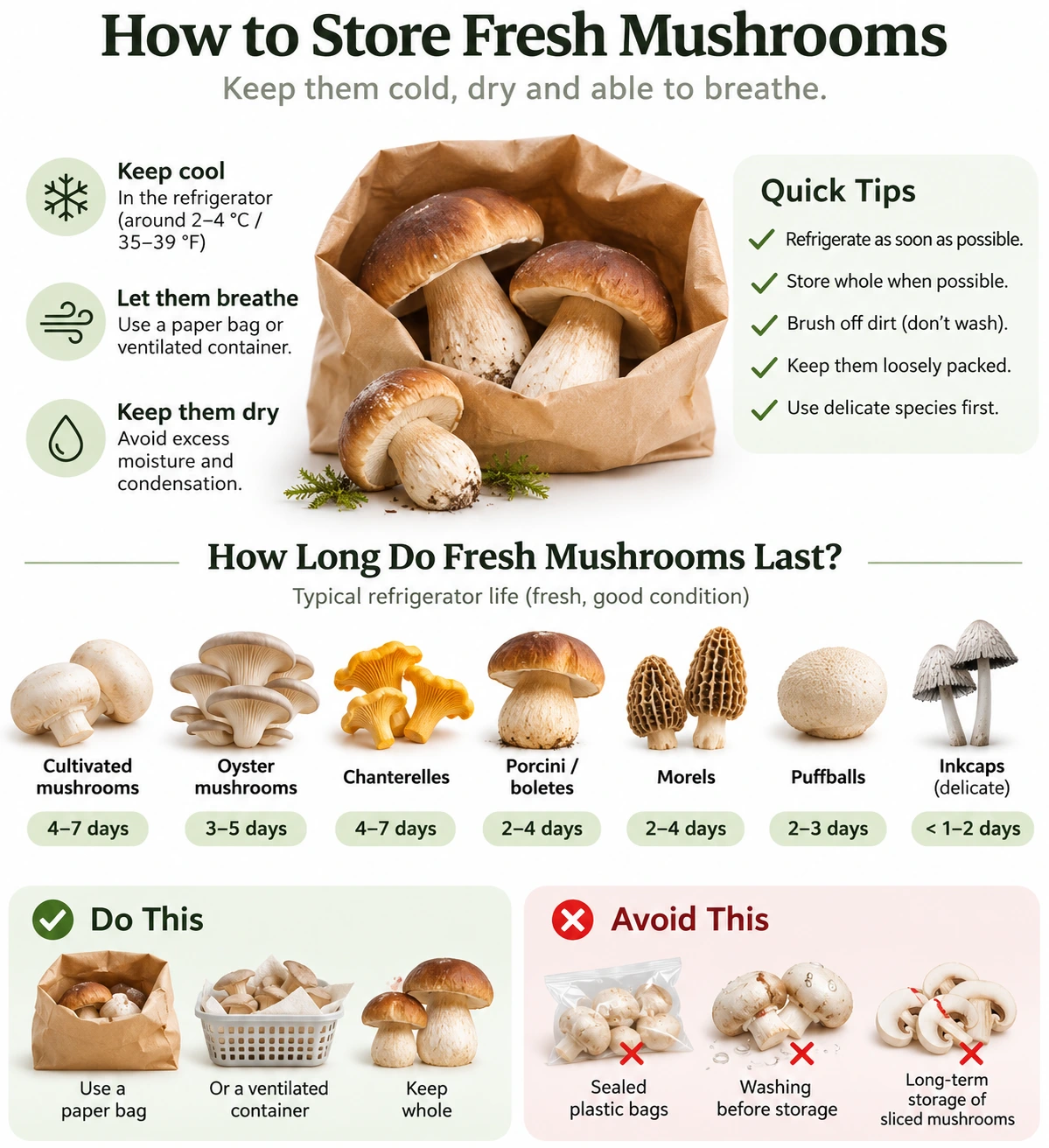
Fresh mushrooms spoil quickly because they contain a lot of water and continue to respire after picking. The best storage method is therefore one that keeps them cool, allows some airflow, and prevents excess moisture from collecting around the fruit bodies.
For most fresh mushrooms, the refrigerator is the best short-term option. Paper bags, breathable containers, and dry storage conditions usually work better than sealed plastic bags.
How Long Do Fresh Mushrooms Last?
Storage life depends on species, freshness at harvest, and how they are handled. Firm mushrooms collected in good condition last much longer than old, bruised, waterlogged, or insect-damaged specimens.
As a general guide, many fresh wild mushrooms keep for several days in the refrigerator. Some robust species can last longer, while delicate mushrooms may deteriorate within one or two days.
| Mushroom Type | Typical Refrigerator Life |
|---|---|
| Firm cultivated mushrooms | About 4–7 days |
| Oyster Mushrooms | About 3–5 days |
| Chanterelles | About 4–7 days |
| Porcini / boletes | About 2–4 days |
| Morels | About 2–4 days |
| Puffballs | About 2–3 days |
| Delicate inkcaps | Often less than 1–2 days |
| Very mature wild mushrooms | Use as soon as possible |
These are practical estimates rather than guarantees. Always judge the mushroom itself before using it.
The Best Way to Store Fresh Mushrooms
The basic rule is simple: keep them cold, dry, and able to breathe. Mushrooms stored in a warm or sealed humid environment deteriorate much faster.
Do not pack them tightly. A loose arrangement allows moisture to escape and reduces crushing.
Use a Paper Bag
A paper bag is one of the simplest and most reliable ways to store mushrooms in the refrigerator. It absorbs some excess moisture while still allowing airflow.
Fold the top loosely rather than sealing it tightly. If the bag becomes damp, replace it with a dry one.
Use a Breathable Container
A shallow container lined with paper towel also works well. Leave the lid slightly open or use a container with ventilation holes.
This method is especially useful for fragile mushrooms that would be crushed in a bag. Arrange them in one or two loose layers whenever possible.
Avoid Sealed Plastic Bags
Sealed plastic traps moisture released by the mushrooms. Condensation quickly forms inside and creates ideal conditions for bacterial growth and sliminess.
Plastic can be used only if there is plenty of ventilation. A perforated bag is much better than a completely sealed one.
Should You Wash Mushrooms Before Storing Them?
Usually, no. Mushrooms are best stored dry and cleaned shortly before cooking.
If they are heavily soiled, brush off loose dirt before refrigeration. Washing them in advance can shorten storage life because surface moisture accelerates deterioration.
What If the Mushrooms Are Already Wet?
Dry them as much as possible before storage. Spread them on a clean towel or paper towel and allow surface moisture to evaporate.
Do not leave wet mushrooms piled together. Moisture trapped between caps and stems encourages rapid spoilage.
Should You Clean Wild Mushrooms Before Refrigerating Them?
Remove obvious soil, leaves, insects, and damaged tissue before storage. This keeps dirt from spreading and allows you to notice any worms or decay early.
Avoid deep trimming unless necessary. Whole mushrooms often retain moisture and texture better than heavily cut pieces.
Store Mushrooms Whole When Possible
Whole mushrooms usually last longer than sliced ones. Cutting increases the surface area exposed to oxygen and microorganisms.
If you already sliced them, use them quickly. Store slices in a shallow breathable container lined with dry paper towel.
Refrigerator Temperature
Fresh mushrooms should be kept in the cold part of the refrigerator, ideally around normal refrigerator temperatures rather than in the door. Stable cool conditions slow both microbial growth and the mushroom’s own metabolism.
Avoid freezing temperatures unless you intend to freeze them. Fresh mushrooms can suffer texture damage if they partially freeze and then thaw.
Do Mushrooms Need Airflow?
Yes. Mushrooms continue to release water vapor and carbon dioxide after harvest.
Good airflow helps prevent condensation. This is why breathable packaging works better than airtight storage for fresh specimens.
Why Mushrooms Become Slimy
Sliminess usually appears when moisture accumulates on the surface and bacteria begin breaking down tissue. Warm storage and sealed plastic accelerate this process.
A slightly moist cap is not always spoiled, especially in naturally slimy species. A sticky film combined with sour odor, collapse, or discoloration is much more concerning.
Why Mushrooms Shrivel in the Refrigerator
Too much airflow can dry them out. This often happens when mushrooms are left uncovered for several days.
Slight drying is usually less dangerous than slimy spoilage, but texture and flavor decline. A paper bag creates a useful balance between ventilation and moisture retention.
How to Store Porcini
Porcini and other boletes should be checked carefully for insects before storage. Cut away heavily damaged sections and inspect the stem and cap for tunnels.
Store intact firm specimens in a paper bag or ventilated container. Because boletes can soften quickly, they are best used within a few days.
How to Store Chanterelles
Chanterelles are relatively firm and often store better than delicate gilled mushrooms. Brush off forest debris and keep them dry in a paper bag or breathable container.
Do not compress large harvests into a dense pile. Spreading them loosely helps preserve their texture.
How to Store Oyster Mushrooms
Oyster Mushrooms lose moisture quickly but can also become slimy if sealed tightly. A loose paper bag or ventilated container is usually ideal.
Keep clusters intact when possible and separate only badly damaged parts. Use them while the caps remain firm and the gills smell fresh.
How to Store Morels
Morels are hollow and fragile, so they need airflow. Store them in a paper bag or open container lined with paper towel.
Do not seal them in plastic. Their textured caps can trap moisture and deteriorate quickly if ventilation is poor.
How to Store Puffballs
Young puffballs should be firm and completely white inside when cut. Once collected, they should be refrigerated promptly and used within a short period.
Their dense tissue can become soft and yellowish with age. Any developing internal discoloration indicates that they are no longer in ideal condition.
How to Store Russulas
Russulas are brittle and can break easily during transport and storage. Use a shallow container rather than a deep bag if the specimens are delicate.
Keep them dry and avoid stacking heavy mushrooms on top. Older Russulas often deteriorate quickly around damaged gills and cap margins.
How to Store Milkcap Mushrooms
Milkcaps can leak latex when damaged, so rough handling may create wet spots inside the container. Keep them whole and loosely arranged whenever possible.
If damaged mushrooms release a lot of liquid, replace damp paper towels. Excess moisture shortens storage life.
How to Store Wood-Growing Mushrooms
Species such as Oyster Mushrooms, Lion’s Mane, and some polypores should be checked for dirt, bark fragments, and insects. Remove loose debris without soaking them.
These mushrooms often store best in breathable packaging. Dense species may keep longer than very thin shelf-like fruit bodies.
Can You Store Mushrooms at Room Temperature?
Only briefly. Fresh mushrooms deteriorate much faster at room temperature, especially in warm or humid conditions.
If you are not cooking them soon, refrigerate them as quickly as practical. A basket on the kitchen counter is not suitable for multi-day storage.
Can You Store Mushrooms in Water?
No. Soaking mushrooms before storage causes them to absorb or retain excess moisture and speeds up spoilage.
Water storage also damages texture. Wash or rinse only shortly before cooking when needed.
Can You Use an Airtight Container?
An airtight container is generally not ideal for fresh mushrooms unless moisture is carefully controlled. Condensation can build quickly.
If you use a container with a lid, add ventilation or leave it slightly open. A dry paper towel inside can also help absorb excess moisture.
Should You Add Paper Towels?
Yes, especially in containers. Paper towels absorb condensation and moisture released by damaged mushrooms.
Replace them when damp. This small step can noticeably improve storage quality.
How to Store a Large Mushroom Harvest
Large quantities should be divided into several containers rather than packed into one deep pile. Compression damages caps and limits airflow.
Process the most fragile mushrooms first. Keep only the firmest specimens for longer refrigeration.
Sort Before Storage
Separate mushrooms by condition before refrigerating them. Firm young specimens should not be stored together with old, slimy, or insect-damaged ones.
One deteriorating mushroom can release moisture and microbes into the rest of the batch. Sorting helps preserve the best specimens longer.
Remove Wormy or Rotten Parts
Minor insect damage is common in wild mushrooms, but heavily infested or decomposing tissue should be removed. Inspect thick stems and caps where larvae often hide.
Do this before storage rather than waiting several days. Damage tends to progress even under refrigeration.
How to Tell if Fresh Mushrooms Have Gone Bad
Spoiled mushrooms often become slimy, excessively soft, discolored, or sour-smelling. A collapsed cap and wet decomposing tissue are stronger warning signs than simple drying.
Different species age differently, so there is no single visual rule. When texture, smell, and appearance have clearly deteriorated, discard the mushroom.
Is Drying the Same as Spoiling?
No. Mushrooms that lose some moisture may become wrinkled or firmer without being rotten.
However, severely dried mushrooms can lose quality and become unsuitable for normal cooking. Drying is safer when done intentionally and completely rather than accidentally in the refrigerator.
Can You Revive Dried-Out Fresh Mushrooms?
Slightly dry mushrooms can sometimes still be cooked successfully. Their texture may improve somewhat in moist cooking methods.
Do not soak spoiled or questionable mushrooms in an attempt to restore them. Water does not reverse decomposition.
How Long Can Cooked Mushrooms Be Stored?
Cooked mushrooms generally keep better than raw ones for a short period when refrigerated promptly in a clean covered container. They should still be cooled quickly and not left at room temperature for long periods.
For longer storage, freezing cooked mushrooms is usually more practical than keeping them refrigerated for many days.
Can You Freeze Fresh Mushrooms?
Yes, but many mushrooms keep better quality if cooked or blanched before freezing. Raw freezing can make some species watery or rubbery after thawing.
The best method depends on the species. Chanterelles, boletes, and Oyster Mushrooms are often better cooked briefly before freezing.
When Should You Dry Mushrooms Instead?
Drying is ideal when you have more mushrooms than you can use within a few days. Porcini and many other boletes are especially well suited to drying.
Do not wait until mushrooms begin to spoil before drying them. Preservation works best with fresh, firm specimens.
Fresh Storage vs Drying vs Freezing
Refrigeration is best for mushrooms you plan to cook soon. Drying and freezing are better for longer preservation.
Choose the method while the mushrooms are still fresh. Preservation cannot restore poor-quality or decomposing specimens.
Common Storage Mistakes
One common mistake is sealing fresh mushrooms in plastic. The trapped humidity often causes condensation and sliminess.
Another mistake is washing the entire harvest before refrigeration. Surface moisture can reduce shelf life dramatically.
A third mistake is storing old and fresh mushrooms together. Damaged specimens should be processed first or discarded rather than left in the same container.
How to Store Mushrooms After Identification
Complete identification before trimming away important features if the mushroom still needs to be examined. The stem base, ring, volva, gills, and substrate information may all be important.
Once identification is complete, clean and sort the harvest according to how it will be used. Do not rely on storage or cooking to make an uncertain wild mushroom safe.
Can AI Tell if a Mushroom Is Fresh?
AI can sometimes recognize obvious decay such as heavy discoloration, collapse, mold, or sliminess. It is much less reliable for subtle odor, internal decomposition, or texture changes.
A photograph should not replace physical inspection. Smell, firmness, and internal condition remain important.
Interesting Facts
Mushrooms continue to respire after harvesting. They consume stored energy and release carbon dioxide and water vapor, which is why sealed packaging quickly becomes humid.
Commercial mushroom packaging often includes ventilation for the same reason. Completely airtight storage may look tidy but usually works against the biology of the mushroom.
Some species deteriorate much faster than others. Inkcaps can begin self-digesting soon after maturity, while firm chanterelles can remain usable for considerably longer under good conditions.
Freshness also affects identification. Old mushrooms lose color, smell, latex production, and bruising reactions, so storing unknown specimens for too long can make them harder to identify accurately.
Frequently Asked Questions
What is the best way to store fresh mushrooms?
Keep them refrigerated in a paper bag or breathable container. They should stay cool and dry without being sealed in trapped humidity.
Should mushrooms be washed before storage?
Usually not. Brush off dirt and wash them shortly before cooking instead.
Why should mushrooms not be stored in sealed plastic?
They release moisture after harvest. A sealed bag traps this moisture and promotes sliminess and bacterial spoilage.
How long do fresh wild mushrooms last?
Many last only a few days, although firm species can sometimes keep longer. Delicate or mature specimens may need to be used within one or two days.
Can I store sliced mushrooms?
Yes, but sliced mushrooms spoil faster than whole ones. Keep them dry, refrigerated, and use them quickly.
Can fresh mushrooms be frozen?
Yes, although many species have better texture if they are cooked or blanched before freezing.
Are slightly dry mushrooms still usable?
Often yes, if they remain clean, firm enough, and free from spoilage. Drying and rotting are different processes.
When should mushrooms be thrown away?
Discard them when they become slimy, strongly sour-smelling, decomposed, moldy, or excessively soft. Do not try to rescue visibly spoiled mushrooms by washing or cooking them.
Final Notes
Fresh mushrooms keep best when they are cold, dry, loosely packed, and able to breathe. A paper bag or ventilated container in the refrigerator is usually the simplest solution.
Avoid washing before storage, sealed plastic, and deep piles of wet mushrooms. Sort damaged specimens early and use delicate species first.
The simplest storage rule is: brush off dirt → keep mushrooms dry → refrigerate in breathable packaging → inspect daily → cook, dry, or freeze them before quality starts to decline.
Upload a photo and get possible matches in seconds.