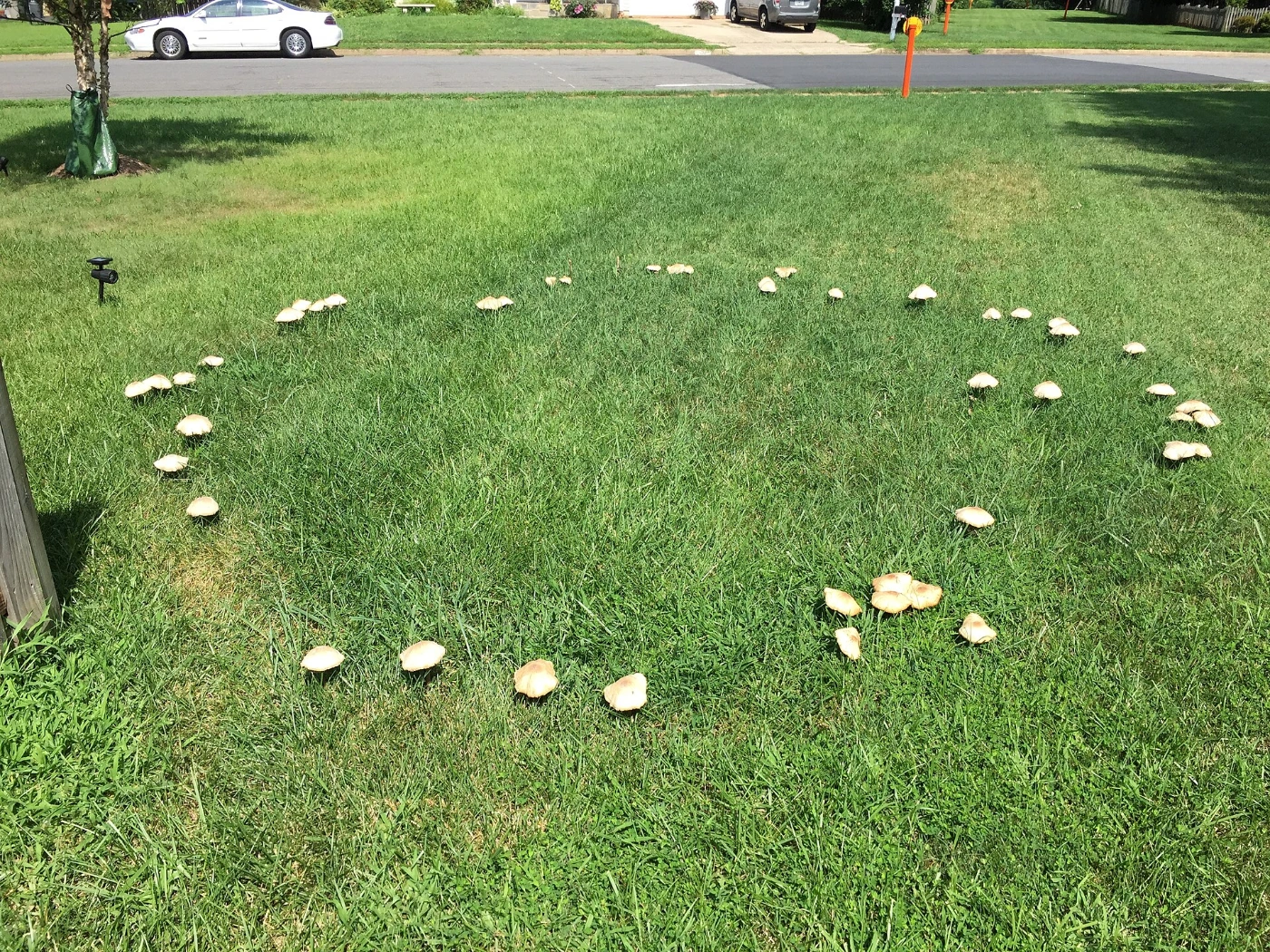
Mushrooms sometimes appear in striking circles or arcs across lawns, meadows, woodland floors, and other grassy places. These formations are called fairy rings, and they are caused by the way underground fungal mycelium expands through the soil.
The visible mushrooms form only along the active growing edge of the fungal colony. As the mycelium spreads outward year after year, the fruit bodies often appear in a wider and wider circle.
What Is a Fairy Ring?
A fairy ring is a circular or semicircular pattern produced by a fungus growing through soil or organic material. The ring may be marked by mushrooms, darker grass, dead grass, or a combination of these features.
The fungus itself is mostly hidden below the surface as mycelium. Mushrooms appear only when moisture, temperature, and other conditions are suitable for fruiting.
Why Does the Fungus Grow in a Circle?
A fungal colony often begins from a single point where a spore germinated or mycelium became established. From that point, the mycelium expands outward in many directions at roughly the same time.
If the soil and resources are reasonably uniform, this outward growth creates a circular pattern. The older central area becomes less active while the outer edge continues moving into fresh soil.
Why Mushrooms Appear Around the Edge
The outer edge of the colony is usually where the mycelium is most actively colonizing new material. This is also where conditions can be best for producing fruit bodies.
When the fungus fruits, mushrooms may therefore appear along that advancing edge. A complete circle forms when conditions are similar in all directions, while obstacles or uneven soil can break the ring into arcs.
The Hidden Mycelium Below the Ring
The mushrooms are only the reproductive structures of the fungus. Beneath them lies a much larger network of microscopic threads called hyphae, which together form the mycelium.
This underground network absorbs nutrients from soil, dead roots, thatch, leaf litter, or other organic material. The visible ring is therefore only a surface clue to the much larger fungal colony below.
How Fast Do Fairy Rings Expand?
Some fairy rings expand slowly over many years, while others can increase noticeably from one season to the next. Growth rate depends on the fungal species, soil, moisture, temperature, and availability of organic material.
A ring can gradually become several meters wide. Long-lived colonies may eventually become very large if nothing interrupts their expansion.
Why Some Fairy Rings Are Perfect Circles
A nearly perfect circle develops when the fungus grows at a similar speed in all directions. Flat ground with uniform soil and evenly distributed organic material creates the best conditions for this.
Natural habitats are rarely perfectly uniform, however. Roots, rocks, paths, buildings, dry patches, and competing fungi can distort the shape.
Why Fairy Rings Become Arcs
Many fairy rings appear as half-circles, curves, or broken lines rather than complete circles. Part of the original colony may have encountered unsuitable soil or an obstacle that stopped growth in one direction.
The remaining active edge continues expanding. Over time, only fragments of the original circle may remain visible.
Why Grass Can Be Darker Around Fairy Rings
Some fungi release nutrients as they break down organic matter. Nitrogen and other compounds can become more available to grass growing near the active edge of the colony.
This can produce a ring of darker, taller, or faster-growing grass. In some cases, the green ring is visible even when no mushrooms are present.
Why Grass Sometimes Dies Inside a Fairy Ring
Some fairy rings can also damage grass. Dense fungal growth may make the soil temporarily water-repellent or compete strongly for moisture.
This can produce yellow or dead patches, especially during dry weather. The same colony may create lush green grass along one edge and stressed grass nearby.
Three Common Fairy Ring Patterns
Fairy rings are often grouped by how they affect the surrounding vegetation. Some damage the grass, some stimulate growth, and others produce mushrooms without obvious effects on the lawn.
The exact appearance depends on the fungal species and local conditions. One ring may also change appearance from year to year depending on rainfall.
Type 1: Dead or Damaged Grass
The most noticeable rings can produce a band of dead or severely stressed grass. Dense fungal mycelium can interfere with water movement through the soil and make the grass more vulnerable to drought.
These rings are often considered a lawn problem. Mushrooms may appear along the same zone during wet periods.
Type 2: Dark Green Grass
Other rings mainly produce a band of unusually lush green grass. This happens when fungal decomposition releases nutrients into the soil.
The grass may grow faster and require more mowing than surrounding areas. Mushrooms can appear along the green band after rain.
Type 3: Mushrooms Without Obvious Grass Changes
Some fungi form clear rings of mushrooms while causing little visible change to the vegetation. The underground colony is still circular even though the grass appears normal.
These rings are especially common in meadows and woodland clearings. They can be easiest to notice only during the brief fruiting period.
Which Mushrooms Form Fairy Rings?
Many different mushroom species can produce rings. They include grassland species, woodland fungi, and mushrooms associated with buried organic material.
Common examples include Marasmius oreades, some Clitocybe and Infundibulicybe species, certain Agaricus, and several grassland fungi. The presence of a ring does not identify the species by itself.
Marasmius oreades — Fairy Ring Mushroom
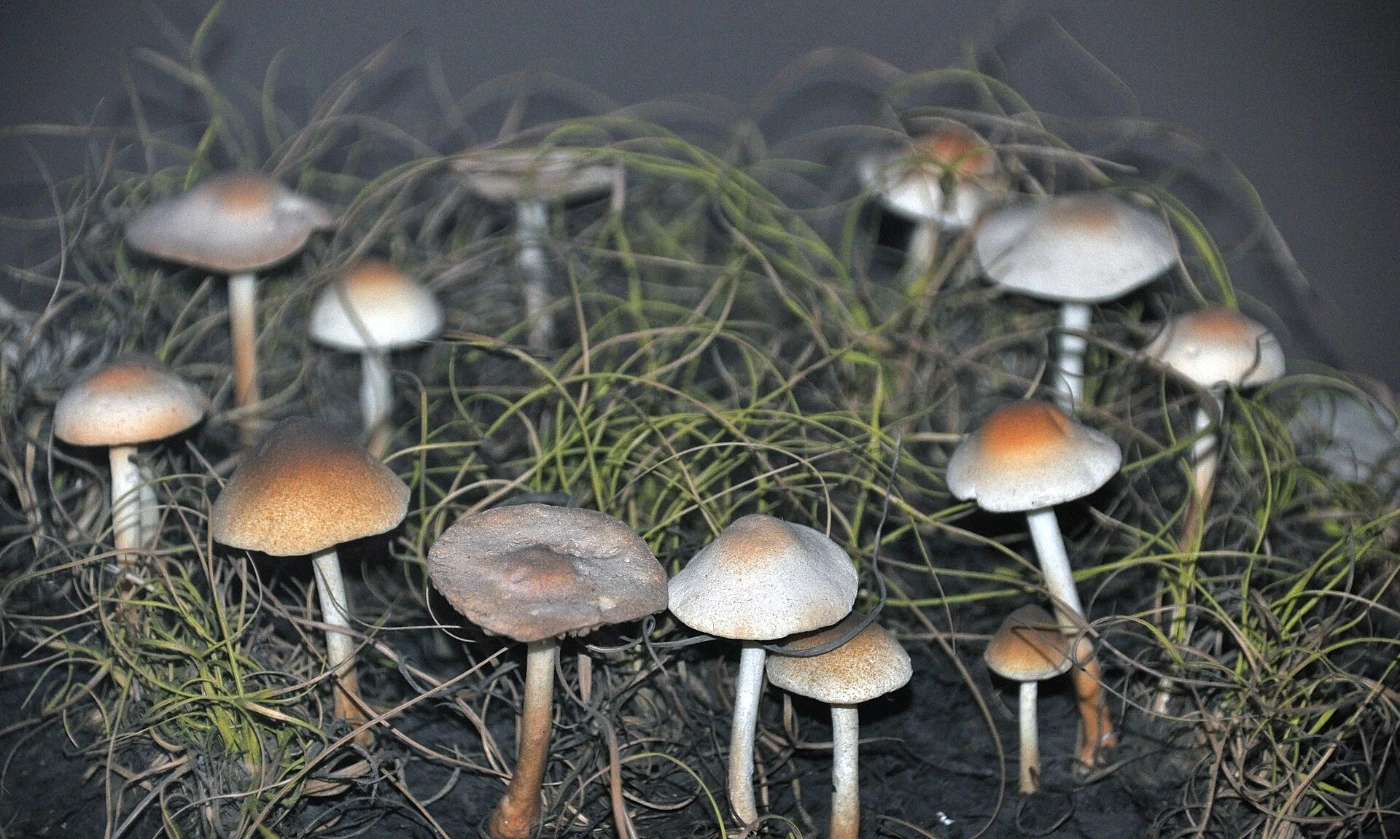
Marasmius oreades is one of the species most strongly associated with classic fairy rings in lawns and meadows. It produces small tan to buff caps on slender stems and often appears in arcs or full circles.
The species can form persistent colonies that return year after year. Its rings may become progressively larger as the mycelium continues moving outward.
Can Poisonous Mushrooms Grow in Fairy Rings?
Yes. A circular growth pattern says nothing about whether the mushroom is edible or poisonous.
Different species can form almost identical rings. Every mushroom still needs to be identified using its own cap, gills, stem, spore print, habitat, and other features.
Fairy Rings in Lawns
Lawns are ideal places to notice fairy rings because the grass creates a uniform background. The contrast makes darker grass, dead patches, and mushroom circles especially obvious.
The fungi often feed on thatch, old roots, buried wood, or other organic matter. Even a carefully maintained lawn can contain enough material to support a long-lived colony.
Fairy Rings in Meadows
Meadows and pastures can support very large fairy rings. Some may persist for many years and expand gradually across open grassland.
Because mowing and landscaping are limited, the circles can become more obvious than they are in heavily managed lawns. Several different fungal species may even form overlapping rings.
Fairy Rings in Woodland
Woodland rings are often less geometrically obvious because trees, roots, logs, and uneven ground interrupt the pattern. Mushrooms may appear in arcs around trees or along sections of an underground mycelial front.
Mycorrhizal fungi can also produce ring-like fruiting patterns around host trees. In these cases, the biology is different from a saprotrophic lawn fungus but the visible result can look similar.
Why Fairy Rings Appear After Rain
The underground fungus may be present all year without producing visible mushrooms. Rain raises soil moisture and humidity, creating better conditions for fruit body development.
This is why a ring can suddenly appear after several wet days. The circular colony was already there, but the mushrooms reveal its shape.
Why Fairy Rings Disappear Again
Mushrooms are temporary fruit bodies and may last only a few days. Once conditions become dry, hot, cold, or otherwise unfavorable, the fruiting bodies disappear.
The mycelium usually remains underground. The same ring may return after the next suitable period or during the following year.
Can a Fairy Ring Move?
A fairy ring does not move like an animal, but its active edge gradually shifts outward. The older center becomes less active while new mycelium colonizes fresh soil around the perimeter.
From year to year, this can make the ring seem to travel across a lawn. In reality, it is expanding rather than relocating.
Can Two Fairy Rings Meet?
Yes. Two expanding fungal colonies can eventually encounter each other.
Their interaction depends on the species and whether they can coexist. The rings may merge visually, distort one another, or stop expanding where competing mycelia meet.
How Old Can a Fairy Ring Be?
Some rings can persist for decades if the habitat remains suitable. Very large rings may be the result of many years of gradual outward expansion.
Age cannot be determined reliably from size alone because different fungi grow at different rates. Soil conditions and obstacles also affect expansion.
Do Fairy Rings Mean the Soil Is Unhealthy?
Not necessarily. Fairy rings are a natural consequence of fungal growth and decomposition.
In many habitats they simply indicate active fungal life in the soil. Lawn damage can occur in some cases, but the presence of mushrooms alone does not mean the soil is unhealthy.
Are Fairy Rings Good for the Ecosystem?
Fungi that form fairy rings help break down organic matter and recycle nutrients. This contributes to soil development and supports plant growth.
In grassland and woodland ecosystems, these fungi are part of normal nutrient cycling. The dramatic ring shape is simply a visible expression of that hidden process.
Can Fairy Rings Be Removed?
Removing the mushrooms does not remove the underground fungus. The mycelium may extend far beyond the visible fruit bodies and remain active in the soil.
In lawns, improving drainage, reducing excessive thatch, and maintaining consistent moisture can sometimes reduce visible symptoms. Complete elimination of an established fungal colony can be difficult and is often unnecessary unless severe turf damage occurs.
Should You Remove Fairy Ring Mushrooms?
If children or pets use the lawn, removing unknown mushrooms can reduce the chance of accidental ingestion. Wear ordinary gardening gloves if preferred and dispose of the fruit bodies where they cannot be eaten.
Removing them does not kill the fungus. New mushrooms may appear again whenever conditions become favorable.
Why Mowing Does Not Stop a Fairy Ring
Mowing removes only the visible mushrooms and grass above the soil. The fungal network remains underground.
A ring can therefore continue expanding even if every mushroom is cut down. The next fruiting period may reveal the same pattern again.
Can Fertilizer Hide a Fairy Ring?
Fertilizer can sometimes make surrounding grass darker and reduce the visual contrast of a green fairy ring. This changes the appearance rather than eliminating the fungus.
Overfertilization can create other lawn problems. It is better to manage the lawn according to normal turf needs rather than trying to “feed away” the fungus.
Why Fairy Rings Sometimes Form Around Trees
Some rings appear around trees because the fungus is associated with tree roots. Mycorrhizal fungi obtain sugars from the tree and provide water and mineral nutrients in return.
As roots and fungal mycelium extend outward, fruit bodies may form in an arc or ring around the host. These patterns can be quite different from classic decomposer fairy rings in lawns.
Are Mushrooms Inside the Ring Younger Than Those Outside?
Not necessarily. The ring represents the position of the active colony, not the age of individual mushrooms.
All fruit bodies in one flush may emerge at roughly the same time. The key age difference is in the underground fungal colony, with older growth closer to the original center and newer expansion near the outer edge.
Common Misconceptions
One common misconception is that mushrooms somehow arrange themselves into a circle after they emerge. The circular pattern already exists underground in the shape of the fungal colony.
Another misconception is that every fairy ring is produced by the same species. Many unrelated fungi can grow outward in a similar way and create the same visible pattern.
A third misconception is that the center of the ring is where the fungus lives. The most active growth is often near the outer edge, while the center may contain older or less active mycelium.
How to Photograph a Fairy Ring
Take a wide photograph from an elevated angle if possible so the full arc or circle is visible. A close-up photograph of only one mushroom loses the most interesting ecological feature.
Then photograph several individual mushrooms from above and below. The ring pattern can help document the colony, but species identification still requires normal mushroom features.
Can AI Identify Mushrooms From a Fairy Ring?
AI can use the ring as ecological context, but the pattern itself does not identify the mushroom. Many species are capable of forming fairy rings.
Clear photographs of the cap, gills or pores, stem, stem base, and habitat remain much more important. The ring should be treated as supporting information rather than a diagnostic feature.
Interesting Facts
The name “fairy ring” comes from European folklore, where mushroom circles were associated with fairies, elves, dancing spirits, and supernatural activity. Different cultures developed both lucky and dangerous interpretations of the same natural pattern.
The biological explanation is much simpler but still impressive. A tiny starting point can become a large circular fungal colony through years of outward growth.
Some rings become so large that their circular shape is difficult to recognize from ground level. Only part of the arc may be visible at any one time, especially in woodland or uneven terrain.
A fairy ring can also exist without producing mushrooms. Changes in grass color may reveal the hidden colony even when no fruit bodies are present.
Frequently Asked Questions
Why do mushrooms grow in a perfect circle?
The fungus often begins at one point and expands outward through the soil at a similar speed in every direction. Mushrooms then appear around the active outer edge when conditions are suitable.
Do fairy rings come back every year?
They can. The underground mycelium may survive for many years and fruit again whenever moisture and temperature conditions are favorable.
Are fairy ring mushrooms poisonous?
Some can be, while others are edible. The circular growth pattern does not provide any information about toxicity.
Why is the grass greener around a fairy ring?
Fungal decomposition can release nutrients, including nitrogen, into the soil. Grass along the active edge may therefore grow darker and faster.
Why does grass sometimes die in the ring?
Dense mycelium can reduce water penetration or compete for moisture. This effect becomes especially noticeable during dry weather.
Can a fairy ring appear without mushrooms?
Yes. A ring of darker or stressed grass can reveal the underground fungus even when no fruit bodies are produced.
Does removing the mushrooms remove the fairy ring?
No. The mycelium remains in the soil after the mushrooms are removed and may produce another flush later.
How long can a fairy ring live?
Some colonies can persist for decades. Their exact lifespan depends on species, habitat, available nutrients, and environmental disturbance.
Final Notes
Fairy rings form because fungal mycelium often expands outward from an original starting point. As the colony reaches fresh soil, the active outer edge can produce mushrooms in a circular or arc-shaped pattern.
The mushrooms themselves are temporary, while the underground fungal network can persist for many years. Rain simply makes the hidden pattern visible by triggering fruiting.
The simplest explanation is: mycelium starts in one place → spreads outward → the center becomes older → mushrooms appear along the active edge → the ring gradually gets larger.
Upload a photo and get possible matches in seconds.