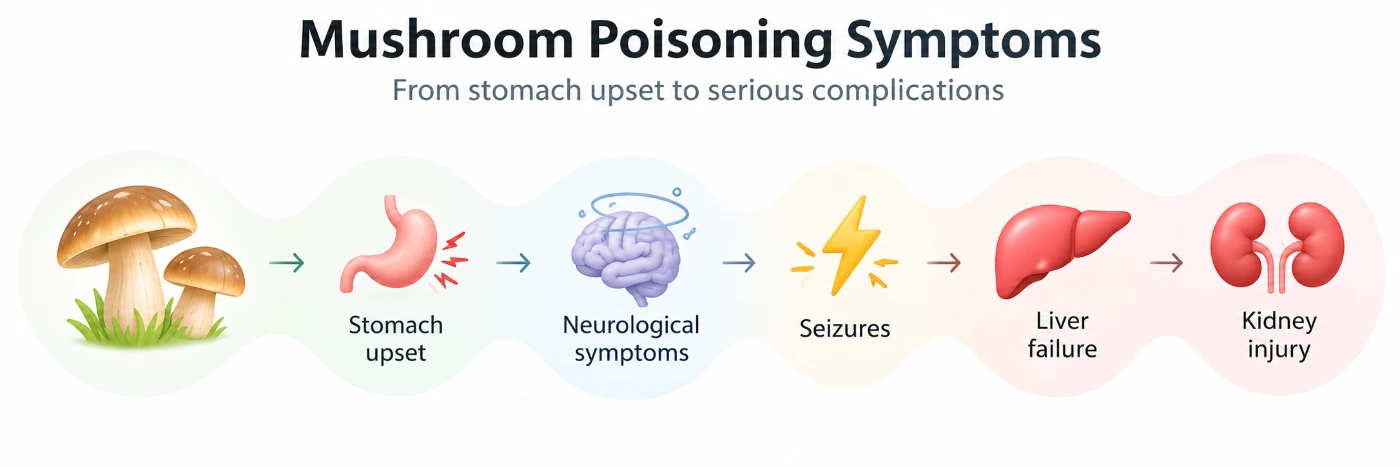
Mushroom poisoning can cause anything from short-lived stomach upset to severe liver, kidney, neurological, or blood disorders. The symptoms depend on the mushroom species, the toxin involved, the amount eaten, and the person’s health.
One of the most important clues is how long symptoms take to appear. Illness beginning within the first few hours is often caused by gastrointestinal or neurological toxins, while symptoms delayed for more than about six hours can indicate a potentially life-threatening poisoning involving the liver or kidneys.
⚠️ Important: If someone becomes ill after eating a wild mushroom, contact emergency medical services or a poison center promptly. Do not wait for the mushroom to be identified before seeking help, especially when symptoms are severe or begin more than six hours after ingestion.
Quick Guide to Mushroom Poisoning Symptoms
| Symptoms | Possible syndrome or toxin |
|---|---|
| Nausea, vomiting, diarrhea | Gastrointestinal irritants |
| Severe delayed diarrhea | Amatoxins |
| Abdominal pain | Many mushroom toxins |
| Sweating, salivation, tearing | Muscarine |
| Small pupils | Muscarine |
| Confusion, agitation | Muscimol / ibotenic acid |
| Hallucinations | Psilocybin / psilocin |
| Seizures | Gyromitrin or severe neurological poisoning |
| Jaundice | Liver injury, especially amatoxins |
| Reduced urination | Kidney injury |
| Muscle pain and weakness | Rhabdomyolysis syndrome |
| Dizziness or altered consciousness | Neurological poisoning |
The same symptom can occur with several different mushroom toxins. Timing, severity, and the combination of symptoms are therefore more useful than any single symptom alone.
When Do Mushroom Poisoning Symptoms Begin?
Symptoms can begin within minutes or may be delayed for many hours or even days. The delay between eating the mushroom and becoming ill is called the latency period.
Short latency is often associated with gastrointestinal irritation, muscarinic poisoning, hallucinogenic mushrooms, or Amanita muscaria-type syndromes. Longer latency is more concerning because toxins such as amatoxins and orellanine may damage internal organs before obvious symptoms appear.
Symptoms Within 30 Minutes to 3 Hours
Early symptoms commonly include nausea, vomiting, abdominal cramps, and diarrhea. Some mushrooms cause mainly gastrointestinal irritation and symptoms may improve within a day.
Other early-onset syndromes can affect the nervous system. Sweating, excessive saliva, small pupils, confusion, hallucinations, agitation, or unusual drowsiness may appear depending on the toxin involved.
Early symptoms do not automatically mean the poisoning is harmless. Severe dehydration, neurological symptoms, breathing problems, or cardiovascular effects can still require urgent treatment.
Symptoms Beginning After 6 Hours
Symptoms beginning more than about six hours after eating wild mushrooms should be treated as especially concerning. Delayed poisoning is associated with several potentially life-threatening syndromes, including amatoxin poisoning, some Gyromitra poisonings, and delayed kidney injury from certain mushrooms.
The first symptoms may still look like ordinary food poisoning. Severe vomiting, watery diarrhea, and abdominal pain can therefore be misleading when they begin long after the mushroom meal.
Gastrointestinal Symptoms
Nausea, vomiting, abdominal pain, and diarrhea are the most common symptoms of mushroom poisoning. Many different mushroom species can produce this pattern.
Some gastrointestinal toxins cause illness within one to three hours and resolve with supportive care. Chlorophyllum molybdites, for example, is well known for causing severe vomiting and diarrhea without the delayed liver failure characteristic of amatoxins.
Severe diarrhea can cause dehydration, electrolyte abnormalities, dizziness, weakness, and low blood pressure. Children, older adults, and people with underlying medical conditions may deteriorate more quickly.
Amatoxin Poisoning
Amatoxins occur in mushrooms such as Amanita phalloides, destroying angels, and some small Galerina and Lepiota. This is one of the most dangerous mushroom poisoning syndromes.
The first phase is usually silent. A person may feel completely normal for six to twelve hours or longer after eating the mushroom.
Severe vomiting, abdominal pain, and profuse watery diarrhea then develop. The resulting dehydration can be substantial.
After this gastrointestinal phase, symptoms may temporarily improve. This apparent recovery is dangerous because liver and kidney damage can continue even while the person feels better.
Over the following days, liver injury can produce jaundice, abnormal bleeding, confusion, low blood sugar, and eventually liver failure. Kidney failure can also occur, and severe cases may require liver transplantation.
Why Feeling Better Can Be Dangerous
Temporary improvement after severe delayed gastrointestinal symptoms does not always mean the poisoning has passed. In amatoxin poisoning, gastrointestinal symptoms can subside while laboratory evidence of liver injury worsens.
This deceptive recovery phase is one of the reasons delayed mushroom poisoning requires medical evaluation. A patient who feels better may still be entering the most dangerous stage of poisoning.
Liver Failure Symptoms
Severe liver injury can produce yellowing of the skin or eyes, unusual fatigue, confusion, bleeding problems, and low blood sugar. Blood tests may become abnormal before some of these outward signs appear.
Advanced liver failure can cause encephalopathy, meaning the brain is affected by the failing liver. This can lead to confusion, drowsiness, altered behavior, and coma.
Kidney Poisoning Symptoms
Some mushrooms cause kidney injury rather than primarily attacking the liver. Certain Cortinarius species containing orellanine are particularly important because symptoms can be delayed for several days.
Early symptoms may include thirst, headache, nausea, or abdominal discomfort. Later, kidney damage can cause flank pain and reduced urine output.
The delay can be very long compared with ordinary food poisoning. Kidney failure may develop days after the mushroom meal, which can make the connection difficult to recognize.
Muscarine Poisoning
Some Inocybe and Clitocybe-type mushrooms contain muscarine. Symptoms typically begin relatively quickly.
Muscarine stimulates the parasympathetic nervous system and can cause heavy sweating, excessive saliva, watery eyes, abdominal cramps, vomiting, diarrhea, small pupils, wheezing, and a slow heart rate.
Severe cases can affect breathing because of excessive airway secretions and bronchospasm. Medical treatment can be very effective when the syndrome is recognized promptly.
Amanita muscaria-Type Symptoms
Amanita muscaria and related mushrooms contain ibotenic acid and muscimol. These toxins affect the central nervous system rather than causing amatoxin-type liver failure.
Symptoms can include nausea, dizziness, confusion, unusual behavior, agitation, poor coordination, drowsiness, and altered perception. Some people experience alternating periods of excitement and profound sleepiness.
Severe poisoning can include seizures or reduced consciousness. The clinical pattern can vary considerably from person to person.
Hallucinations and Psilocybin
Psilocybin-containing mushrooms can cause altered perception, visual changes, euphoria, anxiety, confusion, and hallucinations. Symptoms often begin relatively quickly after ingestion.
Physical effects can include increased heart rate, nausea, dizziness, and changes in blood pressure. Psychological effects vary according to dose, individual sensitivity, and environment.
Hallucinations after unknown wild mushrooms should not automatically be attributed to psilocybin. Other toxic mushrooms can also cause confusion or neurological symptoms.
Gyromitra Poisoning
Some false morels contain gyromitrin-related compounds that can produce gastrointestinal and neurological toxicity. Symptoms may include nausea, vomiting, abdominal pain, dizziness, headache, and seizures.
Severe cases can also involve liver injury and low blood sugar. Symptom onset may be delayed compared with ordinary gastrointestinal mushroom poisoning.
Cooking does not provide a reliable universal safety method for wild Gyromitra. Species and toxin concentrations vary substantially by region.
Rhabdomyolysis
Some mushroom poisonings can cause rhabdomyolysis, a breakdown of muscle tissue. Symptoms can include severe muscle pain, weakness, dark urine, and exhaustion.
The syndrome has been associated with repeated or heavy consumption of certain mushrooms. Muscle breakdown can lead to kidney injury and can become life-threatening.
Paxillus Syndrome
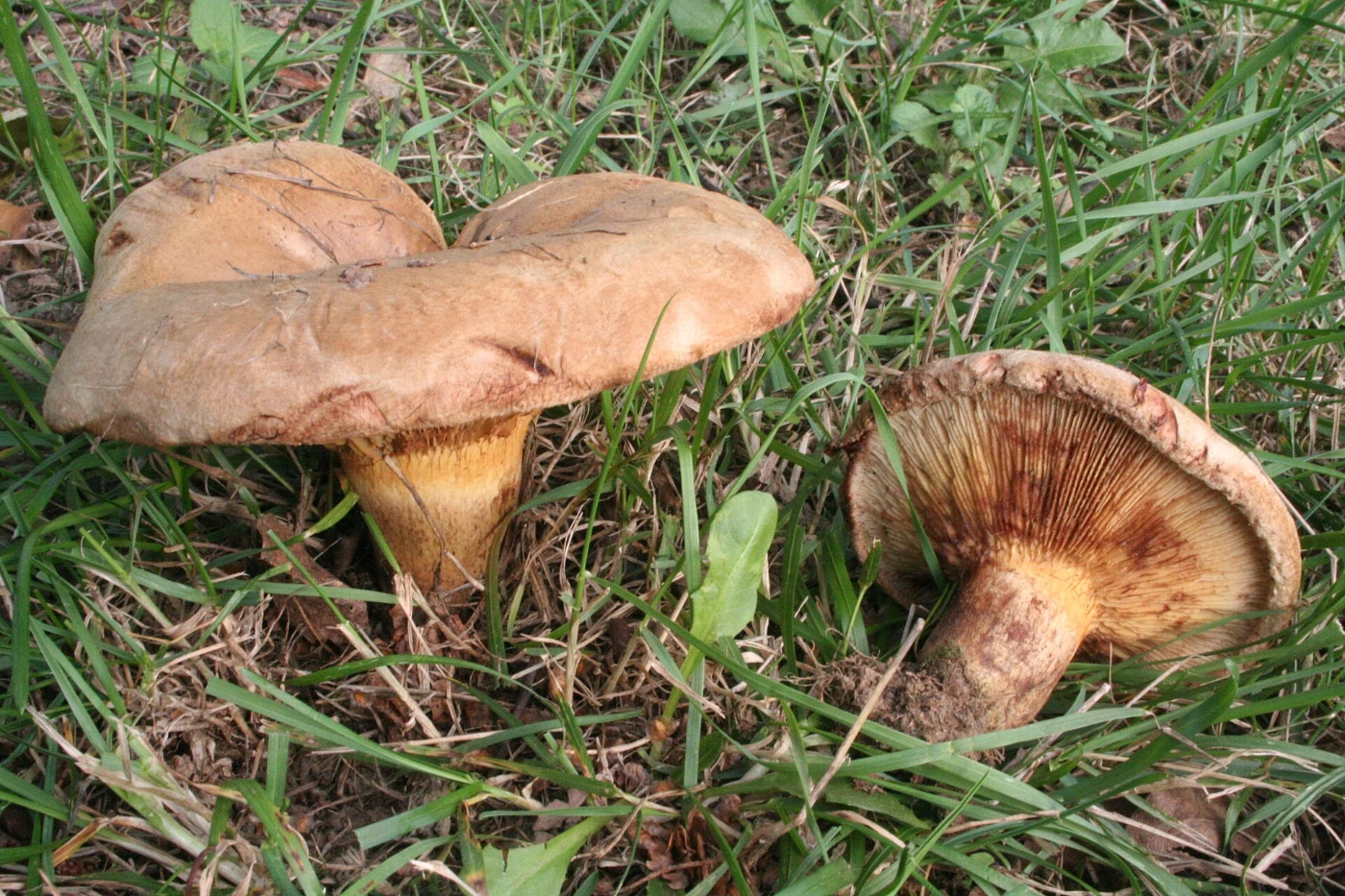
Paxillus involutus can cause a distinctive immune-mediated hemolytic reaction. This syndrome is different from ordinary gastrointestinal poisoning.
A person may have eaten the mushroom previously without obvious problems and still develop a severe reaction during a later meal. Red blood cells can be destroyed rapidly, potentially causing anemia, kidney injury, and shock.
This is why historical claims that Brown Roll-Rim is edible are unsafe. Previous tolerance does not establish future safety.
Neurological Symptoms
Mushroom toxins can affect the brain and peripheral nervous system in several different ways. Symptoms may include confusion, hallucinations, poor coordination, dizziness, seizures, numbness, burning sensations, or altered consciousness.
Some neurological syndromes begin quickly, while others can be delayed. The type of symptom and its timing help clinicians narrow the possible toxin group.
Can Mushroom Poisoning Cause Fever?
Fever is not one of the most characteristic signs of mushroom toxin exposure. Gastrointestinal symptoms without fever can still represent serious poisoning.
However, illness after eating mushrooms can also be caused by bacterial contamination or another unrelated condition. A medical professional should evaluate the full clinical picture rather than relying on one symptom.
Can Symptoms Begin the Next Day?
Yes. Some of the most dangerous mushroom poisonings do not produce obvious symptoms until the next day.
Amatoxin illness commonly begins after six to twelve hours, and certain kidney-damaging syndromes can be delayed for several days.
A long symptom-free period should therefore never be interpreted as proof that an unidentified mushroom was safe.
Does the Amount Eaten Matter?
Dose matters in many mushroom poisonings. Larger amounts can produce more severe illness, although individual sensitivity also varies.
For amatoxin poisoning, greater exposure is associated with greater potential for liver damage. Even a relatively small amount of a deadly species can still be medically significant.
Can Several People Have Different Symptoms?
Yes. People sharing the same mushroom meal may experience different symptom severity.
Differences in portion size, body weight, age, health, alcohol consumption, medications, and individual sensitivity can all affect the clinical picture. One person feeling well does not prove that the mushrooms were safe.
What to Do if Mushroom Poisoning Is Suspected
Seek medical or poison-center advice promptly rather than trying to identify the toxin at home. Severe vomiting, diarrhea, confusion, seizures, breathing difficulty, jaundice, or symptoms beginning more than six hours after a wild mushroom meal require particular attention.
Keep any leftover mushrooms, cooked food, photographs, and collection information. These can help a poison center, doctor, or mycologist identify the likely mushroom.
Do not intentionally induce vomiting unless a medical professional specifically instructs you to do so. Treatment depends on the suspected toxin and the patient’s condition.
Why Mushroom Identification Still Matters
Doctors often treat mushroom poisoning according to the symptoms and timing because the exact species may not be immediately known. Nevertheless, identifying the mushroom can help predict whether liver, kidney, neurological, or other complications are likely.
A photograph should include the cap, underside, full stem, stem base, and habitat. Remaining uncooked specimens are even more useful because important structures may no longer be visible after cooking.
Common Mistakes
One dangerous mistake is assuming that symptoms beginning quickly are always harmless. Early gastrointestinal or neurological poisoning can still become severe.
Another mistake is waiting for symptoms before seeking advice after a known ingestion of a deadly mushroom. Amatoxin poisoning has a long silent period precisely when early medical assessment can be important.
A third mistake is assuming that improvement after vomiting and diarrhea means recovery. Temporary improvement is characteristic of the dangerous course of amatoxin poisoning.
Frequently Asked Questions
What are the first symptoms of mushroom poisoning?
Nausea, vomiting, abdominal pain, and diarrhea are among the most common early symptoms. Neurological symptoms such as dizziness, confusion, sweating, or hallucinations can occur with particular toxins.
How quickly does mushroom poisoning start?
Some symptoms begin within 30 minutes, while others take six to twelve hours or even several days. Delayed symptoms are particularly concerning for organ-damaging toxins.
Why are symptoms after six hours more dangerous?
A long latency is associated with several serious syndromes, including amatoxin poisoning and delayed kidney injury. It is an important warning sign, although not an absolute rule.
Can Death Cap poisoning start the next day?
Yes. Amatoxin symptoms commonly begin six to twelve hours after ingestion and can sometimes appear even later.
Can mushroom poisoning cause liver failure?
Yes. Amatoxins can cause severe and potentially fatal liver injury.
Can mushroom poisoning cause kidney failure?
Yes. Orellanine-containing Cortinarius and several other toxin groups can cause delayed kidney injury.
Can you feel better and still be poisoned?
Yes. In amatoxin poisoning, gastrointestinal symptoms can improve temporarily while liver injury continues.
Should you wait to identify the mushroom before seeking treatment?
No. Medical assessment should not be delayed while trying to determine the exact species.
Final Notes
Mushroom poisoning symptoms range from ordinary-looking stomach upset to delayed liver failure, kidney injury, neurological symptoms, seizures, and other serious syndromes.
The most useful early clue is time to symptom onset. Symptoms beginning within a few hours are often caused by gastrointestinal or neurological toxins, while symptoms beginning more than six hours later deserve particular concern for dangerous organ-damaging poisonings.
The practical safety rule is: wild mushroom eaten + new symptoms = seek professional advice promptly. Severe symptoms, delayed onset, jaundice, reduced urination, seizures, confusion, or temporary improvement after intense gastrointestinal illness should never be ignored.
Upload a photo and get possible matches in seconds.