November can be one of the most exciting months for mushroom foraging in California, but only when autumn rain arrives at the right time. After the long dry summer, the first soaking storms can transform coastal pine forests, oak woodland, redwood country, grassy areas, and old logs within a matter of weeks.
Northern California and the coast generally offer the widest range of November mushrooms, while conditions in the Sierra Nevada depend strongly on elevation and early snow. Southern California can also produce mushrooms after substantial rain, but fruiting is usually more localized and less predictable.
⚠️ Important: Never decide that a wild mushroom is safe to eat from season, location, or a photograph alone. California contains deadly species, including Death Cap (Amanita phalloides), which commonly fruits from fall into winter under coast live oak and other hardwoods.
Quick Guide
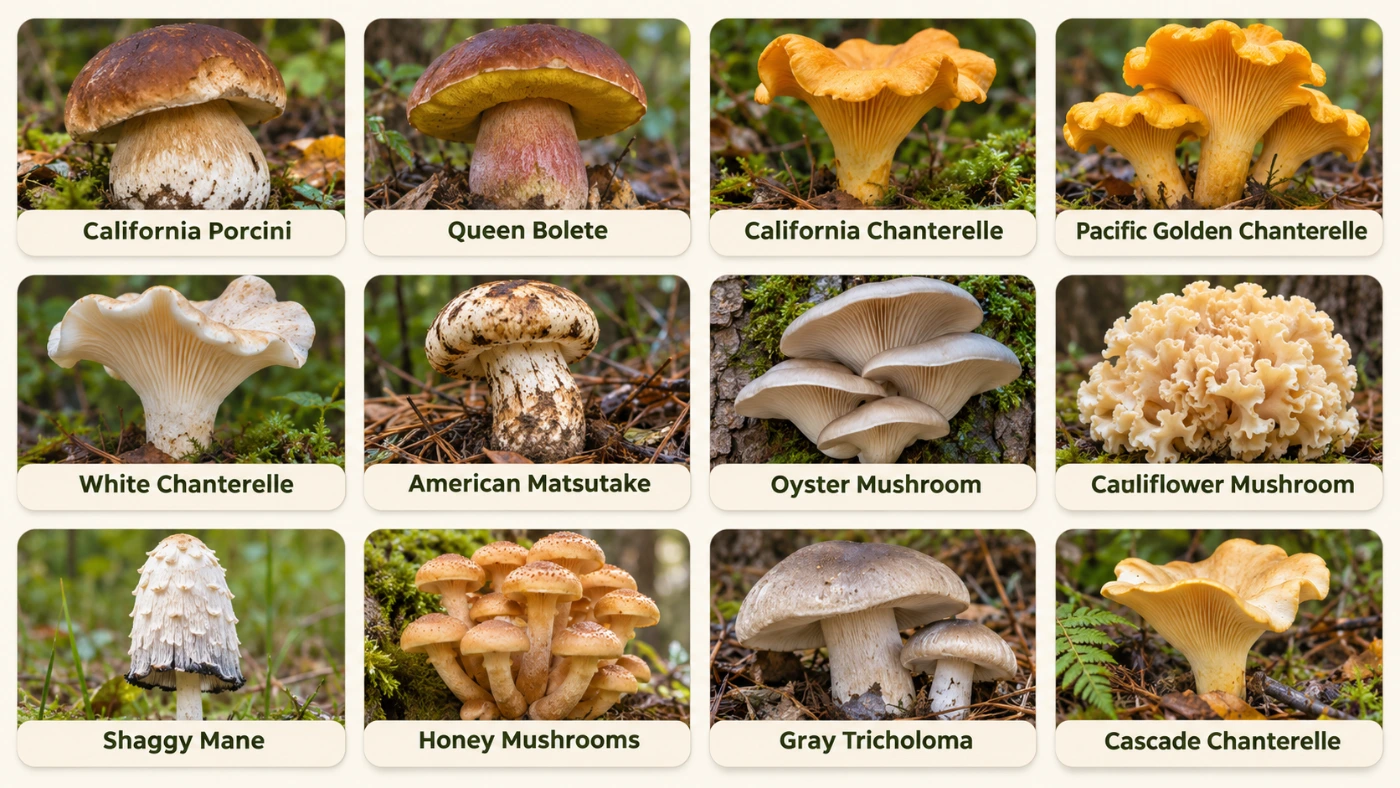
| Mushroom | Scientific name | Best California habitat | November potential |
|---|---|---|---|
| California Porcini | Boletus edulis var. grandedulis | Bishop and Monterey pine | Excellent after autumn rain |
| Queen Bolete | Boletus regineus | Mixed hardwood/conifer forest | Good after fall rain |
| California Chanterelle | Cantharellus californicus | Coast live oak | Excellent |
| Pacific Golden Chanterelle | Cantharellus formosus | Northern coastal conifer forest | Excellent |
| White Chanterelle | Cantharellus subalbidus | Mixed conifer/hardwood forest | Good |
| Matsutake | Tricholoma murrillianum | Pine, tanoak, madrone | Good late in month |
| Oyster Mushroom | Pleurotus ostreatus | Hardwood logs and stumps | Excellent |
| Cauliflower Mushroom | Sparassis radicata | Base of conifers | Good |
| Shaggy Mane | Coprinus comatus | Lawns and disturbed ground | Excellent after rain |
| Honey Mushrooms | Armillaria spp. | Trees, roots, stumps | Common |
| Gray Tricholoma | Tricholoma portentosum | Northern coastal conifer forest | Good late season |
| Cascade Chanterelle | Cantharellus cascadensis | Mendocino north, conifer forest | Regional |
Why November Can Be So Good in California
California has a Mediterranean climate across much of its coastal region, with dry summers followed by wetter winters. In central coastal California, most rainfall falls between roughly November and April, so November can represent the beginning of a completely new biological season rather than the end of autumn mushrooming.
The amount of rain matters more than the date on the calendar. Point Reyes National Seashore notes that mushroom activity becomes especially noticeable about two weeks after the first soaking fall rain and can continue through winter and spring.
1. Boletus edulis var. grandedulis — California Porcini
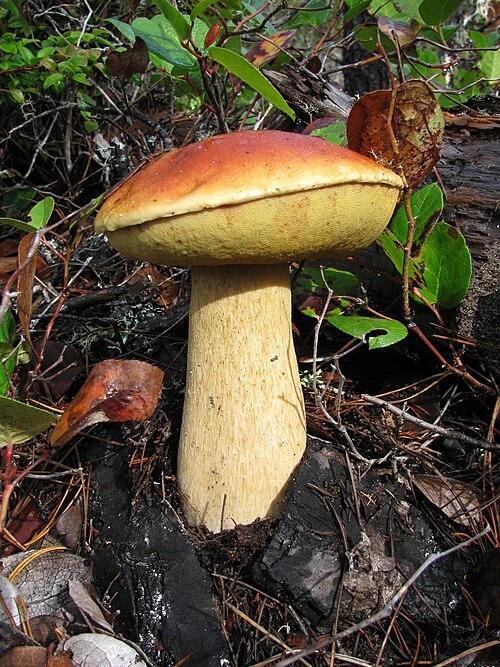
Porcini are among the most desirable mushrooms to look for after California’s first substantial autumn storms. California populations associated with the Boletus edulis group fruit particularly strongly after soaking autumn rains.
The mushroom has a thick white to pale brown stem, a brown cap, and pores rather than gills. Young pores are pale and gradually become yellowish to olive as the mushroom matures.
Where to Look
California porcini are especially associated with Bishop pine and Monterey pine. Coastal pine forests can therefore become very productive once moisture penetrates deeply enough into the soil.
November can be excellent when autumn rain arrives early. In a dry year, however, the same locations may remain nearly empty until December.
2. Boletus regineus — Queen Bolete
Queen Bolete is another excellent California bolete and a close relative of porcini. It has a brown to chestnut cap, firm white flesh, pale pores when young, and a reticulated upper stem.
The species favors mixed hardwood and conifer forests rather than the stronger pine association typical of California porcini. Significant fruiting occurs shortly after fall rains.
How It Differs From Porcini
Young Queen Boletes can have a whitish bloom over the cap and often grow in more mixed forest habitat. The stem tends to become more evenly cylindrical than the very swollen stems frequently seen in young porcini.
Both are desirable edible boletes when correctly identified. California also contains bitter and otherwise unsuitable boletes, so a brown cap and pores alone are not enough.
3. Cantharellus californicus — California Chanterelle
The California Chanterelle is one of the signature mushrooms of the central California coast. It is large, yellow to golden, often irregularly shaped, and grows particularly with coast live oak.
Instead of true blade-like gills, the underside has blunt, forked ridges that run down the stem. The species fruits from fall into early spring, making November one of its core seasonal months.
Where to Look
Coast live oak woodland is the classic habitat, especially around the San Francisco Bay Area and other coastal regions. Tanbark oak and California bay can also occur in productive habitat.
These chanterelles can grow unusually large. Mature fruit bodies may be partly hidden beneath leaf litter, so the exposed yellow edge may be the first thing visible.
4. Cantharellus formosus — Pacific Golden Chanterelle
In far northern California, particularly toward the Oregon border, Pacific Golden Chanterelle becomes increasingly important. It grows with conifers such as Douglas fir, Sitka spruce, and western hemlock.
Its documented fruiting period extends from September through November. Coastal northern California lies at the southern part of its major Pacific Northwest distribution.
Where to Look
Moist conifer forest from northern California northward is the main habitat. November can remain highly productive where repeated rains keep the forest floor damp.
Do not automatically call California chanterelles Cantharellus cibarius. The classic European species does not represent the main western North American chanterelles, and California has several distinct species.
5. Cantharellus subalbidus — White Chanterelle
White Chanterelle looks like a pale cream or ivory relative of the familiar golden chanterelles. It develops blunt ridges underneath rather than true gills and can discolor yellowish to brownish when bruised.
The species occurs in mixed hardwood and conifer forest with trees including pine, Douglas fir, and madrone. Its season runs from late fall into mid-winter, so November is a logical time to begin looking for it.
Identification
The pale coloration makes it superficially resemble other large white woodland mushrooms. The blunt decurrent ridges are therefore particularly important.
Matsutake can also be pale, but it has true gills, a veil and ring structure, and a completely different spicy odor. This is a useful comparison because both can occur during the same part of the season.
6. Tricholoma murrillianum — American Matsutake
California’s western matsutake is Tricholoma murrillianum, not the eastern North American T. magnivelare. It is a large, firm, pale mushroom with a thick cottony ring and a powerful aromatic smell.
The species grows in soil and duff under pine, tanoak, and madrone. Its season extends from late fall into mid-winter, making late November especially relevant after good rainfall.
What to Look For
Young matsutake are often partly buried and extremely firm. The cap begins pale and can develop yellow, orange, or brown stains as it ages.
The characteristic spicy fragrance is an important clue, but smell alone is not identification. White-gilled mushrooms with rings include dangerous species, so complete structural identification is essential.
7. Pleurotus ostreatus — Oyster Mushroom
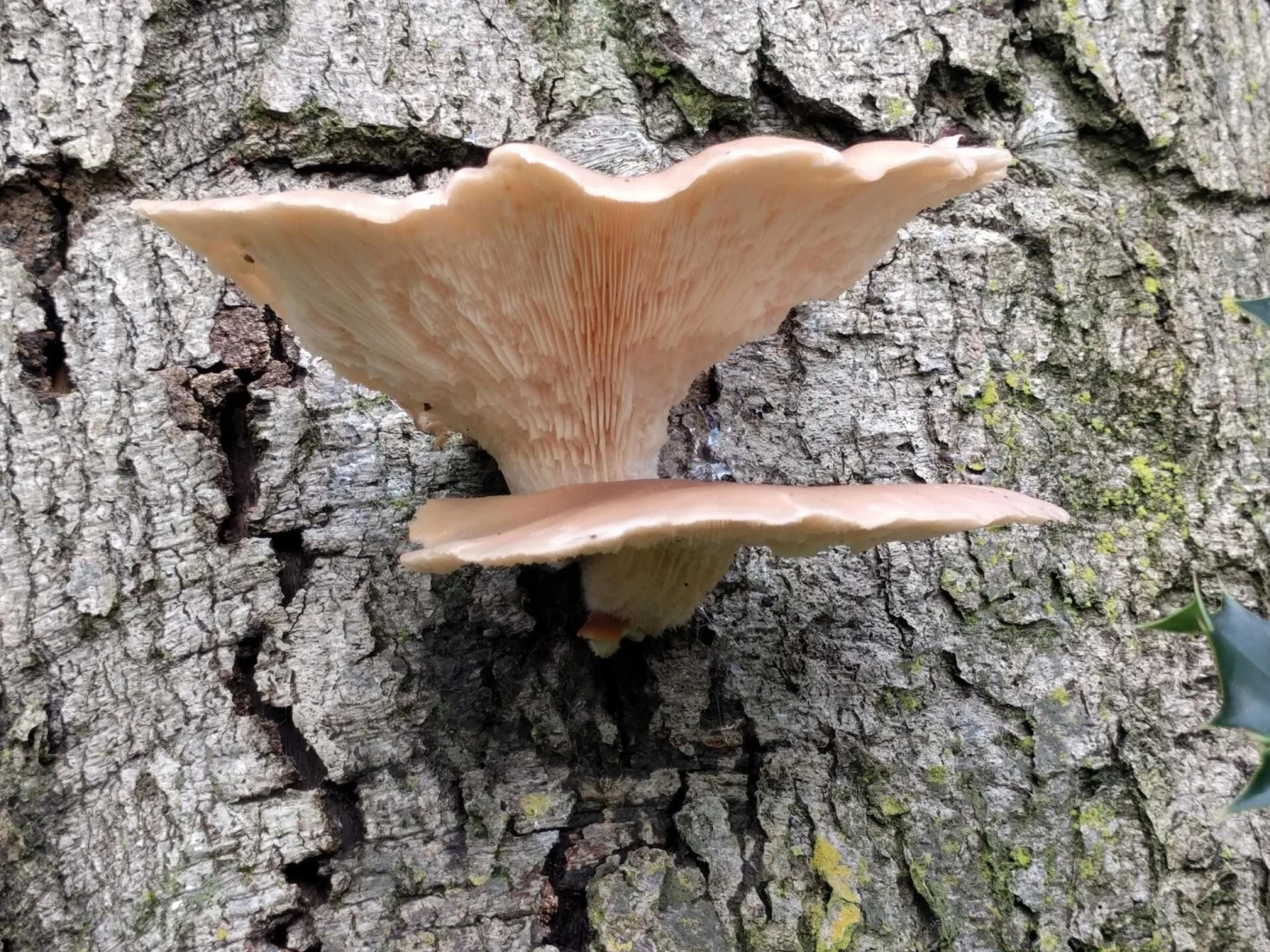
Oyster Mushrooms are a dependable cool-season target because they grow from wood rather than directly from the forest floor. They form overlapping gray, brownish, or pale shelves with white gills running down toward a short lateral stem.
In California, Pleurotus ostreatus fruits from early fall into mid-winter on hardwood stumps and logs. It may also appear sporadically along the coast during other seasons when fog provides enough moisture.
Where to Look
Fallen hardwoods and standing dead trees are worth checking after rain. A single productive trunk can produce a substantial cluster.
Fresh Oyster Mushrooms should be firm and relatively clean. Old clusters become yellowish, tough, insect-damaged, or waterlogged and are better left behind.
8. Sparassis radicata — Western Cauliflower Mushroom
Western Cauliflower Mushroom is one of California’s most spectacular late-season fungi. A large fruit body resembles a cream or pale yellow mass of wavy ribbons and can become enormous.
It grows at the base of conifers, particularly Bishop and Monterey pine, and fruits from late fall into mid-winter. This makes November an important beginning to its season.
California Taxonomy Matters
Western collectors should use the name Sparassis radicata. The European Sparassis crispa and eastern North American Sparassis americana are different species.
Cleaning is the main practical challenge because needles and soil become trapped between the folds. Young pale specimens are generally much more desirable than older fruit bodies with brown edges.
9. Coprinus comatus — Shaggy Mane
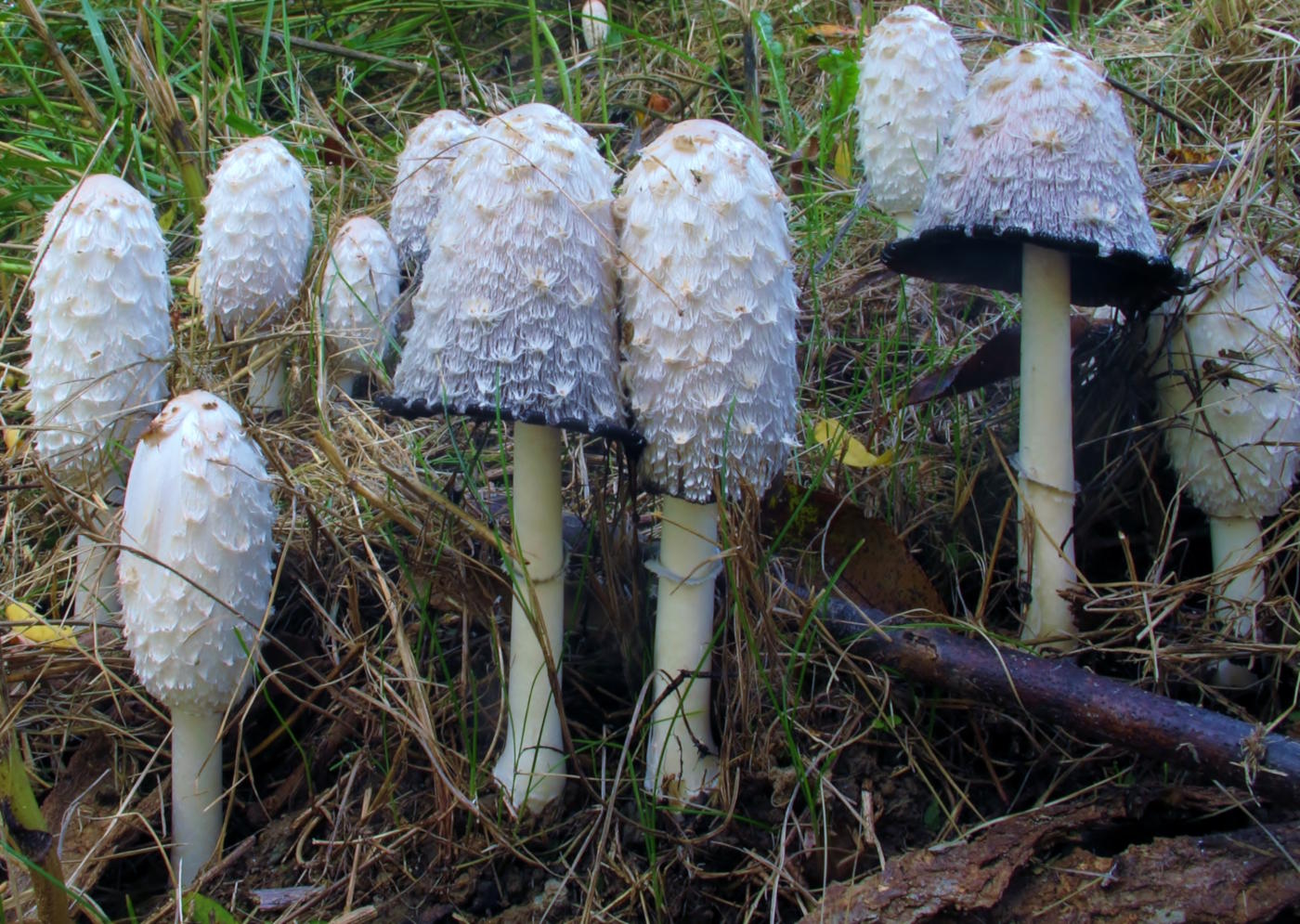
Not every November mushroom requires a forest trip. Shaggy Manes often appear in lawns, parks, roadside verges, playing fields, and other disturbed grassy ground after autumn rain.
They have tall white shaggy caps that eventually turn pink, then black, and dissolve into an inky liquid. California records indicate that they can occur whenever moisture is available but are especially abundant after fall rains.
Collect Them Young
Shaggy Manes change extremely quickly after picking. The best specimens are young and white before the gills begin blackening.
They should be processed soon after collection. A basket of perfect young mushrooms can begin turning into black liquid surprisingly quickly.
10. Armillaria Species — Honey Mushrooms
Honey Mushrooms can appear in substantial clusters around tree trunks, roots, old stumps, and buried wood after autumn rain. California has multiple Armillaria taxa, so exact identification should not rely on the common name alone.
Typical fruit bodies have honey-brown caps, pale gills, and often a stem ring. Large colonies may reveal that the fungus is occupying an extensive root system beneath the soil.
Edibility Requires More Care
Honey Mushrooms have a long history of culinary use, but some people develop gastrointestinal symptoms. Thorough cooking and conservative identification are especially important, and wild Armillaria is not an ideal beginner mushroom.
The cluster should also be distinguished from other wood-growing mushrooms. Sulphur Tuft, Pholiota, and several other genera can grow in superficially similar groups.
11. Tricholoma portentosum — Late-Season Gray Tricholoma
This gray woodland mushroom occurs mainly in northern California, particularly coastal conifer forests and some Sierra foothill habitats. Its gray to gray-brown cap has dark radial fibers, while the gills and stem can develop yellow tones.
The species fruits from late fall into mid-winter and is uncommon south of Humboldt County. November therefore represents the beginning of its most relevant season in California.
Important Look-Alike
The poisonous Tricholoma pardinum is an important comparison. It has a dry cap covered with darker scales rather than the characteristic streaked surface of T. portentosum.
This is not a species I would recommend as a first foraging target. Tricholoma identification can be subtle even when the mushroom is considered edible.
12. Cantharellus cascadensis — Cascade Chanterelle
Cascade Chanterelle is another western North American chanterelle that occurs in California. It grows particularly with Douglas fir and western hemlock and is reported from Mendocino County northward as well as parts of the Sierra Nevada.
The bright yellow cap and pale underside help distinguish it from some related species. As with other chanterelles, the underside consists of ridges rather than thin true gills.
Why It Matters
California chanterelle identification is regional. Depending on location and trees, a yellow chanterelle may be C. californicus, C. formosus, C. cascadensis, or another western species.
This is precisely why a generic label such as “Cantharellus cibarius” is often inappropriate in California. Tree association and geography matter along with appearance.
Best California Regions in November
The North Coast and Mendocino region are among the most promising November areas because autumn rainfall arrives relatively early and extensive conifer and mixed forests provide excellent habitat. The Mycological Society of San Francisco even holds its long-running Mendocino Woodlands foray in November, reflecting how important this period is for the north-coast season.
The San Francisco Bay Area and nearby coastal counties can become productive after the first soaking rains, with porcini under pines and California Chanterelles around coast live oak among the major targets. November productivity is highly variable between years because an early rainy season can start the action quickly, while a dry autumn may postpone the main flush.
The Sierra Nevada follows a different pattern because elevation quickly changes temperature and precipitation. November is transitional, and higher elevations can already receive substantial snow while lower foothills remain suitable for fall fungi.
How Long After Rain Should You Look?
A tiny shower is usually less important than a soaking storm that wets the duff and soil deeply. At Point Reyes, the National Park Service describes the best mushroom period as beginning around two weeks after the first soaking fall rain.
Different species respond at different speeds, so a single trip can miss the main flush. Revisiting promising habitat several days later can produce completely different results.
California Chanterelle Habitat: Oak vs Conifers
Tree identification is particularly valuable in California. Cantharellus californicus is strongly associated with coast live oak, while several northern chanterelles are more strongly linked to conifers.
This is one reason habitat photographs are useful when identifying a harvest. A picture of the mushroom alone removes ecological information that can separate otherwise similar yellow chanterelles.
Where Porcini Are Most Promising
Coastal pine habitat deserves particular attention after the first substantial rains. California Boletus edulis is strongly associated with Bishop pine and Monterey pine, making those trees useful indicators when scouting new areas.
Porcini can grow rapidly and become insect-infested equally quickly. During a strong flush, revisiting a known area after a short interval can be worthwhile.
Mushrooms Better Left to Experts
California produces several mushrooms that are traditionally considered edible but have dangerous look-alikes. Coccoli (Amanita calyptroderma) is an important example: it fruits from late fall into early winter, but MykoWeb specifically warns that it can be confused with Death Cap and should only be considered by collectors with extensive local experience.
For a general foraging guide, porcini, well-understood chanterelles, Oyster Mushrooms, Shaggy Manes, and Cauliflower Mushrooms make more sensible educational targets. Amanita should be treated as an advanced identification group rather than an easy November edible.
Mushrooms You May See but Should Not Collect for Food
Death Cap (Amanita phalloides) is especially important in California because it commonly grows with coast live oak and fruits from early fall into mid-winter. Its season therefore overlaps directly with California Chanterelles and many other November mushrooms.
False Chanterelle (Hygrophoropsis aurantiaca) can also occur from early fall through late winter on conifer debris and wood chips. It has thin, repeatedly forked true gills rather than the blunt ridges of genuine chanterelles.
Check Collection Rules Before Picking
Being able to identify an edible mushroom does not automatically mean it is legal to collect it at a particular location. Regulations differ between national forests, parks, state lands, preserves, county properties, and private land.
Always check the rules for the exact property before collecting. Protected areas may prohibit removal entirely, while other lands may allow limited personal-use harvesting.
Common November Foraging Mistakes
One mistake is going out immediately after the first light rain and assuming the season has started. California’s long dry summer can leave deep soil and forest duff dry even when the surface becomes wet.
Another mistake is using European names for western North American mushrooms without checking regional taxonomy. California has its own chanterelles, boletes, matsutake, and Cauliflower Mushroom species.
A third problem is assuming a productive November one year guarantees the same timing the next. California mushroom fruiting can shift by weeks depending on when substantial rain arrives.
Interesting Facts
California’s mushroom calendar is almost reversed compared with places that have wet summers and cold winters. Along much of the coast, the arrival of November rain can mark the beginning of the most active fungal part of the year rather than the end.
The state also contains remarkable geographic contrasts. A mushroom hunter may find fresh chanterelles in wet coastal forest while high Sierra habitats are already covered by snow.
Several famous “European” mushroom names have also turned out to be poor fits for California fungi. Western matsutake is Tricholoma murrillianum, western Cauliflower Mushroom is Sparassis radicata, and California has multiple native chanterelle species rather than simply European Cantharellus cibarius.
Frequently Asked Questions
Is November a good mushroom month in California?
Yes, especially in Northern California and coastal areas after substantial autumn rain. In dry years, however, the main season may not become productive until December.
What is the best November mushroom to look for in California?
Porcini and chanterelles are among the major targets after good rain. Which one is more likely depends largely on local trees, with coastal pines favoring porcini and coast live oak supporting Cantharellus californicus.
Can I find porcini in California in November?
Yes. California porcini can produce major fruitings after the first soaking autumn rains, especially around Bishop and Monterey pine.
Do chanterelles grow in California in November?
Yes. Several California chanterelles fruit during this period, including Cantharellus californicus and, farther north, C. formosus.
Is November too early for matsutake?
No. California’s western matsutake fruits from late fall into mid-winter, so November can be productive after suitable weather arrives.
What mushrooms can I find around San Francisco in November?
After sufficient rain, California Chanterelles, porcini, Oyster Mushrooms, Shaggy Manes, and numerous other fungi become possible. Exact timing varies considerably between years.
Is Northern California better than Southern California in November?
Generally, northern coastal California offers more reliable November mushroom conditions because rainfall often begins earlier and suitable forest habitat is extensive. Southern California can still produce strong local flushes after substantial storms.
How long after the first rain should I wait?
There is no exact universal interval, but a soaking rain followed by roughly one to two weeks of suitable conditions can produce a major change. Point Reyes specifically notes that its best mushroom period begins about two weeks after the first soaking fall rain.
Final Notes
November can be an excellent California mushroom month when autumn rains arrive early enough. California porcini, California Chanterelles, Pacific Golden Chanterelles, White Chanterelles, Matsutake, Oyster Mushrooms, Cauliflower Mushrooms, and Shaggy Manes are among the most interesting targets.
The best strategy is to follow both rainfall and trees. Coastal pine, coast live oak, Douglas fir forests, tanoak woodland, and wet hardwood logs each support different groups of mushrooms.
California also rewards regional identification. Do not automatically apply European species names to western mushrooms, and never let a promising edible name override structural identification or safety checks.
Upload a photo and get possible matches in seconds.