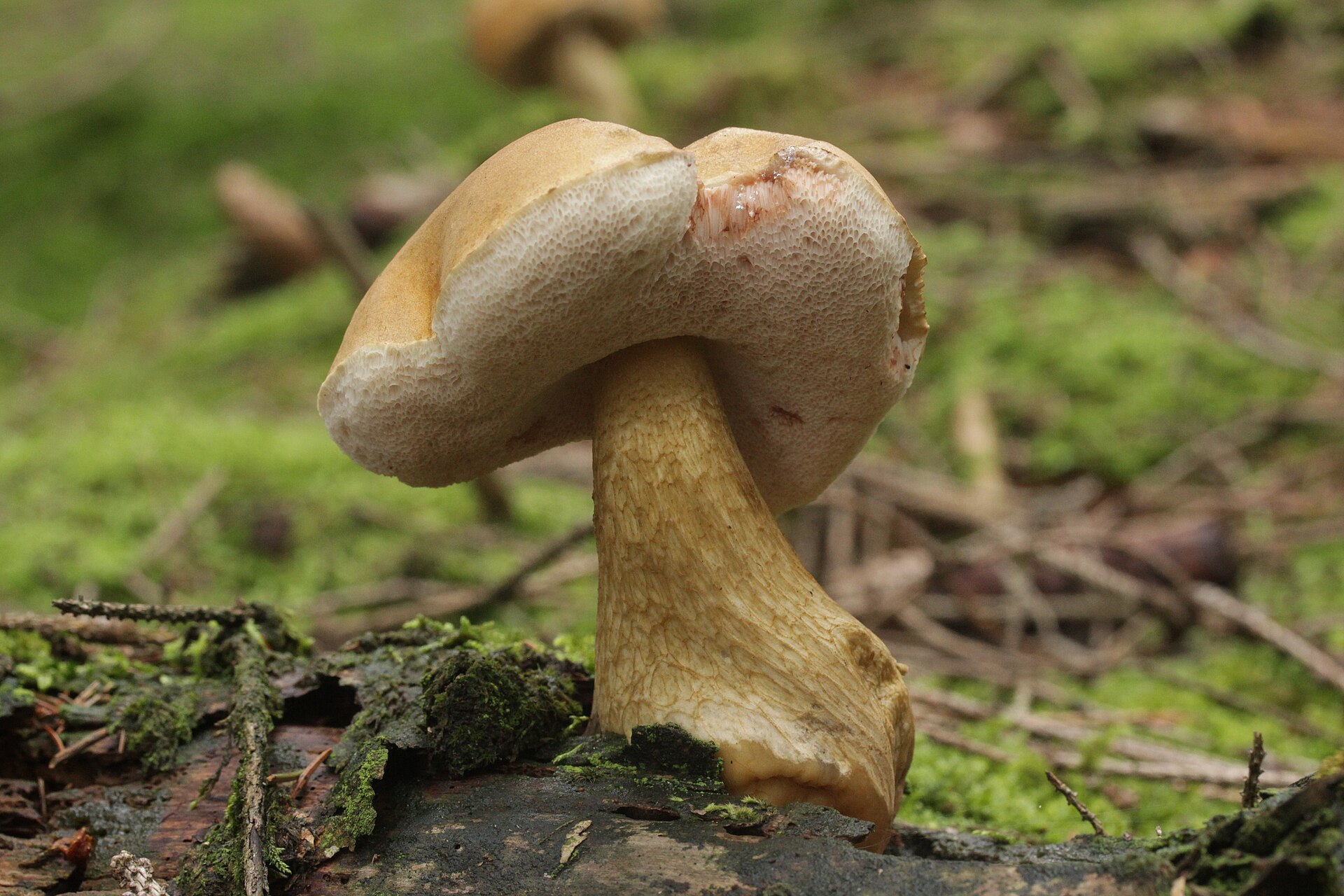
Tylopilus felleus, commonly known as the Bitter Bolete, is a brown-capped bolete famous for resembling porcini while having an intensely bitter taste. It has a pale pore surface that becomes distinctly pinkish with age, a stout stem with a dark brown net-like pattern, and white flesh that usually does not show strong blue bruising.
The strongest field pattern is brown cap + pores that become pink + dark coarse reticulation on the stem + extreme bitterness. These features are especially important because young specimens can look surprisingly similar to Boletus edulis.
Bitter Bolete is not generally considered dangerously poisonous, but it is regarded as inedible because of its powerful bitter flavor. Even a small specimen mixed into a dish of edible boletes can make the entire meal unpleasant.
⚠️ Important: Do not taste an unidentified wild mushroom simply to confirm that it is bitter. Use pore color, stem reticulation, habitat, bruising, and overall morphology first.
Quick Identification
| Feature | Tylopilus felleus |
|---|---|
| Common name | Bitter Bolete |
| Cap | Tan-brown to dark brown |
| Cap size | Usually medium to large |
| Underside | Pores, not gills |
| Young pores | Whitish to pale |
| Mature pores | Pinkish to flesh-pink |
| Stem | Thick, pale brown to brown |
| Stem pattern | Dark coarse reticulation |
| Flesh | White |
| Bruising | Usually little or no blueing |
| Spore print | Pinkish-brown |
| Ecology | Ectomycorrhizal |
| Habitat | Woodland, often with conifers |
| Taste | Extremely bitter |
| Edibility | Inedible |
Tylopilus felleus vs Porcini
This is the most important comparison because young Bitter Boletes can closely resemble Boletus edulis. Both can have brown caps, pale pores, thick stems, and a net-like pattern on the stem.
The easiest mature distinction is the pore color. Porcini pores mature from white toward yellow and olive, while Tylopilus felleus develops a characteristic pink or flesh-colored pore surface.
| Feature | Bitter Bolete | Porcini |
|---|---|---|
| Scientific name | Tylopilus felleus | Boletus edulis |
| Young pores | Whitish | Whitish |
| Mature pores | Pink to flesh-pink | Yellow to olive |
| Stem reticulation | Dark brown, coarse | Usually pale, fine |
| Flesh | White | White |
| Blue bruising | Usually absent | Usually absent |
| Taste | Extremely bitter | Mild |
| Edibility | Inedible | Edible |
The stem network provides a second useful clue. Bitter Bolete often has a darker and more conspicuous brown reticulation, while porcini usually has a finer pale network, especially near the upper stem.
What Does Bitter Bolete Look Like?
Bitter Bolete is a robust bolete with a convex brown cap, thick stem, and sponge-like pore surface. Fresh specimens can look very convincing as porcini until the pore surface begins developing its pink coloration.
The fruit body is usually solid and substantial. Older specimens can become softer and more irregular, but the pink pores and dark stem network often remain useful.
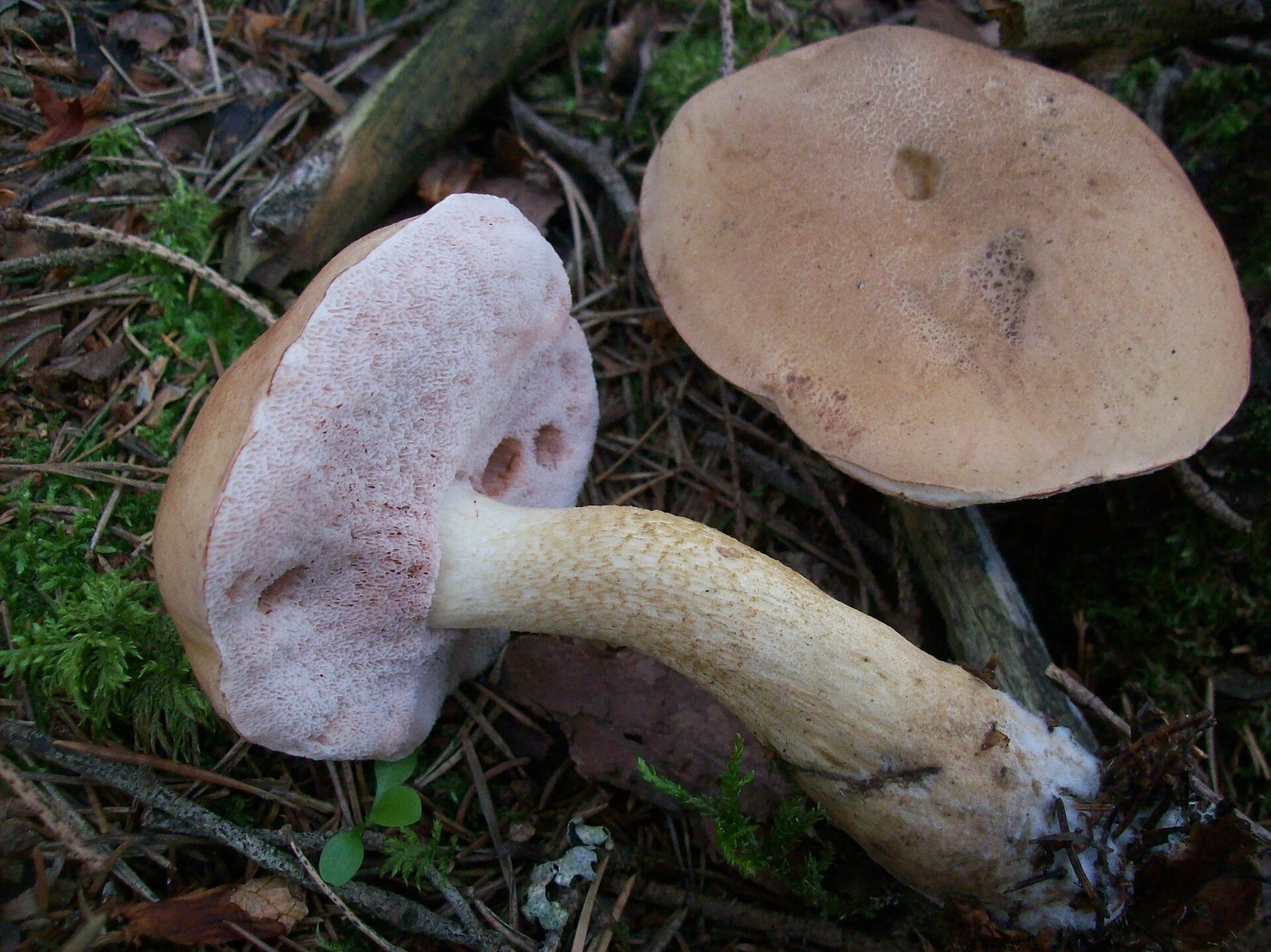
Cap
The cap ranges from pale tan and ochre-brown to deeper chestnut or dark brown. It is usually convex when young and becomes broadly convex or flatter with age.
The surface is generally dry and may be smooth or slightly velvety. Cap color varies enough that it should not be used alone to distinguish the species from porcini or other brown boletes.
Pore Surface
The pore surface is one of the most important identification features. Young specimens may have whitish or cream pores, which is why early fruit bodies can be mistaken for Boletus edulis.
As the spores mature, the pores become pinkish, flesh-colored, or dirty rose-pink. First Nature specifically highlights this pink flush as one of the strongest clues separating Bitter Bolete from edible ceps.
The pores may darken slightly where handled but usually do not show the dramatic blue bruising seen in many other bolete groups. A strong blue reaction should therefore make another species more likely.
Stem
The stem is thick and often club-shaped, especially in young specimens. Its color ranges from pale tan to brown and usually becomes darker toward the middle or base.
A coarse net-like pattern, or reticulation, is often clearly visible. The network is usually brown and darker than the underlying stem, making it more conspicuous than the pale reticulation commonly seen on porcini.
This dark network is one of the most practical field clues. It should be checked together with pore color rather than treated as a standalone character.
Flesh
The flesh is white and generally remains pale after cutting. Strong blue bruising is not typical.
The most famous characteristic is the intense bitterness. The species epithet felleus refers to gall or bile, reflecting the unpleasant taste.
Because taste-testing unidentified mushrooms is not necessary for ordinary photo identification, other morphological characters should be used first. Pink pores and dark reticulation are usually much safer diagnostic clues.
Spore Print
The spore print is pinkish-brown to brownish-pink. This corresponds with the increasingly pink appearance of the mature pore surface.
Spore color helps distinguish Tylopilus from many classic porcini-type boletes. It is still only one character and should be combined with stem structure and habitat.
Where Does Tylopilus felleus Grow?
Bitter Bolete is an ectomycorrhizal fungus associated with living trees. It occurs in woodland and is especially frequent in coniferous or mixed forests in cooler regions.
It can grow near spruce, pine, and other trees depending on region. The mushrooms usually arise from soil rather than directly from wood.
First Nature describes it as occasional in Britain and Ireland and more common in northern parts of Europe.
Season
Bitter Bolete typically fruits from summer into autumn. Exact timing depends on rainfall, temperature, latitude, and local woodland conditions.
Productive periods often overlap with porcini season. This seasonal overlap contributes to the frequency with which the two are confused.
Distribution
Tylopilus felleus is widely distributed across temperate regions of the Northern Hemisphere. It is well known from Europe and is also reported from North America and other northern regions.
Regional identification still matters because several related Tylopilus species can resemble the classic Bitter Bolete. A European identification concept should not automatically be applied to every pink-pored bolete found elsewhere.
Current Taxonomy
Species Fungorum currently accepts Tylopilus felleus (Bull.) P. Karst. in the family Boletaceae. The species was originally described as Boletus felleus by Bulliard and transferred to Tylopilus by Petter Adolf Karsten in 1881.
Older literature may therefore refer to the species as Boletus felleus. Species Fungorum lists several historical combinations and varieties as synonyms of the modern name.
Why Is It Called Bitter Bolete?
The common name refers to the exceptionally bitter taste of the flesh. The bitterness is strong enough that one mushroom can spoil a dish containing otherwise good edible boletes.
First Nature notes that cooking does not remove the bitterness and may make it seem even stronger. This makes the species practically inedible despite not being considered a classic dangerous toxic bolete.
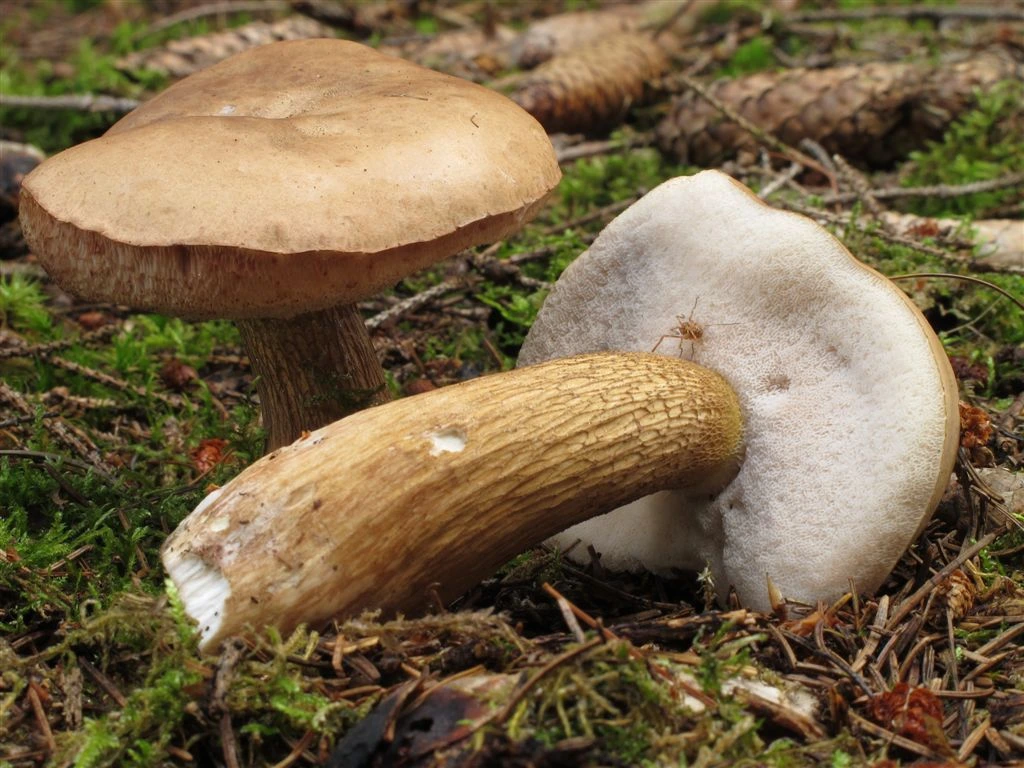
Is Tylopilus felleus Poisonous?
Bitter Bolete is generally classified as inedible rather than dangerously poisonous. The main problem is its extreme bitterness rather than a well-established severe toxin syndrome.
Some people may still experience gastrointestinal discomfort after eating unsuitable or misidentified mushrooms. For that reason, an uncertain pink-pored bolete should not be eaten simply because it is not known as a deadly species.
The practical rule is straightforward: if the mushroom fits Tylopilus felleus, it should not be collected for food.
Why One Bitter Bolete Can Ruin a Meal
The bitter compounds are powerful enough to affect an entire mixed dish. A small amount chopped together with porcini can make the whole meal taste unpleasant.
This is why experienced porcini collectors pay close attention to pore color and stem reticulation before placing a brown bolete in the basket. Recognizing Bitter Bolete early is more useful than discovering the mistake after cooking.
Look-Alikes
Bitter Bolete is easiest to confuse with other brown-capped boletes that have thick stems and pale pores. The most important comparisons are porcini and other Boletus species, but regional Tylopilus and brown boletes can also create confusion.
Boletus edulis — Porcini
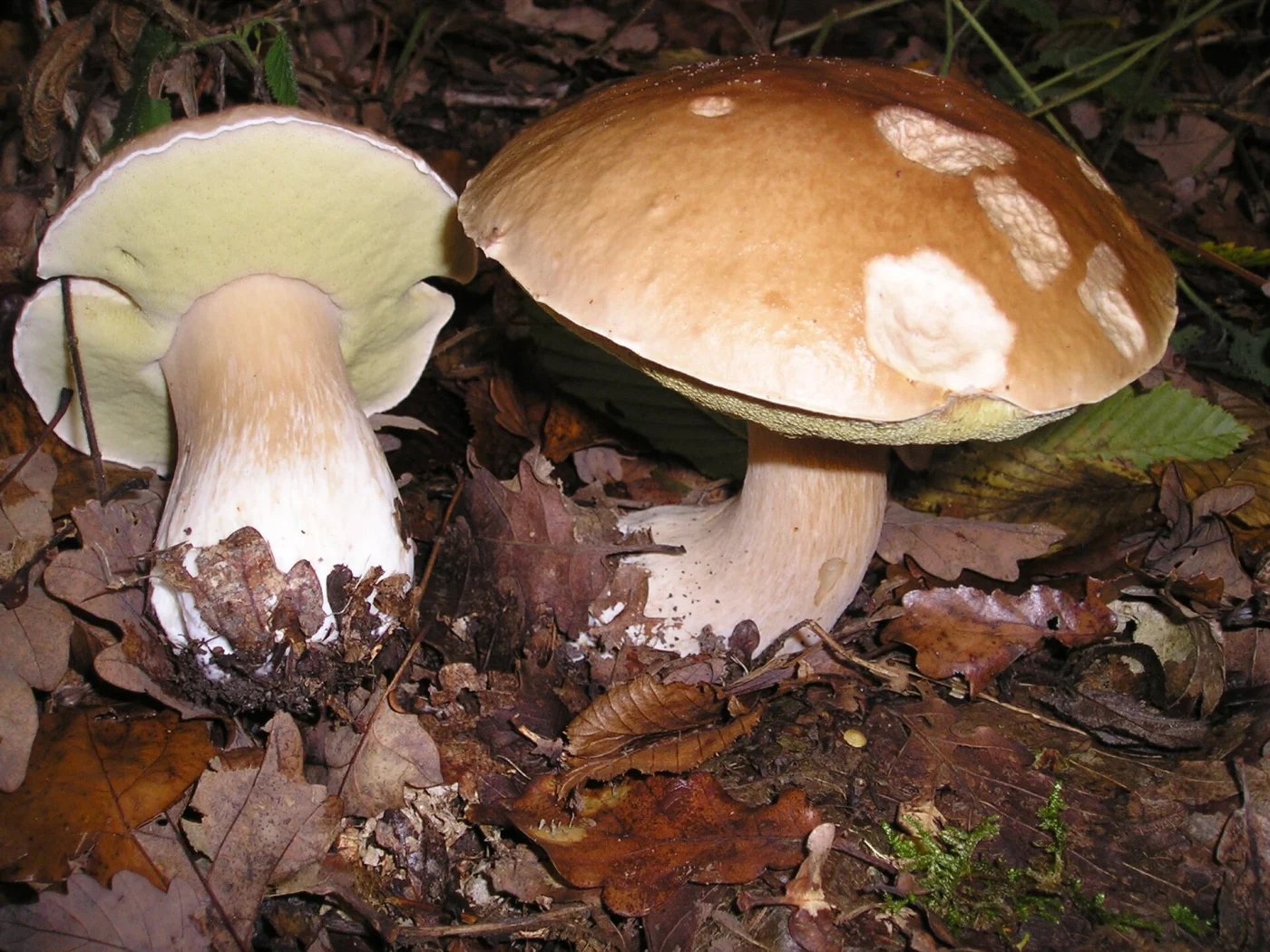
Identification
Porcini has a brown cap, thick pale stem, and pores that begin white. Mature pores become yellow and eventually olive rather than pink.
The stem usually shows a fine pale net-like pattern, especially near the top. This reticulation generally contrasts less strongly with the stem than the dark network of T. felleus.
Main Difference
Pink mature pores + dark coarse reticulation favor Bitter Bolete. Yellow-to-olive pores + pale fine reticulation favor Porcini.
This distinction becomes much easier as the mushroom matures. Very young fruit bodies require closer examination.
Boletus reticulatus — Summer Bolete
Identification
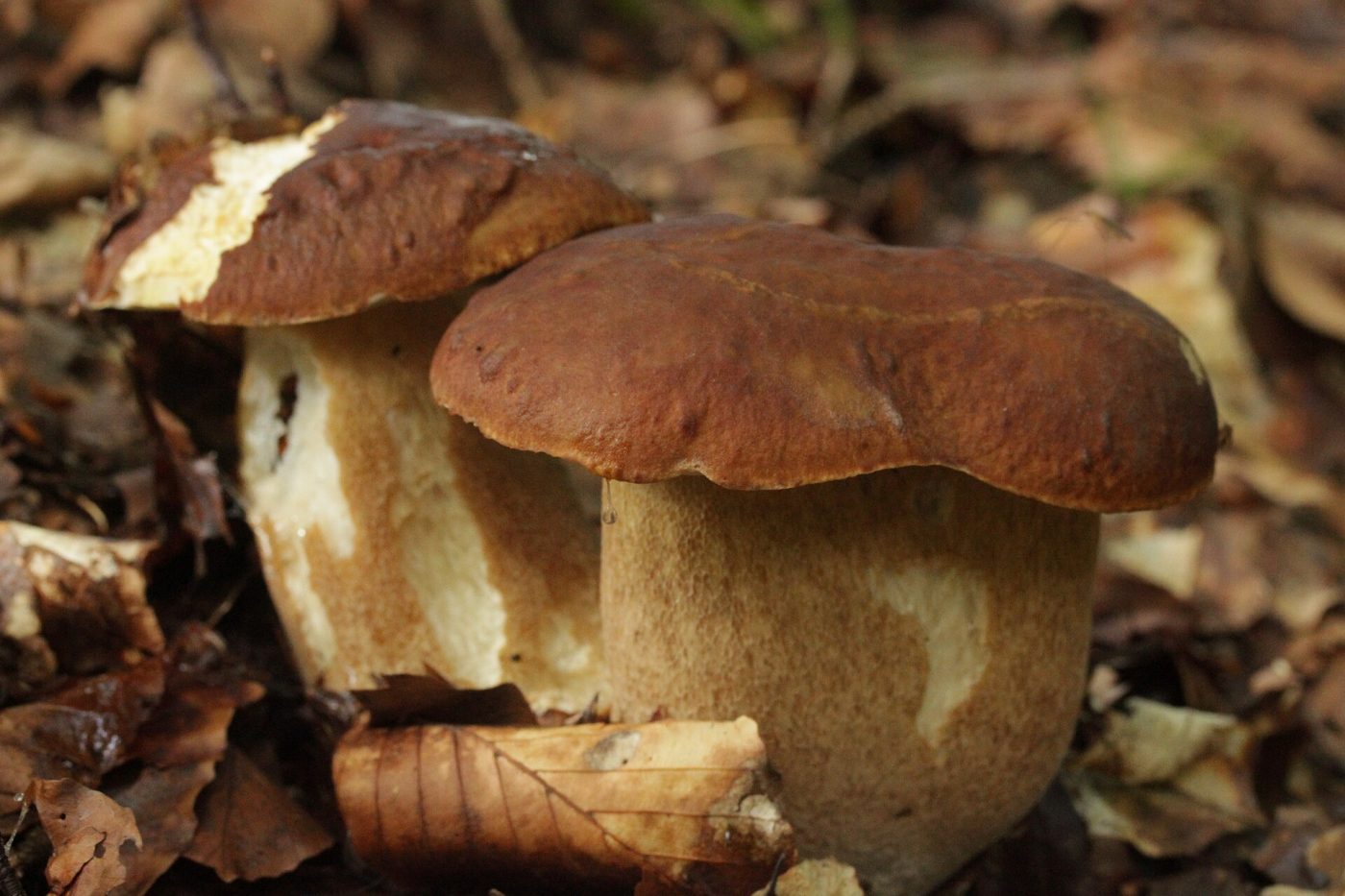
Boletus reticulatus can have a brown cap and a strongly reticulate stem. It occurs especially with broadleaf trees such as oak and beech.
Its pores mature toward yellow and olive rather than pink. The stem network is also generally pale rather than dark chocolate-brown.
Main Difference
Mature pore color is the quickest distinction. Pink points toward Tylopilus felleus, while yellow or olive is much more consistent with Boletus.
Host trees also help. B. reticulatus is particularly associated with warm broadleaf woodland.
Boletus pinophilus — Pine Bolete
Identification
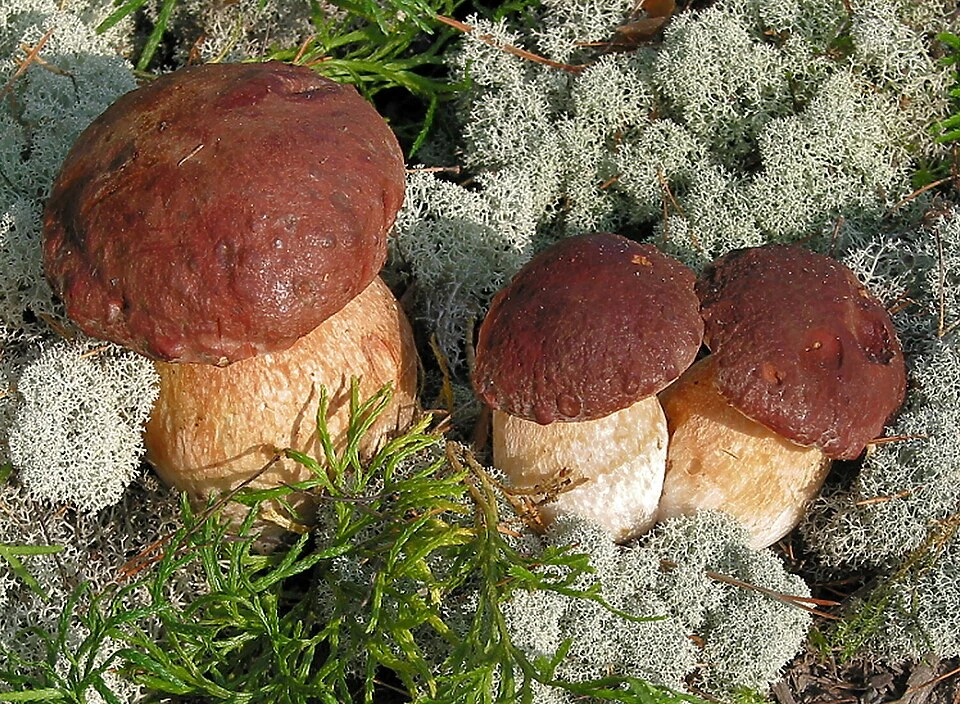
Pine Bolete is another large brown bolete associated strongly with conifers. It can overlap with Bitter Bolete in both habitat and season.
Its cap is often darker reddish-brown, and the pore surface develops yellow or olive tones. The flesh remains mild rather than intensely bitter.
Main Difference
The combination of pink pores and dark stem reticulation supports Bitter Bolete. A reddish-brown cap with yellowing pores and pale network is more consistent with Pine Bolete.
Other Tylopilus Species
Identification
Several Tylopilus species have pinkish spores and pore surfaces. Depending on region, some can resemble T. felleus closely.
Differences may involve cap color, stem reticulation, bruising, taste, host association, and microscopic characters. Species-level identification can therefore become more difficult outside the classic European range.
Main Difference
There is no single universal field character that separates T. felleus from every related Tylopilus. Regional species knowledge and microscopy may be necessary for difficult collections.
Bitter Bolete vs Porcini: Step-by-Step
First, look under the cap. If the pores are clearly pink or flesh-colored, Bitter Bolete should immediately move high on the list.
Next, examine the stem. A dark brown coarse network supports T. felleus, while a pale fine network supports porcini.
Then consider habitat and maturity. Young specimens can still have pale pores, so several features should be combined before making a final identification.
Why Young Specimens Are Difficult
Young Bitter Boletes can have almost white pores, thick pale stems, and brown caps. At this stage, their strongest mature clue—the pink pore surface—may not yet be developed.
The dark stem reticulation can still provide useful evidence. However, young specimens should be treated cautiously because age-related color changes have not yet fully appeared.
If several fruit bodies of different ages are present, examine them together. Mature mushrooms often reveal the identification much more clearly.
Does Bitter Bolete Turn Blue?
Strong blue bruising is not typical of Tylopilus felleus. The flesh generally stays pale after cutting, while the pore surface may darken modestly from handling.
This is useful because many red- or yellow-pored boletes bruise blue rapidly. However, lack of blueing is not unique to Bitter Bolete, since porcini also usually does not show strong blue staining.
Blue bruising should therefore be used as an elimination clue rather than a positive identification by itself.
Can You Identify Bitter Bolete by Taste?
Extreme bitterness is characteristic, but taste-testing is not necessary for routine identification. Pink mature pores and dark stem reticulation usually provide enough evidence to suspect the species.
Tasting an unidentified mushroom also creates unnecessary risk when several species are still possible. For MushroomID, the safer identification workflow is visual and ecological first.
If a specimen has already been reliably identified as a known bolete by an experienced mycologist, taste may historically be used as a supporting character. It should not be the first diagnostic step for beginners.
Common Identification Mistakes
One common mistake is assuming that every brown bolete with a thick stem is porcini. Bitter Bolete demonstrates why pore color must always be checked.
Another mistake is ignoring the color of the stem network. A dark coarse reticulation is much more suggestive of T. felleus than the finer pale network typical of Boletus edulis.
A third mistake is judging a very young mushroom before its pores have matured. Young Bitter Boletes can still have pale pores and therefore look much more porcini-like.
A fourth mistake is assuming that a non-poisonous bolete is automatically worth eating. Bitter Bolete is a classic example of a mushroom that is rejected for culinary reasons despite not being a notorious deadly species.
How to Photograph Tylopilus felleus
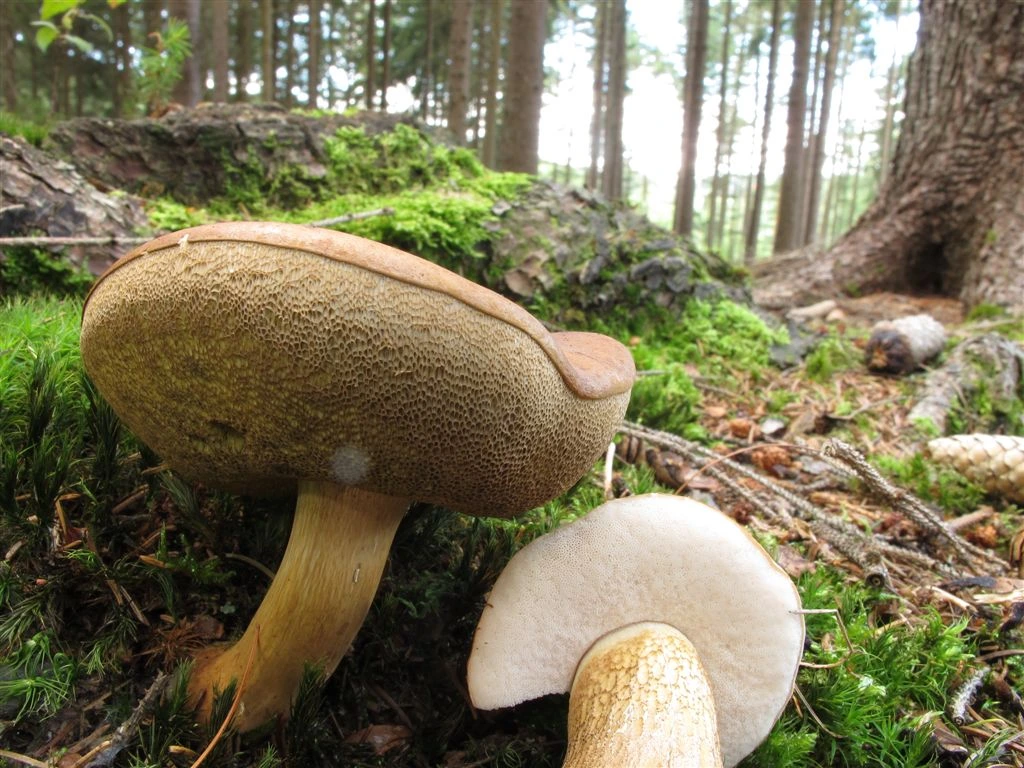
Photograph the top of the cap, but always include the underside. The pore color is one of the most important identification features and may be invisible in a top-down image.
Take a close photograph of the stem network. The contrast, size, and color of the reticulation can help separate Bitter Bolete from porcini.
Include the complete fruit body and nearby trees in a habitat photograph. Host association can help when comparing several similar boletes.
If possible, photograph young and mature specimens from the same group. The transition from pale to pink pores is particularly valuable.
Can AI Identify Bitter Bolete?
AI can often recognize a strong Bitter Bolete candidate when photographs show the mature pink pores and dark stem reticulation. Accuracy falls when only the brown cap is visible.
Very young specimens are more difficult because the pore surface may still be nearly white. In this situation, the AI should compare the mushroom directly with porcini and avoid presenting a high-confidence identification from cap shape alone.
A useful AI result should therefore explain why T. felleus is likely: pink pores, dark reticulation, lack of strong blue bruising, and appropriate woodland habitat.
Interesting Facts
Bitter Bolete is one of the classic examples of a mushroom that looks far more appetizing than it tastes. Its resemblance to prized porcini makes it especially memorable to anyone who has accidentally added one to a mixed mushroom dish.
The scientific name also describes this character. The Latin-derived epithet felleus refers to gall or bile and effectively means bitter or gall-like.
The species was originally described within Boletus before being transferred to Tylopilus. Modern taxonomy still accepts that placement today.
Frequently Asked Questions
What is the common name of Tylopilus felleus?
The standard English common name is Bitter Bolete. The name refers to the extremely bitter flavor of the flesh.
Is Tylopilus felleus poisonous?
It is generally regarded as inedible rather than dangerously poisonous. Its extreme bitterness is the primary reason it is rejected as food.
What does Bitter Bolete taste like?
It is intensely bitter. Even a small amount can make an entire mushroom dish unpleasant.
How can I tell Bitter Bolete from porcini?
Check the mature pore surface and stem network. Bitter Bolete develops pink or flesh-colored pores and usually has dark coarse reticulation, while porcini develops yellow-to-olive pores and generally has a finer pale network.
Does Tylopilus felleus bruise blue?
Strong blue bruising is not typical. The flesh usually remains pale, although handled areas may darken somewhat.
What color is the spore print?
The spore print is pinkish-brown. This corresponds with the pink coloration that develops on the mature pore surface.
Can young Bitter Boletes have white pores?
Yes. Young specimens can have pale or whitish pores, making them much easier to confuse with porcini.
Where does Bitter Bolete grow?
It grows from soil in woodland as an ectomycorrhizal fungus. It is especially associated with coniferous and mixed forests in cooler temperate regions.
Can cooking remove the bitterness?
No reliable cooking method makes Bitter Bolete a desirable edible mushroom. First Nature notes that cooking can actually make the bitterness seem even stronger.
Is Tylopilus felleus the same as Boletus felleus?
Boletus felleus is the older basionym. The currently accepted name is Tylopilus felleus.
Final Identification Notes
Tylopilus felleus, the Bitter Bolete, is best recognized by the combination of a brown cap, pore surface that matures from pale to pink or flesh-colored, thick stem with dark coarse reticulation, white flesh, little or no blue bruising, and extremely bitter taste. These features make it one of the most important porcini look-alikes to learn.
The strongest separation from Boletus edulis is the mature pore color. Pink pores favor Bitter Bolete, while yellow-to-olive pores favor Porcini, and the dark coarse stem network provides a second major clue.
The practical identification pattern is: brown bolete + pink mature pores + dark reticulate stem + no strong blueing = strong Tylopilus felleus candidate. Young specimens can be more difficult, so several features should be checked before assuming that a pale-pored brown bolete is porcini.
Upload a photo and get possible matches in seconds.