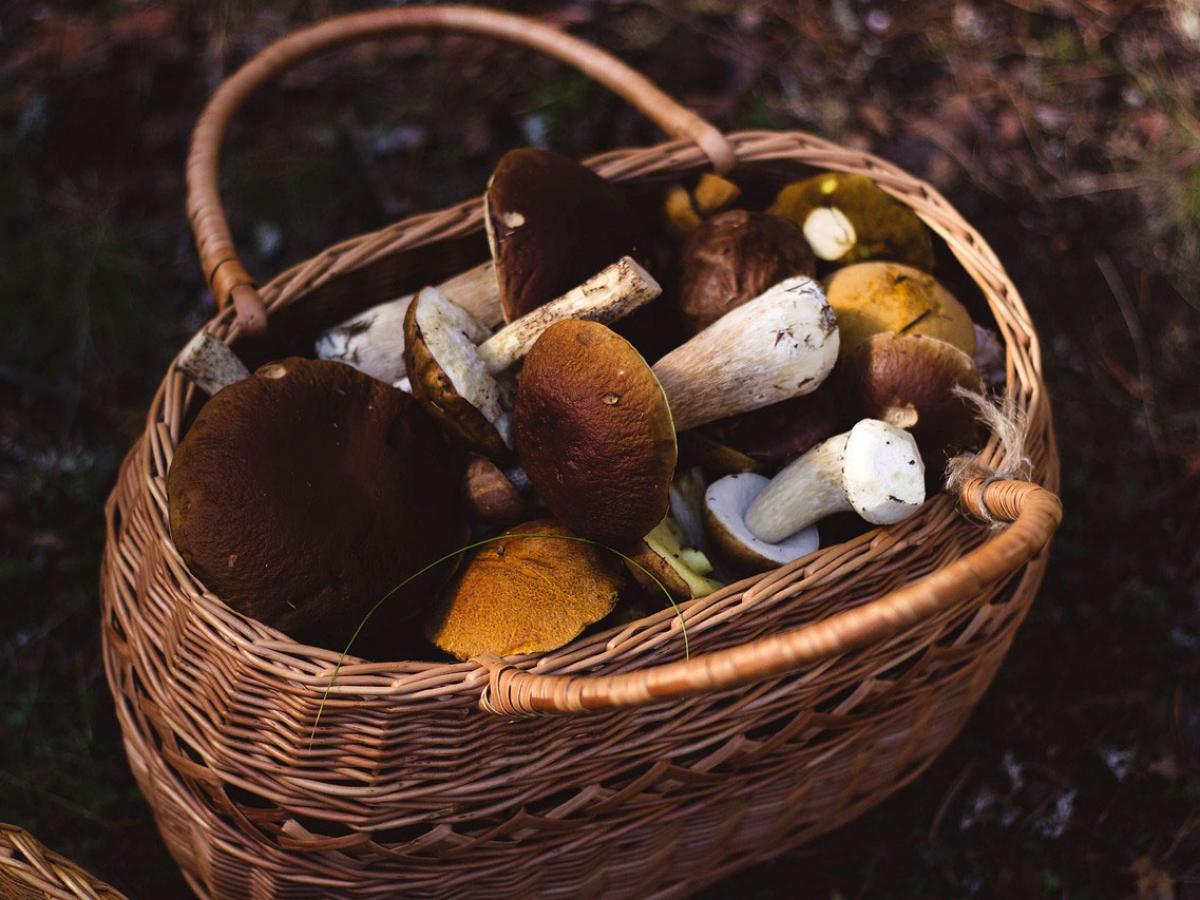
If you are wondering what mushrooms to pick in Europe in September, this is one of the best months of the year for mushroom hunting. Common edible mushrooms found across Europe in September include porcini, chanterelles, bay boletes, birch boletes, saffron milk caps, parasol mushrooms, hedgehog mushrooms, russulas, milk caps, and puffballs.
September is the peak mushroom season in many parts of Central and Northern Europe. Cooler nights, mild daytime temperatures, and autumn rainfall create excellent conditions for fruiting. In Southern Europe, the season often depends more heavily on rainfall and may peak later, in October or November.
The exact mushrooms you can pick in Europe in September vary by country, altitude, forest type, and weather conditions. Spruce, pine, beech, oak, and birch forests can all be productive, while woodland edges, mossy areas, forest tracks, and clearings are often especially good places to search.
Below are some of the most common and sought-after September mushrooms in Europe.
Porcini
Porcini mushrooms, also known as ceps or penny buns, are among the most sought-after mushrooms in Europe.
Several closely related species occur across the continent, including Boletus edulis, Boletus pinophilus, and Boletus reticulatus.
They grow in deciduous, coniferous, and mixed forests, often forming relationships with spruce, pine, beech, oak, and birch.
September is an excellent month for porcini, especially after periods of rain followed by mild temperatures.
Look for them along forest paths, beneath mature trees, on mossy ground, and around woodland clearings.
Chanterelles
Chanterelles often continue fruiting well into September, particularly in Northern and Central Europe.
The common chanterelle, Cantharellus cibarius, is found in both deciduous and coniferous forests. It prefers relatively clean woodland soils and often grows in groups.
Its yellow to orange fruiting body and thick, forked ridges running down the stem help distinguish it from many other mushrooms.
In warmer parts of Europe, chanterelles may become less common as summer ends, while in cooler regions the season can continue throughout September.
Bay Bolete
The bay bolete, Imleria badia, is one of the most common autumn mushrooms in many European forests.
It typically has a chestnut-brown cap and yellowish pores underneath. The pores and flesh may turn blue when bruised or cut.
Bay boletes are particularly common under spruce and pine, although they can also occur in mixed woodland.
They often grow among moss, leaf litter, and fallen needles.
Birch Bolete
Birch boletes belonging to the genus Leccinum are common in areas where birch trees grow.
One of the best-known species is Leccinum scabrum, the brown birch bolete.
It usually has a brownish cap and a pale stem covered with darker scales. As its name suggests, it forms a close association with birch trees.
Birch boletes are among the common mushrooms to pick in Europe in September, especially in Northern and Central Europe.
Orange-Cap Boletes
Several Leccinum species with orange, reddish, or brownish caps can be found in European forests during September.
They may grow with aspen, birch, oak, pine, and other trees depending on the species.
Many have firm stems covered with dark scales, and their flesh can turn grey, blue, or almost black after cutting.
This colour change is a natural chemical reaction and does not by itself indicate toxicity.
Slippery Jacks
September is a productive month for many species in the genus Suillus, commonly known as slippery jacks.
They are strongly associated with conifers, especially pine.
Many have sticky or slimy caps when wet, and some species have a ring on the stem.
Young pine plantations, woodland edges, and grassy areas beneath pine trees can be particularly productive after rain.
Saffron Milk Caps
Saffron milk caps are among Europe’s most distinctive autumn mushrooms.
Species such as Lactarius deliciosus and related milk caps grow mainly with pine and other conifers.
They usually have orange caps with concentric rings and release orange or reddish latex when damaged.
In many Mediterranean countries, saffron milk caps are especially popular and are often collected in large quantities during autumn.
Parasol Mushroom
The parasol mushroom, Macrolepiota procera, is common across much of Europe in late summer and autumn.
It grows in woodland clearings, grasslands, roadside verges, meadows, and forest edges.
Mature specimens can become very large, with broad caps covered in brown scales and tall stems carrying a movable ring.
However, small parasol-like mushrooms should be treated with caution. Some species of Lepiota are highly poisonous.
Hedgehog Mushrooms
Hedgehog mushrooms in the genus Hydnum are excellent autumn mushrooms and frequently appear in September.
Instead of gills or pores, they have small tooth-like spines underneath the cap.
They grow in deciduous and coniferous forests and are often found in groups.
The wood hedgehog, Hydnum repandum, is one of the most widespread species in Europe.
Black Trumpet
The black trumpet, Craterellus cornucopioides, is a distinctive dark grey or almost black mushroom associated mainly with deciduous woodland.
It is particularly common beneath beech and oak in some regions.
Because of its dark colour, it can be surprisingly difficult to spot among fallen leaves despite sometimes growing in large groups.
Its season can extend through September and into autumn.
Russulas
Many species of Russula continue to appear throughout September.
Their caps can be green, red, purple, yellow, brown, or almost white.
Some species are considered good edible mushrooms, while others have an unpleasant hot or bitter taste and may cause digestive problems.
Colour alone is not enough to identify a Russula reliably.
Milk Caps
Europe is home to many species of milk caps, traditionally classified within Lactarius and related genera. They release a milky liquid when their gills or flesh are damaged.
Some are highly valued edible mushrooms, while others are bitter, irritating, or unsuitable for eating.
September is one of the main months for finding milk caps in forests across Northern, Central, and Eastern Europe.
Honey Fungus
Honey fungus often begins fruiting abundantly in late summer and autumn. Species in the Armillaria group typically grow in clusters on tree trunks, stumps, buried roots, and dead wood.
Large groups can sometimes cover an entire stump. Identification requires care because other brown mushrooms also grow in clusters on wood, including some dangerous species.
Puffballs
Several puffball species can be found in Europe in September.
Young puffballs are sometimes eaten when their entire interior is firm, pure white, and uniform.
Once the interior turns yellow, brown, olive, or powdery, the mushroom is mature and no longer suitable for eating.
Puffballs should also be cut open before identification, because very young poisonous Amanita mushrooms can sometimes resemble puffballs externally.
Cauliflower Fungus
The cauliflower fungus, Sparassis crispa, is an unusual mushroom that can appear at the base of coniferous trees, particularly pine.
Its fruiting body consists of many curled, leaf-like branches and may grow to a considerable size.
Late summer and early autumn are typical times to find it in parts of Europe.
Where to Look for Mushrooms in September
Different mushrooms prefer different habitats, so exploring several types of woodland can significantly increase the number of species you encounter.
Particularly productive places include:
- spruce, pine, beech, oak, and birch forests;
- woodland edges, clearings, mossy areas, forest tracks, grassy paths, and places around mature trees.
During dry weather, damp hollows and shaded areas often remain productive longer. When temperatures become cooler, sunny woodland edges can be especially promising.
When Is the Best Time to Go Mushroom Hunting?
Rainfall is one of the most important factors affecting mushroom growth.
A period of steady rain followed by several mild days can trigger large flushes of mushrooms. However, mushrooms do not necessarily appear immediately after rain.
Depending on the species and conditions, fruiting bodies may become visible several days later.
Temperature is equally important. Early September can still feel like summer in Southern Europe, while night frosts may already occur in mountainous and northern regions.
Mushroom Season Across Europe
There is no single mushroom calendar that applies to the entire continent.
In Scandinavia, the Baltic region, the Alps, and other cooler areas, September can represent the peak or even the later part of the season.
Across Central Europe, including countries such as Germany, Poland, the Czech Republic, Austria, Slovakia, and France, September is often one of the richest months for woodland mushrooms.
In Mediterranean regions such as Spain, Italy, Croatia, Greece, and southern France, autumn mushroom growth is often strongly dependent on rainfall. In dry years, the main season may not begin until October or even November.
Poisonous Mushrooms Found in September
September is also an important season for poisonous mushrooms.
One of the most dangerous is the death cap, Amanita phalloides. It occurs widely across Europe and is responsible for many severe mushroom poisonings.
Other dangerous autumn mushrooms include certain Amanita, Cortinarius, Galerina, Inocybe, and Clitocybe species.
Never rely on popular myths such as whether insects eat a mushroom, whether it smells pleasant, or whether silver changes colour during cooking. These methods cannot determine whether a mushroom is safe.
Basic Safety Rules
Collect only mushrooms that you can identify confidently using several reliable characteristics.
Pay attention to the cap, underside of the cap, stem, base of the stem, habitat, associated trees, smell, and any colour changes after cutting or bruising.
Never eat a mushroom simply because it resembles a photograph.
If there is any doubt about the identification, leave the mushroom where it is or consult an experienced local expert.
If you are looking for mushrooms to pick in Europe in September, early autumn offers one of the widest selections of the year. Depending on the region, you may find porcini, chanterelles, bay boletes, saffron milk caps, parasols, hedgehog mushrooms, russulas, and many other species.
The combination of mild temperatures, wetter soil, and cooling nights makes September one of the most rewarding months for mushroom hunting across much of Europe.
Upload a photo and get possible matches in seconds.