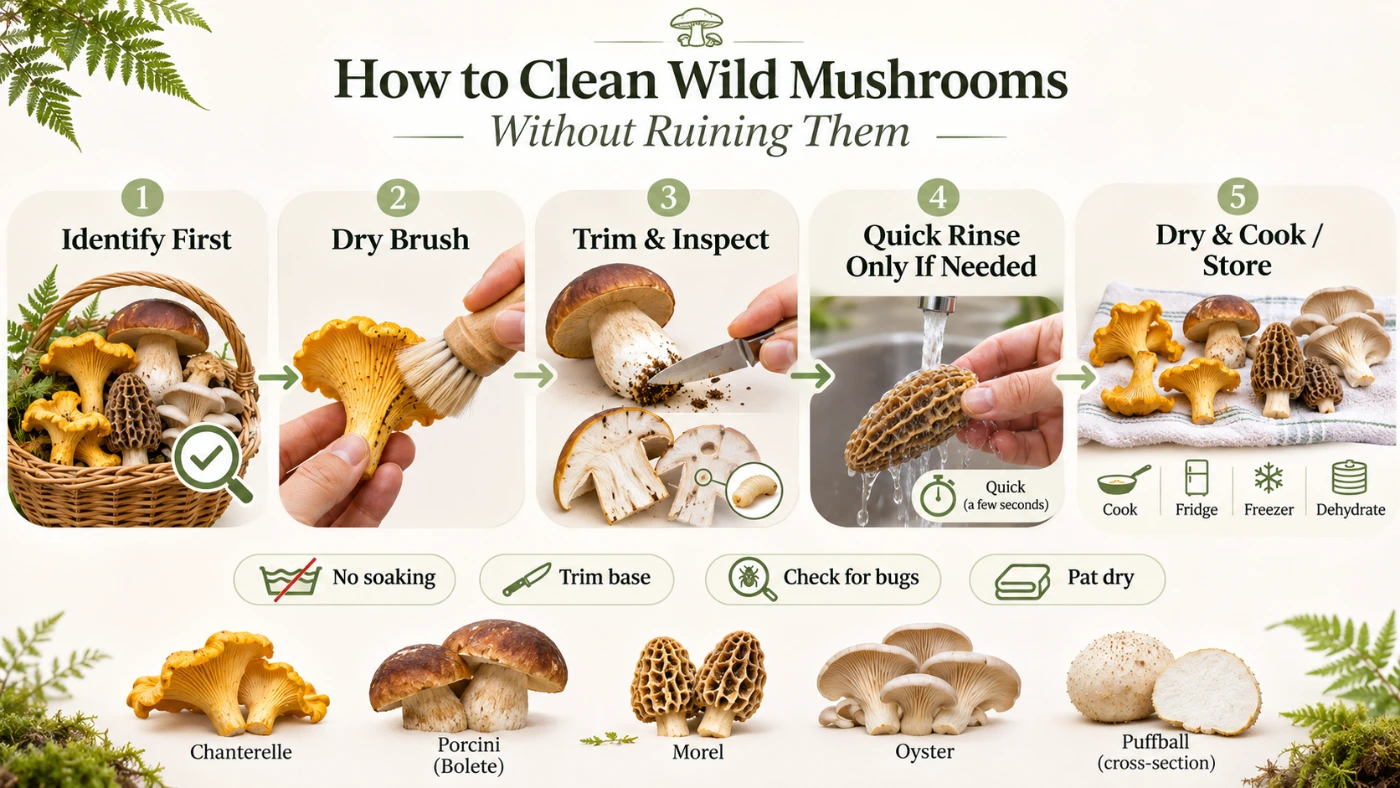
Wild mushrooms often arrive home covered in soil, pine needles, moss, insects, and pieces of leaf litter. Cleaning them properly is important, but over-washing can make delicate mushrooms waterlogged, slippery, or soft.
The best approach is usually dry cleaning first, water only when necessary, and no soaking. Different mushroom types need slightly different handling, so chanterelles, porcini, morels, and Oyster Mushrooms should not all be cleaned in exactly the same way.
⚠️ Important: Identify wild mushrooms before cleaning them extensively. Washing, trimming, or cutting away key features such as the stem base, volva, ring, pore surface, or bruising can make later identification much harder.
1. Start With Dry Cleaning
The safest first step is to remove as much debris as possible without water. Use a soft mushroom brush, pastry brush, clean toothbrush, or dry cloth to loosen soil and forest litter.
A small knife is useful for scraping muddy stem bases and trimming damaged tissue. Work gently because many wild mushrooms, especially chanterelles and russulas, can break easily.
Dry cleaning preserves texture better than washing. It also prevents mushrooms from absorbing unnecessary moisture before cooking.
Clean Mushrooms as Soon as Possible
Fresh debris is much easier to remove than dried mud. If possible, begin cleaning shortly after returning from the forest.
Do not leave heavily soiled mushrooms packed tightly in a basket or plastic bag for hours. Moisture and dirt trapped between fruit bodies can accelerate deterioration.
Clean in the Field When Possible
A quick field clean saves considerable work later. Cut away muddy stem ends and brush off obvious soil before placing mushrooms in the basket.
This also keeps dirt from spreading onto cleaner specimens. However, retain any important identification features until the species has been confidently confirmed.
2. Can You Wash Wild Mushrooms?
Yes. The idea that mushrooms must never touch water is too strict.
A brief rinse under cool running water is usually harmless when mushrooms are genuinely dirty. The important distinction is between quick rinsing and soaking.
Mushrooms already contain a large amount of water, but prolonged immersion can still affect texture and trap water between gills, pores, folds, or hollow structures. Rinse quickly and dry immediately afterward.
When Water Is Worth Using
Water is useful when mushrooms contain fine sand, sticky mud, or debris that cannot be brushed away. Chanterelles gathered from sandy soil are a common example.
A short rinse is often better than eating grit. The goal is to use the minimum amount of water necessary to get the mushroom clean.
Why You Should Not Soak Mushrooms
Leaving mushrooms in a bowl of water encourages debris to move deeper into folds and cavities. Delicate fruit bodies may also become soft and difficult to cook well.
Soaking is especially undesirable when mushrooms will later be sautéed. Excess moisture must evaporate before browning can begin.
Dry Them Immediately
After rinsing, place mushrooms on a clean kitchen towel or paper towel. Pat them gently and allow surface moisture to evaporate.
Do not seal wet mushrooms inside a container. Trapped moisture promotes rapid deterioration.
3. How to Clean Different Wild Mushrooms
Different mushroom shapes trap different kinds of debris. Cleaning technique should therefore match the structure of the species.
Chanterelles
Chanterelles often collect soil inside their folds and around the irregular cap margin. Brush them first, then use a quick rinse if fine sand remains.
Pay particular attention to the false gills underneath. Dirt can become trapped where the ridges fork and run down the stem.
Large chanterelles can be torn lengthwise rather than sliced. This exposes hidden dirt or insect damage while preserving their natural texture.
Porcini and Other Boletes
Porcini are usually best cleaned with a brush and knife. Scrape the stem gently and remove any soil from the base.
Check the pore layer underneath the cap. In young specimens it is firm, but older pores can become soft, wet, or insect-damaged.
Cut thick stems lengthwise to inspect for larvae. Boletes can look perfect outside while containing extensive insect tunnels inside.
Morels
Morels require more attention because their honeycomb-like caps trap sand, insects, and small pieces of forest debris. Split them lengthwise so the hollow interior can be inspected.
A quick rinse is often justified for morels. Gently move water through the pits, then dry the mushrooms thoroughly.
Avoid prolonged soaking unless absolutely necessary. It can reduce texture and introduce additional water into the hollow fruit body.
Oyster Mushrooms
Wild Oyster Mushrooms are usually relatively clean because they grow above the ground on wood. Most debris can be brushed away.
Trim the tough base where the cluster attaches to the tree. Check between overlapping caps for insects, bark, and small pieces of wood.
A quick rinse is fine if needed, but large clusters should be separated first. This makes hidden debris easier to remove.
Hedgehog Mushrooms
The teeth beneath Hedgehog Mushrooms can trap soil and debris. Brush the cap normally and gently clean the spines underneath.
Some of the teeth may break off during cleaning, which is normal. A brief rinse can remove stubborn particles, but dry the mushroom well afterward.
Puffballs
Puffballs generally need little cleaning if collected in good condition. Wipe or brush dirt from the outer surface and trim the base.
Every puffball intended for food should be cut vertically through the center. The interior must be uniformly white and should contain no internal cap, gills, stem, or other mushroom anatomy.
Matsutake
Matsutake is valued partly for its aroma, so aggressive washing is undesirable. Brush away forest soil and scrape the stem lightly with a knife.
Use water only where necessary. Keeping the mushroom relatively dry helps preserve both texture and fragrance.
Wood Blewits
Wood Blewits often grow deep in leaf litter and can collect soil around the stem base. Brush away loose debris and trim the dirty end after identification.
Check the gills carefully because leaf fragments can lodge between them. A quick rinse is acceptable, but the mushrooms should not be soaked.
4. What to Remove Before Cooking
Cleaning is also the time to inspect mushroom quality. Cut away soft, decomposing, heavily insect-damaged, or moldy areas rather than trying to wash them clean.
Small insect holes do not automatically ruin an entire mushroom. Slice through thick caps and stems to see how extensive the damage actually is.
Remove the Dirty Stem Base
The stem base often contains the greatest amount of soil. Once identification is complete, trim it away with a clean knife.
Do not remove it before identification if a volva, bulb, mycelial structure, or other base feature may be important. This is especially critical with Amanita and similar mushrooms.
Should You Peel Mushroom Caps?
Most wild mushrooms do not need to be peeled. The cap skin contains flavor and usually causes no problem.
Some strongly slimy Suillus species are an exception. Their sticky cap skin is often removed for better texture and easier preparation.
Should You Remove Bolete Pores?
Young firm pores usually do not need to be removed. They can be cooked along with the rest of the mushroom.
Older pore layers may become soft, wet, or insect-damaged. Removing them can improve the texture of mature boletes.
Check for Mold
Moldy mushrooms should be discarded rather than cleaned and eaten. Visible mold can indicate that deterioration extends beyond the affected surface.
A strong unpleasant odor, extensive slime, or unusually soft tissue are also reasons to discard a specimen.
5. The Best Cleaning Method Before Cooking or Storage
Clean mushrooms shortly before you plan to use or preserve them. Keeping mushrooms dry during storage generally helps them remain firm for longer.
For immediate cooking, brush first, rinse only if necessary, and dry thoroughly. Mushrooms intended for freezing or drying should be especially free of excess surface moisture.
If mushrooms are going into a hot pan, avoid overcrowding them. Even properly cleaned mushrooms release water during cooking, and excess moisture prevents browning.
Before Refrigerating
If mushrooms are already fairly clean, avoid washing them before refrigeration. Brush off loose dirt and store them dry in a breathable container or paper bag.
Wash or rinse shortly before cooking instead. This reduces excess moisture during storage.
Before Freezing
Clean mushrooms completely before freezing because frozen dirt is difficult to remove later. Dry them thoroughly before placing them in the freezer.
Many wild mushrooms freeze better after brief cooking. Water remaining from washing adds unnecessary ice and worsens texture.
Before Drying
Mushrooms intended for drying should be cleaned with as little water as possible. Brushing and scraping are preferable because extra moisture increases drying time.
If rinsing is unavoidable, allow them to dry on the surface before slicing and placing them in a dehydrator.
Common Cleaning Mistakes
The most common mistake is soaking mushrooms in water because it seems easier than brushing. This often creates more moisture problems than it solves.
Another mistake is washing mushrooms before identification and accidentally removing important features. Always document the specimen first if identification is uncertain.
A third mistake is putting wet mushrooms directly into storage. Moisture trapped in a closed container can quickly lead to soft texture and spoilage.
The fourth mistake is trying to save mushrooms that are already decomposing. Cleaning removes dirt, but it cannot reverse deterioration.
Frequently Asked Questions
Should you wash wild mushrooms?
Yes, when necessary. A quick rinse is fine, but soaking should usually be avoided.
Is it better to brush mushrooms instead of washing them?
Usually, yes. Dry brushing preserves texture and is enough for mushrooms with only light soil or forest debris.
Can mushrooms absorb water when washed?
They can retain additional surface water and moisture in folds, gills, pores, and cavities. The biggest practical problem is usually prolonged soaking rather than a quick rinse.
How do you clean very sandy chanterelles?
Brush them first and then rinse briefly if grit remains. Clean carefully between the false gills and dry them immediately.
Should you wash mushrooms before putting them in the fridge?
Usually not. Store them relatively dry and wash them shortly before cooking.
How do you remove worms from wild mushrooms?
Cut thick mushrooms through the cap and stem and inspect the interior. Remove damaged sections rather than relying on washing.
Can you clean mushrooms with salt water?
It is generally unnecessary and requires soaking, which can worsen texture. Physical inspection, trimming, brushing, and a quick rinse are usually better.
Should wild mushrooms be cleaned before freezing?
Yes. Remove dirt and damaged tissue before freezing, then make sure the surface is thoroughly dry.
Final Notes
The best way to clean wild mushrooms is to use the least aggressive method that works. Start with a brush and knife, use a brief rinse only when necessary, and avoid soaking.
Different species need different attention: chanterelles trap sand in their ridges, morels hide debris in pits, boletes should be checked for larvae, and Oyster Mushrooms often need only light brushing.
The practical rule is: identify first → brush and trim → rinse only if needed → dry thoroughly → cook, store, freeze, or dry promptly.
Upload a photo and get possible matches in seconds.