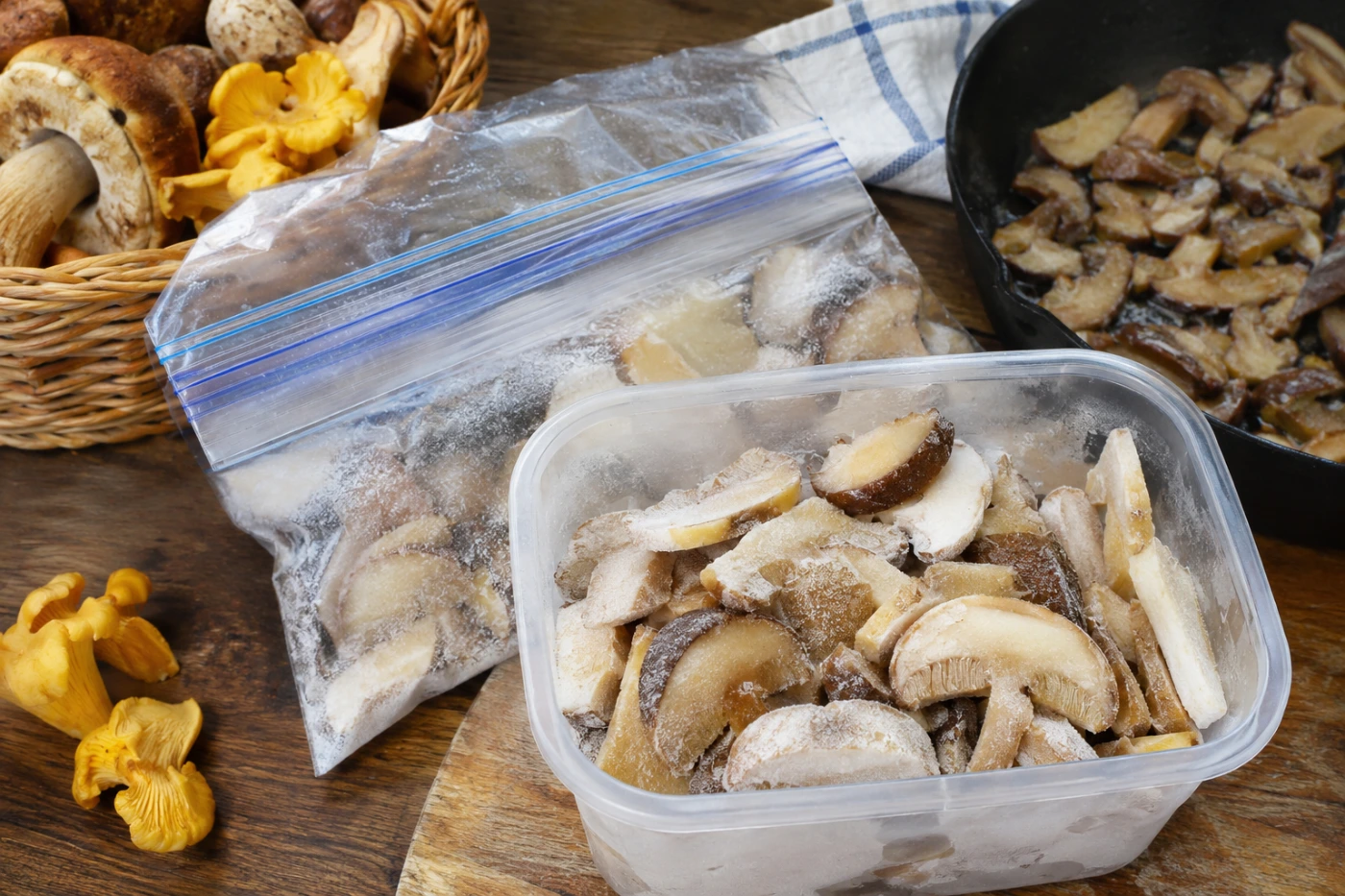
Freezing is one of the easiest ways to preserve wild mushrooms when drying is not ideal or when you want to keep a more natural texture for later cooking. The best method depends on the species, because some mushrooms freeze well raw while others become watery, rubbery, or soft unless they are cooked first.
For most wild mushrooms, brief cooking before freezing gives the best result. Sautéing, steaming, or blanching removes some water, stabilizes the texture, and makes the mushrooms easier to use later.
⚠️ Important: Only freeze mushrooms that have already been confidently identified. Freezing does not make a poisonous or uncertain mushroom safe to eat.
Quick Freezing Guide
| Mushroom Type | Best Method |
|---|---|
| Chanterelles | Sauté first |
| Porcini / boletes | Sauté or blanch |
| Oyster Mushrooms | Sauté first |
| Morels | Blanch or sauté |
| Hedgehog Mushrooms | Sauté first |
| Puffballs | Usually cook first |
| Firm cultivated-style mushrooms | Raw or cooked |
| Very watery mushrooms | Cook first |
Raw freezing is possible for some firm species, but cooked freezing usually gives better texture.
Why Freeze Wild Mushrooms?
Freezing preserves mushrooms for much longer than refrigeration. It is especially useful when you have a large harvest that cannot be eaten within a few days.
Unlike drying, freezing keeps the mushrooms closer to their fresh form. This makes it useful for soups, sauces, stews, sautés, and dishes where rehydrated texture is not desired.
Should You Freeze Mushrooms Raw or Cooked?
Both methods are possible, but they do not give the same result. Raw mushrooms contain a large amount of water, which forms ice crystals during freezing and can damage cell structure.
Cooking first removes some of that water and softens the mushrooms in a controlled way. After thawing, pre-cooked mushrooms are usually less watery and have a better texture.
Best Method: Cook Before Freezing
For many wild mushrooms, the most reliable method is to sauté them briefly before freezing. Cook them until they release moisture and most of that liquid has evaporated.
Allow them to cool completely, portion them, and freeze in airtight containers or freezer bags. This method works particularly well for chanterelles, porcini, Oyster Mushrooms, and Hedgehog Mushrooms.
Method 1: Sauté Before Freezing
Clean and slice the mushrooms into the size you expect to use later. Place them in a dry pan or add a small amount of oil or butter.
Cook over medium heat until they release water and begin to soften. Continue until excess moisture has mostly evaporated, then cool completely before freezing.
Why Sautéing Works So Well
Mushrooms naturally contain a lot of water. If they are frozen raw, this water expands into ice crystals and breaks down the tissue.
Sautéing removes part of that water before freezing. This gives a firmer and less watery result after thawing.
Method 2: Blanch Before Freezing
Blanching is another useful method, especially for mushrooms that benefit from brief heat treatment. Place cleaned mushrooms in boiling water for a short period, then cool them quickly.
Drain them extremely well before freezing. Excess water left on the surface will create ice and worsen the final texture.
Method 3: Steam Before Freezing
Steaming is gentler than boiling and introduces less water into the mushrooms. It can be useful for more delicate species.
Steam until the mushrooms are partially cooked, then cool and dry them thoroughly. Freeze only after the surface is no longer wet.
Can You Freeze Wild Mushrooms Raw?
Yes, some firm mushrooms can be frozen raw. However, texture often becomes softer after thawing.
If you choose raw freezing, clean the mushrooms, slice them if necessary, and freeze them in a single layer first. Once solid, transfer them to a sealed freezer container.
Flash Freezing
Flash freezing prevents mushrooms from freezing into one large solid block. Arrange cleaned mushrooms or slices in a single layer on a tray.
Freeze until solid, then transfer them to bags or containers. This allows you to remove only the amount you need later.
Clean Mushrooms Before Freezing
Remove soil, leaves, insects, and damaged tissue before freezing. Once mushrooms are frozen, cleaning becomes more difficult.
Brush them first and use only a quick rinse if necessary. Dry them thoroughly before cooking or freezing.
Should You Wash Mushrooms Before Freezing?
A quick rinse is acceptable when needed, but soaking is not recommended. Mushrooms that absorb extra water become even more watery after thawing.
After washing, spread them on towels and let surface moisture dry completely.
Slice Before Freezing or Keep Whole?
Large mushrooms are usually easier to use later if sliced before freezing. Porcini, large Oyster Mushrooms, and puffballs are good examples.
Small mushrooms can be left whole. The important thing is to prepare them in the form you are most likely to cook later.
How to Freeze Chanterelles
Chanterelles are best cooked before freezing. Raw freezing can make them rubbery or bitter in texture.
Sauté them until they release moisture and begin to soften. Cool, portion, and freeze with as little excess liquid as possible.
How to Freeze Porcini
Porcini can be frozen after sautéing or blanching. Young, firm specimens give the best results.
Inspect them carefully for insect damage before freezing. Slice thick stems and caps so they cook and freeze evenly.
How to Freeze Oyster Mushrooms
Oyster Mushrooms freeze best after brief cooking. Their thin caps can become soft if frozen raw.
Separate large clusters, trim tough stem bases, and sauté until excess moisture has evaporated. Cool completely before packing.
How to Freeze Morels
Morels should be cleaned carefully because dirt and insects can hide inside the hollow fruit body. Split large specimens lengthwise before freezing.
They can be sautéed or briefly blanched first. Make sure they are drained and cooled before going into the freezer.
How to Freeze Hedgehog Mushrooms
Hedgehog Mushrooms respond well to sautéing before freezing. Their firm flesh retains a reasonably good texture after thawing.
Brush debris from the teeth beneath the cap before cooking. Large specimens can be sliced.
How to Freeze Puffballs
Only young puffballs with completely white, uniform interiors should be used. Slice them before cooking so the inside can be checked.
Because puffballs contain a lot of moisture, pre-cooking usually gives a better result than raw freezing.
How to Freeze Matsutake
Matsutake can be frozen, but their distinctive aroma can change during storage. Slice or portion them before freezing.
Some foragers prefer freezing them raw to preserve more of the fragrance, while others lightly cook them first. Either way, use airtight packaging to reduce aroma loss.
Mushrooms That Do Not Freeze Well
Very watery or gelatinous mushrooms often lose much of their texture after thawing. Some become soft, rubbery, or almost mushy.
These species may be better dried, cooked into a finished dish, or eaten fresh. Preservation method should match the structure of the mushroom.
Cool Mushrooms Before Freezing
Never place hot mushrooms directly into freezer bags. Steam will condense inside the package and create additional ice.
Allow cooked mushrooms to cool completely. Once cool, package them promptly and freeze.
Portion Before Freezing
Freeze mushrooms in practical meal-sized portions. This avoids thawing a large quantity when only a small amount is needed.
Flat freezer bags are especially useful because they freeze quickly and stack efficiently.
Remove Excess Air
Air causes freezer burn and gradual flavor deterioration. Press as much air as possible from freezer bags before sealing.
Vacuum sealing works well if available. Airtight containers are also effective if they are filled reasonably full.
Label Everything
Write the species name, preparation method, and freezing date on the package. This is especially useful when several wild mushrooms are stored at the same time.
Do not rely on recognizing frozen mushrooms months later. Color and shape can change substantially after freezing.
How Long Do Frozen Mushrooms Last?
For best quality, use frozen mushrooms within about 6–12 months. They can remain frozen longer if continuously stored at a safe freezer temperature, but flavor and texture gradually decline.
Mushrooms with strong aromas may lose quality faster. Airtight packaging helps preserve them.
Freezer Temperature
A normal freezer temperature of about −18°C / 0°F is suitable for long-term storage. Stable temperature is more important than occasional small fluctuations.
Repeated thawing and refreezing should be avoided. It causes further texture damage and increases food-safety risk.
Should You Thaw Mushrooms Before Cooking?
Usually, no. Frozen mushrooms can often go directly into a hot pan, soup, sauce, or stew.
Thawing first may cause them to release a large amount of water. Cooking from frozen often gives better texture.
How to Cook Frozen Mushrooms
Add frozen mushrooms directly to a hot pan and allow excess moisture to evaporate. Once the water is gone, continue cooking normally.
Pre-cooked mushrooms need less time than raw-frozen mushrooms. Avoid overcrowding the pan, which traps steam.
Why Frozen Mushrooms Release So Much Water
Ice crystals damage the mushroom’s cell walls. When thawed, water that was once held inside the cells leaks out.
This is normal. Pre-cooking before freezing reduces the effect because some water has already been removed.
Can You Refreeze Mushrooms?
It is better not to repeatedly thaw and refreeze mushrooms. Each cycle worsens texture and increases the risk of spoilage if the mushrooms warm too much.
Freeze in small portions so only the required amount is removed each time.
Can You Freeze Cooked Mushroom Dishes?
Yes. Mushroom soups, sauces, stews, and cooked mixtures often freeze very well.
Cool them quickly, portion them, and use freezer-safe containers. This can be more convenient than freezing the mushrooms separately.
Freeze Mushrooms Before They Deteriorate
Freezing does not improve poor-quality mushrooms. Use fresh, firm specimens rather than old, slimy, or partially decomposed ones.
Preserve the harvest soon after collecting it. Waiting several days before freezing reduces both flavor and texture.
Insect-Damaged Mushrooms
Wild boletes and other mushrooms may contain insect larvae. Inspect thick stems and caps before freezing.
Freezing may kill insects, but it does not remove damaged or decomposing tissue. Cut away affected areas before preservation.
Raw Freezing vs Cooked Freezing
| Method | Advantages | Disadvantages |
|---|---|---|
| Raw freezing | Fast, simple | Softer texture after thawing |
| Sautéing first | Best texture for many species | Requires extra preparation |
| Blanching | Simple heat treatment | Can add water |
| Steaming | Less water than boiling | Requires steamer |
| Finished dish | Very convenient | Less flexible later |
For most wild mushrooms, sautéing provides the best balance of simplicity and quality.
Freezing vs Drying
Freezing preserves a more fresh-like texture, while drying concentrates flavor. Porcini are excellent dried, while chanterelles often perform better when cooked and frozen.
There is no single best preservation method for every species. Large harvests can be divided between drying and freezing depending on how they will be used.
Freezing vs Refrigeration
Refrigeration is suitable only for short-term storage. Most fresh wild mushrooms remain in good condition for a few days rather than weeks.
Freezing is better when the harvest cannot be used soon. Preserve mushrooms while they are still fresh rather than waiting until the end of their refrigerator life.
Common Freezing Mistakes
One common mistake is freezing wet mushrooms. Surface water turns into excess ice and damages texture.
Another mistake is packing mushrooms while they are still warm. Condensation creates more moisture inside the package.
A third mistake is freezing a large unportioned mass. This makes it difficult to use only part of the harvest later.
A fourth mistake is expecting freezing to preserve a perfect fresh texture. Some softening is unavoidable because ice crystals alter mushroom tissue.
How to Freeze Wild Mushrooms Step by Step
First identify and inspect the mushrooms. Remove damaged areas and clean away dirt and debris.
Next choose whether to sauté, blanch, steam, or freeze raw. For most wild mushrooms, brief sautéing is the safest choice for texture.
Cool and dry the mushrooms completely, portion them, remove excess air from the packaging, label, and freeze.
Can AI Tell Which Mushrooms Are Suitable for Freezing?
AI can suggest a preservation method once a mushroom has been identified. Different species respond differently to raw freezing, cooking, drying, and blanching.
However, a photo cannot guarantee edibility or freshness. Identification and physical inspection should happen before preservation.
Interesting Facts
Freezing changes mushroom texture because mushrooms are mostly water. Ice crystals expand inside the tissue and rupture cell walls, which is why thawed mushrooms often release liquid.
Cooking before freezing partly solves this problem by reducing water content before ice forms. This is why a simple sauté can make a surprisingly large difference.
Wild mushrooms also differ greatly in how well they tolerate freezing. Firm chanterelles, boletes, and hedgehog mushrooms generally preserve better than very delicate or gelatinous species.
Freezing is especially useful for mushrooms that do not improve through drying. Chanterelles are a good example because their dried texture can be less appealing than their cooked-and-frozen texture.
Frequently Asked Questions
Can you freeze wild mushrooms raw?
Yes, but many species have better texture if cooked first. Raw freezing is most suitable for firm mushrooms that will later be used in cooked dishes.
Should chanterelles be cooked before freezing?
Usually yes. Sautéing before freezing helps prevent a rubbery or watery texture.
Can porcini be frozen?
Yes. They can be sautéed or blanched first, although porcini are also excellent dried.
Do mushrooms need to be washed before freezing?
Only if necessary. Brush off dirt first, and if you rinse them, dry them thoroughly.
How long can frozen mushrooms be stored?
For best quality, use them within about 6–12 months. Airtight packaging helps preserve flavor and prevent freezer burn.
Should frozen mushrooms be thawed before cooking?
Usually not. Cooking directly from frozen often gives better texture and reduces excess water.
Can you freeze cooked mushrooms?
Yes. Cooked mushrooms often freeze better than raw ones because some of their water has already been removed.
Does freezing make poisonous mushrooms safe?
No. Freezing does not neutralize mushroom toxins and should never be used as a safety treatment.
Final Notes
For most wild mushrooms, the best freezing method is clean → cook briefly → cool → portion → freeze airtight. Sautéing is especially effective because it removes excess moisture before ice crystals form.
Raw freezing is possible, but texture is usually softer after thawing. Chanterelles, porcini, Oyster Mushrooms, morels, and Hedgehog Mushrooms generally benefit from some heat treatment first.
The simplest rule is: identify first → clean and dry → cook if appropriate → cool completely → portion and seal → freeze at about −18°C / 0°F → cook directly from frozen.
Upload a photo and get possible matches in seconds.