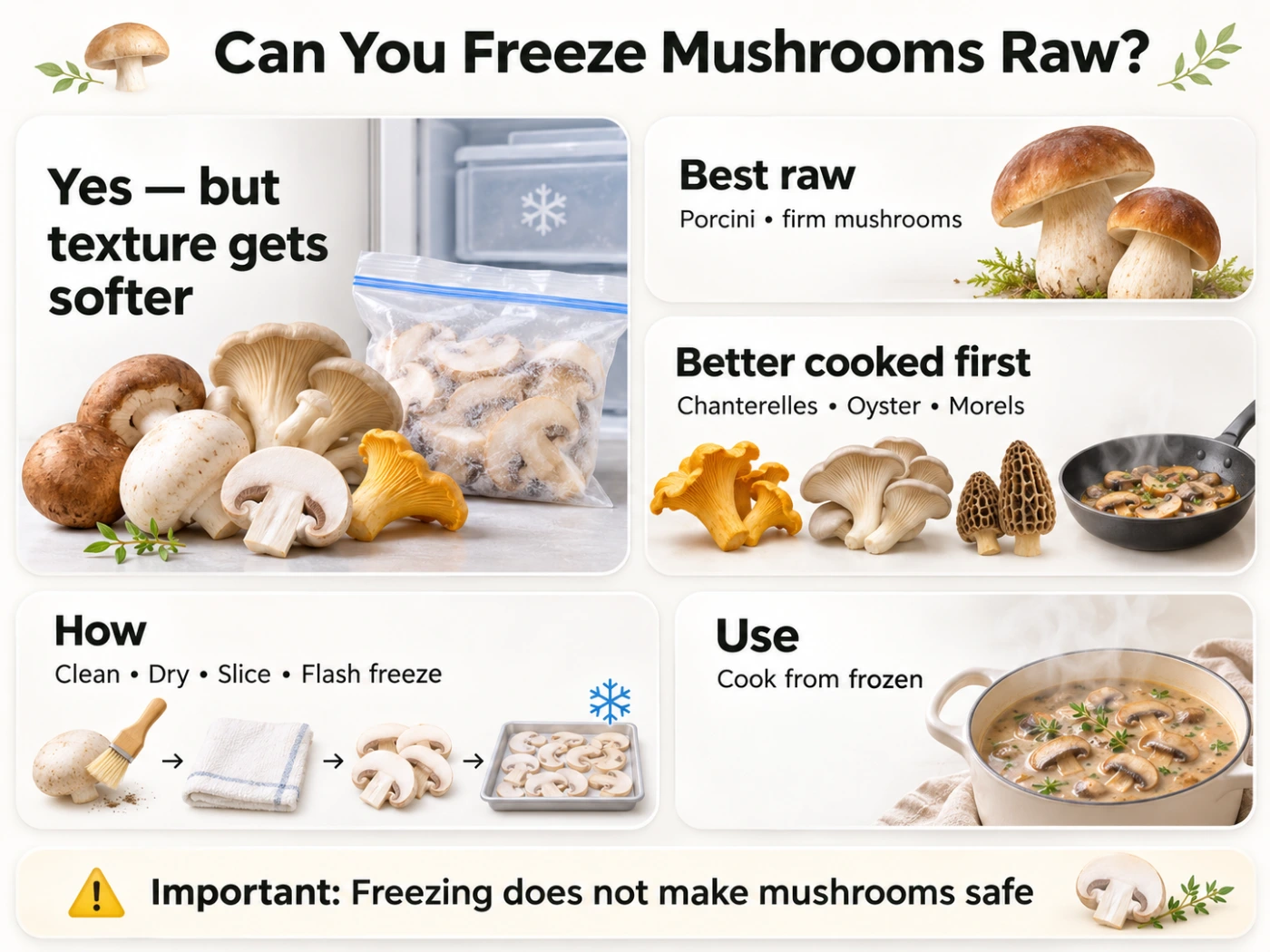
Yes, you can freeze some mushrooms raw, but that does not mean raw freezing is the best method for every species. Mushrooms contain a large amount of water, and when that water freezes, ice crystals damage the cell structure and often make the mushrooms softer after thawing.
For firm mushrooms that will later be used in soups, sauces, stews, or cooked dishes, raw freezing can be perfectly practical. For delicate, watery, or highly aromatic mushrooms, brief cooking before freezing usually gives better texture and more predictable results.
⚠️ Important: Freezing does not make an unidentified or poisonous mushroom safe. Wild mushrooms should be confidently identified before they are cleaned, frozen, cooked, or eaten.
Quick Answer
Raw mushrooms can be frozen, but texture usually changes. The best results come from fresh, firm specimens that are cleaned, dried thoroughly, and frozen quickly.
If texture matters, sautéing or steaming first is often better. If convenience matters more and the mushrooms will later be cooked thoroughly, raw freezing can still work well.
What Happens When You Freeze Mushrooms Raw?
Fresh mushrooms are made mostly of water. During freezing, that water forms ice crystals inside the tissue.
Those crystals rupture cell walls and membranes. When the mushroom later thaws, some of the internal water leaks out, which is why thawed mushrooms can feel softer, wetter, or more fragile than fresh ones.
Why Raw-Frozen Mushrooms Become Soft
The problem is not that the mushroom has spoiled. It is a physical change caused by freezing.
The larger the ice crystals, the more damage they cause. Slow freezing tends to create larger crystals, while rapid freezing generally preserves texture somewhat better.
Can You Freeze All Mushrooms Raw?
Technically, many mushrooms can be frozen raw, but some tolerate it much better than others. Firm mushrooms usually survive raw freezing better than delicate or watery ones.
The intended use also matters. A mushroom that becomes too soft for frying may still be perfectly suitable for soup, sauce, risotto, or stew.
Best Mushrooms for Raw Freezing
Firm, fresh mushrooms usually give the best results. Thick caps and dense flesh tend to hold up better than thin, fragile structures.
Porcini, firm boletes, some cultivated mushrooms, and certain young wild mushrooms can often be frozen raw if they are intended for later cooking. Even then, pre-cooking may still produce a better final texture.
Mushrooms That Are Better Cooked First
Chanterelles, Oyster Mushrooms, morels, Hedgehog Mushrooms, and very watery mushrooms often benefit from brief cooking before freezing. Sautéing removes part of their moisture and reduces the amount of structural damage caused by ice.
Cooking first also makes them easier to use later. You can often add them directly from the freezer to a hot pan or finished dish.
Can You Freeze Porcini Raw?
Yes, firm young porcini can be frozen raw. Slice them, inspect them carefully for insect damage, dry the surface, and freeze them in a single layer before transferring them to a bag or container.
They will usually become softer after thawing. For dishes where texture is important, sautéing before freezing may be preferable.
Can You Freeze Chanterelles Raw?
You can, but it is usually not the best method. Raw-frozen chanterelles may become rubbery, watery, or less pleasant in texture.
Brief sautéing generally gives better results. Cook them until they release moisture, allow that moisture to evaporate, cool completely, and then freeze.
Can You Freeze Oyster Mushrooms Raw?
Raw freezing is possible, but Oyster Mushrooms are relatively delicate. Their thin caps can become soft and limp after thawing.
For better texture, sauté them briefly first. If they are being frozen raw, separate large clusters and remove tough stem bases before freezing.
Can You Freeze Morels Raw?
Morels can be frozen raw, but they are often better after brief cooking. Their hollow structure traps dirt, insects, and moisture, so cleaning is especially important.
Split larger morels lengthwise, clean them thoroughly, and dry them well. For best texture and safety, sautéing or blanching before freezing is usually more practical.
Can You Freeze Puffballs Raw?
Young puffballs can technically be frozen raw, but their high water content means texture may deteriorate significantly. Slicing and cooking first usually produces a better result.
Only completely white, homogeneous young puffballs should ever be considered for culinary use. Any internal yellowing, olive coloration, or visible mushroom structure rules out the usual edible stage.
Can You Freeze Matsutake Raw?
Matsutake is one of the cases where raw freezing can be useful because heat can alter its distinctive aroma. Freezing raw may preserve more of the fragrance for some uses.
Slice or portion the mushrooms first and package them very tightly. Their aroma can still change during frozen storage, so long-term quality is not guaranteed.
Should You Wash Mushrooms Before Freezing Them Raw?
Do not soak mushrooms before freezing. Extra absorbed water increases ice formation and makes texture worse.
Brush away loose soil and debris first. If rinsing is necessary, keep it brief and dry the mushrooms thoroughly before freezing.
Drying the Surface Matters
Surface moisture creates frost and ice crystals around the mushrooms. It can also cause individual pieces to stick together.
Spread washed mushrooms on a clean towel and let them dry completely. The drier they are on the outside, the better the freezing result.
Should Mushrooms Be Sliced Before Freezing?
Usually, yes. Slicing makes mushrooms easier to portion and cook directly from frozen.
Large porcini and other thick mushrooms are especially practical to slice first. Small firm mushrooms can be left whole if that suits the intended dish.
Flash Freezing Raw Mushrooms
Flash freezing prevents pieces from freezing into one solid block. Arrange cleaned mushrooms in a single layer on a tray.
Freeze them until firm, then transfer them to freezer bags or airtight containers. This makes it easy to remove only the amount needed later.
Why Flash Freezing Helps
If wet or unfrozen mushroom pieces are packed together immediately, they tend to stick. A single frozen mass is difficult to portion.
Freezing them separately first solves this problem. It also helps each piece freeze faster than a large packed mass.
Use Airtight Packaging
Air exposure causes freezer burn and gradual flavor deterioration. Press as much air as possible out of freezer bags before sealing.
Vacuum sealing is useful when available. Airtight containers also work well, especially if there is little unused space inside.
Label the Package
Write the species name and freezing date on the package. This is especially important with wild mushrooms.
Frozen mushrooms often change color and shape enough to become difficult to recognize later. Identification should never depend on remembering what a frozen bag probably contained.
Can You Freeze Mushrooms Whole?
Yes, small firm mushrooms can be frozen whole. Larger mushrooms are usually more convenient to slice first.
Whole mushrooms may also freeze more slowly because of their thickness. This can lead to somewhat greater texture damage.
Can You Freeze Mushroom Slices Raw?
Yes, and this is often the most practical way to freeze them. Thin slices freeze quickly and are easy to add directly to cooked dishes.
Do not slice them too thinly, however. Very thin pieces can become fragile and break apart after freezing.
Should You Blanch Mushrooms Before Freezing?
Blanching is optional but can improve quality for some species. Brief heat treatment partially cooks the mushroom and can reduce texture deterioration.
The main disadvantage is added water. If you blanch mushrooms, drain and dry them extremely well before freezing.
Sautéing vs Raw Freezing
Sautéing usually produces better texture because it removes moisture before freezing. It also means the mushrooms are partly cooked and ready to use.
Raw freezing is faster and preserves more of the original preparation flexibility. The trade-off is a greater chance of soft or watery texture.
Raw Freezing vs Sautéing
| Method | Advantages | Disadvantages |
|---|---|---|
| Raw freezing | Fast and simple | Softer texture |
| Sautéing first | Better texture | Requires more preparation |
| Blanching | Simple heat treatment | Adds moisture |
| Steaming | Less added water | Requires extra equipment |
For most wild mushrooms, sautéing gives the most consistent result.
Can You Cook Mushrooms Straight From Frozen?
Yes, and this is often better than thawing them first. Frozen mushrooms can go directly into a hot pan, soup, sauce, or stew.
They will release water as they heat. Allow that liquid to evaporate before continuing with normal cooking.
Should You Thaw Raw-Frozen Mushrooms First?
Usually not. Thawing often makes mushrooms release a large amount of liquid before cooking begins.
Cooking directly from frozen keeps the process more controlled. It also reduces the amount of time the mushrooms spend sitting in their own moisture.
Why Thawed Mushrooms Look Wet
The water comes from damaged cells. Once ice crystals have ruptured the tissue, thawing releases liquid that was previously held inside.
This is normal and does not automatically mean the mushrooms have spoiled. Odor, surface condition, storage history, and signs of freezer burn still matter.
How Long Can Raw Mushrooms Stay Frozen?
For best quality, use them within about 6–12 months. Flavor and texture gradually decline even when frozen continuously.
Strongly aromatic mushrooms may lose quality faster. Good airtight packaging helps slow these changes.
Best Freezer Temperature
A standard freezer temperature of about −18°C / 0°F is suitable for long-term storage. Stable temperature is important.
Repeated warming and refreezing accelerates quality loss. It also creates larger ice crystals and further damages texture.
Can You Refreeze Raw Mushrooms?
Repeated freezing and thawing should be avoided. Each cycle damages the tissue further and increases moisture loss.
Small portions are the simplest solution. Freeze only as much as you expect to use at one time.
Do Frozen Mushrooms Need to Be Cooked?
Wild mushrooms should generally be cooked before eating unless a particular species is specifically known to be safely consumed otherwise. Freezing does not replace cooking.
Cooking also improves texture after freezing. A hot pan helps drive off the excess water released by damaged cells.
Does Freezing Kill Mushroom Toxins?
No. Freezing does not make poisonous mushrooms safe.
Many fungal toxins remain dangerous after freezing. Correct identification must happen before preservation.
Does Freezing Kill Insects in Mushrooms?
Freezing may kill many insects or larvae present in the mushroom, but that does not make damaged tissue desirable. Insect tunnels, decomposed areas, and contaminated sections should still be removed.
Inspect wild mushrooms before freezing. Thick boletes are particularly prone to hidden larvae.
Can You Freeze Old Mushrooms?
Freezing should not be used to rescue mushrooms that are already deteriorating. Soft, slimy, strongly discolored, or unpleasant-smelling specimens should not be preserved.
Freeze mushrooms while they are still fresh and firm. The freezer preserves current quality rather than improving it.
Freezing Raw Mushrooms for Soup
Raw freezing works particularly well when the mushrooms will later be used in soup. Texture changes matter much less in a moist cooked dish.
Add the mushrooms directly from frozen. They can cook along with the other ingredients.
Freezing Raw Mushrooms for Sauces
Raw-frozen mushrooms also work well in sauces. Cook them first in the pan until the released liquid has evaporated.
Once they begin to brown, continue with the sauce as usual. This produces better flavor than adding them directly to a finished sauce.
Freezing Raw Mushrooms for Frying
This is where texture matters most. Raw-frozen mushrooms can become softer and may not brown as cleanly as fresh ones.
If frying quality is important, sautéing before freezing is usually the better preservation method. The initial cooking removes moisture and produces a more predictable result later.
Common Mistakes When Freezing Mushrooms Raw
One common mistake is freezing mushrooms while they are still wet. Surface water forms ice and worsens texture.
Another mistake is packing them into a thick bag before they are frozen. This creates a solid block and slows freezing.
A third mistake is freezing old or damaged mushrooms. Quality cannot improve in the freezer.
A fourth mistake is thawing them slowly before cooking. This often produces unnecessary water loss and a softer texture.
How to Freeze Mushrooms Raw Step by Step
First, identify and inspect the mushrooms. Remove damaged areas, insects, soil, and forest debris.
Clean them with minimal water and dry them completely. Slice large specimens if needed, arrange them in a single layer, and freeze until firm.
Transfer the frozen pieces to airtight packaging, remove excess air, label the package, and return it to the freezer. Cook directly from frozen when possible.
Raw Freezing vs Drying
Raw freezing preserves mushrooms in a form closer to fresh, but texture suffers. Drying changes the texture much more but can concentrate flavor.
Porcini are a classic example of a mushroom that often benefits from drying. Chanterelles are often more suitable for cooking and freezing.
Raw Freezing vs Refrigeration
Refrigeration is useful only for short-term storage. Fresh mushrooms usually remain at their best for only a limited number of days.
Freezing is a better choice when the mushrooms cannot be used soon. Preserve them while they are still fresh rather than waiting until they begin to deteriorate.
Can AI Tell Whether a Mushroom Can Be Frozen Raw?
AI can suggest preservation methods after a mushroom has been identified. Different species vary considerably in water content, texture, and response to freezing.
A photograph alone cannot determine whether a wild mushroom is safe to eat. Preservation advice should come only after identification and inspection.
Interesting Facts
Raw-freezing damage is mainly caused by ice crystals rather than the cold itself. The faster the mushroom freezes, the smaller those crystals tend to be.
This is why thin slices and flash freezing usually perform better than freezing a large dense container all at once. The method reduces, but does not eliminate, tissue damage.
Some mushrooms are preserved better by freezing, while others become more useful after drying. Preservation method can change not only shelf life but also flavor and texture.
A mushroom that seems disappointing after thawing may still work very well in soup, sauce, or stew. The best preservation method therefore depends partly on how the mushroom will eventually be cooked.
Frequently Asked Questions
Can you freeze fresh mushrooms without cooking them?
Yes. Many mushrooms can be frozen raw, although they usually become softer after thawing.
Do raw mushrooms need to be washed before freezing?
Only if necessary. Brush them first, rinse briefly if needed, and dry them completely before freezing.
Is it better to freeze mushrooms raw or cooked?
For texture, cooked is usually better. Raw freezing is faster and works well when the mushrooms will later be used in soups, sauces, or stews.
Can you freeze raw chanterelles?
You can, but sautéing first usually gives better texture. Raw-frozen chanterelles may become rubbery or watery.
Can you freeze raw porcini?
Yes. Young firm porcini can be sliced and frozen raw, although sautéing or drying may give better results depending on the intended use.
Can you freeze raw mushrooms whole?
Yes, especially small firm mushrooms. Large specimens usually freeze and cook more evenly when sliced first.
Should frozen mushrooms be thawed before cooking?
Usually not. Add them directly to a hot pan or cooked dish to reduce water loss.
Does freezing make wild mushrooms safe to eat?
No. Freezing does not destroy many mushroom toxins and cannot correct an identification mistake.
Final Notes
You can freeze mushrooms raw, but the result depends heavily on species, freshness, water content, and how the mushrooms will be used later. Firm mushrooms generally tolerate raw freezing better than delicate or watery species.
The main disadvantage is texture. Ice crystals damage the tissue, so raw-frozen mushrooms are often softer and release more water during cooking.
The practical rule is: clean → dry thoroughly → slice if needed → freeze in a single layer → pack airtight → cook directly from frozen. If texture is especially important, sautéing before freezing usually produces a better result.
Upload a photo and get possible matches in seconds.