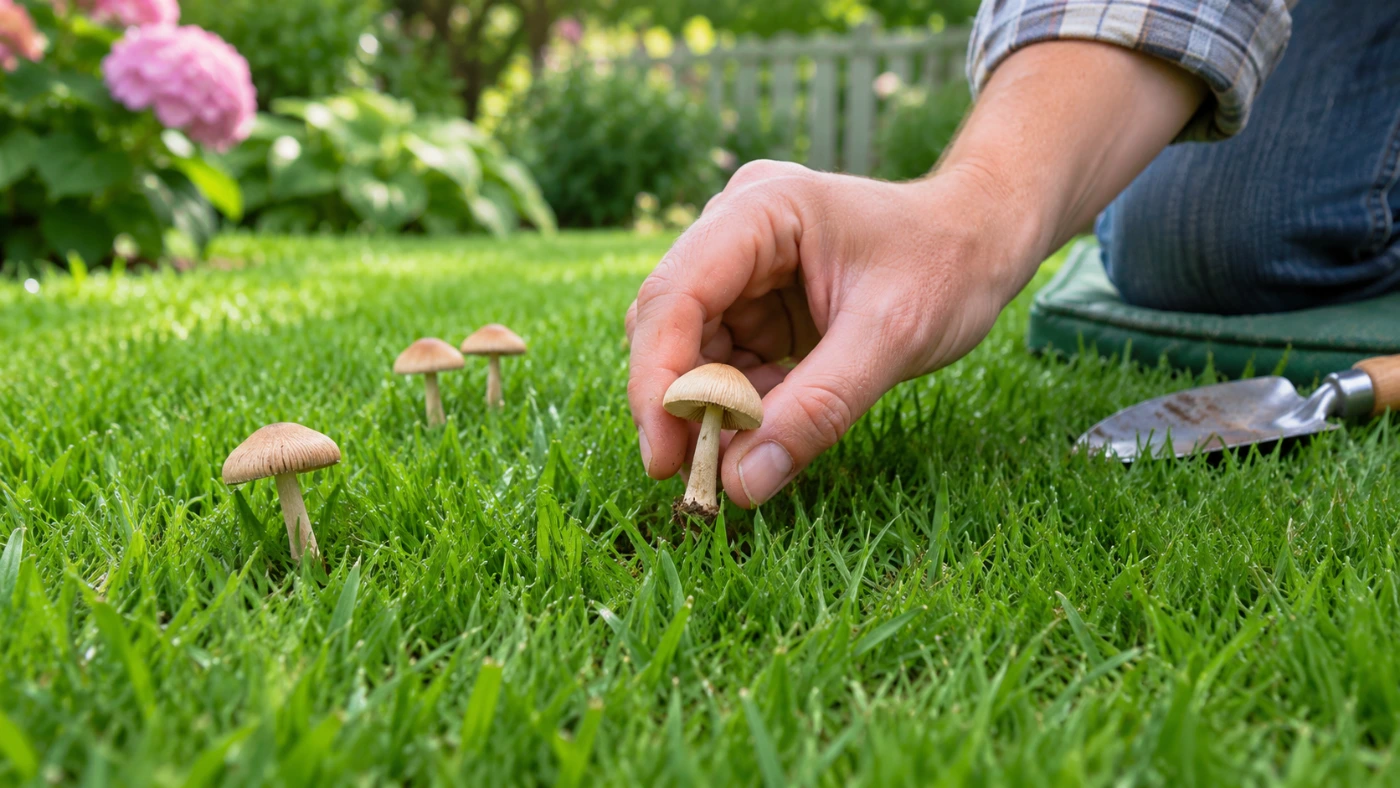
Mushrooms appearing in a lawn are usually a sign that fungi are feeding on organic material in the soil, such as old roots, buried wood, thatch, or decomposing plant debris. The visible mushrooms are only temporary fruiting bodies, while most of the fungus remains underground as mycelium.
If you want to remove the mushrooms without harming the grass, the best approach is simple: pick or mow the fruit bodies, improve drainage and airflow, reduce excess moisture, and avoid aggressive fungicides. In most cases, the lawn itself is not being attacked.
⚠️ Important: Do not eat mushrooms collected from a lawn unless they have been confidently identified. Some toxic species can grow in lawns, parks, gardens, and other managed grass areas.
Why Mushrooms Appear in Lawns
Lawn mushrooms usually appear when moisture, temperature, and organic material create suitable conditions for fruiting. Rainy weather, heavy irrigation, shaded soil, and compacted areas can all contribute.
The fungus itself may have been present long before the mushrooms appeared. Fruiting often happens suddenly after a wet period and may stop again once the soil dries.
Common sources of fungal food include buried tree roots, old stumps, wood chips, thatch, dead grass, and other decomposing material. Even a healthy lawn can produce mushrooms if enough organic matter is present.
The Safest Way to Remove Lawn Mushrooms
The easiest method is to remove the mushrooms by hand before they release more spores. Grasp them close to the base and lift gently rather than digging deeply into the turf.
You can also mow over small mushrooms if they are scattered across the lawn. However, collecting them first is cleaner and prevents pieces from being spread around.
Avoid cutting into the soil with a shovel unless you have another reason to remove buried wood or damaged turf. The underground mycelium usually extends well beyond the visible mushroom, so digging out individual fruit bodies rarely solves the problem.
Pick Them by Hand
Wear gloves if you prefer, especially if the mushrooms are unknown. Place the removed fruit bodies in a bag or garden waste container rather than leaving them scattered on the lawn.
Picking mushrooms does not usually damage the grass because only the temporary fruiting body is removed. The surrounding roots and turf remain largely undisturbed.
Mow Carefully
If mushrooms are numerous and short, mowing can remove them quickly. Use a normal mowing height and avoid scalping the lawn.
The main disadvantage is that mushroom fragments can spread across the grass. If appearance matters, collecting visible mushrooms before mowing usually gives a cleaner result.
Do Not Dig Out the Entire Area
Trying to excavate every trace of fungal mycelium can cause far more lawn damage than the mushrooms themselves. Mycelium may extend through a wide area of soil and often forms beneficial decomposer networks.
Digging is only useful when there is a specific buried source, such as a rotting stump or large piece of wood, that you already intend to remove.
Reduce Excess Moisture
Mushrooms need moisture to fruit. If your lawn stays wet for long periods, reducing unnecessary irrigation can make conditions less favorable for repeated flushes.
Water deeply but less frequently rather than applying small amounts every day. Allow the surface to dry between watering cycles whenever the grass species and weather conditions allow it.
Poor drainage also encourages mushrooms. Low spots, compacted soil, and shaded areas may remain wet long after the rest of the lawn dries.
Improve Drainage and Soil Aeration
Compacted soil holds water and limits oxygen around grass roots. Core aeration can improve drainage without destroying the turf.
Aerating is especially useful in lawns with heavy foot traffic or clay-rich soil. Better drainage can reduce both mushroom fruiting and other moisture-related lawn problems.
Reduce Shade Where Practical
Dense shade slows evaporation and keeps the soil moist. Trimming low branches or thinning dense vegetation can improve sunlight and airflow.
This should be done carefully because excessive pruning is not always desirable. The goal is simply to reduce persistently damp conditions where possible.
Remove Thatch and Organic Debris
A thick layer of thatch can hold moisture and provide food for decomposer fungi. If thatch becomes excessive, dethatching can improve airflow and reduce accumulated organic material.
Do not remove every piece of organic matter from the lawn. Normal decomposition is part of healthy soil biology, and fungi play an important role in that process.
Remove Buried Wood if Mushrooms Keep Returning
Persistent mushrooms in the same small area can sometimes indicate buried roots, old stumps, or construction wood beneath the soil. As this material decomposes, fungi may fruit repeatedly above it.
If the wood is accessible and causing ongoing lawn problems, removing it can reduce future mushroom growth. This is more effective than repeatedly treating only the visible mushrooms.
Should You Use Fungicide?
Usually, no. Lawn mushrooms are rarely a good reason to apply fungicide.
Most fungicides do not eliminate the underground fungal network responsible for ordinary mushroom fruiting. They can also disrupt other fungi and microorganisms that contribute to healthy soil.
For simple lawn mushrooms, moisture management and removal of fruit bodies are usually more practical. Fungicides make more sense for specific diagnosed turf diseases, not for harmless decomposer mushrooms.
Why Household Remedies Are a Bad Idea
Advice online sometimes recommends bleach, vinegar, salt, dish soap, or other household chemicals. These can burn grass, alter soil chemistry, and damage roots.
They also do not reliably remove the underground fungus. The result can be dead patches of lawn with the fungal network still present deeper in the soil.
Avoid pouring concentrated chemicals directly onto mushrooms or turf. The treatment can cause more visible damage than the mushrooms themselves.
Do Mushrooms Damage the Grass?
Usually, no. Most mushrooms growing in lawns are decomposers or fungi associated with organic matter in the soil.
They are often a sign that decomposition is occurring underground. The mushrooms may be visually unwanted, but they are not necessarily harming the grass.
Some fungal diseases do damage lawns, but those typically produce symptoms such as dead patches, discolored blades, lesions, or thinning turf rather than only obvious mushroom fruit bodies.
What About Fairy Rings?
Mushrooms growing in a circle or arc may be part of a fairy ring. The underground mycelium expands outward over time, sometimes creating a ring of mushrooms.
The grass inside or around the ring may become greener because fungal decomposition releases nutrients. In more severe cases, dense fungal growth can make soil water-repellent and cause dry grass.
For mild fairy rings, aeration and deep watering can help. Removing only the mushrooms improves appearance but does not eliminate the underground ring.
Can You Prevent Lawn Mushrooms Completely?
Not always. Fungal spores are widespread, and fungi are natural components of healthy soil.
You can reduce fruiting by keeping the lawn from staying excessively wet, improving drainage, reducing heavy thatch, and removing large buried wood sources. Even with good lawn care, mushrooms may still appear temporarily after prolonged rain.
How Long Do Lawn Mushrooms Last?
Individual mushrooms often last only a few days. Hot, dry, or windy weather can make them disappear even faster.
A new flush may appear after the next period of rain. Repeated fruiting does not necessarily mean the problem is getting worse; it may simply reflect favorable weather.
Should You Remove Mushrooms Before They Release Spores?
Removing them early can reduce the number of spores released directly into the immediate lawn area. However, fungal spores are already extremely common in the environment.
The main reason to remove mushrooms is appearance, safety around children or pets, or convenience. Spore removal alone is unlikely to make a lawn permanently mushroom-free.
Are Lawn Mushrooms Dangerous to Dogs or Children?
Unknown mushrooms should be treated cautiously. Some lawn species can cause poisoning if eaten.
Remove fruit bodies promptly from areas used by young children or pets that may chew unfamiliar objects. Identification is especially important if ingestion is suspected.
Why Mushrooms Often Appear After Rain
Rain raises soil moisture and humidity, allowing fungal fruit bodies to develop. The underground mycelium may already have been active for months or years.
Several days of damp weather can trigger many mushrooms at once. Once the soil dries, fruiting often declines naturally.
How to Remove Mushrooms Without Damaging Grass Step by Step
First, pick or mow the visible mushrooms without digging into the soil. Then check whether the area stays unusually wet or shaded.
Reduce unnecessary irrigation, improve drainage or aeration if needed, and remove excessive thatch or obvious buried wood. Repeat mushroom removal after future rain rather than applying harsh chemicals.
This approach preserves the turf while gradually making the environment less favorable for repeated mushroom fruiting.
Common Mistakes
One common mistake is digging deeply around each mushroom. This damages grass roots without removing the wider fungal network.
Another mistake is applying bleach, vinegar, salt, or other harsh chemicals. These treatments can burn the lawn while doing little to solve the underlying cause.
A third mistake is overwatering after mushroom removal. If the soil remains saturated, another flush may appear quickly.
A fourth mistake is assuming that mushrooms automatically indicate lawn disease. Most visible lawn mushrooms are simply decomposers taking advantage of moist organic soil.
Frequently Asked Questions
What is the easiest way to remove mushrooms from a lawn?
Pick them by hand or mow them down. Hand removal is cleaner and causes very little disturbance to the grass.
Will mowing spread mushrooms?
Mowing can scatter fragments and spores, but it does not usually make the underlying fungus significantly worse. If appearance matters, collect the mushrooms before mowing.
Should I dig mushrooms out by the roots?
No. Mushrooms do not have roots, and the fungal mycelium can extend far beyond the visible fruit body. Deep digging usually damages the lawn unnecessarily.
Does vinegar kill lawn mushrooms?
Concentrated vinegar can damage grass and alter soil conditions. It is not a good solution for ordinary lawn mushrooms.
Do mushrooms mean my lawn is unhealthy?
Not necessarily. They often indicate moist soil and active decomposition of organic material.
How can I stop mushrooms from coming back?
Improve drainage, reduce excess watering, aerate compacted soil, manage thatch, and remove buried wood if present. Complete prevention is not always possible.
Are lawn mushrooms harmful to grass?
Most are not. Many simply decompose dead organic matter beneath the lawn.
Why do lawn mushrooms keep returning after rain?
The underground mycelium remains in the soil even after fruit bodies are removed. Wet conditions can trigger new mushrooms from the same fungal network.
Final Notes
The safest way to remove lawn mushrooms without damaging the grass is to remove the fruit bodies gently and change the conditions that encourage repeated fruiting. Picking, mowing, improving drainage, reducing unnecessary irrigation, and aerating compacted soil are usually enough.
Avoid aggressive chemicals and unnecessary digging. In most lawns, the fungus is part of normal soil decomposition rather than a threat to the grass.
The practical approach is: pick the mushrooms → keep the turf intact → reduce excess moisture → improve drainage and airflow → remove buried wood only if it is clearly contributing to repeated growth.
Upload a photo and get possible matches in seconds.