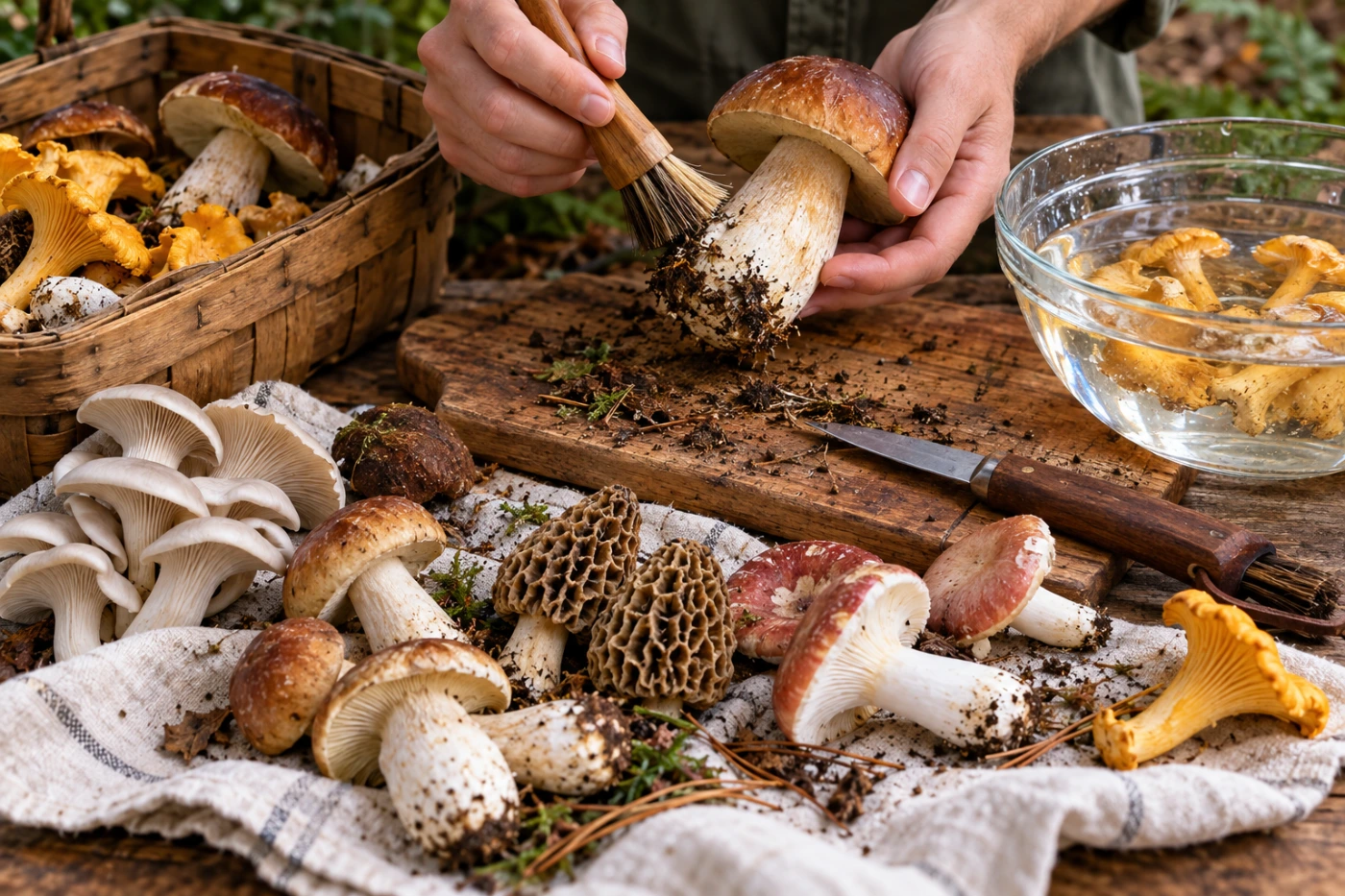
Cleaning wild mushrooms is mostly about removing soil, needles, leaves, insects, and damaged tissue without soaking the mushrooms unnecessarily. The best method depends on the species, how dirty it is, and whether it will be cooked immediately, dried, frozen, or stored.
For many mushrooms, a brush, small knife, and damp cloth are enough. Washing under running water is also acceptable when needed, but long soaking usually adds unnecessary moisture and can damage texture.
⚠️ Important: Clean mushrooms only after they have been confidently identified. Washing, trimming, or cutting can remove features that are important for identification, including the stem base, ring, volva, latex, bruising reactions, and substrate clues.
Quick Cleaning Guide
| Mushroom type | Best cleaning method |
|---|---|
| Porcini and boletes | Brush, trim, quick rinse if needed |
| Chanterelles | Brush, rinse briefly if sandy |
| Morels | Cut and rinse carefully |
| Oyster mushrooms | Brush or wipe |
| Puffballs | Wipe, peel if needed, cut open |
| Milkcaps | Brush, trim, rinse if dirty |
| Russulas | Brush carefully, rinse briefly |
| Wood-growing mushrooms | Brush and trim substrate |
| Very sandy mushrooms | Quick rinse or bowl wash |
| Mushrooms for drying | Avoid unnecessary washing |
Clean Mushrooms Before or After Identification?
Identification should come first because many important mushroom characters are easiest to see before the fruit body is cleaned or cut. The complete stem base, cap surface, gills, substrate, and nearby trees can all provide clues that disappear during preparation.
Keep the entire stem base whenever possible, especially with Amanita and other mushrooms where a volva or bulb may be important. If the identification is uncertain, photograph the mushroom and its habitat before brushing, trimming, or washing it.
What You Need
A small soft brush is one of the most useful tools for cleaning wild mushrooms, while a mushroom knife or ordinary small kitchen knife works well for trimming dirty stem bases and damaged areas. A damp cloth or paper towel can remove sticky soil without wetting the entire mushroom.
Running water is useful when dry cleaning is not enough. You do not need specialized equipment, although a field knife with a brush is convenient when collecting regularly.
Start Cleaning in the Field
The easiest dirt to remove is the dirt you never bring home. Cutting away heavily soiled material and brushing off loose leaves in the field can save considerable work later and keeps soil from spreading through the basket.
Do not remove structures that may still be needed for identification. If you are unsure what the mushroom is, keep it intact until the important characters have been documented.
Brush First
For most mushrooms, begin with a dry brush and remove loose soil, needles, moss, and fragments of leaf litter. This method works particularly well with firm mushrooms such as porcini and many other boletes.
Dry cleaning also preserves texture and keeps extra water out of mushrooms intended for dehydration. If brushing removes most of the debris, there is often no reason to wash the mushroom at all.
Use a Knife for Stubborn Dirt
Soil often becomes embedded in the bottom of the stem, where brushing is ineffective. Instead of washing the entire mushroom, scrape or trim away the dirty outer surface.
A knife can also remove insect-damaged, bruised, or decaying sections. Healthy flesh should remain firm and fresh-looking after trimming.
Can You Wash Wild Mushrooms?
Yes. The idea that mushrooms must never touch water is too absolute, especially when the alternative is leaving sand or mud on the fruit body.
A brief rinse usually adds relatively little moisture. Problems are more likely when mushrooms are left soaking for long periods or stored while still wet.
When Washing Is Useful
Washing makes sense when mushrooms are covered in fine sand, sticky mud, or debris that cannot be removed efficiently with a brush. Chanterelles growing in sandy soil are a classic example because grit can lodge between the folds.
Use cool water and work quickly. Drain and dry the mushrooms soon afterward rather than leaving them sitting wet.
When to Avoid Washing
Avoid unnecessary washing when mushrooms are already fairly clean, especially if they are going to be dried. Extra moisture increases drying time and can make dehydration less even.
Delicate mushrooms may also soften or break under running water. In these cases, a brush or damp cloth is usually the better option.
Should You Soak Wild Mushrooms?
Long soaking is usually unnecessary because it can soften mushrooms and reduce their texture. Some species absorb water more readily than others, so soaking an entire mixed batch is rarely a good general method.
There are exceptions where brief immersion can help remove grit or insects. Morels are one example because debris can hide inside their pits and hollow interior, but even then several quick rinses are usually better than prolonged soaking.
How to Clean Porcini
Porcini are usually best cleaned with a brush and knife. Remove soil from the stem base, wipe the cap, and cut through thick specimens to check for hidden insect larvae.
A quick rinse is acceptable if the mushroom is very dirty. If the porcini will be dried, however, dry cleaning is preferable whenever practical because it avoids adding extra moisture.
How to Clean Chanterelles
Chanterelles can trap needles, leaf fragments, and fine sand between their folds. Start by brushing the cap and underside, then trim the dirty part of the stem base.
If grit remains, rinse the mushrooms briefly under cold water or wash them quickly in a bowl. Drain immediately and spread them out to dry before cooking.
How to Clean Morels
Morels require more careful cleaning because dirt, insects, and debris can become trapped inside the honeycomb-like cap. Cutting them lengthwise exposes the hollow interior and makes inspection much easier.
Rinse the halves under cool running water or swish them briefly in clean water. If they are especially sandy, repeat the process with fresh water rather than leaving them to soak.
How to Clean Oyster Mushrooms
Wild Oyster Mushrooms are often relatively clean because they grow above the soil on trunks and branches. Brush away bark, moss, insects, and loose debris, then trim the tough point where the cluster attaches to the wood.
Washing is usually unnecessary unless the mushrooms are visibly dirty. If they are rinsed, dry them well before frying so they brown rather than steam.
How to Clean Puffballs
Wipe or brush soil from the outside first, and remove tough or damaged skin if necessary. Large puffballs may be easier to prepare after peeling, although peeling is not always required.
Young puffballs should also be cut vertically from top to bottom before cooking. The interior must be completely homogeneous and white, with no developing cap, gills, stem, or other internal mushroom structures.
How to Clean Russulas
Russulas are brittle and can crumble if handled roughly. Use a soft brush on the cap and stem and clean the gills gently rather than scrubbing them.
A brief rinse can remove remaining soil if necessary. Handle washed Russulas carefully because wet gills can become even more fragile.
How to Clean Milkcaps
Brush away loose debris and trim the stem base before washing. Soil can become trapped between the gills, particularly in older or funnel-shaped specimens.
A quick rinse is acceptable when needed. Damaged milkcaps release latex during cleaning, so the gills may temporarily become wet or stained even when the mushroom was relatively clean beforehand.
How to Clean Wood-Growing Mushrooms
Wood-growing mushrooms often carry bark, moss, insects, and pieces of decaying timber rather than soil. Trim the tough or dirty attachment point and brush away loose fragments from the cap and underside.
Oyster Mushrooms, Chicken of the Woods, and similar species often need little water. Older fruit bodies should be inspected for insect tunnels, soft areas, and deterioration before cooking.
Removing Insects and Larvae
Small insects are common in wild mushrooms and do not automatically mean the entire fruit body is unusable. Cut through thick caps and stems to see how extensive the damage actually is.
Minor channels can be trimmed away if the surrounding flesh is firm and fresh. Heavily infested mushrooms are usually poor quality and are better discarded.
What About Wormy Mushrooms?
The “worms” found in mushrooms are usually insect larvae rather than actual worms. Boletes are especially prone to this kind of infestation, and damage may be invisible from the outside.
A few tunnels do not necessarily ruin the mushroom. Extensive tunneling, soft tissue, or signs of decomposition indicate that cleaning is unlikely to produce a good-quality result.
Remove Slugs and Snails
Slugs and snails frequently feed on wild mushrooms, especially during wet weather. Remove them and trim areas that are heavily damaged or contaminated.
Minor feeding marks are normally a quality issue rather than a reason to reject the entire mushroom. Freshness of the remaining tissue matters much more than cosmetic perfection.
Check for Mold and Decay
Moldy mushrooms should not simply be cleaned and used. Fuzzy growth, sour smells, unusual softness, or widespread discoloration indicate that the fruit body has begun deteriorating.
Cutting away one visibly moldy patch may not solve the problem if the rest of the mushroom is already old or soft. When spoilage is extensive, discard the specimen.
Should You Peel Mushroom Caps?
Most wild mushrooms do not need to be peeled because the cap skin is edible in species that are otherwise suitable for cooking. Removing it can waste flesh and sometimes strips away useful flavor.
Peeling can make sense when the surface is extremely dirty, damaged, or naturally tough. Giant puffballs are one example where the outer skin is sometimes removed before cooking.
Should You Remove Bolete Pores?
Young firm pore layers can normally remain attached. They cook well and contain plenty of mushroom flavor.
On older boletes, the pore layer may become thick, soft, and sponge-like. Removing it can improve texture and keep the finished dish from becoming excessively mushy.
Should You Remove Mushroom Gills?
Usually not. Gills are normal edible tissue in species that are otherwise suitable for cooking and generally do not need special removal.
An exception can be heavily damaged or dirty gills filled with insects or debris. In that situation, removing part of the underside may be easier than trying to clean every surface.
Cleaning Mushrooms for Drying
Mushrooms intended for drying should remain as dry as practical before they enter the dehydrator or oven. Brush, scrape, and trim them carefully rather than washing automatically.
If washing is unavoidable, dry the surfaces thoroughly before slicing. Extra moisture increases drying time and can make thicker pieces dry unevenly.
Cleaning Mushrooms for Freezing
Mushrooms that will be cooked before freezing can be washed if necessary. Because much of the moisture will be driven off during cooking, surface water is less problematic than it is during dehydration.
There is still little benefit to soaking them. Excess water means longer cooking and can weaken the final texture.
Cleaning Mushrooms for Immediate Cooking
For mushrooms going directly into a frying pan, a quick rinse is rarely a serious problem. Surface water will evaporate during cooking, although drying them first improves browning.
Wet mushrooms initially steam rather than sear. Blot them with a towel or leave them exposed briefly before adding them to a hot pan.
How to Clean Very Sandy Mushrooms
Sand is one of the strongest reasons to use water because tiny grains are difficult to brush away completely. Place the mushrooms in a large bowl of cold water, move them briefly through the water, and then lift them out.
Do not pour the whole bowl through a colander because the sand that has settled at the bottom can end up back on the mushrooms. If necessary, repeat the process with fresh water.
Why You Should Not Leave Mushrooms in Dirty Water
Once soil and grit have separated from the mushrooms, they remain in the washing water. Leaving the mushrooms in the same bowl for too long gives debris time to settle back onto their surfaces.
Quick washing followed by lifting and draining works better. Replace visibly dirty water before repeating the process.
Drying Mushrooms After Washing
Spread washed mushrooms over clean towels or absorbent paper and blot them gently. Leaving some space between the pieces allows air to circulate and removes surface moisture faster.
A salad spinner can work for small firm mushrooms, but brittle species may break. For delicate mushrooms, towels and a little air drying are safer.
Should Mushrooms Be Cleaned Before Refrigeration?
Mushrooms generally store better when they are not washed several days in advance. Extra surface moisture encourages softening and deterioration, especially in closed containers.
Remove coarse soil, insects, and damaged tissue before refrigeration, but leave final washing until shortly before use. If mushrooms must be washed first, dry them thoroughly.
Why Mushrooms Become Slimy After Washing
Wet mushrooms stored without enough airflow may develop a slippery surface more quickly. Moisture trapped inside plastic packaging creates conditions that accelerate deterioration.
This does not mean rinsing itself instantly ruins mushrooms. The real problem is usually leaving washed mushrooms wet for too long before cooking or storage.
Cleaning Mushrooms Without Water
A brush, knife, and slightly damp cloth can clean many wild mushrooms without fully washing them. This method works particularly well with porcini and other firm mushrooms.
Begin with the cleanest surfaces and finish with the dirty stem base. Working in this order reduces the chance of spreading soil over areas that were already clean.
Do You Need a Special Mushroom Brush?
No special brush is required. A soft vegetable brush, pastry brush, or clean paintbrush can all work effectively.
The bristles should be firm enough to move soil without damaging the mushroom. Very stiff brushes can tear gills or remove delicate cap surfaces.
Common Cleaning Mistakes
One of the biggest mistakes is cleaning before identification is complete. Trimming the stem base, scrubbing the cap, or washing away latex can remove features needed to distinguish similar species.
Another mistake is soaking every mushroom regardless of species or condition. Many mushrooms need only brushing, while unnecessary water can make delicate fruit bodies soft.
A third mistake is trying to rescue mushrooms that are already decomposing. Cleaning removes dirt and insects, but it cannot make spoiled tissue fresh again.
Clean vs Over-Clean
Wild mushrooms do not need to look like supermarket produce before cooking. Small stains, insect marks, and natural discoloration are normal and often harmless when the mushroom itself is fresh.
Aggressive peeling and trimming can waste a large part of the harvest. The goal is to remove dirt, grit, damaged tissue, and unwanted organisms while preserving healthy mushroom flesh.
How to Photograph Before Cleaning
If a mushroom still needs identification, photograph it before preparation. Useful images include the cap, underside, complete stem base, substrate, and surrounding trees.
These photographs preserve evidence that may disappear during cleaning. After the stem base has been cut away or dirt removed, some identification clues cannot be reconstructed.
Interesting Facts
Many mushroom knives include a brush because field cleaning has long been part of practical mushroom collecting. Removing coarse dirt before putting mushrooms in the basket keeps the rest of the harvest much cleaner.
The traditional advice that mushrooms should never be washed is also more rigid than necessary. A brief rinse usually adds far less water than prolonged soaking and can be the simplest solution for sandy or muddy mushrooms.
Different mushroom structures require different cleaning methods. A dense porcini, hollow morel, brittle Russula, and delicate inkcap cannot all be handled in exactly the same way.
Frequently Asked Questions
Should you wash wild mushrooms before cooking?
Wash them when brushing and wiping are not enough. A quick rinse is generally practical, while prolonged soaking is unnecessary for most species.
Can mushrooms absorb water?
Yes, although the amount varies between species. Long soaking is much more likely to affect texture than a quick rinse under running water.
Is it better to clean mushrooms dry?
Often yes, particularly when the mushrooms are only lightly dirty or are going to be dried. Brushes and knives remove a surprising amount of debris without adding water.
Can I soak mushrooms in salt water to remove insects?
It may remove some insects, but prolonged soaking also affects texture and adds moisture. Cutting and inspecting the mushroom usually provides better control over insect damage.
Should I clean mushrooms as soon as I pick them?
Removing major dirt and debris in the field is useful, especially around the stem base. More thorough cleaning can usually wait until shortly before cooking or preservation.
Can I eat mushrooms with insect holes?
Minor insect damage does not automatically make a mushroom unusable if the remaining flesh is firm and fresh. Heavily infested or decomposing specimens are best discarded.
Do you need to peel wild mushrooms?
Usually not. Peeling is mainly useful when a particular species has a tough skin or when the outer surface is badly damaged or dirty.
Why should I keep the stem base before identification?
The base can contain a volva, bulb, rooting extension, or other important structures. Removing it too early can make an otherwise identifiable mushroom much harder to determine.
Final Notes
The best approach to cleaning wild mushrooms is to start dry and use water only when it actually improves the result. Brush away loose debris, trim dirty or damaged tissue, and use a quick rinse for sand, mud, or debris that cannot be removed efficiently.
Different species need different handling. Porcini usually clean well with a brush, sandy chanterelles may benefit from rinsing, morels need attention inside their hollow bodies, and mushrooms intended for drying should remain as dry as possible.
Most importantly, complete the identification before cleaning away useful features. A perfectly clean mushroom is not helpful if the stem base, latex, bruising reaction, or substrate clues needed to identify it have already disappeared.
Upload a photo and get possible matches in seconds.