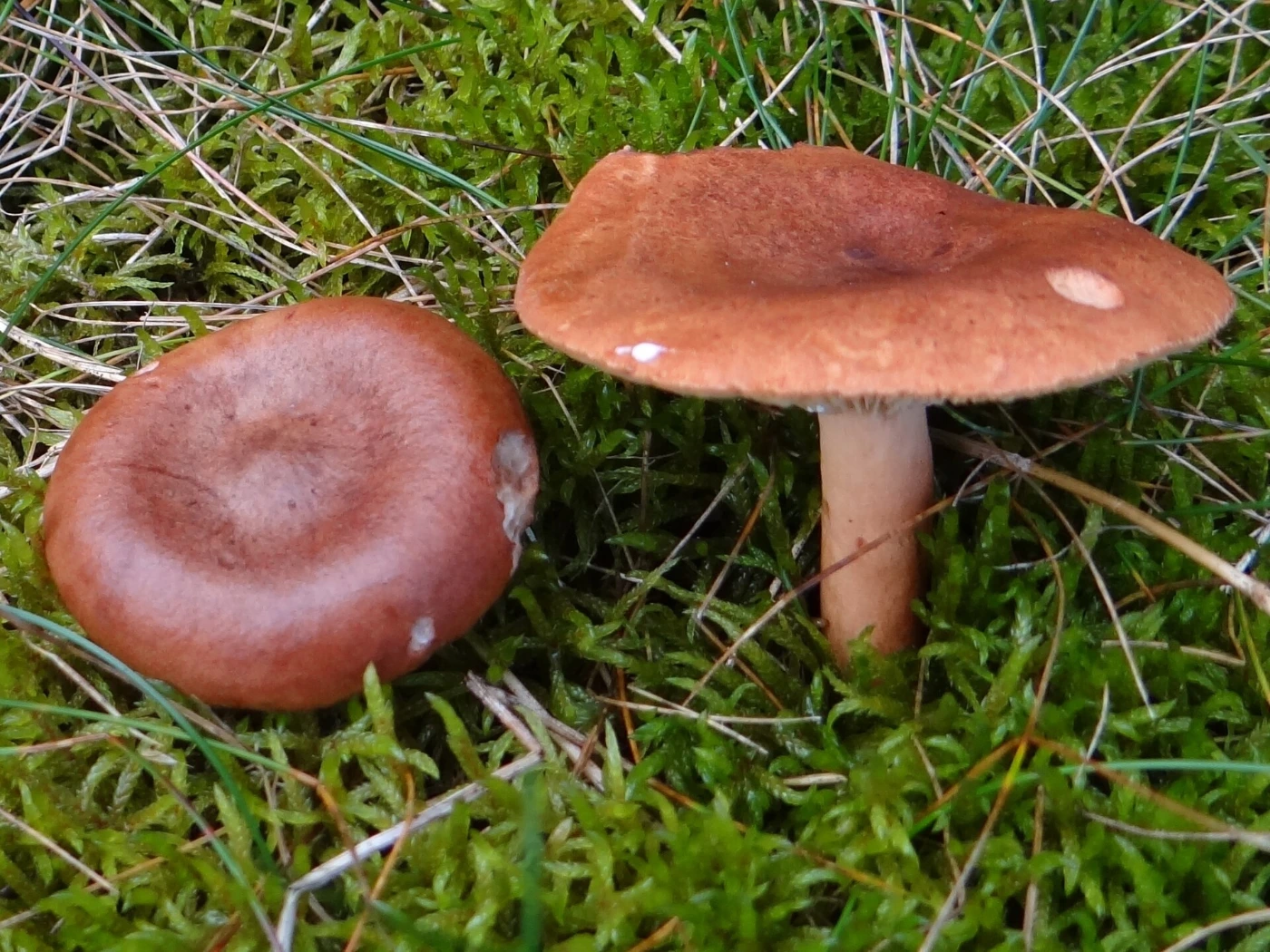
Lactarius rufus, commonly known as the Rufous Milkcap, is a reddish-brown milkcap found mainly in coniferous and mixed forests. It is recognized by its dry cinnamon to brick-brown cap, pale gills, white latex, and strongly acrid taste.
The species can be common in acidic woodland, especially under spruce and pine. Because many brown milkcaps look similar, identification should combine cap color, latex, gill structure, smell, habitat, and host trees rather than relying on one feature alone.
⚠️ Important: Lactarius rufus is not recommended as a beginner food mushroom. Its acrid latex and similarity to other brown milkcaps make careful identification important, and edibility traditions vary by region and preparation method.
Quick Identification
| Feature | Lactarius rufus |
|---|---|
| Scientific name | Lactarius rufus |
| Common name | Rufous Milkcap |
| Family | Russulaceae |
| Cap color | Reddish-brown, cinnamon, brick-brown |
| Cap shape | Convex, later flatter or slightly depressed |
| Cap center | Often with a small central bump |
| Cap surface | Dry, smooth to finely matte |
| Gills | Cream to pale buff |
| Latex | White |
| Latex change | Usually remains white |
| Stem | Pale reddish-brown to buff |
| Ring | Absent |
| Volva | Absent |
| Flesh | Pale, brittle |
| Spore print | Cream to pale ochre |
| Ecology | Mycorrhizal |
| Main hosts | Spruce, pine and other conifers |
| Season | Summer to autumn |
| Edibility | Generally not recommended |
| Main look-alikes | Lactarius helvus, L. quietus, L. tabidus, L. camphoratus |
What Does Lactarius rufus Look Like?
Rufous Milkcap is a medium-sized brownish mushroom with a fairly simple appearance. Its cap is usually dry and reddish-brown, often with a darker center.
The overall color can range from cinnamon and chestnut to brick-red or dull orange-brown. The gills and stem are usually much paler than the cap.
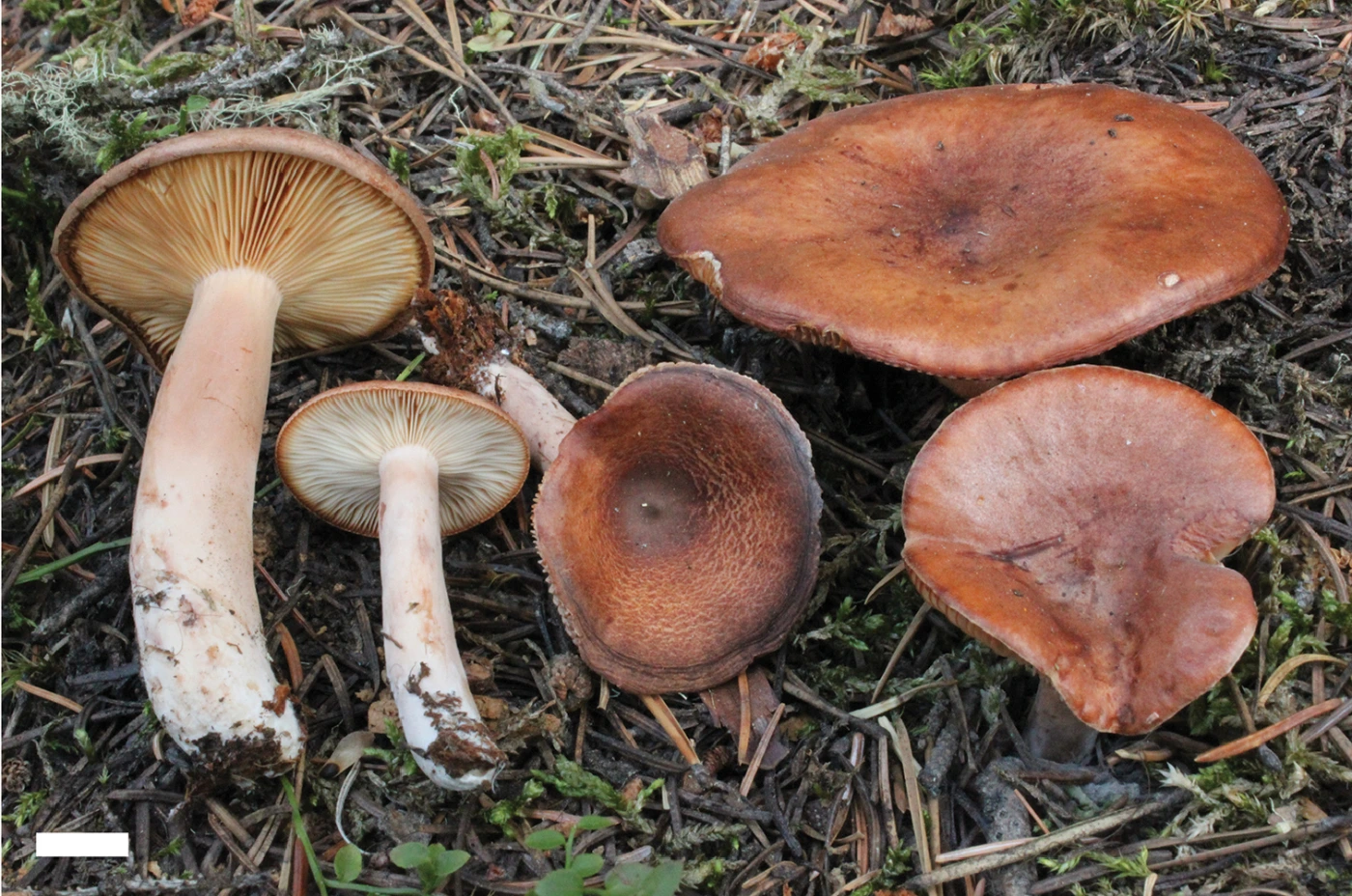
Cap
The cap begins convex and gradually becomes flatter. Older fruit bodies may develop a shallow depression in the center.
A small pointed or raised central bump is common and can be one of the easiest visual clues. This feature is not unique to the species, but it is often noticeable in fresh specimens.
Cap Color
Typical colors include rufous brown, cinnamon, reddish-brown, and brick-brown. The tone is usually fairly even rather than strongly zoned.
Weather can change the appearance significantly. Dry caps may look matte and pale, while wet conditions can deepen the color.
Cap Surface
The surface is usually dry and smooth to finely velvety or matte. It is not strongly slimy.
This dry surface helps separate it from some other milkcaps that become sticky or greasy in wet weather.
Gills
The gills are cream, pale buff, or slightly yellowish and run slightly down the stem. They are relatively close together but not extremely crowded.
When damaged, they release white latex. Older gills may darken slightly or develop brownish marks from handling.
Latex
The latex is white and usually remains white rather than changing quickly to yellow, orange, or red. It can be abundant in fresh mushrooms and much less visible in dry or old specimens.
The white latex is important but not diagnostic by itself because many other milkcaps produce the same color.
Acrid Taste
The latex and flesh are strongly acrid or peppery. This sharp sensation has historically been used as an identification feature.
Taste testing wild mushrooms is not recommended for beginners, and it is unnecessary when other features already fit well. Cap shape, host trees, latex, and smell are safer practical clues.
Stem
The stem is usually cylindrical and relatively slender. Its color ranges from pale buff to reddish-brown, often lighter than the cap.
There is no ring or volva. The surface is usually smooth and not strongly pitted.
Flesh
The flesh is pale cream to whitish and has the brittle texture typical of Russulaceae. It breaks rather than pulling apart into long fibers.
There is no dramatic bruising reaction. Damage may cause mild brownish discoloration over time.
Smell
The smell is usually mild to slightly resinous or mushroom-like. It is less distinctive than in some other brown milkcaps.
Because odor can vary, it should not be used as a main feature. Habitat and latex are more useful.
Spore Print
The spore print is cream to pale ochre. This is typical of many Lactarius species.
Spore print color confirms the broader group but is usually not enough to separate Lactarius rufus from close relatives.
Where Does Lactarius rufus Grow?
Rufous Milkcap is mycorrhizal and grows in association with living trees. It is especially common in coniferous forests.
Spruce and pine are among the most typical partners. The species often prefers acidic soils and can occur in mossy woodland, heath-like forest floors, and needle litter.
Under Spruce
Spruce forest is one of the classic habitats for Lactarius rufus. The reddish-brown caps can be easy to spot among green moss and dark needles.
Several fruit bodies may appear together after wet weather. This makes the species a regular component of northern and temperate conifer forests.
Under Pine
Pine is another common host. In dry or sandy pine woodland, the mushrooms may be smaller and more deeply colored.
Because many other milkcaps also occur with pine, tree association alone is not enough for species-level identification.
Season
The main fruiting period is summer through autumn. It often appears after periods of sustained rain.
In cool climates, fruiting can continue quite late in the season. Abundance varies strongly between years depending on moisture.
Distribution
Lactarius rufus is widespread across Europe and other northern temperate regions. It is especially associated with coniferous forest zones.
Similar brown milkcaps occur in North America and elsewhere, so regional taxonomy should be considered when identification is based on photographs alone.
Is Lactarius rufus Edible?
The species is generally not recommended as a food mushroom because of its strongly acrid taste and the difficulty of separating brown milkcaps safely. Some regional traditions have used it after special preparation, but that does not make it a good beginner species.
For practical identification, it is better to treat Rufous Milkcap as not recommended rather than as a target edible mushroom.
Lactarius rufus Look-Alikes
Brown milkcaps can be difficult because many species share pale gills, white latex, and conifer or broadleaf habitats. The most useful differences involve host tree, cap texture, smell, and latex behavior.
Several common look-alikes deserve special attention.
Lactarius helvus — Fenugreek Milkcap
Identification
Lactarius helvus usually has a paler pinkish-brown to gray-brown cap and can have a distinctive sweet or spicy smell, often compared with fenugreek, curry, or dried herbs.
It tends to grow in damp acidic habitats, often with conifers or birch.
Main Difference
The strong distinctive odor is the best clue. Lactarius rufus is usually darker reddish-brown and lacks that intense sweet-spicy smell.
Lactarius quietus — Oak Milkcap
Identification
Oak Milkcap is brown to reddish-brown and produces pale latex. It can look superficially similar to Lactarius rufus.
Its most important ecological clue is oak association. The smell can also be unusual and distinctive in fresh specimens.
Main Difference
Host tree is especially useful. A brown milkcap under oak fits Lactarius quietus better than L. rufus.
Lactarius tabidus — Birch Milkcap
Identification
Lactarius tabidus is usually smaller and paler, with yellow-brown to orange-brown tones. It often grows with birch in damp woodland.
The latex may change toward yellowish tones after exposure in some specimens.
Main Difference
Birch association and smaller, paler fruit bodies point away from Lactarius rufus. Watching the latex can provide additional evidence.
Lactarius camphoratus — Curry Milkcap
Identification
Cactarius camphoratus is a small reddish-brown milkcap with a distinctive aromatic smell that can become especially strong as the mushroom dries.
The odor may be described as curry-like, camphor-like, or spicy.
Main Difference
Smell is the easiest practical clue. Lactarius rufus lacks the strong aromatic odor of L. camphoratus.
Lactarius rufus vs Lactarius helvus
| Feature | Lactarius rufus | Lactarius helvus |
|---|---|---|
| Cap | Reddish-brown | Paler pinkish-brown |
| Surface | Dry | Dry |
| Latex | White | White to watery |
| Smell | Mild | Strong sweet-spicy |
| Habitat | Conifer forest | Damp acidic woodland |
| Best clue | Dark rufous cap | Distinctive odor |
The smell often solves this comparison faster than cap color.
Lactarius rufus vs Lactarius quietus
| Feature | Lactarius rufus | Lactarius quietus |
|---|---|---|
| Main host | Spruce, pine | Oak |
| Cap | Rufous to brick-brown | Brown to reddish-brown |
| Latex | White | Pale |
| Smell | Mild | Often distinctive |
| Habitat | Conifer forest | Oak woodland |
| Best clue | Conifer association | Oak association |
This is a good example of why host trees are so important in milkcap identification.
How to Identify Lactarius rufus Step by Step
Start with the habitat and cap. A dry reddish-brown milkcap under spruce or pine is a strong candidate.
Then confirm the white latex, pale gills, and lack of ring or volva.
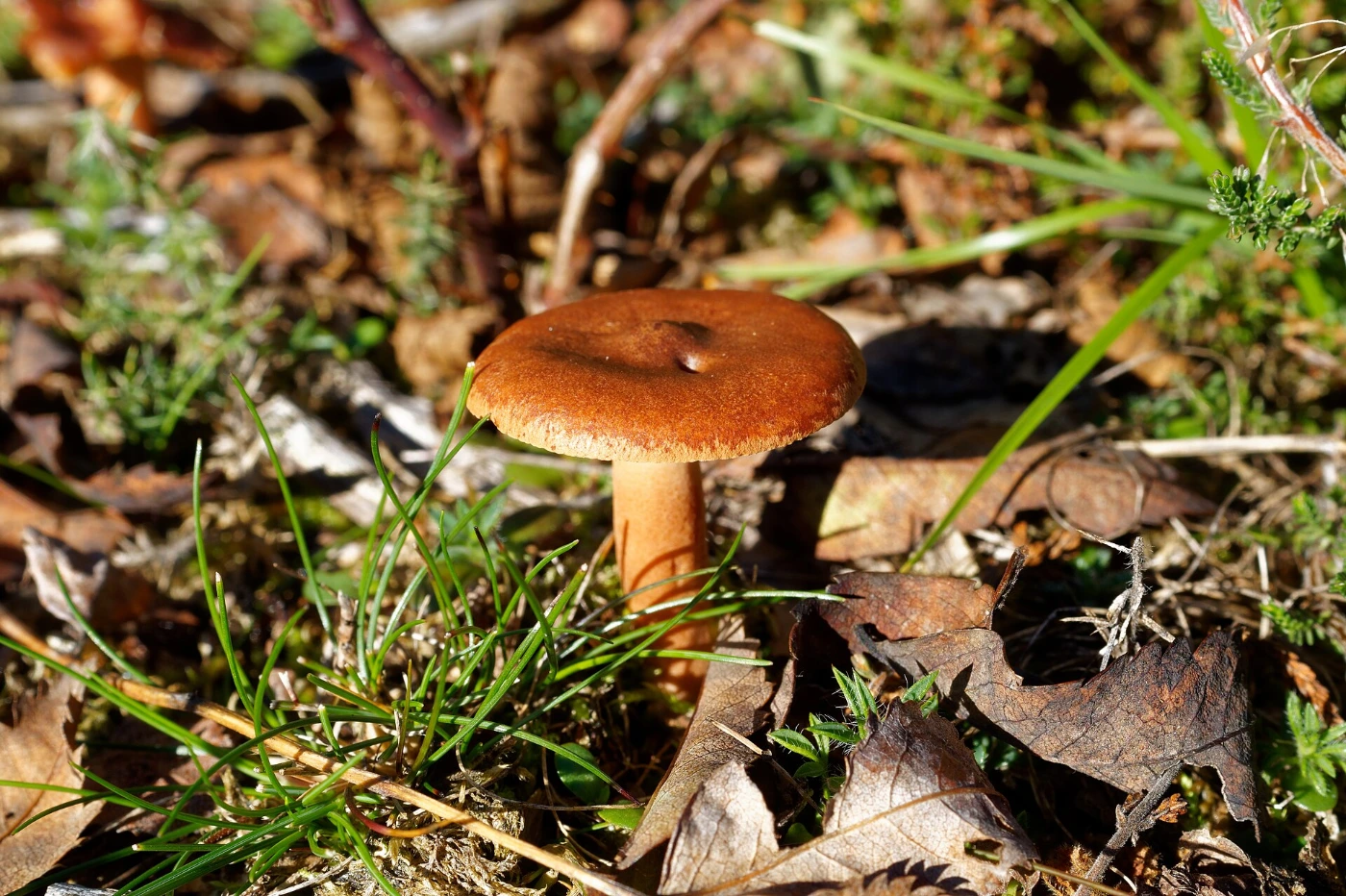
Step 1: Check the Host Tree
Look for spruce, pine, or other conifers nearby. Conifer association strongly supports the identification.
In mixed forest, remember that roots from several tree species can overlap.
Step 2: Examine the Cap
Look for a dry reddish-brown cap, often with a small central bump. Strong zoning or a slimy surface would suggest another species.
Cap color should be used together with habitat rather than alone.
Step 3: Cut the Gills
Fresh gills should release white latex. Observe whether the latex remains white or changes.
A dramatic yellow, orange, or red reaction points toward another milkcap group.
Step 4: Check the Stem
The stem should be pale brown to reddish-brown and lack both ring and volva.
A strongly pitted or ornamented stem suggests another species.
Step 5: Consider Smell
A mild smell fits Lactarius rufus. A strong curry-like or sweet fenugreek odor points more toward another brown milkcap.
Smell is especially useful when comparing very similar caps.
How to Photograph Rufous Milkcap for Identification
Take one image of the mushroom in its conifer habitat. Include spruce or pine needles, cones, or nearby trees if possible.
Then photograph the cap, underside, and full stem. Scratch the gills and take a close-up of the white latex while it is still fresh.
If several specimens are present, photograph both young and mature fruit bodies. This helps show how cap shape and color change with age.
Can AI Identify Lactarius rufus?
AI can often recognize a brown milkcap group when latex and gills are visible. Exact species identification is harder because many brown milkcaps overlap strongly.
Host tree is particularly useful. A reddish-brown dry milkcap with white latex under spruce or pine is much easier to narrow than a cap-only photograph.
A cautious result such as “rufous milkcap group” may sometimes be more accurate than forcing a species name.
Common Identification Mistakes
One common mistake is identifying every reddish-brown milkcap as Lactarius rufus. Several species can look almost identical from above.
Another mistake is ignoring the host tree. A brown milkcap under oak or birch belongs in a different comparison group.
A third mistake is relying on taste. The acrid character is real, but safer visible and ecological clues are available.
Interesting Facts About Lactarius rufus
The common name “Rufous Milkcap” refers to the warm reddish-brown color of the cap. The word “rufous” is widely used in natural history for rusty or reddish-brown coloration.
The species is especially well adapted to acidic conifer forests. Its close association with spruce and pine roots makes it part of the underground mycorrhizal community that helps trees obtain nutrients.
Like other milkcaps, Lactarius rufus produces latex from specialized fungal cells. The white liquid is not plant sap but part of the mushroom’s own tissue chemistry.
The strongly acrid taste also shows how different milkcap species can be despite similar appearances. Two brown mushrooms may look nearly identical while having very different chemical properties.
Frequently Asked Questions
Can Lactarius rufus have a flat cap without a central bump?
Yes. The central bump can become less obvious as the cap expands. Older specimens may look almost flat or slightly depressed.
Can the latex disappear in dry weather?
Yes. Old or dry fruit bodies may produce very little visible milk. Fresh inner tissue is usually the best place to test.
Why are some caps much darker than others?
Moisture, age, genetics, and light conditions all affect color. Wet specimens often look darker and richer in tone.
Can it grow in moss?
Yes. Mossy conifer forest is a very typical habitat, especially where the soil is acidic and moist.
Can several brown milkcaps grow in the same spruce forest?
Yes. Conifer forests can support multiple milkcap species at once, which is why each fruit body should be checked independently.
Does the white latex always remain white?
Typically yes, although the surrounding tissue may discolor slightly with age or damage. A strong latex color change would suggest another species.
Can Rufous Milkcap grow outside conifer forest?
It is strongly associated with conifers, but mixed woodland can also provide suitable habitat if spruce or pine roots are present.
Is the acrid taste enough to identify it?
No. Several milkcaps can taste acrid. Habitat, cap structure, latex, and smell are more useful together.
Final Identification Notes
Lactarius rufus is best recognized by the combination of a dry reddish-brown cap, pale gills, white latex, brittle flesh, mild smell, and growth under spruce or pine.
Its main look-alikes include Lactarius helvus, L. quietus, L. tabidus, and L. camphoratus. Host tree and smell are especially useful when the caps look similar.
The simplest field pattern is: dry rufous-brown milkcap + white latex + conifer habitat + no strong distinctive smell = strong Rufous Milkcap candidate.