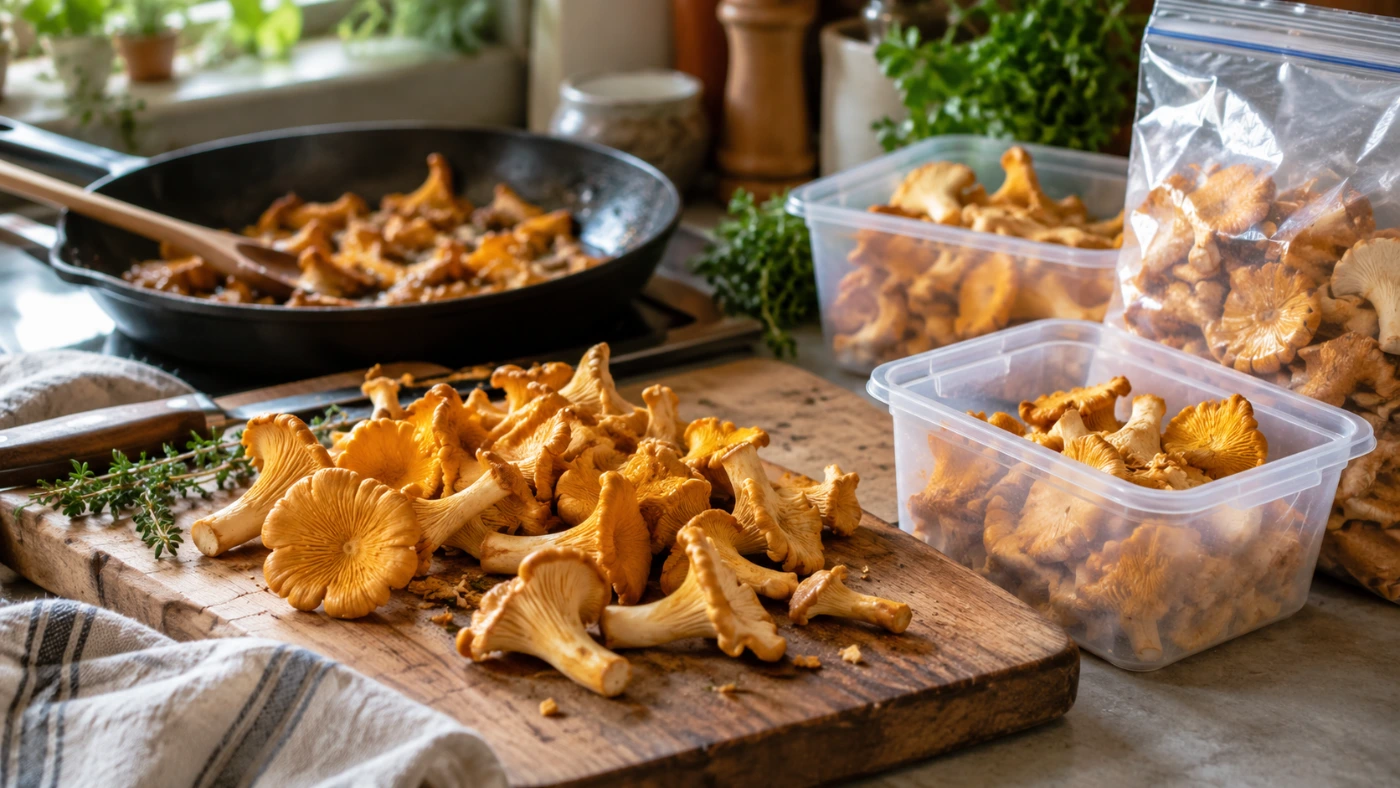
Yes, you can freeze chanterelles, and freezing is one of the easiest ways to preserve a larger harvest. The best results usually come from cooking them briefly before freezing rather than putting raw chanterelles straight into the freezer.
Raw freezing can change the texture and sometimes make chanterelles taste slightly bitter or watery after thawing. A short sauté or gentle pre-cooking helps reduce excess moisture and usually gives a better result when the mushrooms are reheated later.
⚠️ Important: Only preserve mushrooms that have been confidently identified and are fresh enough to eat. Freezing does not make an unsafe, spoiled, or incorrectly identified mushroom safe.
What Happens If You Freeze Chanterelles Raw?
Raw chanterelles contain a lot of water, and that moisture forms ice crystals inside the mushroom during freezing. When the mushrooms thaw, the damaged cells release water and the texture can become noticeably softer.
Some people also notice more bitterness after raw freezing, especially with older or wetter chanterelles. For this reason, lightly cooking them first is usually the more reliable method.
Is It Better to Cook Chanterelles Before Freezing?
Yes, briefly cooking chanterelles before freezing usually gives better texture and flavor. A short sauté helps remove some excess water and reduces the chance that the mushrooms become soggy after thawing.
You do not need to cook them completely. The goal is simply to heat them until they begin to soften and release moisture.
How to Prepare Chanterelles for Freezing
Start with fresh, firm chanterelles that have not become slimy, waterlogged, or heavily damaged. Older mushrooms may still be usable, but they generally freeze less well because their texture has already started to break down.
Clean the mushrooms before cooking and remove damaged parts. A little preparation at this stage makes the frozen portions easier to use later.
Should You Wash Chanterelles Before Freezing?
You can wash chanterelles, but it is better not to soak them for a long time. They can hold extra water, and that moisture can make the frozen mushrooms softer and increase ice formation.
A brush, soft cloth, or quick rinse is usually enough. If you rinse them, dry them carefully before cooking.
How to Freeze Chanterelles: Best Method
The simplest method is to sauté the mushrooms briefly before freezing. This works well for most chanterelles and requires very little equipment.
The process is straightforward and can be done in small batches. Once the mushrooms are cooled and portioned, they can go directly into the freezer.
Step 1: Clean the Mushrooms
Remove soil, needles, leaves, and damaged sections from the chanterelles. Trim dirty stem ends and separate any mushrooms that have already become soft or spoiled.
Cut large chanterelles into halves or pieces so they cook more evenly. Small mushrooms can usually be left whole.
Step 2: Cook Them Briefly
Place the chanterelles in a dry frying pan or add a small amount of butter or oil. Cook over medium heat until they release moisture and begin to soften.
Continue until most of the excess liquid has evaporated. Heavy browning is not necessary unless you prefer that flavor.
Step 3: Cool Completely
Spread the cooked chanterelles out and allow them to cool before packing. Putting hot mushrooms directly into a freezer container creates condensation and extra ice.
Cooling also protects nearby frozen food from warming unnecessarily. The mushrooms should be cool before they go into bags or containers.
Step 4: Divide Into Portions
Separate the mushrooms into amounts you are likely to use for one meal. Smaller portions are easier to cook and help avoid thawing more than you need.
Freezer bags and airtight containers both work well. Remove as much excess air as practical before sealing.
Step 5: Freeze
Put the packed chanterelles into the freezer as soon as they are cool. Labeling each portion with the date makes it easier to use older batches first.
Flat freezer bags are especially convenient because they freeze quickly and take up less space. They are also easier to stack and organize.
Can You Freeze Chanterelles Without Frying Them?
Yes, chanterelles can be frozen raw, but the final texture may be less pleasant. Raw mushrooms are more likely to become soft, watery, or slightly bitter after thawing.
If you still want to freeze them raw, clean and dry them very carefully first. Freezing them in a single layer before transferring them to a bag can help prevent one solid frozen block.
Can You Blanch Chanterelles Before Freezing?
Blanching is another possible method, although sautéing is usually more practical for chanterelles. Brief exposure to boiling water partially cooks the mushrooms and can help prepare them for storage.
The main disadvantage is extra moisture. If you blanch chanterelles, drain and dry them thoroughly before freezing.
Can You Steam Chanterelles Before Freezing?
Yes, gentle steaming can work as an alternative to frying. It partially cooks the mushrooms without adding oil or butter.
The chanterelles still need to cool and dry before freezing. Excess surface moisture will otherwise turn into ice around them.
How Long Can Frozen Chanterelles Be Stored?
Frozen chanterelles can keep for many months when they remain continuously frozen. Their quality gradually declines over time, even if they are still safe from a storage standpoint.
For the best flavor and texture, it is sensible to use them within the same year. Freezer burn, temperature changes, and poor packaging can shorten their useful storage life.
Can You Freeze Chanterelles in Butter?
Yes, chanterelles can be lightly sautéed in butter before freezing. This can be convenient if you already know they will be used later in sauces, pasta, eggs, or similar dishes.
Keep the amount of butter moderate because more can always be added during reheating. The mushrooms should still remain the main part of the frozen portion.
Can You Freeze Chanterelles in Cream Sauce?
Cooked chanterelles can be frozen in cream sauce, but dairy-based sauces do not always thaw perfectly. Cream can separate or become slightly grainy after freezing and reheating.
For better texture, it is often easier to freeze the mushrooms separately. Fresh cream can then be added when the final dish is prepared.
Can You Freeze Chanterelle Soup?
Yes, chanterelle soup can often be frozen successfully, especially if it is broth-based. Soups with a large amount of cream may change texture more noticeably after thawing.
If possible, freeze the soup before adding the cream. Add the dairy component after reheating for a smoother result.
Should You Thaw Chanterelles Before Cooking?
In many dishes, there is no need to thaw them first. Pre-cooked chanterelles can usually go directly from the freezer into a hot frying pan, soup, sauce, or stew.
Cooking them from frozen also helps prevent them from sitting in their own liquid during thawing. This usually gives a better texture.
How to Cook Frozen Chanterelles
Heat the pan first and add the frozen mushrooms directly. Allow any released water to evaporate before adding extra butter, cream, garlic, herbs, or other ingredients.
If the chanterelles were already lightly cooked before freezing, they usually need only a short reheating. Avoid cooking them much longer than necessary because repeated heating can make them softer.
Why Do Frozen Chanterelles Become Bitter?
Bitterness after freezing is most often reported when chanterelles are frozen raw. Freezing damages mushroom tissue and can change how some flavor compounds are perceived after thawing.
Pre-cooking usually reduces this problem. Using young, fresh chanterelles instead of old or waterlogged specimens also helps.
Why Do Frozen Chanterelles Become Rubbery?
A rubbery texture can develop when chanterelles are cooked too long before freezing and then heavily cooked again after thawing. Repeated moisture loss can make the texture tougher than expected.
A brief first cooking followed by quick reheating usually works better. Avoid long cooking at both stages.
Can Frozen Chanterelles Be Refrozen?
Refreezing is generally not ideal because every freeze-thaw cycle damages texture further. It is better to freeze chanterelles in small portions that can be used completely.
If thawed chanterelles have been cooked into a finished dish, normal food-safety rules for cooked food apply. Quality can still decline after another freezing cycle.
Are Frozen Chanterelles as Good as Fresh?
Fresh chanterelles usually have the best texture, especially when they are young and recently collected. Freezing inevitably changes them somewhat because their cells contain a significant amount of water.
Well-prepared frozen chanterelles can still be excellent in cooked dishes. Sauces, soups, risotto, pasta, eggs, and stews are particularly good uses.
Freezing vs Drying Chanterelles
Freezing usually preserves the familiar chanterelle texture better than drying. Dried chanterelles can become tougher and may not rehydrate as pleasantly as some boletes or morels.
Drying is still useful when freezer space is limited. The best method depends on how you plan to use the mushrooms later.
Freezing vs Pickling
Pickling changes the flavor much more dramatically than freezing. It is useful when you want a preserved mushroom that is ready to serve rather than one that tastes close to a freshly cooked chanterelle.
Freezing is usually better for future hot dishes. Pickling is better treated as a separate preparation method.
Best Chanterelles to Freeze
Young to medium-sized firm chanterelles usually freeze best. They should have fresh flesh, good texture, and no signs of sliminess or advanced decay.
Very wet, old, or heavily damaged chanterelles are less suitable. Freezing preserves their current condition rather than improving it.
Can You Freeze Different Chanterelle Species?
Yes, many true chanterelles can be preserved in a similar way. Species differ somewhat in thickness, moisture content, and texture, but the same basic freezing method works for most of them.
In North America, chanterelles include several regional species rather than only European Cantharellus cibarius. Correct identification should still come before cooking or storage.
Common Mistakes When Freezing Chanterelles
One common mistake is freezing wet mushrooms immediately after washing them. Extra water creates more ice and usually produces a softer texture after thawing.
Another mistake is packing hot mushrooms into sealed containers. Condensation then freezes around the chanterelles and can contribute to large ice crystals.
A third mistake is freezing a very large batch in one solid block. Small meal-sized portions are much easier to cook directly from frozen.
Interesting Facts
Chanterelles have a firmer structure than many delicate gilled mushrooms, which makes them reasonably well suited to freezing after brief cooking. Their distinctive aroma can also survive frozen storage well when the mushrooms are packed tightly and protected from air.
The yellow or orange color of many chanterelles comes from natural pigments in the tissue. Freezing may dull the color slightly, but strong gray or dark brown discoloration is more likely to reflect age, oxidation, or poor storage.
Professional kitchens often preserve mushrooms in a partially cooked form rather than completely raw. This reduces preparation time later and gives more consistent results when the mushrooms are added to a finished dish.
Frequently Asked Questions
Can I freeze freshly picked chanterelles the same day?
Yes, and freezing them while they are still fresh usually gives the best result. Clean and pre-cook them first rather than leaving them for a long time at room temperature.
Do frozen chanterelles need to be thawed overnight?
No, they usually do not need overnight thawing. Pre-cooked chanterelles can often be added directly from the freezer to a hot pan.
Can I freeze chanterelles whole?
Yes, especially if the mushrooms are small. Larger specimens are usually easier to cook and portion if they are cut before freezing.
Should I add salt before freezing?
It is usually better to season lightly or wait until the final cooking stage. This gives you more flexibility when using the frozen mushrooms in different dishes.
Can I freeze chanterelles with onions?
Yes, if the chanterelles and onions have already been cooked together. This can be convenient for quick meals, although plain mushrooms are more versatile later.
Can frozen chanterelles be used for risotto?
Yes, they work well in risotto. Add them from frozen or partially thawed and cook off excess moisture before incorporating them into the rice.
Can I freeze chanterelles for a whole year?
They can remain frozen for many months, but flavor and texture gradually decline. For best quality, it is better to use them sooner rather than treating frozen storage as indefinite.
What is the easiest way to freeze chanterelles?
Clean the mushrooms, sauté them briefly until most excess moisture is gone, cool them completely, and freeze them in small airtight portions. This simple method works well for most home kitchens.
Final Notes
Chanterelles can be frozen successfully, but briefly cooking them before freezing usually gives better results than freezing them raw. Pre-cooking reduces excess moisture, helps preserve flavor, and lowers the chance of a bitter or watery texture after thawing.
For the simplest method, clean the chanterelles, sauté them until they release their moisture, cool them, and freeze them in meal-sized portions. When needed, they can usually go directly from the freezer into a hot pan without thawing first.
Upload a photo and get possible matches in seconds.