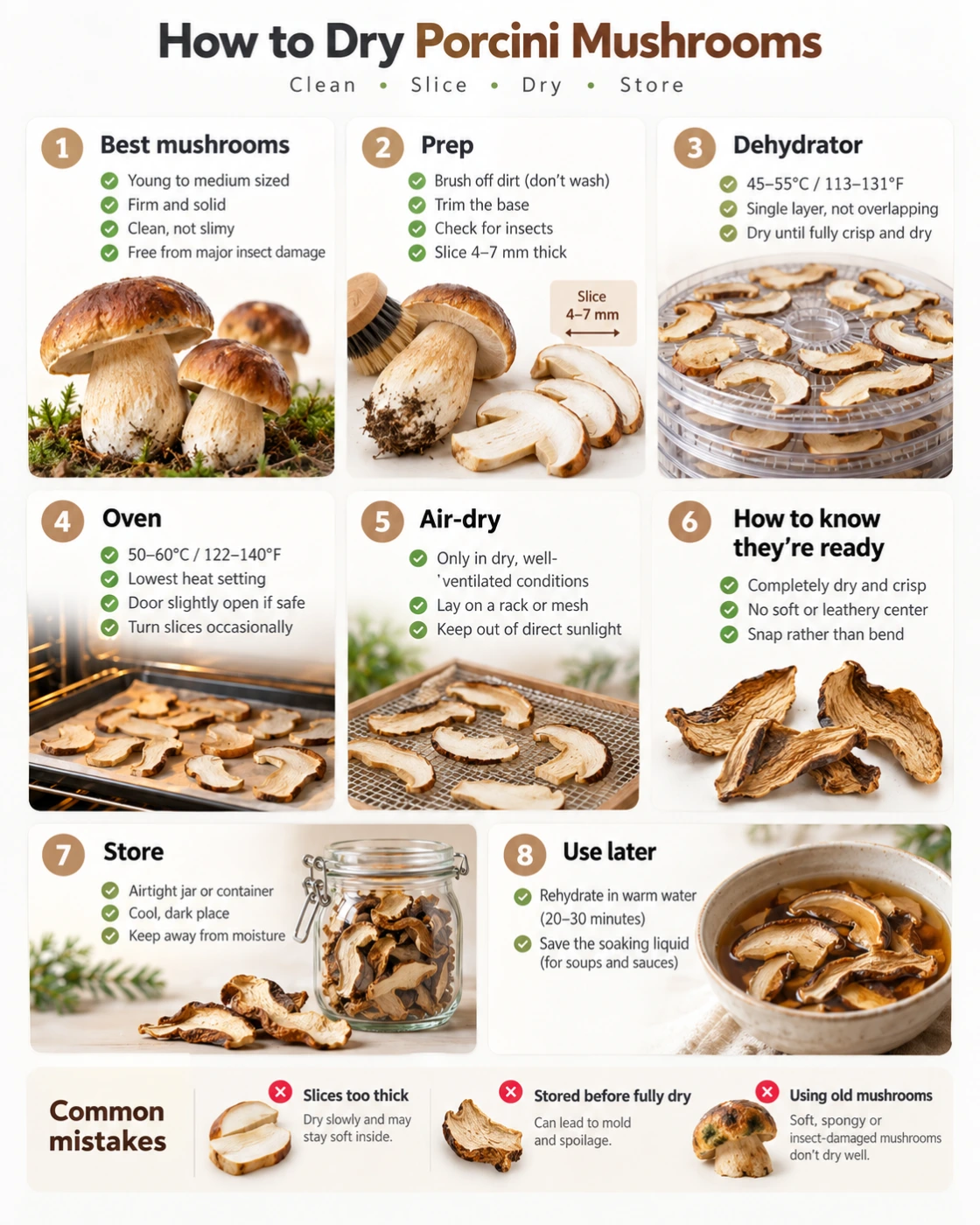
Drying is one of the best ways to preserve porcini because it concentrates their aroma and gives them a long shelf life. Properly dried porcini can later be used in soups, risotto, sauces, pasta, stews, and many other dishes.
Fresh porcini contain a lot of moisture, so the goal is to remove that water evenly without overheating the mushrooms. The best methods are a food dehydrator, a low oven, or careful air-drying in a dry, well-ventilated place.
⚠️ Important: Only dry mushrooms that have been confidently identified and are fresh enough to eat. Drying preserves a mushroom, but it does not make a spoiled or incorrectly identified mushroom safe.
Which Porcini Are Best for Drying?
Young to medium-sized porcini usually give the best results. They should be firm, clean, and free from extensive insect damage or soft decaying areas.
Very old mushrooms can still be dried if the flesh is sound, but their texture and flavor are often less pleasant. Soft, slimy, moldy, or strongly damaged specimens should be discarded rather than preserved.
Should You Wash Porcini Before Drying?
It is usually better to avoid soaking porcini in water before drying. Extra moisture slows the drying process and can make the mushrooms more difficult to dehydrate evenly.
Brush away soil, needles, moss, and other debris with a soft brush or cloth. If washing is necessary, rinse quickly and dry the mushrooms thoroughly before slicing.
How to Clean Porcini for Drying
Trim away dirty stem bases and any damaged or insect-eaten tissue. Cut through the mushroom if necessary to check the inside, because larvae can sometimes be hidden even when the outside looks healthy.
The pore layer under the cap can be left in place on firm young mushrooms. On older specimens, a very soft or spongy pore layer can be removed before drying if you prefer a cleaner final texture.
How Thick Should You Slice Porcini?
Slices around 4–7 mm thick usually dry evenly without becoming too fragile. Very thick slices take longer to dry and can remain moist inside even when the surface feels dry.
Try to keep the slices reasonably similar in thickness. Even pieces dry at a similar rate and are easier to check during the process.
Best Method: Drying Porcini in a Dehydrator
A food dehydrator gives the most consistent result because warm air moves continuously around the mushroom slices. It is especially useful when you have a large harvest or want predictable drying conditions.
Arrange the slices in a single layer without overlapping them. Leave enough space for air to circulate around each piece.
Temperature
A moderate drying temperature works best. Around 45–55°C / 113–131°F is a practical range for most home dehydrators.
Lower temperatures preserve aroma well but take longer. Higher temperatures can speed up drying but may darken the mushrooms or change the flavor.
Drying Time
Drying time depends on slice thickness, mushroom moisture, humidity, and the dehydrator itself. Thin slices may dry in several hours, while thicker pieces can take considerably longer.
Do not rely on time alone. The mushrooms are ready only when the pieces are completely dry throughout.
How to Dry Porcini in the Oven
An oven works well if you do not have a dehydrator. Use the lowest practical temperature and allow moisture to escape rather than trapping it inside.
Place mushroom slices on racks or parchment-lined trays in a single layer. Good airflow is important, so do not crowd the tray.
Oven Temperature
A temperature around 50–60°C / 122–140°F works well if your oven can maintain it. If the minimum setting is higher, use extra caution and check the mushrooms frequently.
Keeping the oven door slightly open can help moisture escape in some ovens. Follow your appliance instructions and avoid any setup that is unsafe for your particular oven.
Turn the Slices
Turn the porcini occasionally so both sides dry evenly. Pieces near the back or edges of the oven may dry faster than those in other areas.
Move trays around if your oven heats unevenly. This helps prevent some slices from becoming over-dry while others remain moist.
Can You Air-Dry Porcini?
Yes, porcini can be air-dried in dry climates or well-ventilated indoor conditions. This traditional method works best when humidity is low and air circulation is strong.
Slices can be placed on mesh racks or threaded onto clean string with space between them. They should be protected from insects, dust, and direct damp conditions.
When Air-Drying Does Not Work Well
High humidity makes air-drying slower and increases the risk of mold. Thick slices can also dry poorly because the center stays moist for too long.
If the weather is damp or cool, a dehydrator or oven is safer and more predictable. Air-drying is most reliable when the environment itself is already favorable for dehydration.
Can You Dry Porcini Whole?
Small porcini can technically be dried whole, but slicing is usually much more practical. Whole mushrooms dry slowly and may retain moisture deep in the stem or cap.
Slicing also makes hidden insect damage easier to detect. For most home drying, sliced porcini are the better choice.
How Do You Know When Porcini Are Fully Dry?
Properly dried porcini should feel dry all the way through. Thin slices often become crisp or brittle, while slightly thicker pieces may remain firm but should not feel soft or flexible in the center.
Break or bend one of the thickest pieces to check it. Any cool, soft, or moist interior means the batch needs more drying time.
Why Complete Drying Matters
Even a small amount of remaining moisture can cause problems during storage. Mushrooms that look dry on the outside may still develop mold if the centers remain damp.
This is why checking the thickest pieces is more important than checking the smallest ones. Storage should begin only when the entire batch is fully dry.
How to Store Dried Porcini
Store dried porcini in airtight containers away from heat, light, and moisture. Glass jars with tight lids work well, as do well-sealed food-safe containers.
Keep them in a cool, dark cupboard rather than near a stove or sunny window. A dry environment helps preserve both flavor and texture.
Should You Vacuum-Seal Dried Porcini?
Vacuum sealing can be useful for long-term storage because it reduces exposure to air and humidity. It is especially helpful if you dry large quantities that will not be used quickly.
Make sure the mushrooms are completely dry before sealing them. Vacuum sealing damp mushrooms can trap moisture and create ideal conditions for spoilage.
How Long Do Dried Porcini Last?
Properly dried and well-sealed porcini can retain good quality for a long time. Their aroma gradually weakens with age, so fresher dried mushrooms usually have a stronger flavor.
For best culinary quality, use older batches before opening newly dried ones. Discard mushrooms that develop mold, unusual moisture, or an unpleasant smell.
Why Dried Porcini Smell Stronger Than Fresh Ones
Drying removes water while concentrating aromatic compounds. This is why dried porcini can smell much more intense than fresh mushrooms even before they are cooked.
The concentrated aroma is one reason dried porcini are so useful in sauces and broths. A relatively small amount can add a strong mushroom flavor to a dish.
How to Rehydrate Dried Porcini
Place the dried mushrooms in warm water and allow them to soften. The exact time depends on slice thickness, but the mushrooms should become pliable before cooking.
Do not automatically discard the soaking liquid. It can contain a great deal of flavor and may be useful in soups, sauces, or risotto after careful filtering.
How to Filter Porcini Soaking Liquid
Forest mushrooms can retain small particles of soil even after cleaning. Fine grit may settle into the soaking water during rehydration.
Pour the liquid through a fine filter, coffee filter, or several layers of clean cloth before using it. This keeps the flavor while removing unwanted sediment.
Can Dried Porcini Be Used Without Rehydrating?
Yes, especially when the mushrooms are ground into powder. Porcini powder can be added directly to sauces, soups, rubs, gravies, or other dishes.
Small dried pieces can also be added directly to long-cooking soups or stews. They will rehydrate gradually in the cooking liquid.
How to Make Porcini Powder
Dry the porcini until they are fully crisp, then grind them in a clean spice grinder or blender. The resulting powder should be stored in an airtight container away from humidity.
Porcini powder is useful when you want concentrated mushroom flavor without visible mushroom pieces. It also works well for seasoning sauces, meat dishes, potatoes, and vegetable dishes.
Should You Dry Porcini Caps and Stems Together?
Yes, both caps and stems can be dried. Firm stems often have excellent flavor and should not be discarded simply because they are less visually attractive.
Cut thick stems into thinner slices so they dry at the same rate as the caps. Very fibrous or damaged sections can be trimmed away before drying.
What About the Pore Layer?
The pore layer on young porcini can be dried together with the rest of the cap. It contains flavor and does not need to be removed if it is firm and fresh.
On older porcini, the pore layer may become thick, soft, or spongy. Removing it can produce cleaner slices and reduce drying time.
Why Do Dried Porcini Turn Dark?
Some darkening during drying is normal. Oxidation, heat, age, and the original color of the mushroom can all affect the final appearance.
Very dark patches combined with unpleasant odor or softness are more concerning than ordinary browning. Color alone does not necessarily mean the dried mushrooms are spoiled.
Can You Dry Frozen Porcini?
It is possible, but fresh mushrooms generally produce a better result. Freezing damages the tissue and can release extra moisture during thawing.
If frozen porcini must be dried, thaw and drain them carefully first. Expect the texture and appearance to differ from mushrooms dried directly from fresh.
Drying vs Freezing Porcini
Drying is especially good for porcini because their aroma becomes concentrated. Dried porcini are lightweight, easy to store, and excellent for soups, risotto, and sauces.
Freezing preserves a texture closer to fresh mushrooms but requires freezer space. The best method depends on whether you value texture or concentrated flavor more.
Common Mistakes When Drying Porcini
One common mistake is slicing the mushrooms too thickly. Thick pieces can feel dry outside while remaining moist in the center.
Another mistake is storing them before they are completely dry. Even slight residual moisture can lead to mold or loss of quality.
A third mistake is drying old or already deteriorating mushrooms. Preservation works best when you begin with fresh, healthy fruit bodies.
Interesting Facts
Dried porcini have been used for generations in European cooking because drying preserves both the mushroom and much of its distinctive aroma. In some dishes, the flavor of dried porcini is actually preferred to that of fresh mushrooms.
The strong aroma develops because volatile compounds become concentrated as water leaves the tissue. Rehydrating the mushrooms releases many of those compounds into both the mushroom and the soaking liquid.
Porcini powder is also a practical way to use broken dried pieces that would otherwise be difficult to serve whole. The small fragments can still provide the same concentrated flavor after grinding.
Frequently Asked Questions
Do I need to cook porcini before drying them?
No. Porcini are normally dried raw after cleaning and slicing. They are cooked later when used in a recipe.
Can I dry wormy porcini?
Minor insect channels can be trimmed away if the remaining mushroom is firm and fresh. Heavily infested or deteriorating mushrooms are better discarded.
Should dried porcini be crispy?
Thin slices are often brittle when fully dry. Thicker pieces may be less fragile, but they should still contain no soft or moist center.
Can I dry porcini in direct sunlight?
Direct sun can work in some traditional drying conditions, but it is harder to control than a dehydrator or low oven. Shade with good airflow usually gives more predictable results for home drying.
Can dried porcini become moldy?
Yes, if they retain moisture or absorb humidity during storage. Airtight containers and complete drying are the best protection.
Do I need to refrigerate dried porcini?
Usually not if they are completely dry and stored in an airtight container in a cool, dark place. Refrigeration can introduce condensation if containers are repeatedly opened and closed.
Can I mix different porcini species when drying?
Closely related edible king boletes can be dried in the same way once each mushroom has been correctly identified. Identification should happen before the mushrooms are sliced or mixed together.
What is the easiest drying method?
A food dehydrator is usually the simplest and most consistent method. Slice the porcini evenly, dry them at moderate heat, and store them only after the thickest pieces are fully dry.
Final Notes
Porcini are particularly well suited to drying because dehydration concentrates their aroma while greatly extending storage life. The simplest method is to clean them carefully, slice them evenly, and dry them with steady warm airflow until no moisture remains inside.
For most home kitchens, a dehydrator at about 45–55°C / 113–131°F gives the most predictable result. Once completely dry, porcini should be stored airtight and protected from humidity, heat, and light.
Upload a photo and get possible matches in seconds.